Top 20 Lakes in Bulgaria
Lakes in Bulgaria are a prominent feature of the country's diverse natural landscape, ranging from glacial formations in high mountains to vast reservoirs and coastal lagoons. These bodies of water are significant for their ecological value and recreational opportunities. Bulgaria's geography includes several mountain ranges, such as the Rila and Rhodope, which host numerous lakes. The country's lakes contribute to its biodiversity and offer various outdoor activities.
Best lakes in Bulgaria
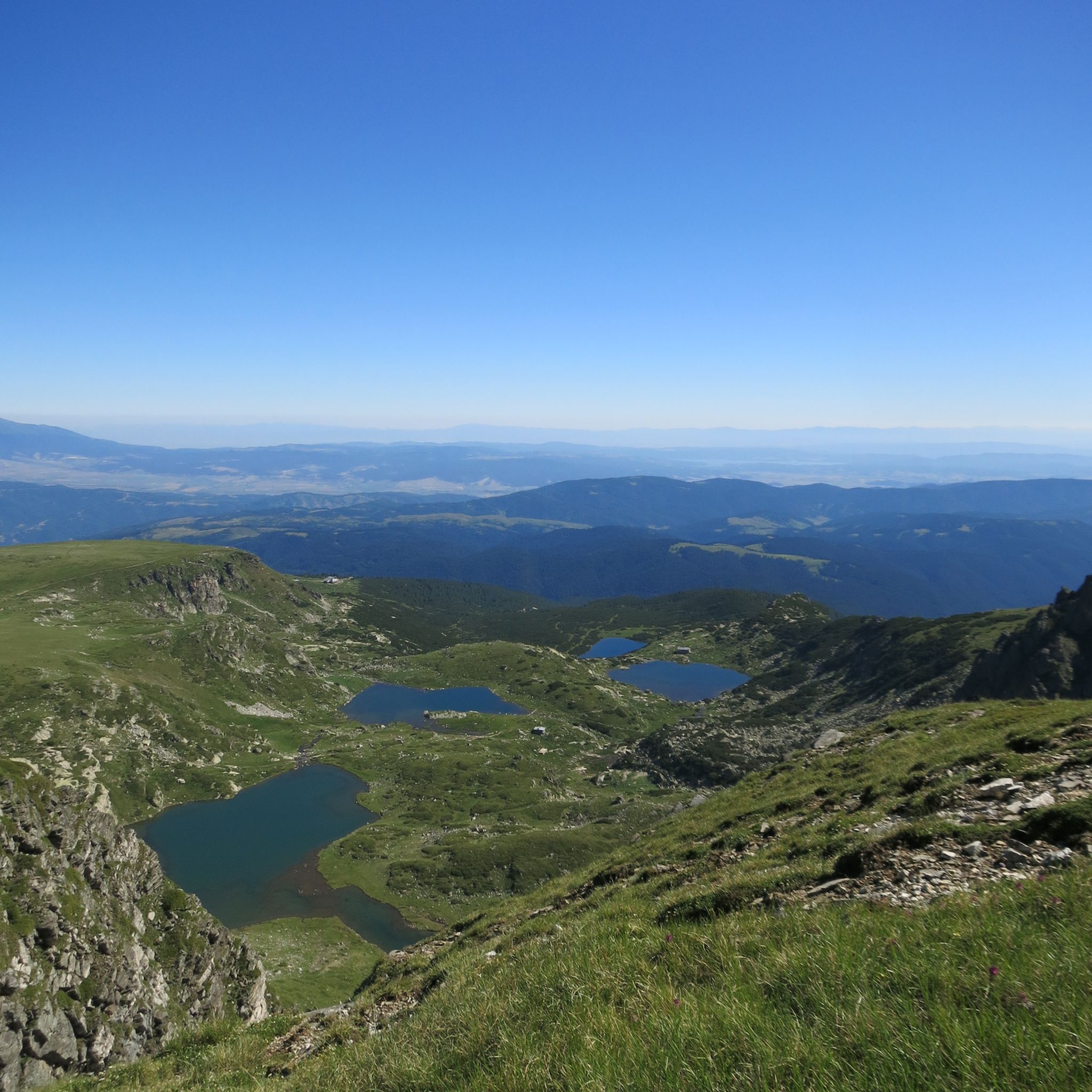
- The most popular lakes is Seven Rila Lakes, a lake system that consists of glacial lakes situated in the Rila Mountains. These lakes are interconnected by small streams and waterfalls.
- Another must-see spot is Bezbog Lake, a high mountain lake. Visitors can access it using a chairlift, and during winter, it may be frozen.
- Visitors also love Burgas Salt Pans & Mud Baths, an area featuring facilities related to a significant wetland. This location is known for its diverse birdlife.
- Bulgaria is known for glacial lakes, artificial reservoirs, and coastal lagoons. These include high-altitude mountain lakes and larger bodies of water near urban centers.
- The lakes in Bulgaria are appreciated by the komoot community, with more than 195 upvotes and 25 photos shared across various highlights.
Last updated: October 12, 2026
Babreka (The Kidney) Lake
Highlight • Lake
Translated by Google •
Tip by

Seven Rila Lakes
Highlight • Lake
The water in all lakes was pure as a drop, but now some lakes grew green :(
There are several options if you want to reach the 7 rila lakes from Pionerska hut:
1) on foot
2) by lift (usually there is 30-60 minutes delay in queue/line)
3) by offroad jeep (you should climb last 100 meters to upper lift station on foot)
Of course there are other options: from Rila monastery/Malyovitsa peak; Ivan Vazov hut; etc...
Tip by

Sign up now to discover places like this
Get recommendations on the best single tracks, peaks, & plenty of other exciting outdoor places.
Boyana Lake
Highlight • Lake
Tip by

Burgas Salt Pans & Mud Baths
Highlight • Structure
Blye is a product of salt harvesting (salt extraction) and contains only inorganic substances – sodium chloride, magnesium, potassium, sulfur, etc. It is obtained after evaporation and concentration of salts in the lake water during the salt extraction process.
Black Sea brine has proven medicinal properties – it is used in the treatment and prevention of diseases related to the musculoskeletal system, skin inflammations and wounds, varicose veins, and colds. It is recommended for osteoarthritis, arthritis, tendonitis, discopathy, joint dislocation, and sciatica. It is best not to sit in the brine for more than 20-30 minutes to avoid overloading the heart. It is not recommended for the treatment of skin diseases or for cosmetic purposes. It is contraindicated for the epidermis and subcutaneous tissue.
Therapeutic mud is a sedimentary product of the closed salt lake. It is clean and homogeneous, dark gray to black in color and has the odor of hydrogen sulfide from the numerous putrefactive microorganisms. It contains inorganic compounds such as silicates, sand, gypsum, iron and aluminum compounds, various hydroxides, and salts. This composition has been formed for thousands of years by the putrefaction of single-celled organisms, algae, fish, crabs, and mussels. One centimeter of healing mud is formed over a period of at least one year.
The essence of the healing mud treatment is a complex effect on the entire peripheral nervous system. Its thermal properties dilate blood vessels and open new capillaries. This reduces swelling and pain, heals and injures scars, and improves metabolic and regenerative processes.
In addition to healing, the mud beautifies and rejuvenates, as calcium, iodine, phosphorus, and other minerals pass through the skin. It treats almost the entire spectrum of skin diseases, arthritis, herniated discs, gynecological problems, and plexitis. It is only contraindicated in cases of tuberculosis, sexually transmitted diseases, and malignant diseases.
Apply the healing mud to all or part of the body and let it dry in the sun. Do not apply the mud to the heart area. You can apply it to the face, but it is not recommended to apply it to the entire head. Once the mud has dried on the skin, wash it off with seawater.
Translated by Google •
Tip by

Bai Slavi Hut at Bezbog Lake
Highlight • Mountain Hut
The bar was closed at the end of October 2018, but the Bezbog refuge offered basic food and lodging.
She is also represented on FB:
m.facebook.com/baislave/?locale2=de_DE
Translated by Google •
Tip by

Bezbog Lake
Highlight • Lake
Bezbog mountain lodge (reminiscent of a youth hostel) offers cheap, basic accommodation and food.
Translated by Google •
Tip by
Okoto Lake
Highlight • Lake
Translated by Google •
Tip by

Plovdiv Rowing Canal
Highlight • Structure
Tip by

Ledeno Ezero Hut
Highlight • Mountain Hut
Translated by Google •
Tip by

Popovo Lake
Highlight • Lake
Tip by
Sign up for free to discover even more lakes in Bulgaria.
Already have an account?
Start today with a free account
Your next adventure awaits.

Other adventures in Bulgaria

Tips from the Community


The water mirrors the trees. It’s not dramatic — it’s contemplative. A quiet place to sit, breathe, do nothing.
0
0
If you’re well-conditioned, consider extending your route up to Otovitsa Ridge for incredible views.
0
0

Massages are also offered on the premises near the lye pools.
0
0
BREY AND HEALING MUD Blye is a product of salt harvesting (salt extraction) and contains only inorganic substances – sodium chloride, magnesium, potassium, sulfur, etc. It is obtained after evaporation and concentration of salts in the lake water during the salt extraction process. Black Sea brine has proven medicinal properties – it is used in the treatment and prevention of diseases related to the musculoskeletal system, skin inflammations and wounds, varicose veins, and colds. It is recommended for osteoarthritis, arthritis, tendonitis, discopathy, joint dislocation, and sciatica. It is best not to sit in the brine for more than 20-30 minutes to avoid overloading the heart. It is not recommended for the treatment of skin diseases or for cosmetic purposes. It is contraindicated for the epidermis and subcutaneous tissue. Healing mud is a sedimentary product of the closed salt lake. It is clean and homogeneous, dark gray to black in color and has the odor of hydrogen sulfide from the numerous putrefactive microorganisms. It contains inorganic compounds such as silicates, sand, gypsum, iron and aluminum compounds, various hydroxides, and salts. This composition has been formed for thousands of years by the putrefaction of single-celled organisms, algae, fish, crabs, and mussels. One centimeter of healing mud is formed over a period of at least one year. The essence of the healing mud treatment is a complex effect on the entire peripheral nervous system. Its thermal properties dilate blood vessels and open new capillaries. This reduces swelling and pain, heals and injures scars, and improves metabolic and regenerative processes. In addition to healing, the mud beautifies and rejuvenates, as calcium, iodine, phosphorus, and other minerals pass through the skin. It treats almost the entire spectrum of skin diseases, arthritis, herniated discs, gynecological problems, and plexitis. It is only contraindicated in cases of tuberculosis, sexually transmitted diseases, and malignant diseases. Apply the healing mud to all or part of the body and let it dry in the sun. Do not apply the mud to the heart area. You can apply it to the face, but it is not recommended to apply it to the entire head. Once the mud has dried on the skin, wash it off with seawater.
1
0
BREY AND THERAPY MUD Blye is a product of salt harvesting (salt extraction) and contains only inorganic substances – sodium chloride, magnesium, potassium, sulfur, etc. It is obtained after evaporation and concentration of salts in the lake water during the salt extraction process. Black Sea brine has proven medicinal properties – it is used in the treatment and prevention of diseases related to the musculoskeletal system, skin inflammations and wounds, varicose veins, and colds. It is recommended for osteoarthritis, arthritis, tendonitis, discopathy, joint dislocation, and sciatica. It is best not to sit in the brine for more than 20-30 minutes to avoid overloading the heart. It is not recommended for the treatment of skin diseases or for cosmetic purposes. It is contraindicated for the epidermis and subcutaneous tissue. Therapeutic mud is a sedimentary product of the closed salt lake. It is clean and homogeneous, dark gray to black in color and has the odor of hydrogen sulfide from the numerous putrefactive microorganisms. It contains inorganic compounds such as silicates, sand, gypsum, iron and aluminum compounds, various hydroxides, and salts. This composition has been formed for thousands of years by the putrefaction of single-celled organisms, algae, fish, crabs, and mussels. One centimeter of healing mud is formed over a period of at least one year. The essence of the healing mud treatment is a complex effect on the entire peripheral nervous system. Its thermal properties dilate blood vessels and open new capillaries. This reduces swelling and pain, heals and injures scars, and improves metabolic and regenerative processes. In addition to healing, the mud beautifies and rejuvenates, as calcium, iodine, phosphorus, and other minerals pass through the skin. It treats almost the entire spectrum of skin diseases, arthritis, herniated discs, gynecological problems, and plexitis. It is only contraindicated in cases of tuberculosis, sexually transmitted diseases, and malignant diseases. Apply the healing mud to all or part of the body and let it dry in the sun. Do not apply the mud to the heart area. You can apply it to the face, but it is not recommended to apply it to the entire head. Once the mud has dried on the skin, wash it off with seawater.
1
0

Great place to refill on water and maybe get something to eat before the final push to the peak. You can also stay there overnight, but reservations are required.
0
0
Frequently Asked Questions
What are some of the most scenic lakes for hiking in Bulgaria?
Bulgaria offers numerous stunning lakes perfect for hiking. The Seven Rila Lakes are arguably the most iconic, known for their cascading landscape and panoramic views in the Rila Mountains. Other notable high-mountain lakes include Bezbog Lake, accessible by chairlift, and Babreka (The Kidney) Lake, famous for its crystal-clear water and majestic peaks. In the Pirin Mountains, Okoto Lake also offers beautiful views.
Are there any family-friendly lakes or activities around them in Bulgaria?
Yes, several lakes in Bulgaria cater to families. Boyana Lake is considered family-friendly, offering a pleasant natural setting. The Plovdiv Rowing Canal, while primarily a sports facility, is part of a larger recreation complex with parks, restaurants, and activities suitable for families. Pancharevo Lake, near Sofia, also provides eco-trails and parks.
What kind of outdoor activities can I do near Bulgaria's lakes?
Near Bulgaria's lakes, you can enjoy a variety of outdoor activities. Hiking is very popular, with routes like the 'View of Fish Lake, Rila – The Kidney Lake loop' or 'Waterfall in Rila – View of the Seven Rila Lakes loop' in the Rila Mountains. You can find more hiking options in our Hiking in Bulgaria guide. Water sports such as kayaking, jet skiing, paddleboarding, rowing, swimming, surfing, and water skiing are popular at larger reservoirs like Lake Iskar and Pancharevo Lake. The Plovdiv Rowing Canal is also excellent for jogging and cycling.
When is the best time to visit the lakes in Bulgaria?
The best time to visit Bulgaria's lakes largely depends on the type of experience you seek. For hiking in the high mountains, such as the Seven Rila Lakes, the period from May to September offers the most favorable weather conditions. During winter, some high-altitude lakes like Bezbog Lake may be frozen, allowing for unique experiences like walking on the ice. For water sports and general relaxation, the warmer months are ideal.
Can I find accommodation or amenities near the lakes?
Yes, several lakes have amenities or nearby accommodation options. For instance, the Seven Rila Lakes area has huts like Ledeno Ezero Hut. Near Bezbog Lake, you can find the Bai Slavi Hut, offering basic accommodation and food. Pancharevo Lake, close to Sofia, has restaurants and mineral springs. Lake Batak also offers a tranquil escape with opportunities for leisurely walks and picnics.
What makes the Seven Rila Lakes such a popular destination?
The Seven Rila Lakes are renowned for their breathtaking natural beauty. These glacial lakes, each with a distinctive shape and name, are interconnected by streams and waterfalls, creating a stunning cascading landscape. Visitors are drawn to the crystal-clear waters, panoramic views, and tranquil atmosphere, making it a prime location for hiking, photography, and connecting with nature. However, due to its popularity, it can get quite crowded, especially during peak season.
Where can I go birdwatching near a lake in Bulgaria?
For birdwatching enthusiasts, Burgas Salt Pans & Mud Baths (also known as Lake Burgas or Vaya Lake) is a significant wetland near the city of Burgas. It is a haven for diverse birdlife, including rare and endangered species like flamingos, herons, and the elusive Dalmatian Pelican, offering excellent opportunities for observation in their natural habitat.
Are there any lakes close to Sofia for a quick escape?
Yes, Pancharevo Lake is an excellent option for a quick escape from Sofia. Located just a few kilometers from the capital, this artificial reservoir is nestled in a picturesque gorge between the Vitosha and Lozenska mountains. It offers various activities like water sports, fishing, hiking, and balneotherapy, making it a popular retreat for nature lovers and outdoor enthusiasts.
What is the Plovdiv Rowing Canal, and what can I do there?
The Plovdiv Rowing Canal is a notable body of water in Bulgaria, primarily a sports facility and the largest of its kind in the Balkans. Beyond hosting international rowing competitions, the area is popular for jogging, cycling, and walking along its alleys. It's part of a larger recreation complex that includes restaurants, tennis courts, a swimming pool, and a rope garden attraction, making it a vibrant hub for recreation and cultural events.
What are the typical hiking difficulties around Bulgarian lakes?
Hiking difficulties around Bulgarian lakes vary significantly. Many high-mountain lakes, such as those in the Rila and Pirin ranges, feature intermediate to difficult trails. For example, routes around the Seven Rila Lakes can be challenging, with some loops rated as 'difficult'. However, there are also easier options, especially around lakes closer to urban centers or those with well-maintained paths. Our Easy hikes in Bulgaria guide can provide more accessible options.
Are there any lakes in the Rhodope Mountains?
Yes, the Rhodope Mountains are home to beautiful lakes. Lake Batak is a prominent example, offering a tranquil escape amidst dense forests and providing breathtaking views of the mountains. It's the sixth biggest reservoir in Bulgaria and is perfect for unwinding, with opportunities for leisurely walks, picnics, and fishing. The area also holds historical remnants, adding cultural interest.
Are there options for accessing high-altitude lakes without extensive hiking?
Yes, some high-altitude lakes offer easier access. For instance, Bezbog Lake can be accessed using a chairlift, significantly reducing the hiking effort required to reach this beautiful mountain lake. This makes it a great option for those who want to enjoy the high-mountain scenery without a strenuous trek.
Most popular routes in Bulgaria
Most popular attractions in Bulgaria

Get inspired with the komoot mobile app


Didn’t find what you were looking for?
Find the best lakes in Bulgaria per region:
Explore more
Still not found your perfect lake in Bulgaria? Check out the guides of these regions to see even more beautiful places.
