Top 7 Castles around Santiago Maior
Castles around Santiago Maior Portugal are found in the Alentejo region, known for its historical architecture and well-preserved medieval buildings. This area features a landscape characterized by rolling plains and ancient settlements. The region's history is marked by various occupations, including Roman, Visigothic, and Muslim influences, which shaped its fortifications. Many of these structures offer insights into Portugal's past and its strategic importance.
Best castles around Santiago Maior
- The most popular castles is Monsaraz Castle, a castle that maintains…
Last updated: July 1, 2026
Monsaraz Castle
Highlight • Castle
Tip by

Monsaraz Historic Village
Highlight • Historical Site
Tip by
Sign up now to discover places like this
Get recommendations on the best single tracks, peaks, & plenty of other exciting outdoor places.
Sign up for free
Climb up to Monsaraz Castle
Highlight (Segment) • Castle
Translated by Google •
Tip by

Redondo Castle
Highlight • Castle
Tip by
Castelo de Terena
Highlight • Castle
Translated by Google •
Tip by
Sign up for free to discover even more castles around Santiago Maior.
Sign up for free
Already have an account?
Start today with a free account
Your next adventure awaits.
Login or Signup

Tips from the Community

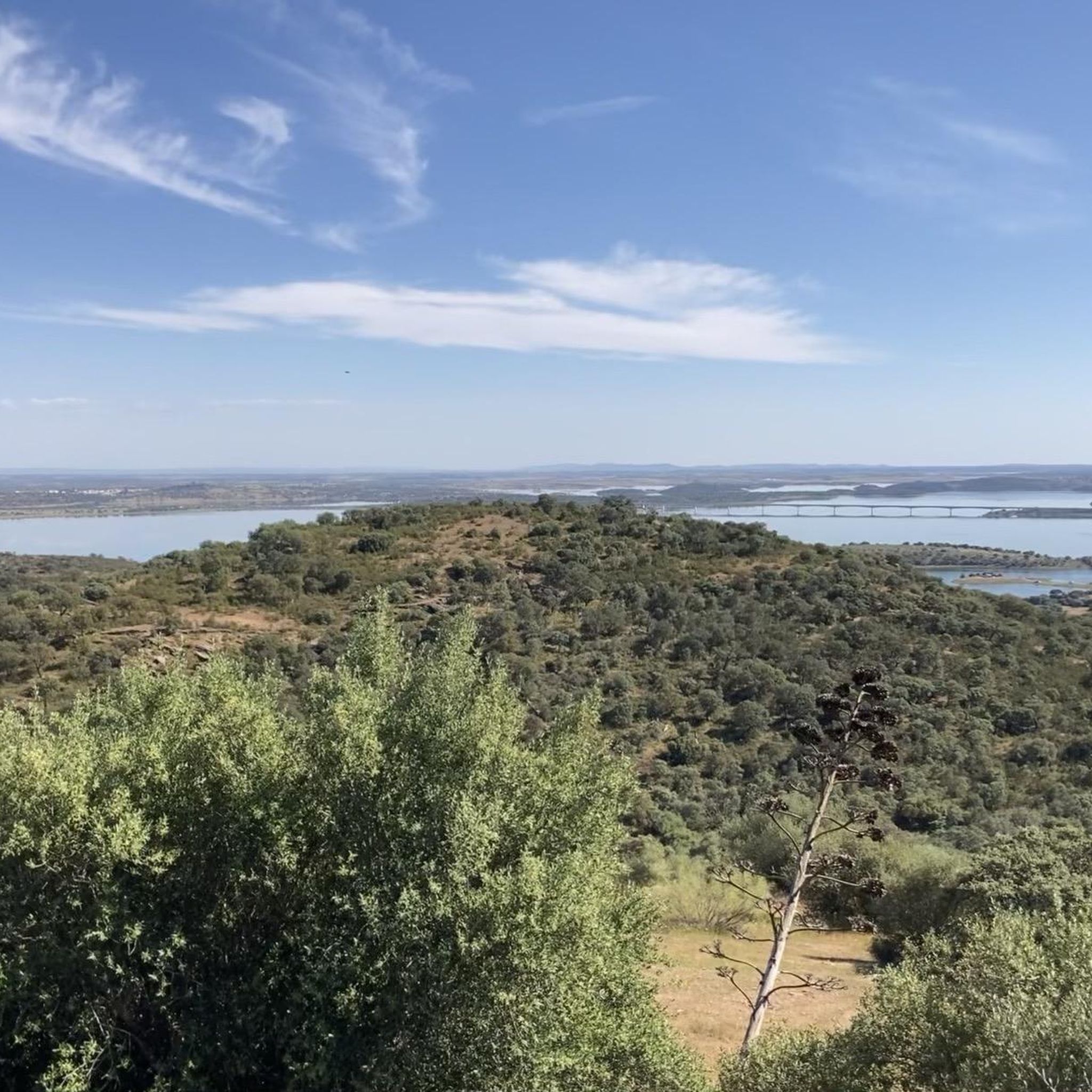
With the construction of the Alqueva Dam, and because Monsaraz is not only a monumental town, but also a high point from which to enjoy spectacular views of the waters of the great lake, the number of tourists in this area has increased exponentially in recent years.
3
0
In a region dotted with megalithic monuments, it is believed that the earliest human occupation of this site dates back to a prehistoric hillfort, successively occupied by Romans, Visigoths, and Muslims, who derived their subsistence from activities related to the agro-pastoral economy. The place name is linked to the latter domain, since, in Portuguese, the word xarez (or xerez) derives from the Arabic saris (or sharish), designating the rockrose (xaras) vegetation then abundant along the banks of the Guadiana River. The place name Monsaraz thus evolved from Monte Xarez (or Xaraz).
5
0

Castelo de Redondo is a medieval fortress built in the 13th century by order of King D. Dinis. The castle played a crucial defensive role in the region. Although today, the only things that remain are the perimeter walls, with an irregular perimeter and several quadrangular towers, and part of the old Torre de Menagem (Keep).
0
0
Castelo de Redondo is a medieval fortress built in the 13th century by order of King D. Dinis. The castle played a crucial defensive role in the region. Although today, the only things that remain are the perimeter walls, with an irregular perimeter and several quadrangular towers, and part of the old Torre de Menagem (Keep).
1
0

Today, it's a museum village perfectly geared toward tourists. It won the "Monument Villages" category in the 7 Maravilhas de Portugal competition in 2017. Anyone staying in the Alentejo should definitely plan a visit here. It's best to arrive early in the morning, as it gets crowded and noisy from 11 a.m. onwards – that's when the tourist buses arrive.
4
3
After the castle's military use, the residents of Monsaraz built their own bullring here. Bullfights still occasionally take place here.
4
0
Like most Portuguese castles, this one is free to visit. The walls are accessible, offering a great view of the town and the surrounding area. Unfortunately, we weren't able to climb the keep. The old bullring is impressive.
6
1
Frequently Asked Questions
What kind of historical significance do the castles around Santiago Maior have?
The castles in the Alentejo region, including those near Santiago Maior, reflect a rich history shaped by Roman, Visigothic, and Muslim influences. Many were built or reinforced after the Christian reconquest, serving strategic defensive roles. For example, Monsaraz Castle was constructed after the Christian reconquest, and Redondo Castle was rebuilt by King D. Dinis in the 13th century over ancient Roman fortress ruins.
Which castles offer the best panoramic views?
For breathtaking panoramic views, visit Monsaraz Castle. The climb up to the castle provides extensive vistas of the surrounding landscape, including the Alqueva reservoir. Castelo de Terena also offers great views over its picturesque town and the surrounding area from its walls.
Are there any well-preserved medieval villages associated with the castles?
Yes, the Monsaraz Historic Village is a prime example. It's a captivating hilltop medieval village entirely enclosed by fortress walls, featuring a well-preserved castle and charming white-washed houses. Exploring its narrow, shale-paved streets offers a unique glimpse into ancient times.
What outdoor activities can I do near these castles?
The area around Santiago Maior offers various outdoor activities. You can find easy hiking trails, such as the 'Monsaraz Historic Village – Cromlech of Xerez loop from Monsaraz' (4.5 km) or the 'Monsaraz Castle – Monsaraz Historic Village loop from Monsaraz' (1.8 km). For more options, explore the Easy hikes around Santiago Maior guide. There are also road cycling routes and running trails available in the region.
Are there easy walking trails around the castles?
Yes, particularly around Monsaraz. You can enjoy easy walks like the 'Monsaraz Castle – Historic Streets of Monsaraz loop from Monsaraz' (1.3 km) or the 'Albufeira aguavelva – Monsaraz Castle loop from Monsaraz' (5.4 km). These trails allow you to explore the historic village and its surroundings at a leisurely pace. More easy hiking options can be found in the Easy hikes around Santiago Maior guide.
What do visitors enjoy most about the castles and villages in this region?
Visitors frequently praise the ancient charm and well-preserved nature of places like Monsaraz. They enjoy wandering through the narrow, historic streets, discovering quaint houses, and experiencing the sense of history. The panoramic views, especially from Monsaraz Castle, are also a major highlight, offering fantastic photo opportunities.
Are the castles around Santiago Maior family-friendly?
Many of the castles and historic villages, such as Monsaraz Historic Village, are suitable for families. Exploring the walled villages and castle grounds offers an engaging historical experience for all ages. The easy walking trails mentioned previously are also great for families.
What is the best time to visit the castles and go hiking in the Santiago Maior region?
The Alentejo region, where Santiago Maior is located, experiences hot, dry summers. Spring (April-May) and autumn (September-October) generally offer more pleasant temperatures for exploring castles and engaging in outdoor activities like hiking, with milder weather and beautiful landscapes.
Are there cafes or places to eat near the castles?
Yes, especially in the historic villages. For instance, in Monsaraz, you can find places like O Gaspacho for a snack or meal after exploring the castle and village. These villages often have local establishments offering traditional Alentejo cuisine.
Can I find viewpoints overlooking the castles?
The castles themselves often serve as excellent viewpoints. From the top of Monsaraz Castle, you get extensive views of the surrounding plains and the Alqueva reservoir. Similarly, the walls of Castelo de Terena provide great vantage points over the town and landscape.
Are there any hidden gem castles worth visiting near Santiago Maior?
While not a hidden gem in the sense of being unknown, Castelo de Terena offers a less crowded experience compared to Monsaraz. Its old village part, nestled between the castle and the church, is exceptionally pretty and worth the steep climb, providing a charming, authentic atmosphere.
What are the options for road cycling near the castles?
The region offers several road cycling routes. You can find routes like the 'Serra d'Ossa Cycling Loop' (80 km, moderate difficulty) or the 'Redondo and Castelo de Valongo Loop' (60 km, moderate difficulty). For more details and routes, refer to the Road Cycling Routes around Santiago Maior guide.
Most popular attractions around Santiago Maior

Get inspired with the komoot mobile app


Explore more
Looking for the best castles somewhere else? Discover other guides around Santiago Maior:
