Top 6 Castles around Saint-Romain-De-Jalionas
Castles around Saint-Romain-De-Jalionas offer insights into the region's historical past, despite no standing castles within the commune itself. The area is characterized by its rich archaeological heritage, notably the extensive site of Vernai, which spans from the Neolithic period to the Middle Ages. This site reveals the remains of a large Gallo-Roman villa, providing a comprehensive look at historical evolution and ancient engineering. The surrounding landscape of Saint-Romain-De-Jalionas features a mix of historical sites and natural settings, making it suitable…
Last updated: October 12, 2026
Château de Bienassis
Highlight • Castle
Translated by Google •
Tip by

Cingle Castle
Highlight • Castle
Translated by Google •
Tip by

Sign up now to discover places like this
Get recommendations on the best single tracks, peaks, & plenty of other exciting outdoor places.
Crémieu, medieval town
Highlight • Historical Site
Translated by Google •
Tip by

Château Delphinal of Crémieu
Highlight • Castle
Translated by Google •
Tip by

Château de Brotel
Highlight • Castle
Translated by Google •
Tip by
Start today with a free account
Your next adventure awaits.
Popular around Saint-Romain-De-Jalionas

Tips from the Community

Beautiful little town, quite touristy, but worth the detour
0
0

Although first mentioned in 1540, the Cingle fortified house was undoubtedly built in the second half of the 14th century by the Pèlerin family. Originally composed of a main tower and a wing back to the west, it perhaps originally included a curtain wall. During the 15th century, the south wing was extended towards the west, a main building comprising a lower room and an upper room was attached to the north of the main tower, while a turret occupied on the first floor by an oratory and on the second by a dovecote is built to the east, projecting. A wing including the kitchen on the ground floor is also built at right angles to the north of the courtyard. The farm itself retains some architectural elements dating from the 16th century. Source: Ministry of Culture
1
0
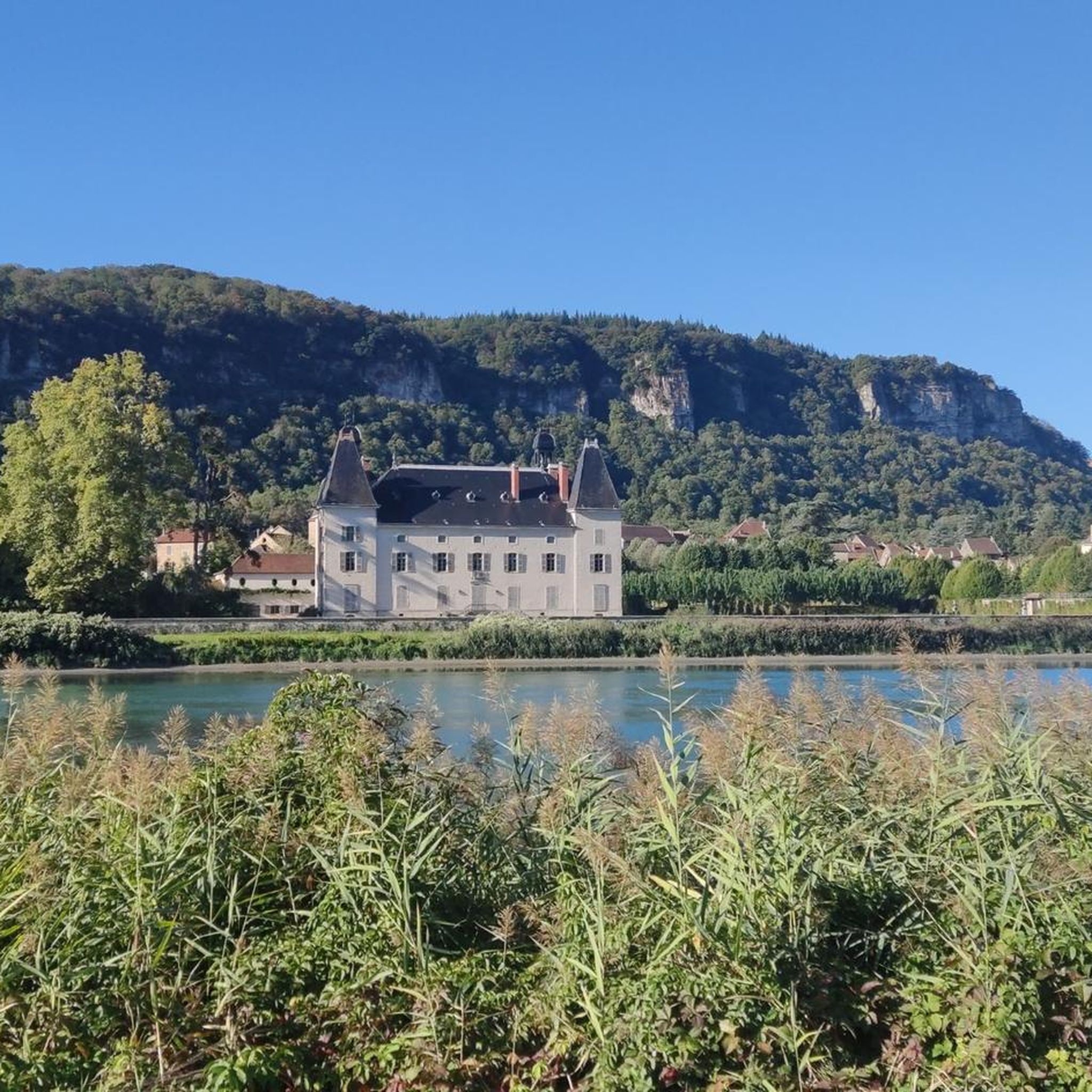
The Bienassis fortified house, built by the Vallin family at the end of the 14th century, was organized around an enclosed courtyard and included a pavilion surrounded by watchtower turrets. The current building was completed in 1897 for Casimir Gournet, who wanted to give the old feudal residence the appearance of a medieval castle. Alphonse de Lamartine made several stays in Bienassis with his friend Nicolas Prosper Guichard, between 1804 and 1808. The castle, built of limestone rubble, consists of an L-shaped building covered with a long-pitched roof covered with mechanical tiles extended to the south by a high quadrangular tower with a porch in the work. The north wing has four levels of elevation: three cellars on the basement floor, a square floor and an attic floor. The tower rises on three levels: a ground floor with ribbed vaults and two square floors, the buildings are crowned with false machicolation. The corner turrets are covered with conical slate roofs. The stained glass windows of the ground floor living room are decorated with two bust-length women and two bust-length men in rondels. The coat of arms of the Joubert de Montlevon family can be found on one of the windows of the first living room on the ground floor. In the library, two shields with scrolling scroll motifs, a shield decorated with three female heads, a shield decorated with a passing griffin, and a shield decorated with two hammers with the initials C G for Casimir Gournet adorn the windows. Source: Châteaux de France
0
0
The Delphinal Castle (12th century), from the top of its strategic promontory, bears witness to the development of the city: construction of imposing fortified gates (14th century), a majestic market hall (15th century), a convent of Augustins leaning against the ramparts (14th-19th century) then its cloister (16th century)... So many vestiges which are the visible traces of a past where Crémieu had military, economic and religious importance. The medieval city of Crémieu is classified as a ZPPAUP (Urban and Landscape Architectural Heritage Protection Zone). Source: Isère Tourism
1
0

This small city of character, located 40 kilometers from Lyon has a sumptuous architectural heritage. Walking through its narrow streets, you will discover the Delphinal castle, its majestic 16th century hall, its cloister or its Augustinian convent. The medieval town of Crémieu is classified as a Protected Area for Urban and Landscape Architectural Heritage (ZPPAUP).
0
0

A very beautiful town! There is a good restaurant in the center right next to the village.
0
0

The Château de Bienassis in Villemoirieu, near Crémieu, was frequented by Alphonse de Lamartine.
1
0

Crémieu, or a pretty little town whose historic center is worth a detour! The old houses, the halls, the cloister, etc. create a very pleasant atmosphere.
0
0
Frequently Asked Questions
What kind of historical sites can I expect to find around Saint-Romain-de-Jalionas?
While there are no standing castles directly within Saint-Romain-de-Jalionas, the region offers a rich historical experience. You can explore the extensive archaeological site of Vernai, which spans from the Neolithic period to the Middle Ages, featuring remains of a large Gallo-Roman villa. Nearby, you'll find medieval towns and fortified houses like Crémieu, medieval town, and the 14th-century Cingle Castle.
Are there any standing castles directly within Saint-Romain-de-Jalionas?
No, there are no standing castles directly within Saint-Romain-de-Jalionas today. Historical records indicate a 'Delphine castle' once stood here, attached to the Saint-Romain church, but it was destroyed during conflicts and never rebuilt. The site is now part of the archaeological site of Vernai.
What is the significance of the archaeological site of Vernai?
The archaeological site of Vernai is highly significant for its historical continuity, showcasing human activity from the Neolithic period through the Gallo-Roman era and into the Middle Ages. It features the remains of a large Gallo-Roman villa with thermal baths, a hydraulic mill, and a swimming pool, demonstrating advanced Roman engineering. An experimental Gallo-Roman garden also explores ancient agricultural practices.
Which castles around Saint-Romain-de-Jalionas are particularly notable for their history?
Several sites stand out for their historical importance. The Crémieu, medieval town, boasts a significant architectural heritage including the Delphinal castle and a 16th-century hall. The Château Delphinal of Crémieu, dating from the 12th century, is notable for its strategic promontory and role in the city's development. Additionally, Cingle Castle, a fortified house from the 14th century, is listed as a historical monument.
Are there family-friendly castles or historical sites to visit?
Yes, the Crémieu, medieval town, is considered family-friendly. Its charming narrow streets, historical buildings, and the general atmosphere make it an enjoyable visit for all ages. The archaeological site of Vernai also offers an educational experience for families interested in ancient history.
Can I combine a castle visit with outdoor activities like hiking or cycling?
Absolutely. The region around Saint-Romain-de-Jalionas offers various outdoor activities that can be combined with historical site visits. You can find numerous running, road cycling, and gravel biking routes. For example, there are road cycling routes that pass by Crémieu, medieval town and Cingle Castle. Explore available routes in the running, road cycling, and gravel biking guides.
Are there walking routes that include castles or historical sites?
Yes, you can find walking and running routes that incorporate visits to historical sites. For instance, there are running loops from Crémieu that can take you past the Château de Bienassis. Check the running trails guide for options.
What do visitors enjoy most about the castles and historical sites in this region?
Visitors particularly appreciate the rich architectural heritage and the comprehensive historical journey offered by the region. The medieval town of Crémieu is often praised for its charming atmosphere, old houses, and significant landmarks like its halls and cloister. The archaeological site of Vernai is valued for its unique glimpse into continuous human history from ancient times to the Middle Ages.
What is the best time to visit the castles and historical sites around Saint-Romain-de-Jalionas?
The best time to visit is generally during the spring (April-June) and autumn (September-October) when the weather is mild and pleasant for exploring both outdoor archaeological sites and medieval towns. Summer can also be enjoyable, though it can be warmer, while winter offers a quieter experience, but some outdoor areas might be less comfortable.
Are there any castles that are private or not open to the public?
Yes, the Château de Brotel is a private property and cannot be visited. It is visible from the Val d'Amby and can be approached by climbing to Saint-Baudille-de-la-Tour, but access to the grounds is restricted.
How long should I plan for a visit to the historical sites around Saint-Romain-de-Jalionas?
To fully appreciate the archaeological site of Vernai and explore the medieval town of Crémieu, including its castle remains and historical buildings, you should plan at least a full day. If you wish to visit multiple sites or combine your trip with outdoor activities, consider dedicating two days to the region.
Where can I find more information about the historical sites in Saint-Romain-de-Jalionas?
For more detailed information about the cultural and historical sites, particularly the archaeological site of Vernai, you can visit the local tourism website: balconsdudauphine-tourisme.com.
Most popular routes around Saint-Romain-De-Jalionas
Most popular attractions around Saint-Romain-De-Jalionas

Get inspired with the komoot mobile app


Explore more
Looking for the best castles somewhere else? Discover other guides around Saint-Romain-De-Jalionas:
