The best walks and hikes in Quogue Wildlife Refuge
3.0
(1)
21
hikers
12
hikes
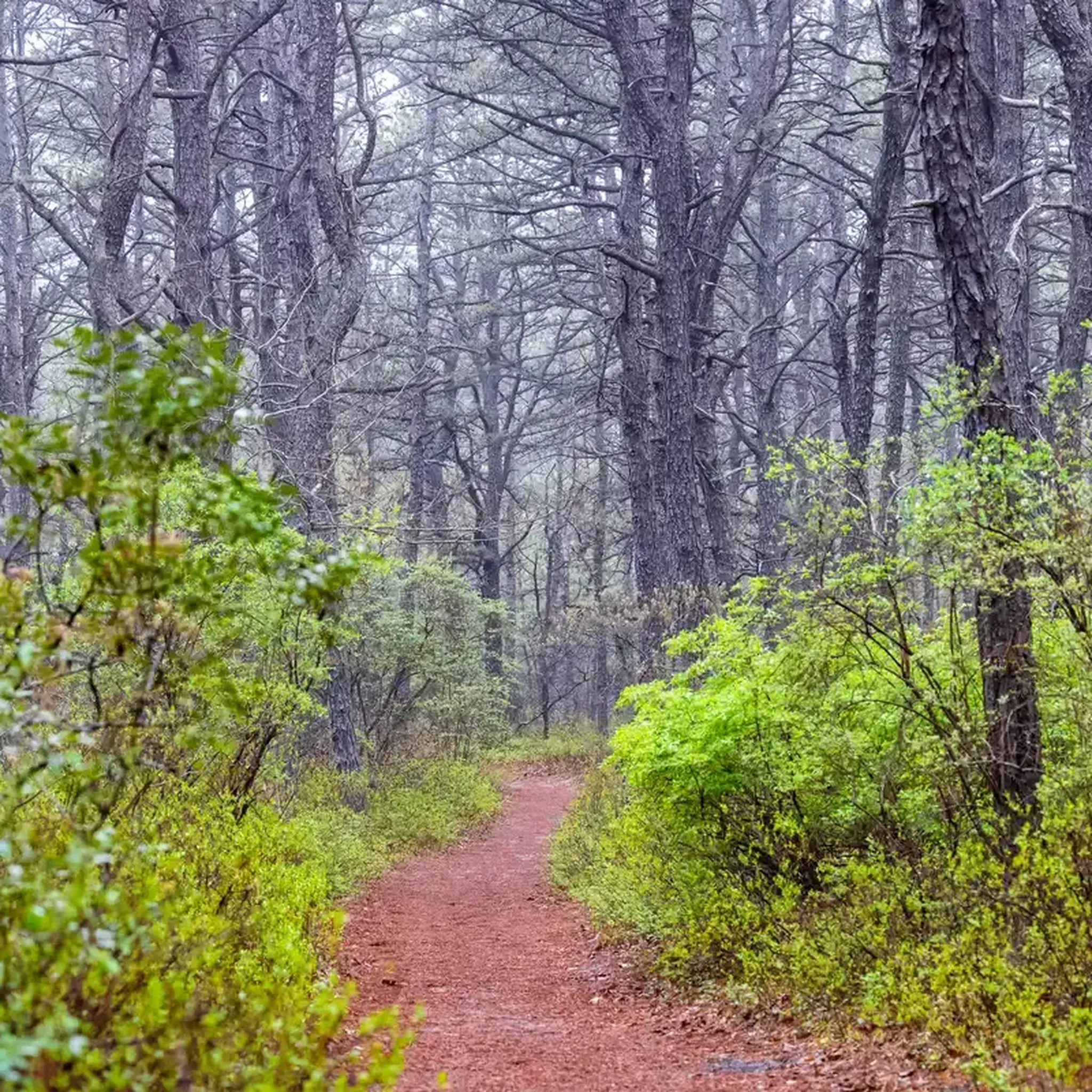
Hiking in Quogue Wildlife Refuge offers 305 acres of diverse natural features. The refuge is characterized by its Pine Barrens, including areas with ecologically rare Dwarf Pines, and various forests. It encompasses several ponds, such as Old Ice Pond and Deer Pond, and is shaped by the freshwater Quantuck Creek. Trails are generally flat, providing easy hiking suitable for various abilities.
Best hiking trails in Quogue Wildlife Refuge
- The most popular hiking route is Red Trail, an easy 3.1…
Last updated: July 8, 2026
2
hikers
1.55km
00:24
0m
10m
The Green Trail offers an easy hike through varied natural scenery, providing a peaceful escape into woodlands and forests. This route is a gentle 1.0 miles (1.5 km) long, with…
8
hikers
4.95km
01:15
10m
10m
Hike the easy 3.1-mile Red Trail through the peaceful forest of Quogue Wildlife Refuge, gaining 38 feet in about 1 hour and 15 minutes.

Sign up for free
3
hikers
2.27km
00:35
10m
10m
Easy hike. Great for any fitness level. Easily-accessible paths. Suitable for all skill levels.
235km
61:10
1,510m
1,500m
Embark on the Paumanok Path, a challenging 146.2-mile (235.3 km) hiking route that traverses Long Island's diverse landscapes. You will experience rolling hills, unique Pine Barrens ecosystems, and enchanting forests…
5.64km
01:26
10m
20m
Explore the distinctive Long Island Pine Barrens ecosystem on an easy 3.5-mile (5.6 km) hike through the David A. Sarnoff Pine Barrens Preserve. You'll spend around 1 hour and 26…
Get access to more routes and recommendations from other explorers.
Sign up for free
Already have an account?
Our route recommendations are based on thousands of hikes, rides, and runs completed by other people on komoot.
Start today with a free account
Your next adventure awaits.
Login or Signup
Popular around Quogue Wildlife Refuge


Tips from the Community

Just across the street, less than half a mile off of Paumanok Path, is Stony Brook's Southampton Campus. It has a little windmill on its 84-acre campus and might be worth a detour!
0
0

The Paumanok Path meets the Penny Pond loop trail at this junction. Both are well-marked. The trail around Penny Pond takes you to an observation blind right on the water, where you can picnic and watch for wildlife.
0
0
The Paumanok Path traverses a lovely series of rolling hills and ponds here. The path is well-marked and, for the most part, rests on a bed of soft pine needles. Be weary of chiggers in the warmer months.
0
0
Canoe Place is a luxury resort town on the Shinnecock Canal with upscale hotels, restaurants, and water access. The Paumanok Path passes through the center of town, and on some maps detours down Gate Street to the canal, where there is often a porta potty, and where you can get excellent views of the canal bridge.
0
0

Long Island is known, among other things, for its deer, which can be seen in many places.
0
0
Just across the street, a short detour, less than half a mile, off of Paumanok Path to the south, is Stony Brook Southampton Campus. This campus has a little windmill on its 84-acre campus and might be worth a detour for windmill enthusiasts.
0
0

The Shinnecock Canal was the first saltwater canal in New York State, built between 1884 and 1892. Once a site used by Native Americans to carry canoes over land, the Canal today connects two of the most stunning bays on Long Island's eastern side, Shinnecock Bay and Great Peconic Bay, which had become landlocked over time. Though the Hamptons officially begin 10 miles (16.09 km) west of the Canal, it is known as the starting point of this exclusive summer resort, as every modern bridge leading to the Hamptons crosses the Canal.
0
0
Manorville Hills County Park is not as busy as other nearby parks. This area has a vast network of trails and is somewhat hilly. Seasonal blooms of mountain laurels can be enjoyed, but watch out for ticks in the summer.
0
0
Frequently Asked Questions
What kind of terrain can I expect on the hiking trails in Quogue Wildlife Refuge?
The trails in Quogue Wildlife Refuge are generally easy to hike, featuring flat paths and clear markings. You'll explore diverse habitats including Pine Barrens with ecologically rare Dwarf Pines, various forests, and tranquil ponds like Old Ice Pond and Deer Pond. The freshwater Quantuck Creek also shapes the refuge's boundaries.
How many hiking trails are available in Quogue Wildlife Refuge?
There are 5 hiking routes detailed in this guide, ranging from easy to moderate difficulty. The refuge itself offers seven different hiking trails, totaling up to seven miles, catering to various preferences and abilities.
Are there any circular hiking routes in Quogue Wildlife Refuge?
Yes, many of the trails are circular. For example, the Quogue Wildlife Refuge loop is an easy 3.1-mile trail that offers a comprehensive exploration of the refuge's habitats. Another option is the Deer Pond loop from Quogue, a 2.7-mile trail leading through forests and past Deer Pond.
What are the main attractions or points of interest within the refuge?
Beyond the trails, you can visit the Outdoor Wildlife Complex, which houses permanently injured native New York animals like owls, falcons, and opossums. The Charles Banks Belt Nature Center offers impressive views of Old Ice Pond, wildlife exhibits, and a nature library. There's also a tranquil Butterfly Garden to explore.
Is Quogue Wildlife Refuge suitable for families with children?
Absolutely. The trails are generally easy to hike with flat paths and clear markings, making them suitable for families and hikers of all ages. The Outdoor Wildlife Complex and Nature Center also provide educational and engaging experiences for children.
Are dogs allowed on the trails in Quogue Wildlife Refuge?
No, dogs are not permitted on the refuge grounds. This policy is in place to protect the wildlife and natural environment within the refuge.
What kind of wildlife might I see while hiking?
The refuge is home to diverse wildlife. While hiking, you might spot various animals adapted to the Pine Barrens ecosystem. The Outdoor Wildlife Complex also provides an opportunity to observe permanently injured native New York wildlife up close, including owls, falcons, hawks, and opossums.
What is the best time of year to visit Quogue Wildlife Refuge for hiking?
The trails are open daily from sunrise to sunset, free of charge, allowing for year-round enjoyment. However, periodic trail closures may occur due to issues like the Southern Pine Beetle infestation, so it's always advisable to stay on open trails. Each season offers a unique experience of the refuge's diverse habitats.
How long do hikes typically take in Quogue Wildlife Refuge?
Hike durations vary depending on the trail. For instance, the Quogue Wildlife Refuge loop, an easy 3.1-mile trail, typically takes about 1 hour 15 minutes. A longer, moderate option like the Sears Pond loop from Flanders, at 6.8 miles, could take around 2 hours 50 minutes.
Is there parking available at Quogue Wildlife Refuge?
Yes, parking is available at the refuge. The trails are open daily from sunrise to sunset, and access is free of charge.
What do other hikers enjoy most about Quogue Wildlife Refuge?
The area is highly rated by the komoot community, with an average score of 3.0 stars. Reviewers often praise the peaceful and quiet environment, the well-maintained and clearly marked trails, and the opportunity to explore diverse habitats like the Pine Barrens and tranquil ponds.
Are there any longer, more challenging hikes in the area?
While most trails within the refuge are easy, there is a moderate option available. The Sears Pond loop from Flanders is a 6.8-mile path featuring a longer distance and some gentle ascents, leading through varied landscapes around Sears Pond.

Get inspired with the komoot mobile app


Explore more
Browse the best Hikes in other regions.
