Attractions and Places To See around Lidzbark - Top 20
Best attractions and places to see around Lidzbark include a rich array of historical sites, cultural landmarks, and natural features. This historic town in northern Poland was once the capital of Warmia, serving as a significant religious and cultural center. Situated at the confluence of the Łyna and Symsarna rivers, the area offers both man-made monuments and natural landscapes. Visitors can explore a region known for its historical depth and scenic surroundings.
Best attractions and places to see around Lidzbark
…Last updated: October 18, 2026
Basilica of Our Lady of Peace, Stoczek Klasztorny
Highlight • Religious Site
Translated by Google •
Tip by

High Gate (Wysoka Brama) in Lidzbark Warmiński
Highlight • Historical Site
Translated by Google •
Tip by

Sign up now to discover places like this
Get recommendations on the best single tracks, peaks, & plenty of other exciting outdoor places.
Stoczek Monastery
Highlight • Religious Site
Translated by Google •
Tip by

Collegiate Church of Saints Peter and Paul in Lidzbark Warmiński
Highlight • Religious Site
Translated by Google •
Tip by
Sanctuary of the Holy Trinity in Krosno
Highlight • Religious Site
Translated by Google •
Tip by

Lidzbark Warmiński Castle
Highlight (Segment) • Castle
Some objects from the history of the castle are on display in the museum and paintings by Polish artists, some of them modern, are on the upper floors.
Translated by Google •
Tip by

Church of Saints Peter and Paul
Highlight • Religious Site
Built in 1818–1823 as an Evangelical church.
The construction was financed by the Prussian King …
Translated by Google •
Tip by
Bishops' Castle in Lidzbark Warmiński
Highlight • Castle
Translated by Google •
Tip by
Lidzbark Warmiński–Orneta Railway Bike Trail
Highlight (Segment) • Cycleway
The former railway line was in …
Translated by Google •
Tip by

Palace of the Prince-Bishops
Highlight • Castle
Translated by Google •
Tip by
Sign up for free to discover even more attractions around Lidzbark.
Already have an account?
Start today with a free account
Your next adventure awaits.



Tips from the Community

The Bernardine Monastery (a branch of the Franciscans) in Stoczek Klasztorny is one of the most important places related to the history of the Church in Poland. In the years 1953–1954, it was the place of internment for Primate Stefan Wyszyński, the head of the Catholic Church in Poland in the mid-20th century, by the communist authorities. Currently, the monastery houses a museum dedicated to his stay and the preserved internment cell. The physical conditions that Wyszyński had in this prison were significantly better than those of other opposition activists. I don't understand why this insignificant 2-year period of imprisonment is the object of such veneration. A place worth visiting. Especially since the sanctuary and monastery are currently under the care of the Marian Fathers (Congregation of Marian Fathers of the Immaculate Conception of the Blessed Virgin Mary), who have served there since 1959.
0
0

This is false information. The name of the sanctuary is SANCTUARY OF THE VISITATION OF THE BLESSED VIRGIN MARY AND ST. JOSEPH IN KROSNO, although by some strange curial decree, the parish must have a shorter name and have one patron saint (as if two would interfere with anything), and the parish is called the Roman Catholic Parish of the Visitation of the Blessed Virgin Mary. This is for the sake of correct and factual naming. It's a beautiful and spiritual place. And it's not true that it's declining. Quite the contrary. A renovated main altar has been installed for several years. The cloisters and roof are being renovated. The convent school has a rectory. I recommend visiting this beautiful place. There's a nice bike trail, and a bike path along the old Orneta - Lidzbark Warm trail starts nearby. And if we advertise well and do our part, this place will surely become even more beautiful. I recommend it and encourage you to visit. We often cycle there.
1
0

The High Gate in Lidzbark Warmiński is a Gothic defensive structure built in the second half of the 15th century (ca. 1466–1478) as part of the medieval city walls and was one of three gates leading into the city. Only this gate, now also known as the Foregate, remains today. It is a four-story brick structure with two semicircular towers and a pointed archway, constituting one of the most valuable Gothic monuments in Warmia and Mazury. In the 17th–19th centuries, the structure was adapted for artillery fire, and after being rebuilt in the mid-19th century, it served, among other purposes, as a courthouse. The gate walls still contain remnants of the 1520 bombardment, in the form of embedded cannonballs. Today, the High Gate is an important symbol of the city and a tourist attraction.
2
0
The Collegiate Church of Saints Peter and Paul in Lidzbark Warmiński was built in the 14th century as a Gothic three-nave church. The church tower reaches approximately 66 meters and dominates the city skyline. The church was rebuilt several times – after the fire in 1698 and in the 18th and 19th centuries, combining the Gothic structure with Baroque and neo-Gothic elements. Currently, the collegiate church serves as the chapter's seat and boasts valuable historic furnishings, including Gothic vaults and works of sacred art.
2
0
The Castle of the Warmia Bishops in Lidzbark Warmiński is a Gothic residence built in the 14th and 15th centuries as the seat of spiritual and secular authority for the Warmia bishops. For over four centuries, it was the most important political and cultural center of Warmia. Among those associated with the castle were Nicolaus Copernicus and Ignacy Krasicki. The brick structure was built on a quadrangular plan with a courtyard and two-story cloisters. After the First Partition of Poland, it lost its residential function and was restored after World War II. It now houses a museum and is one of the most valuable Gothic monuments in Poland.
2
0
The Castle of the Warmia Bishops in Lidzbark Warmiński is a Gothic residence built in the 14th and 15th centuries as the seat of spiritual and secular authority for the Warmia bishops. For over four centuries, it was the most important political and cultural center of Warmia. Among those associated with the castle were Nicolaus Copernicus and Ignacy Krasicki. The brick structure was built on a quadrangular plan with a courtyard and two-story cloisters. After the First Partition of Poland, it lost its residential function and was restored after World War II. It now houses a museum and is one of the most valuable Gothic monuments in Poland.
1
0

one of the few undamaged monuments in Poland where you can see original polychromes from the 12th century on the walls.
0
0

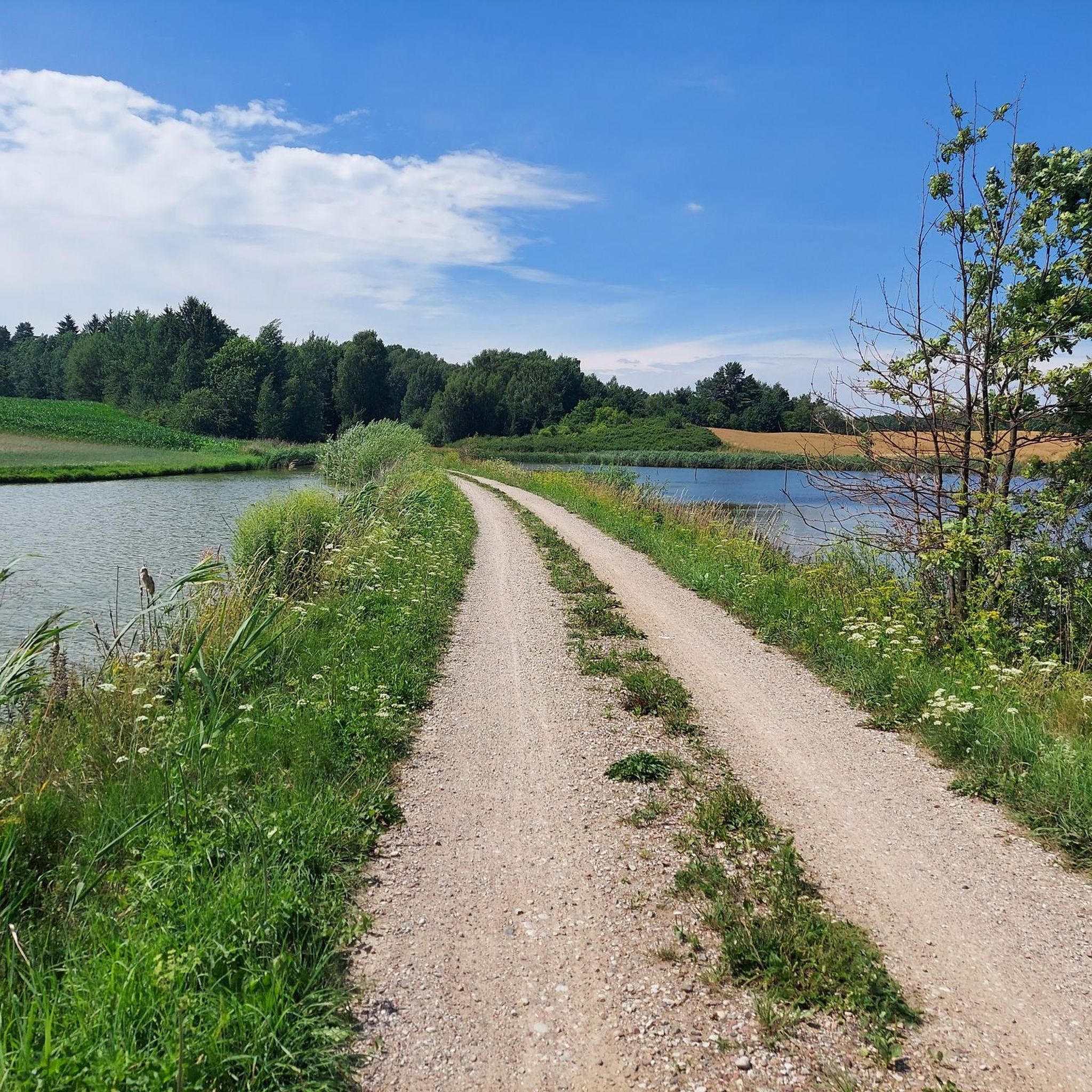
Easy, pleasant and well-marked bicycle trail.
2
0
Frequently Asked Questions
What historical landmarks can I explore in Lidzbark Warmiński?
Lidzbark Warmiński is rich in history. You can explore the impressive Bishops' Castle, a 14th-century Gothic monument that once housed Warmian bishops and now hosts the Warmian Museum. Don't miss the High Gate (Wysoka Brama), the sole remaining gate of the town's medieval defenses, and the historic Collegiate Church of Saints Peter and Paul, dating back to 1315.
Are there any significant religious sites to visit near Lidzbark?
Yes, the region features several notable religious sites. The Basilica of Our Lady of Peace, Stoczek Klasztorny, is an impressive 17th-century baroque sanctuary awarded the title of minor basilica by Pope John Paul II. You can also visit the Sanctuary of the Holy Trinity in Krosno, known for its spiritual atmosphere and beautiful architecture.
What natural attractions can I find around Lidzbark Warmiński?
Lidzbark Warmiński is nestled at the confluence of the Łyna and Symsarna rivers, offering scenic views. You can also visit the nearby Jezioro Wielochowskie (Wielochowskie Lake) for a tranquil experience. For relaxation, the Warmia Hot Springs (Termy Warmińskie) provide modern recreational facilities utilizing thermal waters.
What outdoor activities are popular in the Lidzbark area?
The area is great for outdoor enthusiasts. Kayaking on the Łyna and Symsarna rivers is popular in summer. Cycling is also a highlight, especially on the Lidzbark Warmiński–Orneta Railway Bike Trail, a well-signposted path on a former railway line. You can find more cycling routes in the MTB Trails around Lidzbark guide.
Are there family-friendly attractions in Lidzbark Warmiński?
Many attractions in Lidzbark are suitable for families. Historical sites like the High Gate and the Bishops' Castle offer educational experiences. The Lidzbark Warmiński–Orneta Railway Bike Trail is an easy and pleasant cycling option for all ages. The Warmia Hot Springs also provide water attractions for family fun.
What kind of hiking trails are available near Lidzbark?
You'll find a variety of hiking trails around Lidzbark, ranging from easy strolls to more challenging routes. For example, the 'Wall of Murals – Hotel Krasicki loop' is an easy 5.7 km hike. For more options, explore the Hiking around Lidzbark guide, which includes routes like the 'Wayside Cross loop' for those seeking a more difficult challenge.
What is the 'Shining Bicycle Path' in Lidzbark Warmiński?
The 'Shining Bicycle Path' (Świecąca ścieżka rowerowa) is a unique illuminated cycling route in Lidzbark Warmiński. It offers a distinct experience, especially after dusk, making it a popular choice for an evening ride or run. You can find running routes that incorporate this path in the Running Trails around Lidzbark guide.
What do visitors particularly enjoy about the attractions in Lidzbark?
Visitors frequently praise the historical depth and well-preserved architecture, especially the Gothic style of the High Gate and the Collegiate Church. The Lidzbark Warmiński–Orneta Railway Bike Trail is appreciated for being easy, pleasant, and well-marked, offering a comfortable ride on solid gravel.
Are there any unique cultural sites beyond the main castle?
Beyond the main castle, you can discover the elegant Krasicki's Orangery (Oranżeria Krasickiego), an early 18th-century baroque-classicist garden pavilion that now serves as a cultural center. The Feast of the Cross Church, built in the early 18th century as a votive offering, also offers a glimpse into the town's cultural and religious history.
What is the best time of year to visit Lidzbark Warmiński for outdoor activities?
The summer months are ideal for outdoor activities in Lidzbark Warmiński, particularly for kayaking on the Łyna and Symsarna rivers. The pleasant weather also makes it perfect for cycling on routes like the Lidzbark Warmiński–Orneta Railway Bike Trail and exploring the town's historical sites on foot.
Can I find places for relaxation and green spaces in Lidzbark?
Yes, Lidzbark offers several spots for relaxation. Park Nad Symsarna, located by the Symsarna River, provides a green space perfect for unwinding. The town's setting at the confluence of the Łyna and Symsarna rivers naturally creates a serene environment for leisurely walks.
Most popular routes around Lidzbark

Get inspired with the komoot mobile app


Didn’t find what you were looking for?
Are you keen on exploring more awesome places nearby? Browse our guides:
Explore more
Still not found the Highlight you’re looking for? See guides of the top attractions in other regions:
