Attractions and Places To See around gmina Jasieniec - Top 20
Best attractions and places to see around gmina Jasieniec, located in Poland's Masovian Voivodeship, offer a mix of historical landmarks, cultural sites, and natural features. This region is known for its extensive orchards, particularly vibrant during spring bloom. The landscape is shaped by fruit farming traditions dating back to the 16th century. Visitors can explore historical manors, churches, and nature reserves.
Best attractions and places to see around gmina Jasieniec
- The most popular attractions is Wooden boardwalks over the Pilica…
Last updated: July 1, 2026
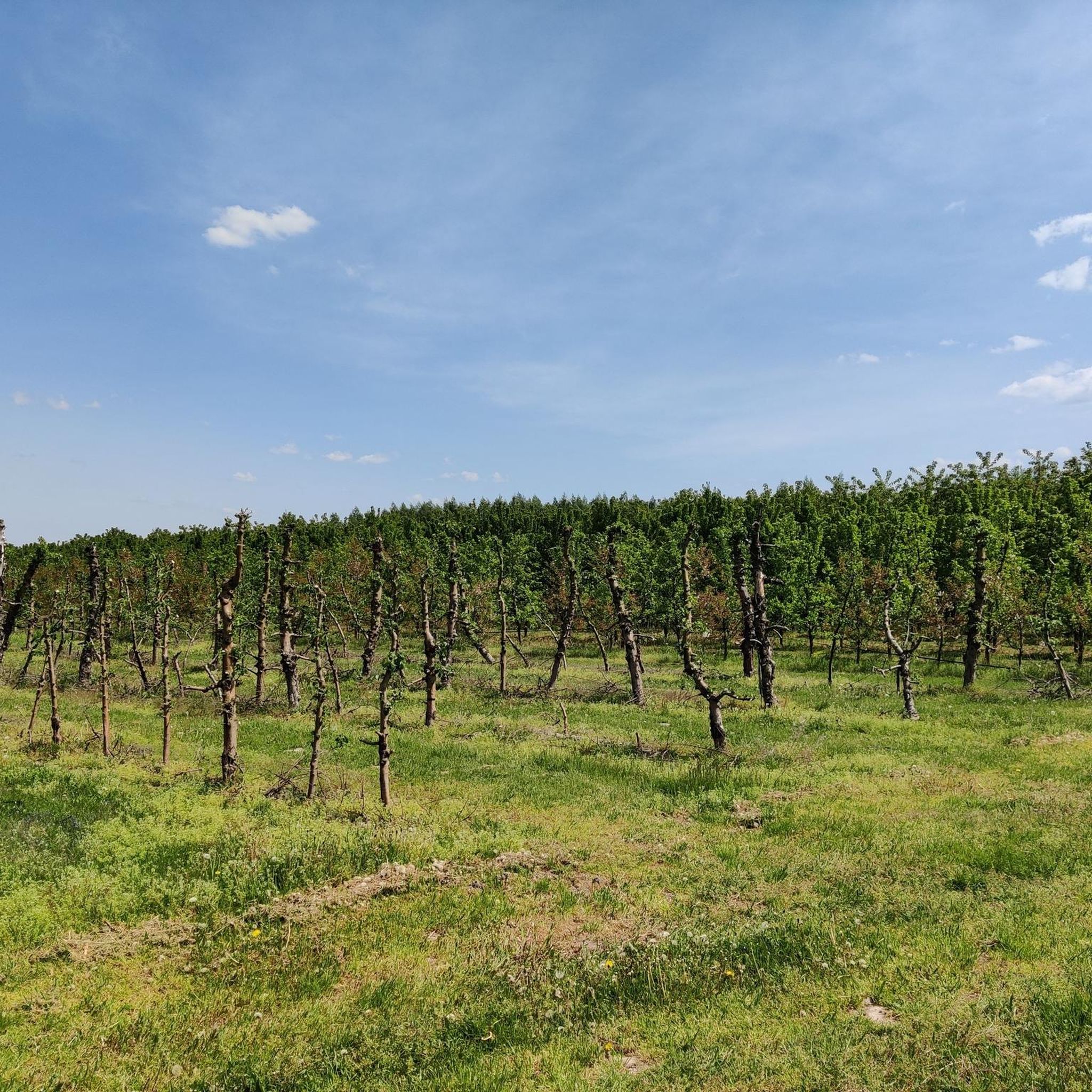
Jeziorka Valley Orchards
Highlight • Natural
Translated by Google •
Tip by

Kazimierz Pułaski Museum in Warka
Highlight • Historical Site
Translated by Google •
Tip by

Sign up now to discover places like this
Get recommendations on the best single tracks, peaks, & plenty of other exciting outdoor places.
Sign up for free
Wooden boardwalks over the Pilica River
Highlight • Bridge
Showing Translation
Tip by

Trail Through Modrzewina Nature Reserve
Highlight (Segment) • Trail
Translated by Google •
Tip by
Market Square in Warka
Highlight • Settlement
Showing Translation
Tip by

Sign up for free to discover even more attractions around gmina Jasieniec.
Sign up for free
Already have an account?
Start today with a free account
Your next adventure awaits.
Login or Signup


Tips from the Community

The Rynek in Warka, officially named Plac Stefana Czarnieckiego, is the heart of this historic town. Located just 63 km south of Warsaw, it is an excellent destination for a day trip tracing history and brewing traditions.
2
0
wooden footbridges over the Pilica
1
0

very charming place, I highly recommend it
2
0

I expected something longer, but in fact we only have a few meters of vengeance here.
1
0

Unique climate, Cosmic number of trees uprooted by storms/from old age on both sides of the path. Beautiful smell of the forest.
1
0

The beginnings of the creation of the "largest orchard in Europe" date back to the reign of Queen Bona, who was famous for her passion for gardening, including fruit growing. In 1545, she received large tracts of land in the Grójec district, which she later took care of, establishing numerous privileges for the owners of gardens. Then, fruit growing found legal support in the royal act of 1578, issued by Queen Bona's son. This gave rise to the development of fruit orchards, mainly apple orchards. Many historical works contain numerous mentions of the development of manor and peasant orchards in the Grójec region. A significant role in the history of "Grójecki apples" was also played by clergymen (Roch Wójcicki from Belsk, Niedźwiedzki from Łęczeszyce, Stefan Roguski from Goszczyn and Edward Kawiński from Konary), who in the 19th century were the main promoters of fruit growing in this region. At the beginning of the 20th century, commercial orchards were already established, the symbol of which was Jan Cieślak from Podgórzyce. He introduced high culture in the cultivation and storage of apples (in 1918 he built the first fruit storage facility in Poland). At the beginning of the 20th century, the first advisors also appeared, and one of the most famous from this region was Witalis Urbanowicz, who in 1909 became famous for developing the 10 gardening commandments. The very dynamic development of Grójec fruit growing, synonymous with Prof. Szczepan Pieniążek, began at the end of World War II. Thanks to him, the Institute of Pomology and Floriculture was established, which passed on the latest knowledge and experience in apple cultivation to local fruit growers. On the professor's recommendation, his student, Eligiusz Gajewski, founded the Experimental Plant of the Institute of Pomology and Floriculture in Nowa Wieś. This plant became a model farm from which Grójec fruit growers drew practical knowledge.
0
0
The museum is located in Warka – Winiary. The institution is an organizational unit of the Grójec district. The museum was established by the resolution of the Council of Ministers of January 18, 1961 "on the reconstruction of the manor house in Winiary and the adaptation of the immediate surroundings to tourist and recreational purposes". It is located in Warka – Winiary, at ul. Pułaskiego 24. The manor house in Winiary was built around 1689 as the seat of Stanisław Antoni Szczuka, Lithuanian vice-chancellor and royal referendary. It was designed by the architect Augustyn Locci, the builder of, among others, the palace in Wilanów. As a result of multiple alterations in the second half of the 19th century and in the first half of the 20th century, the palace lost its Baroque architectural features. via Wikipedia
0
0

A cool little town that is developing quickly
1
0
Frequently Asked Questions
What natural attractions can I explore in Gmina Jasieniec?
Gmina Jasieniec offers several natural highlights. You can visit the Jeziorka Valley Orchards, known for their vast fruit trees, especially beautiful when in bloom. Another significant natural site is the Trail Through Modrzewina Nature Reserve, a forest with ancient trees and a unique climate. Additionally, the Wooden boardwalks over the Pilica River provide a unique perspective on the river environment with informative boards about local nature.
Are there any historical sites or cultural landmarks to visit in the region?
Yes, Gmina Jasieniec is rich in historical and cultural landmarks. You can explore the Holy Trinity Parish Church, an architectural site built between 1932 and 1958. The region also features several historical manor and palace complexes, such as those in Wola Boglewska, Warpęsy, Rytomoczydła, and Turowice. The preserved buildings of the former 'Czersk' Sugar Factory also offer a glimpse into 19th-century industrial history.
What are some family-friendly activities in Gmina Jasieniec?
Many attractions in Gmina Jasieniec are suitable for families. The Jeziorka Valley Orchards are a pleasant place for a stroll, especially during spring bloom. The Trail Through Modrzewina Nature Reserve offers an engaging walk through an old-growth forest. The Wooden boardwalks over the Pilica River are also family-friendly, providing educational insights into local nature. For a cultural outing, the Kazimierz Pułaski Museum in Warka is a nearby historical site.
When is the best time to visit Gmina Jasieniec to see the orchards?
The best time to visit Gmina Jasieniec to experience its famous orchards is in the spring. This is when the fruit trees, particularly apple and cherry, are in full bloom, transforming the landscape into a vibrant and fragrant spectacle. The region's fruit-growing tradition dates back to the 16th century, making this a truly iconic experience.
Can I find hiking trails near the attractions in Gmina Jasieniec?
Yes, there are several hiking opportunities around Gmina Jasieniec. You can explore trails like the "Nature trail "Rezerwat Modrzewina" (loop)" which is a moderate 5.3 km route. Other options include the "Wareckich Morsów Square loop from Warka" and similar routes. For more detailed information and a wider selection of trails, you can visit the Hiking around gmina Jasieniec guide.
Are there options for running or cycling in Gmina Jasieniec?
Absolutely. Gmina Jasieniec offers various routes for running and mountain biking. For runners, there are loops from gmina Grójec, Grójec, Marianów, Wola Krobowska, and Lewiczyn, ranging from easy to moderate difficulties. Cyclists can find MTB trails like the "Młyn Restaurant Osieczek – Osieczek Mill loop" or the "Church in Worów loop." You can find more routes in the Running Trails around gmina Jasieniec and MTB Trails around gmina Jasieniec guides.
What makes the Modrzewina Nature Reserve special?
The Modrzewina Nature Reserve is often referred to as the 'Białowieża of the Grójec Region' due to its ancient forest. The average age of trees here is approximately 99 years, creating a unique climate and a distinct, refreshing forest aroma. Visitors can experience a serene walk amidst trees uprooted by storms or old age, adding to its natural charm.
Where can I learn about the region's history of fruit growing?
The Jeziorka Valley Orchards are at the heart of Gmina Jasieniec's fruit-growing heritage. The tradition dates back to Queen Bona Sforza's reign in the 16th century, who established privileges for garden owners. You can learn about the significant role of clergymen and pioneers like Jan Cieślak, who built Poland's first fruit storage facility, and Professor Szczepan Pieniążek, who founded the Institute of Pomology and Floriculture, which greatly advanced local fruit cultivation.
Is there a museum nearby that focuses on local history?
Yes, the Kazimierz Pułaski Museum in Warka is a significant historical attraction in the vicinity of Gmina Jasieniec. Located in a manor house built around 1689, the museum is dedicated to the Polish general and American Revolutionary War hero, Kazimierz Pułaski. Please note that cycling is prohibited within its park.
What types of churches can I visit in Gmina Jasieniec?
Gmina Jasieniec is home to several notable religious sites. Besides the Holy Trinity Parish Church, designed by Stefan Szyller, you can also find the Kościół pw. Zesłania Ducha Świętego (Church of the Descent of the Holy Spirit) and the Kościół parafialny p.w. Przemienienia Pańskiego w Boglewicach (Parish Church of the Transfiguration of the Lord in Boglewice), all reflecting the region's rich spiritual and architectural heritage.
What do visitors particularly enjoy about the attractions in Gmina Jasieniec?
Visitors appreciate the blend of historical landmarks, cultural sites, and natural beauty. The Wooden boardwalks over the Pilica River are noted for their informative boards about local nature. The Modrzewina Nature Reserve is loved for its unique climate and the distinct aroma of its ancient forest. The Jeziorka Valley Orchards are particularly enjoyed for their beauty during spring bloom, showcasing the region's fruit-growing heritage.
Are there any ancient settlement traces or historical battle sites in Gmina Jasieniec?
Yes, the region has a deep history. The earliest traces of settlement in Gmina Jasieniec date back to the late Bronze Age (800-500 BCE), with evidence found in the village of Gośniewice. Additionally, the gmina's history includes events from the January Uprising, with a significant battle taking place in Gołębiów in 1863.
Most popular routes around gmina Jasieniec

Get inspired with the komoot mobile app


Explore more
Still not found the Highlight you’re looking for? See guides of the top attractions in other regions:
