Top 20 Natural Monuments around Niederfrohna
Best natural monuments around Niederfrohna offer insights into the region's ecology and history. Niederfrohna, a municipality in Saxony, features a landscape characterized by wetlands, historical trees, and geological formations. These natural features near Niederfrohna provide opportunities to observe local biodiversity and connect with historical events. The area's diverse natural monuments make it a destination for those interested in exploring the natural and cultural heritage of Saxony.
Best natural monuments around Niederfrohna
- The most popular natural monuments is Maria Josepha Tower…
Last updated: June 26, 2026
Maria Josepha Tower (Totenstein) Observation Tower
Highlight • Viewpoint
Translated by Google •
Tip by

Giant's kettles in the Chemnitz Valley (Schweizertal)
Highlight (Segment) • Natural Monument
Translated by Google •
Tip by

Sign up now to discover places like this
Get recommendations on the best single tracks, peaks, & plenty of other exciting outdoor places.
Sign up for free
Karl May cave with rest area
Highlight • Cave
Translated by Google •
Tip by

Portal "The Quiet Joy of Nature" (Grünfelder Park Entrance)
Highlight • Monument
Translated by Google •
Tip by

Claußnitz Quarry
Highlight • Lake
Translated by Google •
Tip by

Sign up for free to discover even more natural monuments around Niederfrohna.
Sign up for free
Already have an account?
Start today with a free account
Your next adventure awaits.
Login or Signup
Tips from the Community

Portal of Quiet Nature Enjoyment, in Grünfelder Park in Waldenburg. Information: Renaissance portal made of red sandstone, originally from Waldenburg Castle, which burned down in 1619. It bears an inscription from the park's founding: "To Quiet Nature Enjoyment." It was initially displayed as a ruin and received its current appearance after renovations in 1844.
2
0

The Karl May Cave, also known as the Little Iron Cave, is located in the Waldenburg Upper Forest near Hohenstein-Ernstthal. Originally a mine tunnel dating back to 1620, it was later used as a shelter. In 1869, Karl May hid here when he was wanted for theft. Five years later, he mentioned the cave in his story "The Rose of Ernstthal." It was officially named after him in 1933. During the GDR era, it was closed to the public. Today, however, it can be easily visited again and serves as a reminder of the famous author.
2
2

Nice destination, above Grüna.
8
0

One of the most beautiful sections of the Chemnitz Valley along the cycle path leads into the Schweizerthal, past the Strudel pots in the Chemnitztal - Claußnitz municipality. Strudel pots in the Chemnitztal Stony works of art from the power of nature Extraordinary rock formations, the so-called “Strudeltöpfe”, immediately catch the eye on a trip through the Chemnitz Valley. They are unique for all of Germany. The strudel pots (also called giant pots) are a geological feature of the region and cannot be overlooked when taking a walk along the Chemnitz in the Schweizerthal. They are unique in the area. Something comparable can only be found in Scandinavia or Switzerland.
3
0

Our favorite section in the Chemnitz Valley, it's a shame it's so short...
4
0

Entrance to an enchanting world – a great park with beautiful buildings.
6
3

The path to the park leads through the portal
5
2

Nice photo motif, great well-kept park 👍
4
2
Frequently Asked Questions
What are some of the most popular natural monuments to visit around Niederfrohna?
Visitors frequently enjoy the Maria Josepha Tower (Totenstein) Observation Tower for its panoramic views, the Giant's kettles in the Chemnitz Valley (Schweizertal) for its unique river formations, and the historical Karl May cave with rest area.
Are there family-friendly natural monuments in the Niederfrohna area?
Yes, several natural monuments are suitable for families. The Giant's kettles in the Chemnitz Valley (Schweizertal) offers an engaging trail along the river. The Karl May cave with rest area is also a popular choice, featuring an excellent rest area. Additionally, the Portal "The Quiet Joy of Nature" (Grünfelder Park Entrance) is located within a well-kept park, offering a pleasant experience for all ages.
What kind of historical natural monuments can I find near Niederfrohna?
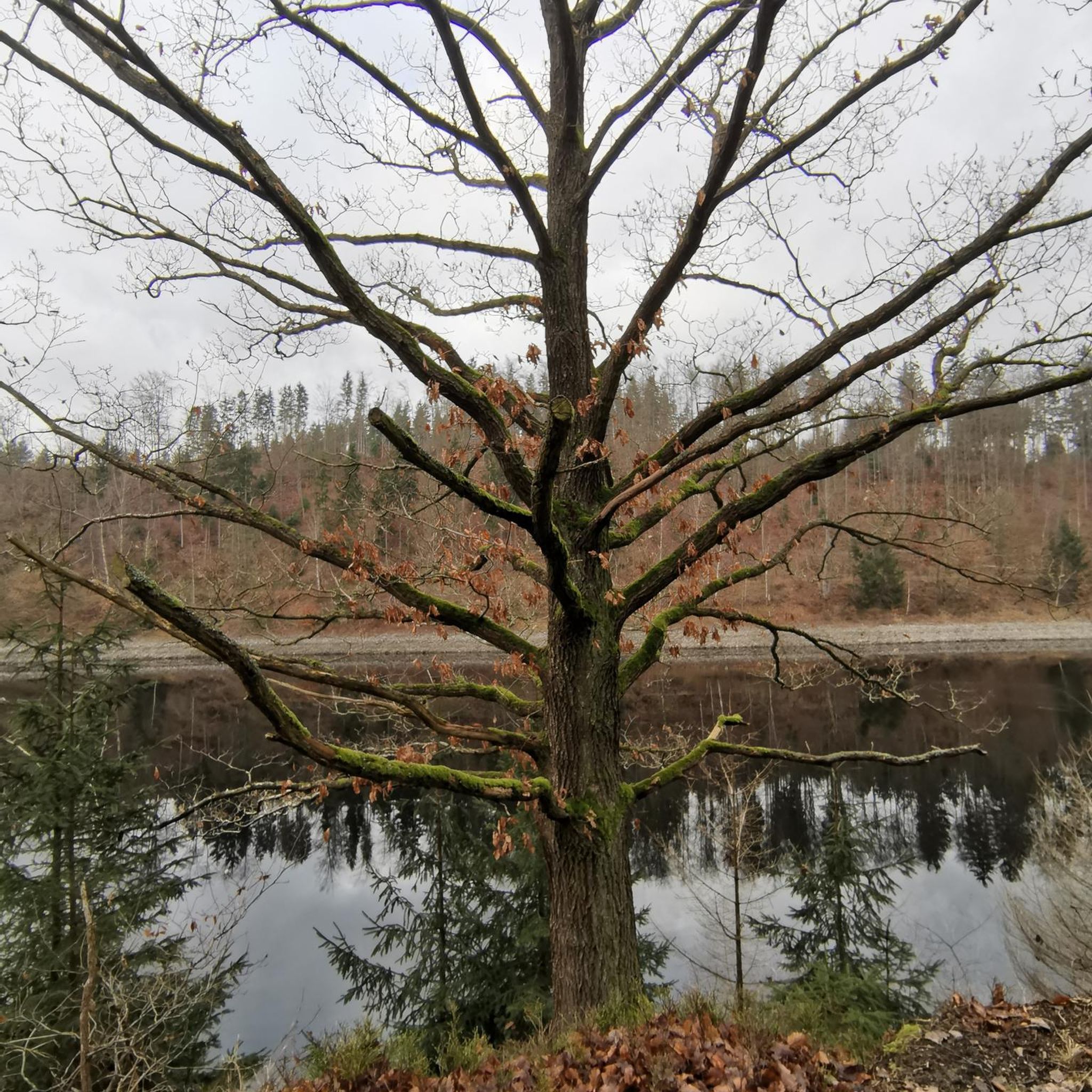
The region features several natural monuments with historical significance. The Karl May cave with rest area, originally a mine tunnel, served as a shelter and is linked to the famous author Karl May. The Portal "The Quiet Joy of Nature" (Grünfelder Park Entrance) is a Renaissance red sandstone portal with a rich history. Furthermore, the Friedens-Eiche (Peace Oak) in Mittelfrohna, protected since 1958, was planted around 1871 to commemorate the end of the Franco-Prussian War, symbolizing strength and hope.
Where can I observe local wildlife and unique ecosystems?
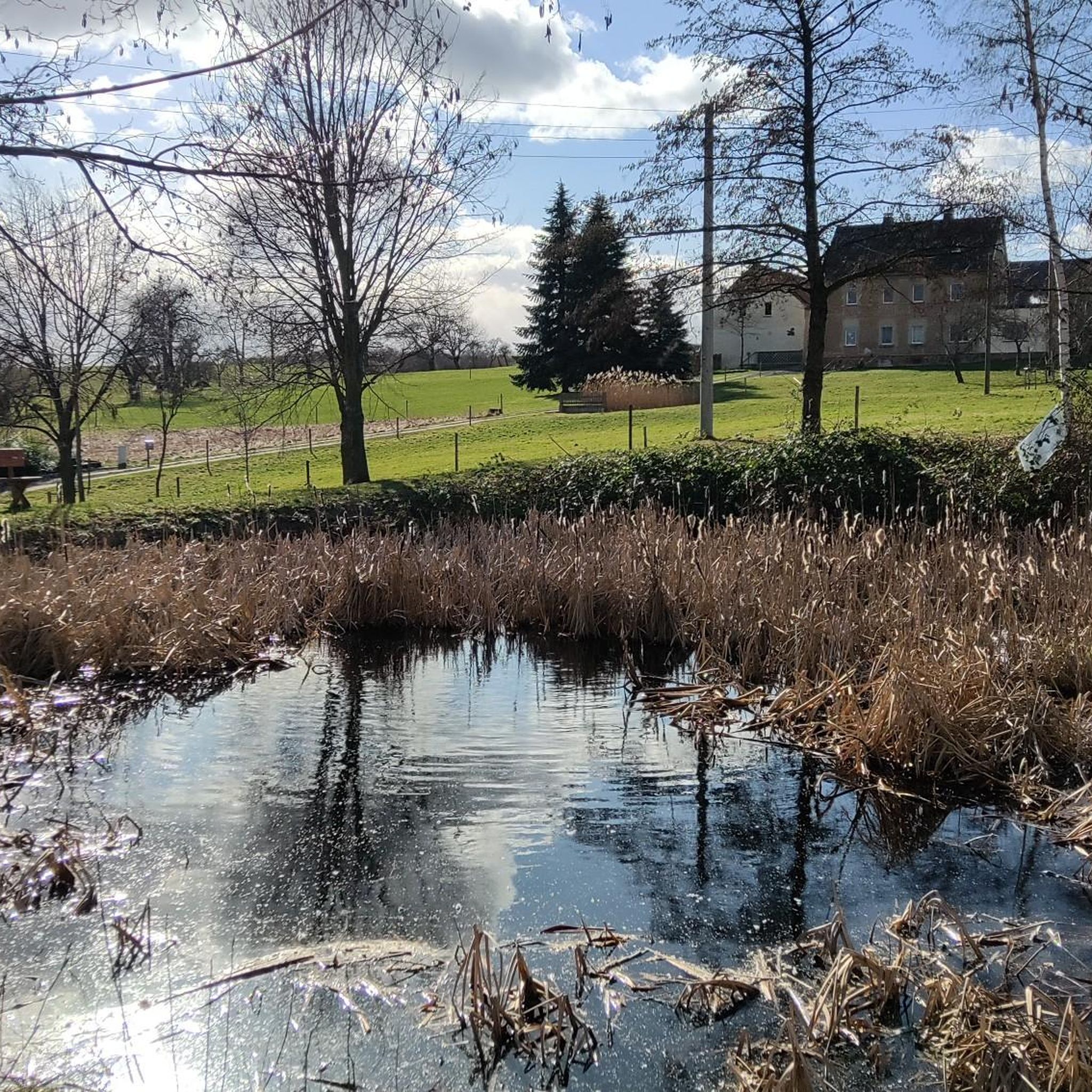
The Fischteiche am Forellenbach (Fish Ponds at Forellenbach) is an excellent spot for nature observation. This area, spanning 20,000 square meters, features dense riparian vegetation, floating and submerged aquatic plants, and is a significant breeding and feeding ground for amphibians and dragonflies. Its riparian forests and wet meadows create a rich and tranquil wetland environment.
Are there hiking or cycling routes near the natural monuments?
Yes, many natural monuments are integrated into or are close to various routes. For instance, the Maria Josepha Tower (Totenstein) Observation Tower is a great place to recharge during hiking and cycling tours. The Giant's kettles in the Chemnitz Valley (Schweizertal) is part of the Chemnitztal Cycle Path. You can find numerous options for gravel biking, running, and road cycling around Niederfrohna.
What kind of natural features define the Niederfrohna region?
Niederfrohna is characterized by a diverse landscape including wetlands, historical trees, and geological formations. You can explore ancient oaks, unique river bends like the Zwickauer Mulde River Bend, and caves such as the Karl May cave. The region offers a variety of natural features for visitors to discover.
What do visitors appreciate most about the natural monuments around Niederfrohna?
Visitors frequently highlight the beautiful views from spots like the Maria Josepha Tower, the tranquility and biodiversity of wetland areas like the Fischteiche am Forellenbach, and the historical significance of sites such as the Friedens-Eiche. The well-prepared rest areas, especially at the Karl May cave, are also highly valued.
Are there any natural monuments that are wheelchair accessible?
Yes, the Portal "The Quiet Joy of Nature" (Grünfelder Park Entrance) is noted as being wheelchair accessible, offering an opportunity to enjoy the natural beauty and historical significance of Grünfelder Park.
What is the best time of year to visit the natural monuments in Niederfrohna?
The natural monuments around Niederfrohna offer different experiences throughout the year. Spring and summer are ideal for observing amphibians and dragonflies at the Fischteiche am Forellenbach. Autumn provides stunning photo opportunities as the trees reflect in the water at places like the Zwickauer Mulde River Bend. Generally, good weather makes for more enjoyable hiking and cycling, but the historical sites can be visited year-round.
Are there any specific tips for visiting the Karl May cave?
If you plan to explore the Karl May cave, it is recommended to wear waterproof shoes and bring a flashlight, as it is a former mine tunnel. The area also features an excellent prepared rest area, making it a good destination, especially with children.
Can I find viewpoints among the natural monuments?
Yes, the region offers several viewpoints. The Maria Josepha Tower (Totenstein) Observation Tower provides a nice view if you ascend its spiral staircase. The Giant's kettles in the Chemnitz Valley (Schweizertal) and the Zwickauer Mulde River Bend also offer scenic spots along trails.
Most popular routes around Niederfrohna
Most popular attractions around Niederfrohna

Get inspired with the komoot mobile app


Explore more
Extend your search for the best caves by checking out these guides of the top ones around Niederfrohna:
