The best road cycling routes around Beirã
5.0
(21)
418
riders
67
rides
Road cycling routes around Beirã traverse a landscape characterized by rolling hills, natural parks, and historic villages. The region features varied terrain, including climbs through areas like the Serra de São Mamede Natural Park and routes connecting ancient settlements. Road cyclists can expect a mix of open roads and paths winding through rural settings. The elevation changes provide opportunities for challenging ascents and descents.
Best road cycling routes around Beirã
- The most popular road cycling route is Serra de São…
Last updated: August 31, 2026
1
riders
81.8km
04:02
1,140m
1,140m
This difficult 50.8-mile road cycling loop from Beirã towards Castelo de Vide offers challenging climbs and scenic views in Serra de São Mam
44
riders
60.3km
03:05
990m
990m
Hard road ride. Very good fitness required. Mostly well-paved surfaces and easy to ride.

Sign up for free
20
riders
58.0km
02:59
920m
920m
Hard road ride. Very good fitness required. Mostly well-paved surfaces and easy to ride.
7
riders
9.43km
00:33
210m
210m
Easy road ride. Great for any fitness level. Mostly well-paved surfaces and easy to ride.
13
riders
58.7km
03:13
1,110m
1,110m
Hard road ride. Very good fitness required. Mostly well-paved surfaces and easy to ride.
Get access to more routes and recommendations from other explorers.
Sign up for free
Already have an account?
Our route recommendations are based on thousands of hikes, rides, and runs completed by other people on komoot.
Start today with a free account
Your next adventure awaits.
Login or Signup

Tips from the Community

Castelo de Vide is a charming Portuguese medieval village located in the district of Portalegre, in the Alentejo region, perched on the hills of the Serra de São Mamede Natural Park. Nicknamed the "Sintra of Alentejo" for its flowery alleys and lush landscapes, this town is famous for its healing thermal waters, its intact Gothic architecture, and one of the most important historical Jewish communities in the country.
0
0

Far in the northeast of Alentejo lies Castelo de Vide, just a few kilometers from the border with Spain. The town is often called Cidade branca (white city), which is primarily due to the pretty whitewashed houses of the town. The highlight of the town (besides its great location in the Parque Natural da Serra de São Mamede) is the 14th-century Castelo de São Roque. From the castle, you have a fantastic view of the old town. Other sights in Castelo de Vide include the old Jewish quarter with the oldest synagogue in Portugal and the numerous churches and chapels of the town.
3
0


The castle was founded by King D. Dinis in 1290, with the aim of defending the Alentejo border. Originally, it had an imposing structure with a double ring of walls, twelve towers and eight gates. Over the centuries, it lost part of its structure to the growth of the city, but it remains a National Monument. The Keep is the best-preserved part of the original complex. Inside, there is a museum that you can visit.
1
0

A place to visit every month. It's wonderful.
2
0
Imposing building in which the Centro de Dia senior center is located
2
0
The current pillory dates from the years immediately following the granting of the New Charter by King Manuel in 1512 and reflects his Manueline, albeit very rustic, style. The monument stands in front of the 16th-century district jail building and next to the clock tower, also from the 16th century, in the square that bears his name. It stands on a base with four octagonal steps and consists of an octagonal shaft set directly into the upper step, formed by five drums with mortar joints.
3
0
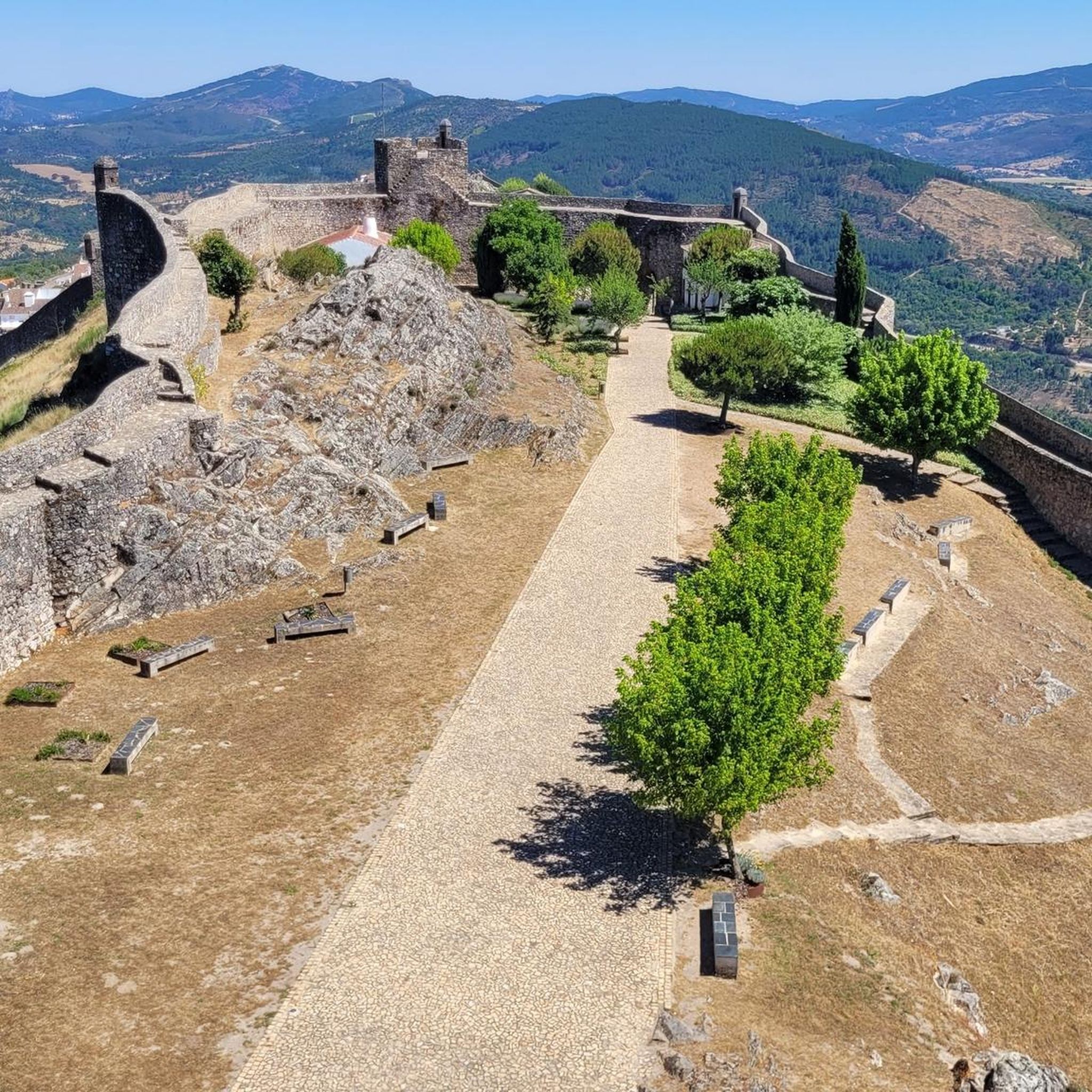
The fortified town of Marvão, 12 kilometers from Quinta do Pomarinho, is also known as the "Eagle's Nest." It boasts a spectacular location on a granite cliff, atop one of the peaks of the Serra de São de Mamede mountain range. Completely walled, Marvão is situated in the Alto Alentejo region, near the Spanish border, which was once controlled from the village. The town of Marvão owes its name to Ibn Maruane, an Arab military leader who sought refuge here in the 11th century. He hid on Mount Ammaia and built a castle there, in the most remote and inaccessible spot he could find. Years later, the castle was transformed into a medieval fortress. Its location made it a strategic defensive position, nestled among hills with slopes to the north, south, and west, accessible only on foot from the village. For many years, Marvão was a municipality heavily and significantly involved in numerous military conflicts in the region. Today, Marvão is a rather sleepy town, but one where you can enjoy wonderful walks. More information can be found here: https://www.feriasemportugal.com/marvao
3
0
Frequently Asked Questions
How many road cycling routes are available around Beirã?
There are over 60 road cycling routes available around Beirã, offering a variety of options for different skill levels. The komoot community has explored these routes over 400 times.
Are there easy road cycling routes for beginners in Beirã?
Yes, Beirã offers several easy road cycling routes suitable for beginners. One example is the View of Castelo de Vide – Castelo de Vide loop from Castelo de Vide, which is a shorter route with less elevation gain, perfect for those new to road cycling in the region.
What kind of terrain can I expect on road cycling routes in Beirã?
Road cycling routes around Beirã traverse a landscape characterized by rolling hills, natural parks, and historic villages. You can expect varied terrain, including climbs through areas like the Serra de São Mamede Natural Park and paths winding through rural settings. The elevation changes provide opportunities for both challenging ascents and enjoyable descents.
Are there challenging routes for advanced road cyclists?
Absolutely. Beirã is known for its significant elevation changes, offering plenty of challenging routes for advanced road cyclists. Routes like the Serra de São Mamede Natural Park Loop and the Marvão Castle – Historic Village of Marvão loop from Marvão are classified as difficult, featuring substantial climbs and longer distances.
What are some scenic viewpoints or landmarks I can see along the routes?
Many routes in Beirã offer stunning views and pass by historic landmarks. You can cycle past the Historic Village of Marvão, the impressive Marvão Castle, or the ancient 16th century bridge of Portagem. The Miradouro – Cidade romana de Ammaia loop from Castelo de Vide specifically highlights viewpoints and Roman sites.
Are there circular road cycling routes available?
Yes, many of the road cycling routes in Beirã are designed as loops, allowing you to start and end in the same location. Popular examples include the Serra de São Mamede Natural Park Loop and the Marvão Castle – Historic Village of Marvão loop from Marvão.
What do other road cyclists enjoy most about cycling in Beirã?
The area is highly rated by the komoot community, with an average score of 4.95 stars from more than 20 reviews. Reviewers often praise the region's varied terrain, the beauty of the natural parks, and the charm of the historic villages encountered along the routes.
Are there any routes that connect historic villages or castles?
Yes, several routes are designed to connect significant historical sites. For instance, the Marvão Castle – Historic Village of Marvão loop from Marvão directly links a historic castle with a picturesque village. Another option is the Marvão Walled Town and Castle – Castelo de Vide loop from Castelo de Vide, which explores multiple historic settlements.
What is the best time of year for road biking in Beirã?
While specific conditions vary, the region's climate generally makes spring and autumn ideal for road cycling. These seasons offer milder temperatures and less extreme weather, providing comfortable conditions for tackling the varied terrain and enjoying the scenic landscapes.
Are there road cycling routes that pass through natural parks?
Yes, the region is characterized by its natural park landscapes. The most prominent example is the Serra de São Mamede Natural Park Loop, which takes you directly through the diverse terrain of the Serra de São Mamede Natural Park.
Where can I find parking for road cycling routes in Beirã?
Many routes start from or pass through towns and villages like Marvão or Castelo de Vide, where public parking is typically available. It's advisable to check specific starting points of routes on komoot for detailed information on parking facilities.
Most popular attractions around Beirã

Get inspired with the komoot mobile app


Explore more
Browse the best Road cycling routes in other regions.
