Attractions and Places To See around Rubiães - Top 20
Best attractions and places to see around Rubiães include historical landmarks, cultural sites, and natural features. This parish in Paredes de Coura, Portugal, is known for its role on the Camino de Santiago, featuring ancient Roman and Romanesque structures. The area is surrounded by mountains and the Coura River, providing diverse landscapes for exploration. Visitors can discover a blend of historical significance and natural beauty.
Best attractions and places to see around Rubiães
- The most popular attractions is Toca River…
Last updated: October 5, 2026
Cruz dos Franceses
Highlight • Monument
Translated by Google •
Tip by

Albergue Quinta Estrada Romana
Highlight • Mountain Hut
It's worth taking a little break here, the stamp here is a very special one in my credential 🤩
Translated by Google •
Tip by

Sign up now to discover places like this
Get recommendations on the best single tracks, peaks, & plenty of other exciting outdoor places.
Waterfall and Cascades of the Rio Couro
Highlight • Waterfall
Translated by Google •
Tip by
Pilgrims' Stone Cross
Highlight • Monument
Translated by Google •
Tip by

Toca River Beach
Highlight • Waterfall
Translated by Google •
Tip by

Sign up for free to discover even more attractions around Rubiães.
Already have an account?
Start today with a free account
Your next adventure awaits.
Other adventures around Rubiães

Tips from the Community

Easy to access and hard to forget: this river beach is a true summer getaway. The river's incredibly clear, cool waters invite long swims and moments of peace. There's plenty of room to spread out your towel, whether on the grass or sand, in the sun or in the shade of the trees. The riverbed is sandy and smooth, with almost no rocks, ideal for relaxing without a care in the world.
2
1

nice place to take a break
1
0

The Rio Couro is said to be the "most trout-rich river in the universe". There is a small waterfall, reservoirs and several cascades here. Behind the house there is a small ramp on the right, from which you have a good view of the area.
1
0

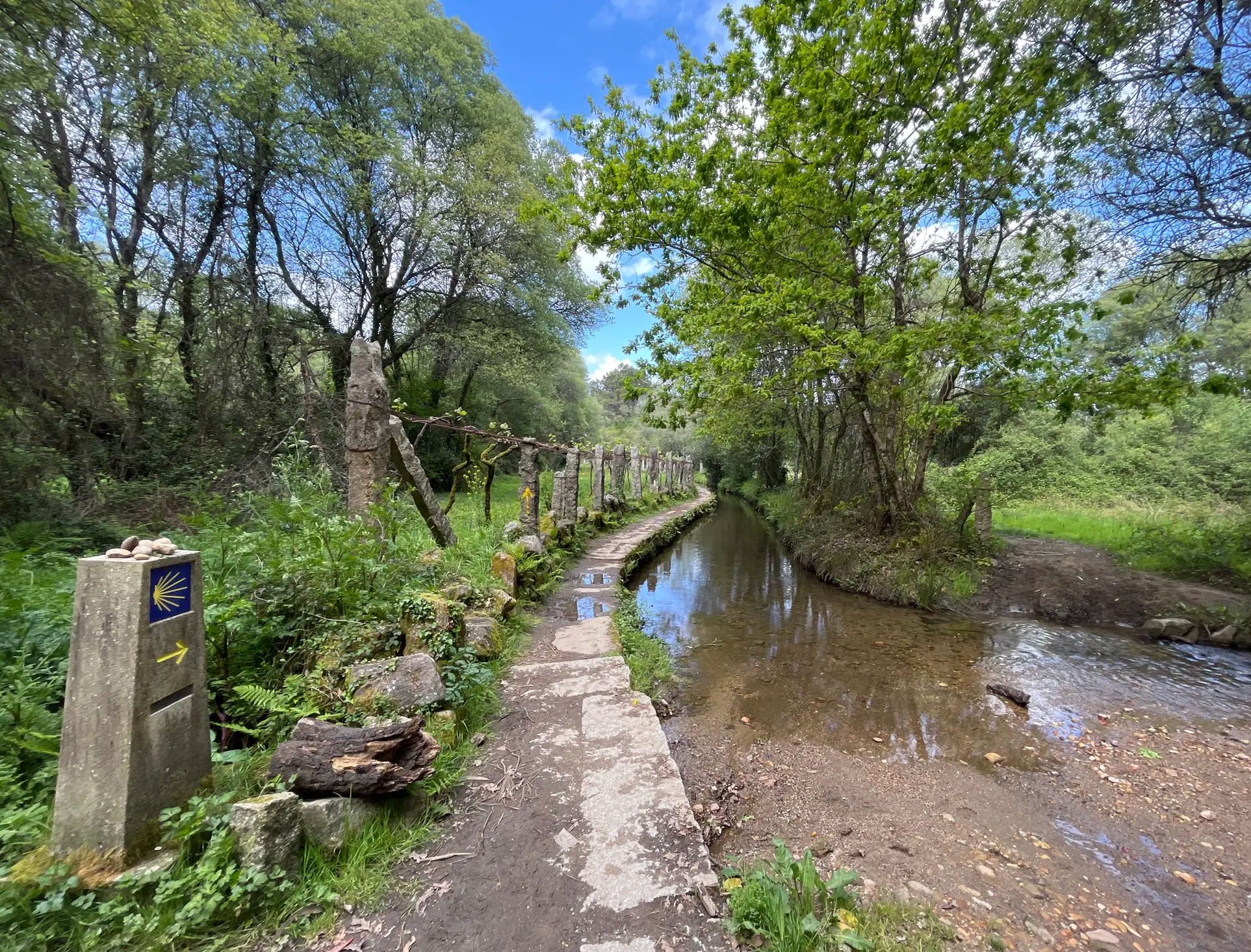
Many people leave behind mementos. It's really very nice.
0
0
Beautiful landscape
0
0

The Quinta da Estrada Romana Hostel, exclusive for Pilgrims, is located in Passos - Valença, on the Portuguese Way of Santiago, 28 km after Ponte
1
0

The stones piled up here at the base of the wayside cross are reminiscent of the “CRUZ de FERRO” (iron cross) – very well known among pilgrims – on Monte Irago on the “Camino Frances” (in Astorga, Leon province, Spain). Many pilgrims who walk the Way of St. James take a stone with them and place it there. Such a stone symbolizes the burdens and needs of the pilgrims (or their family members and friends at home), who symbolically cast off their worries at this point with the stone and can thus move on free of them. The CRUZ DE FERRO is available on komoot as a hiking highlight here: + https://www.komoot.com/de-de/highlight/143518
0
0

Albergue Quinta da Estrada Romana, exclusively for Pilgrims, is located in Passos - Valença, on the Portuguese Way of Santiago, 28 km after Ponte de Lima, 20 km after Labruja and 8 km before the wall of Valença. The hostel has a dormitory with three bunk beds for six people and a dormitory with eight single beds and two double beds. It also has a private bedroom with a double bed and private bathroom.
0
0
Frequently Asked Questions
What historical landmarks can I visit in Rubiães?
Rubiães is rich in history, particularly along the Camino de Santiago. You can explore the ancient Rubiães Bridge, a Roman structure dating back to the 2nd century, and the 12th-century Romanesque Church of São Pedro de Rubiães, a National Monument known for its unique architecture and grotesque figures. Within the church enclosure, you'll also find a Roman Milestone from the 3rd century.
Are there any natural attractions or places for relaxation around Rubiães?
Yes, for natural beauty and relaxation, visit Toca River Beach, which offers clear, cool waters for swimming and ample space to relax. You can also discover the Waterfall and Cascades of the Rio Couro, a scenic spot where the Coura River flows, known for its tranquil environment.
What kind of outdoor activities can I do near these attractions?
The region around Rubiães offers diverse outdoor activities. You can find numerous hiking trails, including easy walks and more challenging routes. For example, there's a moderate 17.9 km hike from Toca River Beach to a Rock Cairn Trail Marker. Cyclists can enjoy road cycling routes, such as a difficult 63.6 km loop to the Roman Bridge of Ponte de Lima, or general cycling tours like a moderate 45.3 km route with views over the mouth of the Minho River. For more details, explore the dedicated guides for Hiking around Rubiães, Road Cycling Routes around Rubiães, and Cycling around Rubiães.
Is Rubiães a good destination for families?
Rubiães offers some family-friendly options. The Albergue Quinta Estrada Romana is a facility that welcomes pilgrims and can be a comfortable stop for families. Natural spots like Waterfall and Cascades of the Rio Couro are also suitable for family visits, offering a chance to enjoy nature together.
What is the significance of the Camino de Santiago in Rubiães?
Rubiães is a significant stop on the Portuguese Way of the Camino de Santiago. Pilgrims often pass through, experiencing its historical treasures and cultural sites. The route includes landmarks like the ancient Roman bridge and the Church of São Pedro de Rubiães, which are integral to the Camino experience. The Albergue Quinta Estrada Romana is specifically designed to cater to pilgrims, offering a comfortable place for a break.
Where can I find a good viewpoint in the area?
For a significant viewpoint with historical context, visit the Cruz dos Franceses. Located in the Serra da Labruja, this 19th-century Latin cross commemorates a battle and offers expansive views of the surrounding landscape. It's also a traditional spot where pilgrims leave stones they've carried.
What is the best time of year to visit Rubiães for outdoor activities?
The natural landscapes of Rubiães, particularly along the Camino Portugués, are beautiful year-round. However, for hiking and outdoor activities, spring (April-June) and early autumn (September-October) generally offer pleasant temperatures and less rainfall, making them ideal for exploring the mountains and river areas.
Are there options for wild swimming near Rubiães?
Yes, Toca River Beach is an excellent spot for wild swimming. Its incredibly clear, cool waters and sandy, smooth riverbed make it an inviting place for a refreshing dip and relaxation during warmer months.
Can I find dog-friendly trails or walks in Rubiães?
While specific dog-friendly designations are not always explicit, many natural trails and outdoor areas around Rubiães, including those along the Coura River and in the surrounding mountains, are generally suitable for walks with dogs, provided they are kept on a leash and owners clean up after them. Always check local regulations for specific areas.
What makes the Church of São Pedro de Rubiães special?
The Church of São Pedro de Rubiães is a 12th-century Romanesque church classified as a National Monument. Its unique features include three concentric arches in the portico and capitals adorned with grotesque figures, possibly allegories of good versus evil. It also has an atrium with an image of the Roman military route, highlighting its historical significance on the ancient Roman road.
What is the 'Pilgrims' Stone Cross' and its significance?
The Pilgrims' Stone Cross is a significant landmark where pilgrims traditionally place stones. This act symbolizes casting off burdens and worries, similar to the famous Cruz de Ferro on the Camino Frances. It's a place of reflection and hope, with many stones piled up by those traversing the Camino de Santiago.
Are there any challenging hikes for experienced trekkers?
Yes, for experienced trekkers, the region offers challenging routes. The Alto da Portela Grande de Labruja is noted as the most significant climb on the Camino Portugués in the area, providing a rewarding experience with demanding terrain. Additionally, some of the longer road cycling routes, such as the 68.5 km loop from Insalde e Porreiras to Valença Fortress, are rated as difficult.
Most popular attractions around Rubiães

Get inspired with the komoot mobile app


Explore more
Still not found the Highlight you’re looking for? See guides of the top attractions in other regions:
