The best road cycling routes in Hawai'I Volcanoes Wilderness
5.0
(4)
69
riders
9
rides
Road cycling routes in Hawai'I Volcanoes Wilderness traverse dynamic volcanic landscapes, offering diverse terrain from lush rainforests to barren lava fields and dramatic coastlines. The region features significant elevation changes, including climbs to high-altitude lookouts and descents to the Pacific Ocean. These routes provide access to unique geological formations and active volcanic areas.
Best road cycling routes in Hawai'I Volcanoes Wilderness
- The most popular road cycling route is Chain of Craters Road, a 45.1 miles (72.6 km) trail that…
Last updated: July 13, 2026
5.0
(1)
13
riders
72.6km
03:44
1,300m
1,300m
Hard road ride. Very good fitness required. Mostly well-paved surfaces and easy to ride.
5.0
(1)
7
riders
75.7km
03:45
1,200m
1,200m
Hard road ride. Very good fitness required. Mostly well-paved surfaces and easy to ride.

Sign up for free
6
riders
45.4km
02:29
620m
620m
Moderate road ride. Good fitness required. Mostly well-paved surfaces and easy to ride.
1
riders
34.8km
01:32
380m
380m
Moderate road ride. Good fitness required. Mostly well-paved surfaces and easy to ride.
5.0
(1)
17
riders
62.5km
03:40
1,270m
1,270m
Hard road ride. Very good fitness required. Some segments of this route may be unpaved and difficult to ride.
Get access to more routes and recommendations from other explorers.
Sign up for free
Already have an account?
Our route recommendations are based on thousands of hikes, rides, and runs completed by other people on komoot.
Start today with a free account
Your next adventure awaits.
Login or Signup
Popular around Hawai'I Volcanoes Wilderness
Tips from the Community

Viewpoint with shelter and great view of the Pacific
3
0
The center is closed for renovations until August 2026
2
0

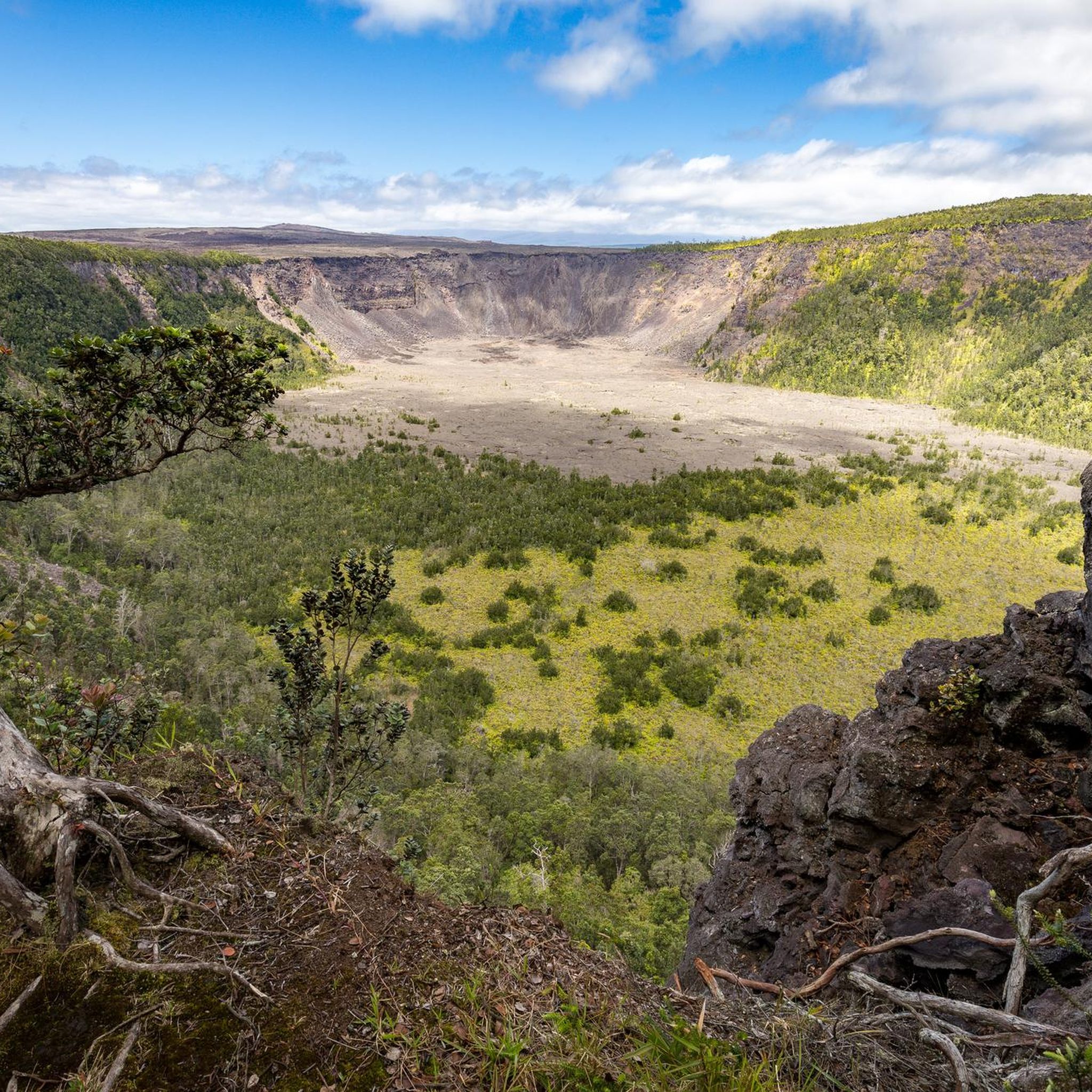
Pauahi is 360 feet deep and 1600 feet wide! This crater has had three recent eruptions (relatively), with two in 1973 and one in 1979. The 1979 event was the most dramatic and is what left the thin veneer currently seen on the crater floor. Pauahi Crater is culturally significant and religious to many of the Hawaiian people. You may see a hoʻokupu (offering), perhaps wrapped in leaves. These should not be touched or disturbed.
0
0
Hilina Pali Overlook provides visitors with a incredible view of the Hawaiian coastline and Pacific Ocean. There is a shelter and bathroom here to provide shelter from any storms, althought there is no potable water.
0
0
Kealakomo Overlook has panoramic views of the Pacific Ocean and lava fields. Kealakomo Overlook gets its name from the ancient village that once resided here and is now partially covered from the Maunaulu flows of 1969-1974. Don't tell real estate developers, but the Maunaulu flows created approximately 210 acres of new land.
0
0
At the bottom of the Chain of Craters Road you can see steep lava rock cliffs. Winds are known to be high here, so use caution if you have deep wheels! This is a unique view with the blue crashing waves on one side and the brown laval fields stretching up the side of the volcano.
0
0
Open 9am-5pm daily, the Kīlauea Visitor Center is a great place to stop before entering the park. There is a park store here that sells books, posters, and other souvenirs! On the back side of the building there are restrooms and across the street you can find a few restaurants and another gift shop!
0
0
Frequently Asked Questions
How many road cycling routes are available in Hawai'i Volcanoes Wilderness?
There are 7 dedicated road cycling routes in Hawai'i Volcanoes Wilderness, offering a range of experiences from moderate to difficult. These routes allow you to explore the park's unique volcanic landscapes.
What are the difficulty levels of road cycling routes in Hawai'i Volcanoes Wilderness?
The routes in Hawai'i Volcanoes Wilderness cater to various skill levels. You'll find 1 easy route, 3 moderate routes, and 3 difficult routes. For example, Hilina Pali Road is a moderate option, while Chain of Craters Road presents a more challenging ride with significant elevation changes.
What unique geological features can I see while road cycling in Hawai'i Volcanoes Wilderness?
Road cycling routes in Hawai'i Volcanoes Wilderness offer unparalleled views of dynamic volcanic landscapes. You can witness steam vents, ancient lava flows, and diverse ecosystems ranging from lush rainforests to arid volcanic deserts. Notable features include the summits of Kīlauea and Mauna Loa, and coastal areas where lava meets the ocean, such as the Hōlei Sea Arch.
Are there any challenging climbs for experienced road cyclists?
Yes, experienced road cyclists will find challenging climbs. The Mauna Loa Road is a difficult route featuring a significant climb of 2,600 feet to the Mauna Loa Lookout. The Chain of Craters Road also includes a descent of over 3,700 feet to the coast, meaning a substantial climb on the return.
What kind of landscapes will I encounter on the road cycling routes?
The routes traverse incredibly diverse landscapes. You'll cycle through lush rainforests with native 'ōhi'a trees, across barren lava fields, and alongside dramatic coastlines where recent lava flows meet the Pacific Ocean. This variety makes for a truly unique cycling experience.
What do other road cyclists say about the routes in Hawai'i Volcanoes Wilderness?
The road cycling routes in Hawai'i Volcanoes Wilderness are highly rated by the komoot community, with an average score of 5.0 stars. Cyclists often praise the dramatic volcanic scenery, the unique experience of riding through active geological areas, and the diverse terrain.
Are there any specific viewpoints or landmarks accessible by road bike?
Yes, several routes offer access to stunning viewpoints and landmarks. For instance, the Mauna Loa Road leads to the Mauna Loa Lookout. Other routes provide views of craters like Halemaʻumaʻu and access to areas with steam vents and lava formations.
Can I cycle on the Crater Rim Drive?
Yes, biking is permitted on paved sections of the Crater Rim Drive. This route offers scenic views around the summit of Kīlauea, passing through rainforests and past steaming vents. It is considered a moderately challenging ride with elevation changes.
Are there any loop routes available for road cycling?
Yes, there are loop options such as the Volcano to Keaʻau loop, which is a difficult 47-mile route. These loops provide a comprehensive way to experience the region's diverse landscapes without retracing your path.
What is the best time of year to go road cycling in Hawai'i Volcanoes Wilderness?
Hawai'i Volcanoes Wilderness offers year-round cycling opportunities due to its tropical climate. However, conditions can vary significantly with elevation. It's always advisable to check the local weather forecast, especially for higher elevations, and be prepared for potential rain or strong winds.
Are there any restrictions for cycling in the wilderness areas of Hawai'i Volcanoes National Park?
While road cycling is permitted on paved roads and some paved sections of trails, certain wilderness areas and dirt trails may have restrictions. Always check the official National Park Service guidelines for the most current information on permitted cycling areas and any necessary permits. You can find more details on the park's official website: nps.gov/havo/planyourvisit/bike.htm.
What should I pack for a road cycling trip in Hawai'i Volcanoes Wilderness?
Given the diverse and dynamic environment, it's wise to pack layers of clothing, including rain gear, as weather can change quickly. Bring plenty of water, snacks, sun protection (sunscreen, hat, sunglasses), and basic bike repair tools. A headlamp or flashlight is also recommended if you plan to be out near dusk or exploring lava tubes.
Most popular routes in Hawai'I Volcanoes Wilderness
Most popular attractions in Hawai'I Volcanoes Wilderness

Get inspired with the komoot mobile app


Explore more
Browse the best Road cycling routes in other regions.
