Attractions and Places To See in Bulgaria - Top 20
Best attractions and places to see in Bulgaria include a rich tapestry of ancient history, diverse natural landscapes, and vibrant cultural heritage. The country features majestic mountains, a Black Sea coastline, and ancient ruins. Bulgaria offers a compelling destination for various interests, from spiritual centers to historical landmarks. Its varied terrain provides opportunities for exploration across different environments.
Best attractions and places to see in Bulgaria
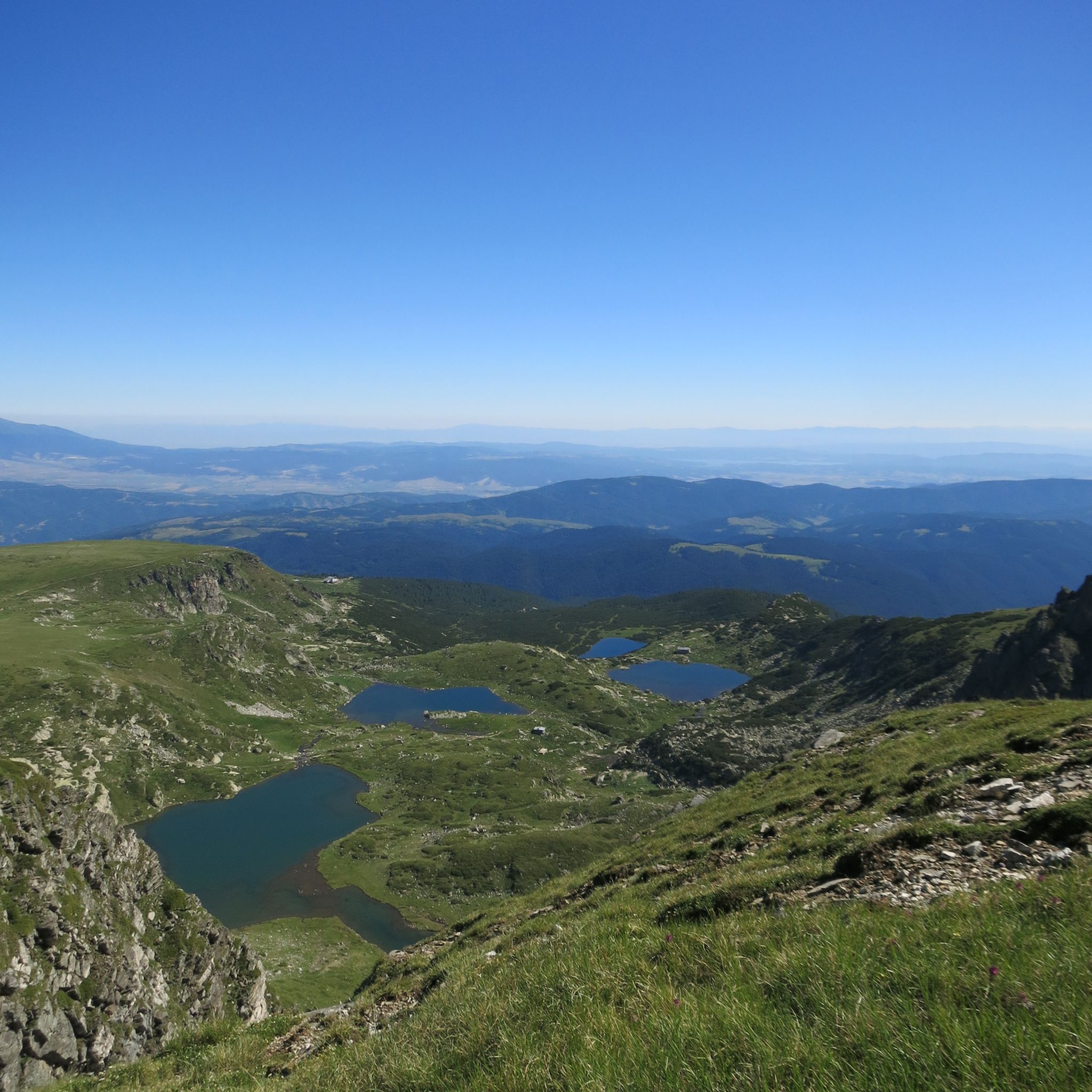
- The most popular attractions is Seven Rila Lakes, a lake known for its crystal-clear waters and alpine landscapes. These seven glacial lakes offer spectacular views and hiking opportunities.
- Another must-see spot is Vihren Peak, a summit and natural monument. It is the second highest mountain in Bulgaria, offering far-reaching views when weather conditions are favorable.
- Visitors also love Musala Peak, a summit that is the highest peak in the Balkans. It provides beautiful views and is a challenging but rewarding climb.
- Bulgaria is known for its ancient historical landmarks, diverse natural features, and significant cultural sites. The country offers a variety of attractions, from Roman theaters and medieval fortresses to glacial lakes and mountain peaks.
- The attractions in Bulgaria are appreciated by the komoot community, with more than 100 upvotes and over 100 photos shared across the highlights.
Last updated: October 9, 2026
Musala Peak
Highlight • Summit
Tip by

Boyana Waterfall
Highlight • Waterfall
Tip by

Sign up now to discover places like this
Get recommendations on the best single tracks, peaks, & plenty of other exciting outdoor places.
Babreka (The Kidney) Lake
Highlight • Lake
Translated by Google •
Tip by

Seven Rila Lakes
Highlight • Lake
The water in all lakes was pure as a drop, but now some lakes grew green :(
There are several options if you want to reach the 7 rila lakes from Pionerska hut:
1) on foot
2) by lift (usually there is 30-60 minutes delay in queue/line)
3) by offroad jeep (you should climb last 100 meters to upper lift station on foot)
Of course there are other options: from Rila monastery/Malyovitsa peak; Ivan Vazov hut; etc...
Tip by
St. Alexander Nevsky Cathedral
Highlight • Religious Site
Translated by Google •
Tip by

Vihren Peak
Highlight • Summit
I suggest to climb it from Kazanite and the return back to Vihren hut throught Kabata
There are number of reasons for that:
1) If you climb in reverse order than you can skip Koncheto because of exhaustion and I think that Koncheto is a place that you should visit!
2) The way through Kazanite is steeper and is more inconvenient for descent (the knees!)
3) I'm sure I'm missing some reasons
Be sure that in the summer you have at least 2 liters of water because there is no water on the road and the sun shines.
Warning: Be aware that the weather can change dramatically in seconds!
You can find Edelweiss in Kazanite.
You should park you car next to Vihren hut early in the morning (7a.m.). Later in the day the parking is full and the police will close the road (next to Baikusheva mura).
Tip by
Statue of Saint Sofia
Highlight • Monument
Bron: visitsofia.bg/en/cityinfrastructure/what-to-see/monuments/sculpture-of-saint-sophia
Tip by
Malyovitsa Hut
Highlight • Mountain Hut
Keep in mind that the region there has very high avalanche risk due to the terain!
Tip by
St. Nedelya Cathedral
Highlight • Religious Site
Translated by Google •
Tip by
Church of Christ Pantocrator, Nessebar
Highlight • Religious Site
25. Aleksandar Razvanov: Месемврийски църкви. Églises de Mésemvria. Sofia 1932, pp. 99-101.
Source: de.wikipedia.org/wiki/Nessebar
Translated by Google •
Tip by

Sign up for free to discover even more attractions in Bulgaria.
Already have an account?
Start today with a free account
Your next adventure awaits.


Other adventures in Bulgaria

Tips from the Community

If you’re well-conditioned, consider extending your route up to Otovitsa Ridge for incredible views.
0
0

A real highlight. A must-see.
0
0

Architecture The first church had three naves, with three bell towers resting on eight-sided drums, and two bell towers. The church is surrounded on three sides by colonnades with arches topped with semicircular domes. After the liberation from Ottoman rule, Prince Dondukov-Korsakov presented the church with eight bells. A new bell tower was built for them outside the church building, facing southeast. In 1898, the church was rebuilt by the architect N. Lazarov.
1
0
The church is believed to have been built in the 10th century and, like other Sofia churches of the time, had a stone base and a wooden structure above it. In the second half of the 14th century, these wooden churches were made of stone. It is unknown why only the Hagia Nedelja remained wooden, and the church continued to exist in this form until the mid-19th century. In 1578, the German traveler Stefan Gerlach visited Sofia and provided a list of Sofia's twelve churches. Among them was the church with the Greek name Kiriaki. In the 19th century and the first decades of the 20th century, the church was also called Sveti Kral (Holy King) because it housed the relics of the Serbian King Stefan Milutin Urosh II, who had healing powers. The church suffered damage in the great earthquake of 1858, and in the early 1850s, the Sofia Diocese and the city parish built a new church in its place, designed by Master Ivan Bojanin, with funds raised by the Christian citizens of Sofia. Until the construction of the St. Alexander Nevsky Church monument, Hagia Nedelya Church was a cathedral. Exarch Joseph I is buried in the southern part. After the destruction of Hagia Nedelya Church as a result of the communist terrorist act against the Tsarist family on April 16, 1925, a competition for its restoration was announced. The competition was won by the architects I. Vasilyov and Dimitur Tsolov. It was completed in 1931 and solemnly consecrated two years later. The new building had five domes and a dominant bell tower on the west side. The exterior was decorated with rows of red tiles. The surrounding land was relocated to a lower level, placing the building on a terrace accessible via a stone staircase. The church, restored according to a design by the architects Vasilyov and Tsolov, is a single-room building with a kul dominating the entire naos. The bell tower rises above the vestibule. The exterior of the church is faced with tuff stone.
1
0

The cathedral is one of the symbols of the Bulgarian capital Sofia. It was built in memory of Tsar Alexander II and the Russian soldiers who died liberating Bulgaria from Ottoman rule in the Russo-Ottoman War of 1877-78. The visit is free!
0
0

Second highest mountain in Bulgaria, so when the weather is good you can enjoy a very far-reaching view. The section of road between the Banderitsa campsite and the Vihren hut is closed from 8 a.m. to 4 p.m. (one-way street, controlled by the police), so start as early as possible. It is also worth being at the summit around 9 a.m. to 10 a.m., otherwise, depending on the weather, clouds can cover the summit.
1
0

The climb to the hut is technically an easy hiking trail. The path is quite wide and not very steep. Since you are in the mountains, it is of course rocky.
1
0
Nice view, but very busy. I found the climb from Yastrebets a bit boring in places: relatively flat at the beginning for about 3km, then uphill through boulders.
0
0
Frequently Asked Questions
What are some popular natural attractions for outdoor enthusiasts in Bulgaria?
Bulgaria offers diverse natural beauty. The Seven Rila Lakes are a highlight, known for their crystal-clear waters and alpine landscapes, offering spectacular views and hiking opportunities. For mountaineers, Musala Peak, the highest peak in the Balkans, and Vihren Peak in Pirin National Park, provide challenging climbs and far-reaching views. Near Sofia, you can explore Boyana Waterfall and Boyana Lake on Vitosha Mountain.
Where can I find historical and cultural landmarks in Bulgaria?
Bulgaria is rich in history. The St. Alexander Nevsky Cathedral in Sofia is a prominent symbol of Orthodox heritage. The Rila Monastery, a UNESCO World Heritage site, is a significant spiritual and cultural center. You can also visit the ancient Church of Christ Pantocrator in Nessebar, or the medieval Tsarevets Fortress in Veliko Tarnovo. The Ancient Theatre of Plovdiv dates back to the 1st century AD and is still used for cultural events.
Are there any family-friendly attractions in Bulgaria?
Yes, many attractions cater to families. The St. Alexander Nevsky Cathedral is considered family-friendly, as is the Church of Christ Pantocrator, Nessebar. The Boyana Lake area offers pleasant walks suitable for families. The Ancient City of Nessebar, with its historical charm and coastal setting, is also a great option for all ages.
What kind of hiking opportunities are available in Bulgaria?
Bulgaria offers extensive hiking opportunities, especially in its mountain ranges. The Rila Mountains are home to the famous Seven Rila Lakes, a popular destination for trekkers. Pirin National Park, with Vihren Peak, provides challenging alpine routes. For more detailed routes, you can explore the Mountain Hikes in Bulgaria guide, which includes routes like the Malak Rezen Peak loop from Torfeno Branishte Reserve.
Can I find ancient Roman or Thracian sites in Bulgaria?
Absolutely. Bulgaria has a rich ancient past. Plovdiv boasts one of the best-preserved Roman theaters in the world, still in use today. The Roman Baths of Varna are extensive 2nd-century AD ruins. For Thracian history, the Thracian Tomb of Kazanlak and the Thracian Tomb of Sveshtari are UNESCO World Heritage sites, offering insights into this ancient civilization. The ancient city of Perperikon in the Eastern Rhodope Mountains is another impressive archaeological site.
What are some unique natural rock formations to visit?
The Belogradchik Rocks are a must-see, with unique sandstone and limestone formations sculpted by time into various shapes. Another fascinating natural wonder is Prohodna Cave, also known as God's Eyes, due to the two large, eye-shaped holes in its ceiling. The Melnik Earth Pyramids, near Bulgaria's smallest town, are also geological formations shaped by erosion into fascinating forms.
Are there any accessible attractions for visitors with mobility needs?
While many natural trails can be challenging, the Statue of Saint Sofia in the capital is noted as wheelchair accessible. When planning visits to historical sites, it's advisable to check specific accessibility details for each location, as older sites may have limitations.
What are the best places to visit for a mix of history and coastal charm?
The Ancient City of Nessebar, a UNESCO World Heritage site on the Black Sea coast, offers a perfect blend. It features ancient Greek ruins, medieval churches, and traditional Bulgarian houses. Varna, another charming seaside city, has a beautiful historical core, Roman Thermae, and the scenic Primorski Park along the seafront.
Where can I experience Bulgaria's spiritual heritage?
Bulgaria's spiritual heritage is deeply rooted. The Rila Monastery is the largest and most famous monastery, playing a crucial role in preserving Bulgarian culture. The St. Alexander Nevsky Cathedral in Sofia is a grand symbol of Orthodox faith. The Boyana Church, a UNESCO site near Sofia, is renowned for its 13th-century frescoes. The Aladzha Monastery Cave Complex near Varna also offers a glimpse into monastic life carved into rock.
What outdoor activities, besides hiking, can I do in Bulgaria?
Beyond hiking, Bulgaria offers various outdoor activities. You can explore road cycling routes, such as the 'View of Pancharevo Lake – View from the Tribunes loop' near Sofia, detailed in the Road Cycling Routes in Bulgaria guide. Gravel biking is also popular, with routes like the 'Training jump in the forest – Highest Tree loop' near Vitosha, found in the Gravel biking in Bulgaria guide. In winter, Bansko is a premier ski and snowboard resort.
What do visitors enjoy most about the Seven Rila Lakes?
Visitors are captivated by the crystal-clear waters and breathtaking alpine landscapes of the Seven Rila Lakes. The area offers spectacular views and fantastic hiking opportunities. While it has become a popular tourist hotspot, many still find the natural beauty and the experience of reaching the lakes to be incredibly rewarding.
Where can I find unique cultural experiences showcasing Bulgarian traditions?
The Ethnographic Complex Etar, an open-air museum, is an excellent place to experience Bulgarian crafts and traditions firsthand. The ancient city of Plovdiv, with its Old Town featuring colorful traditional houses and cobblestone streets, also offers a vibrant cultural scene and a deep sense of history.
Most popular routes in Bulgaria
Most popular attractions in Bulgaria

Get inspired with the komoot mobile app


Didn’t find what you were looking for?
Are you keen on exploring more awesome places nearby? Browse our guides:
Explore more
Still not found the Highlight you’re looking for? See guides of the top attractions in other regions:
