Top 20 Caves around Gießhübl
Best caves around Gießhübl offer diverse underground experiences within the Vienna Woods region of Lower Austria. The area is characterized by its forested hills and geological formations, including former mines and natural grottoes. These sites provide insights into both natural history and human activity, ranging from ancient settlements to industrial use. Visitors can explore various cave types, from expansive underground lakes to smaller rock shelters.
Best caves around Gießhübl
- The most popular caves is Einöd Cave, a cave that features three accessible halls for exploration. It is known for its historical legends and as a winter habitat for bats.
- Another must-see spot is King's Cave, a historical site and natural monument. This cave holds archaeological significance, with evidence of human habitation dating back to the Neolithic Age.
- Visitors also love Anton's Grotto, a cave and natural monument. This grotto is a popular destination, often decorated with candles and known for its tradition of bird feeding.
- Gießhübl is known for former mine caves, natural grottoes, and small rock shelters. The region offers a variety of underground formations to see and explore, from large systems to smaller indentations.
- The caves around Gießhübl are appreciated by the komoot community, with over 400 upvotes and more than 160 photos shared by visitors.
Last updated: June 22, 2026
Matterhörndl
Highlight • Natural Monument
Translated by Google •
Tip by

King's Cave
Highlight • Cave
Translated by Google •
Tip by

Sign up now to discover places like this
Get recommendations on the best single tracks, peaks, & plenty of other exciting outdoor places.
Sign up for free
Anton's Grotto
Highlight • Cave
Source: de.m.wikipedia.org/wiki/Helenental
Translated by Google •
Tip by
Einöd Cave
Highlight • Cave
Translated by Google •
Tip by

Höllensteinlucke Cave
Highlight • Cave
Translated by Google •
Tip by
Sign up for free to discover even more caves around Gießhübl.
Sign up for free
Already have an account?
Start today with a free account
Your next adventure awaits.
Login or Signup
Tips from the Community

The people who lived in the Baden region around 3000 years ago were referred to as the "Baden culture" due to the sensational finds made around the so-called "Königshöhle" (King's Cave).
1
0
Höllensteinlucke: Best viewed from the hiking trail. Luckily there are 4 routes
1
0
After his death, the giant Einöder was carried away into the Anninger. To this day, he lives deep within the Einödhöhle and is considered by the people to be the most powerful guardian of the land against the incursions of enemy armies from the east.
1
0

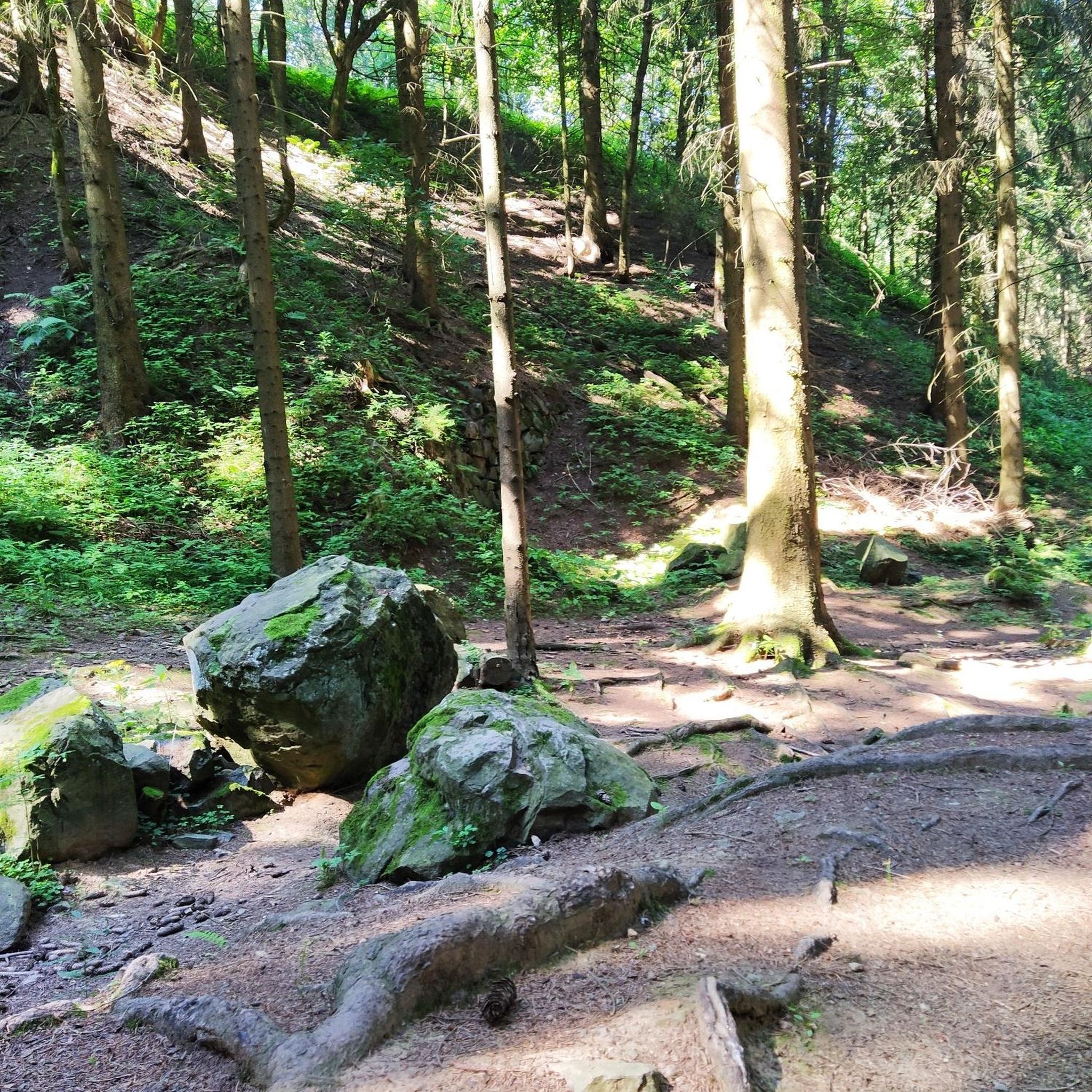
Höllensteinlucke – the breather for altitude heroes 😅 Are you on your way to the Höllensteinhaus, panting like a broken vacuum cleaner and wondering if you're lost? Don't worry – you've arrived at the Höllensteinlucke! 🎉 This legendary "lucke" isn't a magical portal, but simply a small cut in the terrain – but for tired hiking legs, it feels like a gift from the Vienna Woods. 🌲✨ Here you can take a short breather, question your existence, and mentally prepare for the final climb. Because from here on, things get tough again – but hey, you're not here for fun. Or are you? 😄
11
1

The Antonsgrotte opposite the Cholera Chapel in Helenental is a popular destination. The place of worship, always decorated with candles, now has another attraction. Bird feeding is carried out there with particular passion, and indeed: the birds eat a lot and happily. BADEN. Bird feeding at the Antonsgrotte is a tradition. Elisabeth Werkmann - she has been looking after the Antonsgrotte for five years - took over this task last year from her predecessor, who suddenly dropped out. Source: www.meinbezirk.at/baden/c-lokales/kerzerln-vogerln-und-baeume-mit-gesichtern_a7034811
9
1

Small & big explorers can explore the cave
0
0

The isolated cave is closed from September 16th to April 30th to allow the bats to hibernate in peace.
0
0
The network of promenades dates back to Archduke Anton (1779–1835), who had it built in the years up to 1829. The highlight was the Antonsgrotte, which stands roughly opposite the Cholera Chapel, which did not yet exist at the time. The approximately 2.2 km long section of the Helenental from Antonsbrücke to Antonsgrotte is therefore called Antonstal. Source: https://de.m.wikipedia.org/wiki/Helenental
9
0
Frequently Asked Questions
What unique underground experiences can I find near Gießhübl?
The region offers diverse underground experiences. A notable highlight is the Seegrotte Hinterbrühl, one of Europe's largest underground lakes, formed from a former gypsum mine. Visitors can take guided tours and enjoy a unique boat ride across the illuminated underground lake. This site also holds historical significance as a secret aircraft factory during WWII.
Are there any caves with historical or archaeological significance?
Yes, the King's Cave is a historical site and natural monument with archaeological significance. Evidence of human habitation dates back to the Neolithic Age, and important finds from this cave led to the naming of the 'Baden culture'. It also has legends of King Bela IV of Hungary seeking refuge there.
Which caves are suitable for families or offer easy exploration?
The Einöd Cave is considered family-friendly and offers three accessible halls for exploration. It's recommended to visit from April to October and bring a headlamp for an exciting, relatively safe experience. Another popular spot is Anton's Grotto, a natural monument known for its tradition of bird feeding and being a popular destination often decorated with candles.
What natural features can I expect to see in the caves around Gießhübl?
Beyond the underground lake at Seegrotte Hinterbrühl, you can find various geological formations. The Matterhörndl, though more of a rock formation than a deep cave, is a small but impressive limestone rock with a small opening to explore. Other sites like Höllensteinlucke Cave are small geological indentations or rock shelters.
What is the best time to visit the caves in the Gießhübl area?
For caves like the Einöd Cave, the recommended visiting period is from April to the end of October to avoid disturbing bats during their winter hibernation. The Seegrotte Hinterbrühl maintains a constant 9°C year-round, making it a good option even on bad weather days.
Are there any smaller, less-known cave formations for hikers?
Yes, for hikers, the Höllensteinlucke Cave is a small geological indentation on the trail to the Höllensteinhaus, often used as a resting spot or shelter. The Parapluieberg Cave in the Vienna Woods is another small rock cave that can be an adventurous detour for hikers.
What should I wear when exploring caves in this region?
Given that the temperature inside caves like the Seegrotte Hinterbrühl remains a constant 9°C (48°F) year-round, it's advisable to wear warm clothing, even in summer. For exploring smaller, less developed caves like the Einöd Cave, a headlamp is essential.
What outdoor activities can I combine with a visit to the caves?
The Gießhübl area, part of the Vienna Woods, offers numerous outdoor activities. You can find various Mountain Hikes around Gießhübl, including routes like the 'Parking Lot – Höllensteinhaus loop'. There are also options for Road Cycling Routes and general Cycling around Gießhübl, with routes like the 'Gießhübl Gravel Section – Josef Schöffel Hut loop'.
What do visitors particularly enjoy about the caves and grottoes in the Gießhübl area?
Visitors appreciate the diverse experiences, from the unique boat ride on the underground lake at Seegrotte Hinterbrühl to the historical depth of sites like King's Cave. The opportunity for exploration in places like Einöd Cave and the mystical atmosphere of the illuminated caverns are frequently highlighted. The community has shared over 160 photos and given more than 400 upvotes for the caves in the region.
Are there any caves that served a specific purpose in the past?
Yes, the Seegrotte Hinterbrühl has a significant past beyond its natural formation. During World War II, it was secretly used as an underground aircraft factory for the Heinkel jet fighter, employing forced laborers. Exhibitions within the grotto provide insights into this poignant period.
Are there any caves that are easily accessible from Vienna?
The Seegrotte Hinterbrühl is easily accessible from Vienna and the surrounding areas, offering options for both car and public transportation. Its proximity makes it a convenient day trip for those looking to explore a major underground attraction.
Most popular routes around Gießhübl
Most popular attractions around Gießhübl

Get inspired with the komoot mobile app


Explore more
Extend your search for the best caves by checking out these guides of the top ones around Gießhübl:
