The 10 Most Amazing Peaks in Rio Grande National Forest
Best mountain peaks in Rio Grande National Forest are situated within the San Juan Mountains of Colorado, encompassing a vast area of forests, alpine tundra, and high-altitude terrain. This region is known for its challenging 14ers and numerous summits that provide extensive mountain views. The forest spans over 1.8 million acres, offering a range of experiences for those seeking to explore its natural landscape.
Best mountain peaks in Rio Grande National Forest
- The most popular mountain peaks is Highest Point of the Colorado Trail, a summit that marks the official highest point of the Colorado Trail at over 13,000 feet. This location offers panoramic views and a significant achievement for hikers.
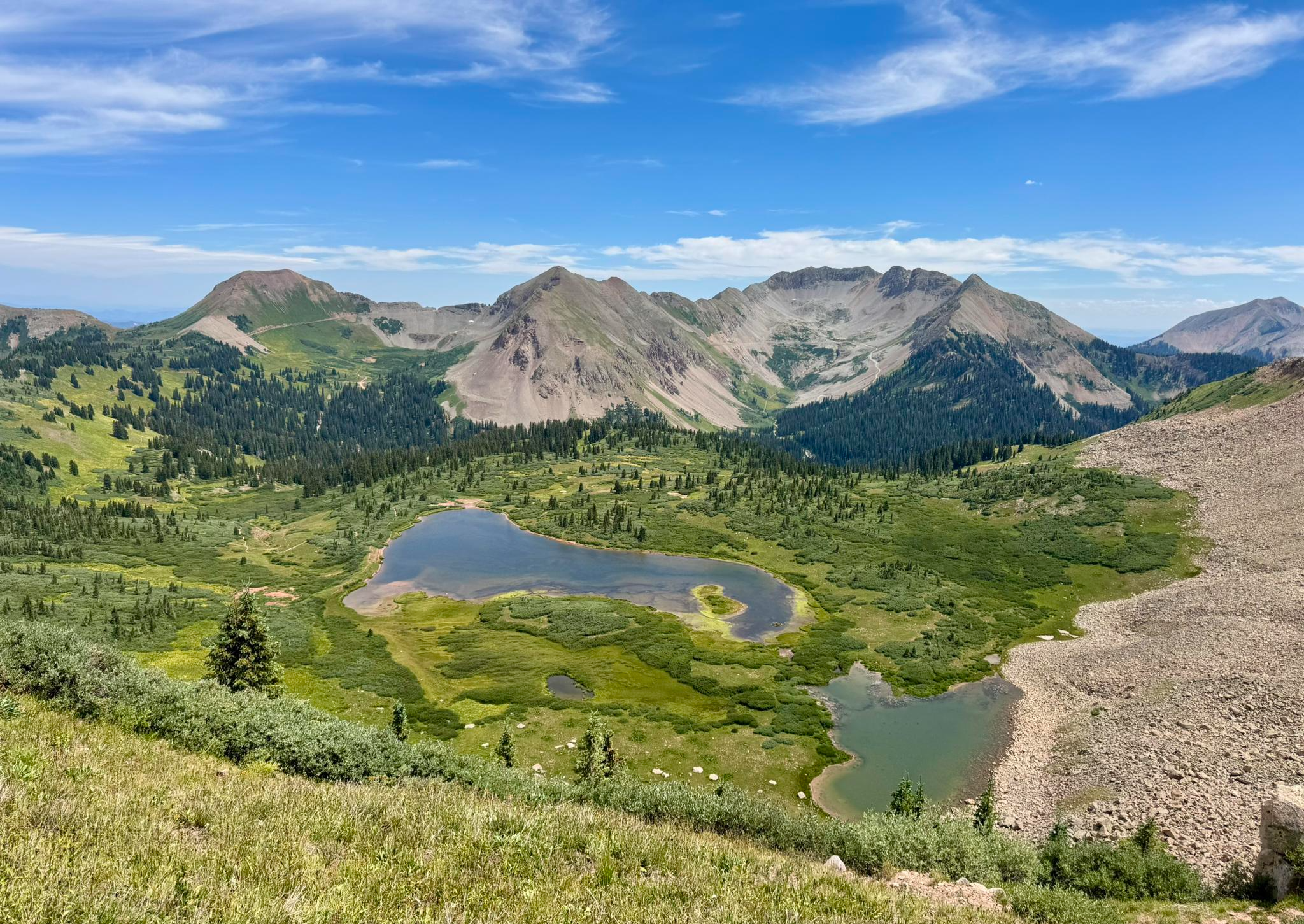
- Another must-see spot is Maggie Gulch Overlook, a viewpoint offering expansive views over Maggie Gulch, Canby Mountain, Sheep Mountain, and the Weminuche Wilderness. Visitors can observe the landscape and remnants of old gold mines.
- Visitors also love Kit Carson Mountain, a challenging summit with class 2 and 3 climbing sections. This 14er provides remarkable views of Willow Creek Valley, Challenger Peak, and Crestone Needle.
- Rio Grande National Forest is known for its diverse summits, viewpoints, and challenging climbs, including several 14ers. The region offers a variety of mountain peaks to see and explore, from high-altitude trails to technical ascents.
- The mountain peaks in Rio Grande National Forest are appreciated by the komoot community, with 3 upvotes and 5 photos shared across the highlights.
Last updated: July 8, 2026
Highest Point of the Colorado Trail
Highlight • Summit
Tip by

Maggie Gulch Overlook
Highlight • Viewpoint
Tip by

Sign up now to discover places like this
Get recommendations on the best single tracks, peaks, & plenty of other exciting outdoor places.
Sign up for free
Blanca Peak
Highlight • Summit
Tip by

Kit Carson Mountain
Highlight • Summit
Tip by
Wolf Creek Pass Climb South
Highlight (Segment) • Climb
Tip by

Sign up for free to discover even more peaks in Rio Grande National Forest.
Sign up for free
Already have an account?
Start today with a free account
Your next adventure awaits.
Login or Signup
Popular around Rio Grande National Forest
Other adventures in Rio Grande National Forest


Tips from the Community

At 13,271 feet you reach the official highest point of the Colorado Trail. Neither the ascent nor the descent are particularly steep, so you might think that you didn’t climb up that much. Nevertheless, enjoy the view and celebrate your achievement! If you like, you can hike up to the nearby summit to find a geological marker.
1
0

Climbing Wolf Creek Pass eastwards on US Highway 160 from the Pagosa Springs side is a long, high-altitude journey to the Continental Divide, taking you deep into Colorado's stunning San Juan Mountains. You'll ascend through beautiful forests to reach the lofty 10,857 ft summit. Averaging a challenging 5-7% with sustained pitches hitting 8% make this a tough finish at very high altitude. Enjoy the expansive mountain views, especially near the Wolf Creek Ski Area.
0
0

A small sign on a wooden post marks the High Point of the Colorado Trail. This is an amazing place to pause and catch your breath (if you can at 13,271 feet!), take in the stunning panoramic views, and bask in your amazing accomplishment.
1
0

Kit Carson Mountain is one for those who like 14er adventures, it's challenging but worth it. The trail has climbing parts of class 2 and 3, so an alpine hiking experience is mandatory to attempt reaching this summit. Make sure to pay attention on your way up, and take note of the route from Challenger Point, because you will need to pass through the same way on the way back. The peak has remarkable views of Willow Creek Valley, Challenger Peak, and Crestone Needle.
0
0
Blanca Peak is a very menacing, 14350 ft summit, in Sangre de Cristo Wilderness. Reaching the peak is usually combined with a trip via Ellingwood Point, as the summits are close to one another. The trail to Blanca Peak is highest and less technical than Ellingwood. Some alpine hiking experience is required to get to this summit.
0
0

From here you can look south out over Maggie Gulch, Canby Mountain, Sheep Mountain, and the Weminuche Wilderness. The Hardrock 100 route and a few old abandoned gold mines can be seen throughout the valley.
0
0
Frequently Asked Questions
What are some of the most challenging mountain peaks in Rio Grande National Forest?
For experienced hikers seeking a challenge, Kit Carson Mountain and Ellingwood Point are notable 14ers. Kit Carson Mountain involves class 2 and 3 climbing sections, requiring alpine hiking experience. Ellingwood Point, a 14048ft summit, also features challenging rocky terrain and class 3 climbing along its ridge, especially during the traverse to Blanca Peak.
Where can I find the best panoramic views in Rio Grande National Forest?
For breathtaking vistas, consider visiting the Highest Point of the Colorado Trail, which offers stunning panoramic views at 13,271 feet. Another excellent spot is Maggie Gulch Overlook, providing expansive views over Maggie Gulch, Canby Mountain, Sheep Mountain, and the Weminuche Wilderness. The summit of Kit Carson Mountain also offers remarkable views of Willow Creek Valley, Challenger Peak, and Crestone Needle.
Are there easy hiking trails near the mountain peaks in Rio Grande National Forest?
Yes, there are several easy hiking options available. You can explore trails like Up and Over Trail, Alberta Peak via Continental Divide National Scenic Trail, Lobo Overlook and Continental Divide Trail, Alder Bench Trail, and Seepage Creek Trail. For more details and routes, refer to the Easy hikes in Rio Grande National Forest guide.
What kind of wildlife can I expect to see along trails in Rio Grande National Forest?
Rio Grande National Forest is home to diverse wildlife, including elk, deer, bighorn sheep, and various bird species. While specific highlights don't detail wildlife sightings, the vast forests and alpine tundra provide habitats for many animals. Keep an eye out, especially during dawn and dusk, and maintain a respectful distance.
What should I pack for high-altitude hiking in Rio Grande National Forest?
When hiking at high altitudes, it's crucial to be prepared. Pack layers of clothing, including a warm jacket, rain gear, and sun protection. Bring plenty of water, high-energy snacks, a map and compass or GPS device, a first-aid kit, and sturdy hiking boots. Weather can change rapidly, so be ready for varying conditions.
Are there any mountain passes suitable for cycling in the area?
Yes, Wolf Creek Pass Climb South is a notable mountain pass. Climbing Wolf Creek Pass eastwards on US Highway 160 from the Pagosa Springs side offers a long, high-altitude journey to the Continental Divide, ascending through beautiful forests to its 10,857 ft summit. It's a challenging ride with sustained pitches.
What are some popular mountain biking trails in Rio Grande National Forest?
The forest offers challenging mountain biking experiences. Some routes include the Red Lake Trail – Conejos Canyon Overlook loop, Colorado Trail Segment 19 - 21 Detour (La Garita Wilderness Bypass), and Colorado Trail Segment 22. You can find more information and routes in the MTB Trails in Rio Grande National Forest guide.
Are there any historical points of interest near the mountain peaks?
Yes, the region has a history tied to mining. From Maggie Gulch Overlook, you can observe the landscape and remnants of old gold mines throughout the valley, offering a glimpse into the area's past.
What is the highest point of the Colorado Trail within Rio Grande National Forest?
The official highest point of the Colorado Trail is located within the Rio Grande National Forest at 13,271 feet. This significant landmark, known as the Highest Point of the Colorado Trail, offers a rewarding experience and stunning panoramic views for hikers.
Are there options for running trails near the mountain peaks?
Yes, there are several running trails, many of which are quite challenging. Options include Crater Lake Trail, Ute Creek and West Ute Trail Loop, Vestal Basin via Colorado and Elk Creek Trail, Colorado Trail: Segment 22, and Humboldt Peak Trail. For detailed routes, check the Running Trails in Rio Grande National Forest guide.
What kind of experience is required for climbing peaks like Kit Carson Mountain or Ellingwood Point?
For peaks such as Kit Carson Mountain and Ellingwood Point, alpine hiking experience is mandatory due to class 2 and 3 climbing sections and rocky terrain. It's recommended to have experience with such conditions and to check weather stability before attempting these challenging ascents.
Most popular routes in Rio Grande National Forest
Most popular attractions in Rio Grande National Forest

Get inspired with the komoot mobile app


Explore more
See even more amazing summits in Rio Grande National Forest with these guides:
