Death Valley National Park
Death Valley National Park
The 9 Most Amazing Peaks in Death Valley National Park
Best mountain peaks in Death Valley National Park are characterized by extreme contrasts, from vast salt flats to high-elevation summits. The park's diverse ecosystems include rugged mountain ranges, deeply eroded canyons, and unique geological formations. These peaks offer perspectives on the park's dramatic vertical relief and varied landscapes. Visitors can explore a range of natural features across the region.
Best mountain peaks in Death Valley National Park
- The most popular mountain peaks is Manly Beacon, a natural monument that can be accessed from Badwater Road or via a longer hike from Zabriskie Point. It was named in honor of William L. Manly, who guided members of the 49er out of Death Valley.
- Another must-see spot is Dante's View — 1,669 m, a viewpoint offering a panoramic perspective of the valley below. From this mountain-top overlook, visitors can see the vast salt flats of Badwater Basin and the Panamint Range.
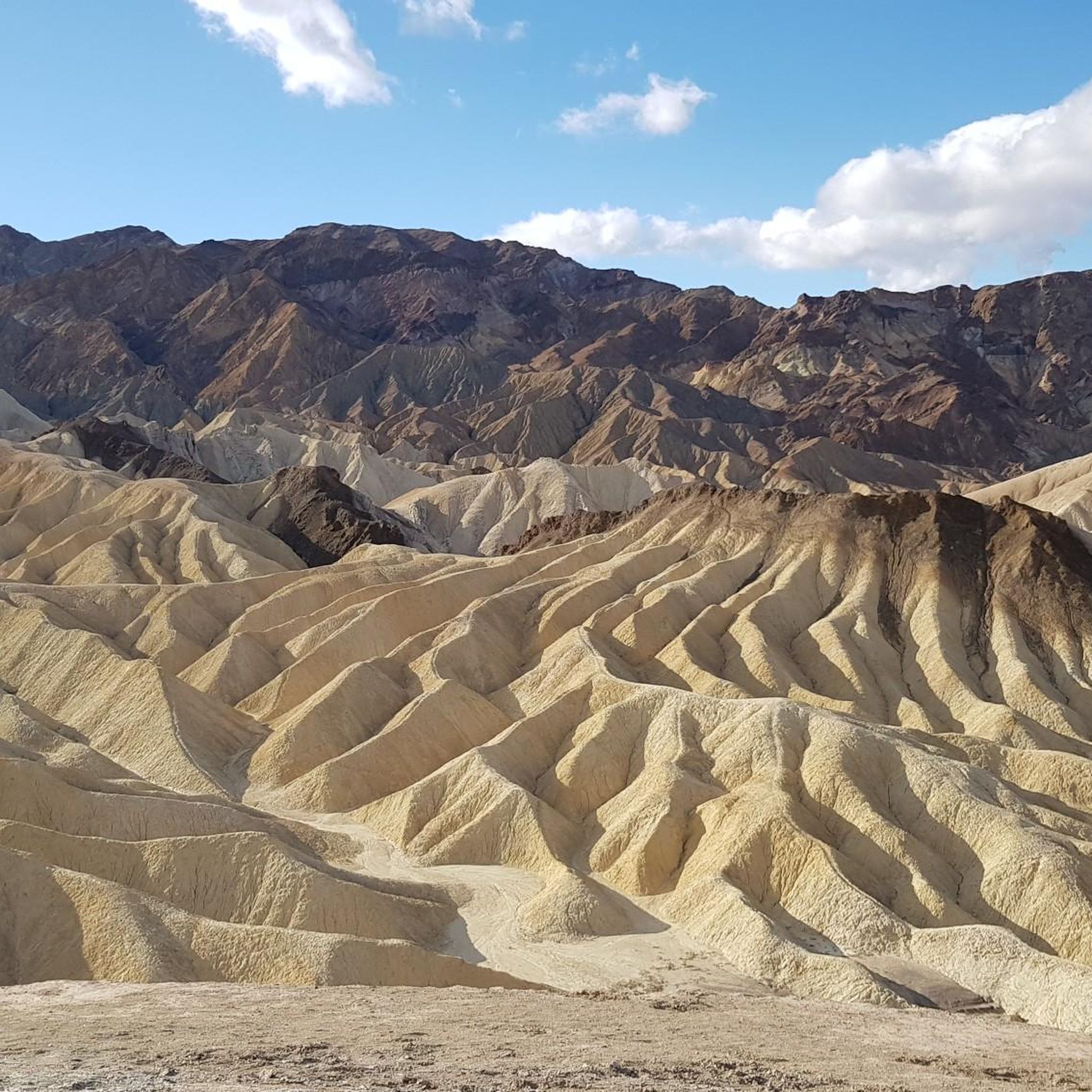
- Visitors also love Red Cathedral, a crimson cliff that stands out 183 meters above the yellow and brown slopes of Golden Canyon. Its name comes from the red rocks that have eroded into pillars in some places.
- Death Valley National Park is known for high-elevation summits, panoramic viewpoints, and unique geological formations. The region offers a variety of mountain peaks to see and explore, from challenging climbs to accessible overlooks.
- The mountain peaks in Death Valley National Park are appreciated by the komoot community, with 12 upvotes and 26 photos shared across the highlights.
Last updated: July 8, 2026
Red Cathedral
Highlight • Natural Monument
Tip by

Dante's View — 1,669 m
Highlight • Viewpoint
nps.gov/deva/planyourvisit/furnacecreekarea.htm
Tip by

Sign up now to discover places like this
Get recommendations on the best single tracks, peaks, & plenty of other exciting outdoor places.
Sign up for free
Manly Beacon
Highlight • Natural Monument
Tip by

Mount Perry Trail
Highlight • Trail
Tip by
Wildrose Peak
Highlight • Summit
After 1.7 miles (2.7km) the divide at a saddle offers the first of several views into Death Valley.
The following 2.5 miles (4 km) roll up and down the saddle before switchbacking steeply up the spine to above tree line where the peak finally comes into view.
The final 0.25 mile stretch (0.4km) to the top yields breathtaking 360 ° views of the Mojave Desert and Basin-Range topography.
To the west is Panamint Valley; on a clear day the snow-capped Sierra Nevada Mountains can be seen on the horizon, home to the highest point in the contiguous 48 US-States, 14,505 ft (4421m) Mount Whitney.
A rock pile marks the summit of Wildrose Peak with a view of the Black Mountains in the distance, and Death Valley salt flats to the east more than 9,000 feet (2,743m) below; home to the lowest point in North America, Badwater Basin -282 ft (-86m).
nps.gov/deva/planyourvisit/wildrose-peak.htm
Tip by
Sign up for free to discover even more peaks in Death Valley National Park.
Sign up for free
Already have an account?
Start today with a free account
Your next adventure awaits.
Login or Signup
Popular around Death Valley National Park
Tips from the Community

The Red Cathedral is a crimson cliff that stands out 183 meters above and behind the yellow and brown slopes and walls of the Golden Canyon. The origin of the name comes from the red rocks that have eroded into pillars in some places
0
0

Great view of the Death Valley Wilderness from the top of the peak. The path up is straightforward and definitely worth the effort for the wonderful views.
0
0
Wildrose Peak is a 9,064 feet (2,743m) high mountain and climbing it should not be understated. The initial ascent begins as a leisurely stroll through a picturesque pine and juniper forest. But then a steep climb follows that will drive your heart rate up. At higher altitude, the trees become rare and reveal great views. Breathtaking 360-degree views of Death Valley and the eastern Sierra Nevada await you at the summit.
0
1
The Red Cathedral is a crimson cliff that stands out 183 meters above and behind the yellow and brown slopes and walls of the Golden Canyon. The origin of the name comes from the red rocks that have eroded into pillars in some places.
1
0

Classic tourist spot, to which you can drive up to the ridge by car. However, the road there is off-road in places and requires having spare tires and other roadside assistance on hand. But the view of Death Valley is actually worth it. Great view.
0
1

Dante’s View gives you an almost bird’s eye view of the valley below and the mountain range across from it. It is breathtaking by all means an one of my favorite spots in the park.
4
1
Manly Beacon was named in honor of William L. Manly, who guided members of the ill-fated 49er out of Death Valley during the gold rush of 1849.
1
0

Following the ridge line straight north from Dante's View parking lot, this trail runs over two more elevation markers and continues another mile to Mount Perry.
1
0
Frequently Asked Questions
What are some of the most popular mountain peaks and viewpoints in Death Valley National Park?
Death Valley National Park offers several remarkable peaks and viewpoints. Among the most popular are Dante's View — 1,669 m, which provides iconic panoramic perspectives of the valley, and Manly Beacon, a natural monument accessible from Badwater Road or Zabriskie Point. Another must-see is Red Cathedral, a striking crimson cliff within Golden Canyon.
What is the highest point in Death Valley National Park?
The highest point within Death Valley National Park is Telescope Peak, standing at 11,049 feet (3,368 meters) in the Panamint Range. It offers an unparalleled perspective of the park's dramatic vertical relief, with views stretching over 100 miles in every direction, including Mount Whitney and Badwater Basin.
Are there family-friendly mountain viewpoints in Death Valley National Park?
Yes, Dante's View — 1,669 m is an excellent family-friendly option. Its accessibility via a paved road makes it a popular choice for all visitors, offering breathtaking panoramic views of the southern Death Valley basin. It's particularly recommended for sunrise or sunset.
When is the best time to visit the mountain peaks in Death Valley National Park?
The cooler temperatures at higher elevations make spring, summer, or fall ideal for visiting peaks like Telescope Peak. For viewpoints like Dante's View, sunrise or sunset offers breathtaking displays of light and shadow. Generally, the cooler months from late fall to early spring are best for hiking in the park, but higher peaks can offer respite from the heat during warmer seasons.
What unique natural features can I expect to see on the mountain peaks?
The mountain peaks in Death Valley National Park showcase diverse natural features. On Telescope Peak, you'll find forested areas of pinyon pine, juniper, and ancient bristlecone pine. Wildrose Peak also features pinyon pine and juniper woodlands. Other areas, like Red Cathedral, highlight unique geological formations with crimson cliffs and eroded pillars.
What kind of hiking trails are available near the mountain peaks?
Death Valley National Park offers a variety of hiking trails. For example, the trail to Wildrose Peak leads through pinyon pine and juniper woodlands, offering a moderately strenuous half-day trek. You can also find routes like the Mount Perry Trail, which follows a ridge line from Dante's View. For more options, explore the Hiking in Death Valley National Park guide.
Are there challenging hikes for experienced trekkers?
Yes, for experienced hikers seeking a strenuous climb, Telescope Peak is a challenging destination. The hike traverses diverse terrain and rewards with panoramic vistas. The trail to Wildrose Peak also involves a steep climb at higher altitudes, offering a significant challenge with rewarding 360-degree views.
What is Aguereberry Point and why should I visit?
Aguereberry Point, located at 6,433 feet (1,961 meters) in the Panamint Range, offers fantastic, less-crowded views into Death Valley, nearly opposite Dante's View. It provides unique perspectives of Badwater Basin and the Funeral Mountains. It's particularly celebrated as an exceptional spot to witness the sunrise, illuminating the valley with dazzling colors.
Can I find any historical sites or mining history near the peaks?
Yes, the Funeral Mountains, forming the rugged eastern boundary of Death Valley National Park, have a significant mining history, with sites like Chloride Cliff. Aguereberry Point was also named after Jean Pierre 'Pete' Aguereberry, a French miner who discovered gold nearby, adding a historical layer to the scenic views.
What are some running trails available in the mountain peak areas?
For runners, there are several trails that offer unique experiences. You can find routes like the Red Cathedral via Golden Canyon Trail or the Telescope Peak Trail run for a more challenging option. For a comprehensive list of running opportunities, check out the Running Trails in Death Valley National Park guide.
What can I expect from the Funeral Mountains?
The Funeral Mountains, part of the Amargosa Range, are characterized by rugged limestone and dolomite ridges, deeply eroded canyons, and jagged peaks. They offer stunning scenic drives, such as Daylight Pass Road, and viewpoints like Hell's Gate, providing dramatic vistas over Death Valley, especially at sunrise or sunset. Remote hikes to peaks like Funeral Peak offer sweeping views of Badwater Basin and the Black Mountains.
How long does it typically take to hike Telescope Peak?
The hike to Telescope Peak is considered strenuous and typically takes a full day. It involves a significant elevation gain and covers diverse terrain, so hikers should plan for a challenging, long excursion to reach the summit and return.
Most popular routes in Death Valley National Park
Most popular attractions in Death Valley National Park

Get inspired with the komoot mobile app


Explore more
See even more amazing summits in Death Valley National Park with these guides:
