Attractions and Places To See in Death Valley National Park - Top 20
Best attractions and places to see in Death Valley National Park include a diverse range of natural features and historical sites. As the lowest national park in the United States, it presents unique landscapes from vast salt flats to colorful canyons. The park is known for its extreme conditions and offers a variety of geological formations and cultural points of interest.
Best attractions and places to see in Death Valley National Park
- The most popular attractions is Badwater Basin Salt Flats, a natural monument that is the lowest point in North America, sitting 282 feet (86 meters) below sea level. Visitors can walk out onto the vast salt flats and observe geometric salt formations.
- Another must-see spot is Zabriskie Point, a viewpoint offering panoramic views of eroded badlands and salt flats. It is a favorite for its sunrise and sunset vistas.
- Visitors also love Golden Canyon Trail, a canyon offering incredible landscapes with golden-hued walls and red cliffs. This trail is one of the most scenic in the park.
- Death Valley National Park is known for its vast salt pans, sand dunes, and colorful canyons. The park offers a variety of natural monuments, viewpoints, and historic sites to see and explore.
- The attractions in Death Valley National Park are appreciated by the komoot community, with 33 upvotes and 122 photos shared across various highlights.
Last updated: July 6, 2026
Badwater Basin Salt Flats
Highlight • Natural Monument
Tip by

Zabriskie Point
Highlight • Viewpoint
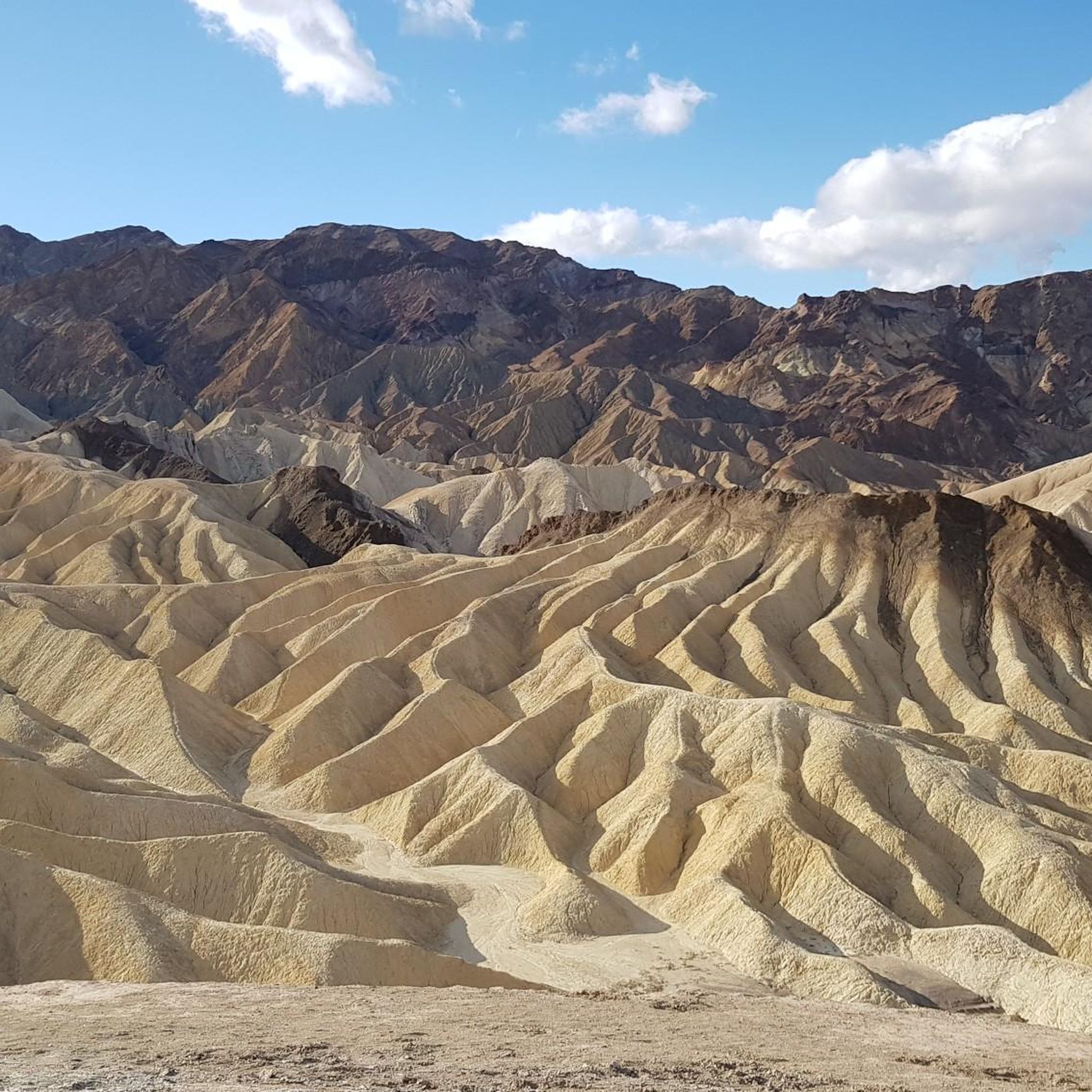
Zabriskie Point became known worldwide mainly through the Hollywood thriller of the same name by Michelangelo Antonioni from 1969. This viewpoint is located southeast of Furnace Creek Ranch on Highway 190. It offers a unique view of the Badwater and Artist's Palette below and is surrounded by a breathtaking backdrop of striking eroded furrows and ocher-colored mud deposits.
Tip by

Sign up now to discover places like this
Get recommendations on the best single tracks, peaks, & plenty of other exciting outdoor places.
Sign up for free
Mesquite Flat Sand Dunes Overlook
Highlight • Natural Monument
Length can be flexible from 0 to 2 miles (3.2km) round trip out and back, Easy to Moderate
Located near Stovepipe Wells Village, 24mi/39km west of Furnace Creek.
Tip by

Golden Canyon Trail
Highlight (Segment) • Canyon
Tip by
Mosaic Canyon Trailhead
Highlight • Trail
Tip by
Sign up for free to discover even more attractions in Death Valley National Park.
Sign up for free
Already have an account?
Start today with a free account
Your next adventure awaits.
Login or Signup
Popular around Death Valley National Park
Tips from the Community

Water and sunglasses are essential!
1
0

The heat should not be underestimated… Despite the short distance
1
0

Badwater Basin is the lowest point in North America, at 280 feet (86 meters) below sea level. The salt flats here cover nearly 200 square miles (518 square kilometers) and are composed primarily of sodium chloride (table salt), along with calcite, gypsum, and borax. Stories suggest that Badwater Basin got its name when an early surveyor’s mule refused to drink from the spring-fed pool near the current boardwalk. The water here isn’t really “bad,” just very salty. Despite the high salt content, many organisms not only survive here, but thrive. The pool is home to an endemic snail that is native only to this location, and the rim is dotted with salt-tolerant plants, including samphire. Badwater Basin was once the site of the large, ancient inland lake Manly, which evaporated tens of thousands of years before the arrival of the man in 1849 for whom it is named. The lake had no outlet, so over time sediment and salt accumulated. When the lake eventually evaporated, it left behind concentrated salt layers. Today, fascinating geometric salt flats form on the plains as groundwater rises through these layers and evaporates.
4
1
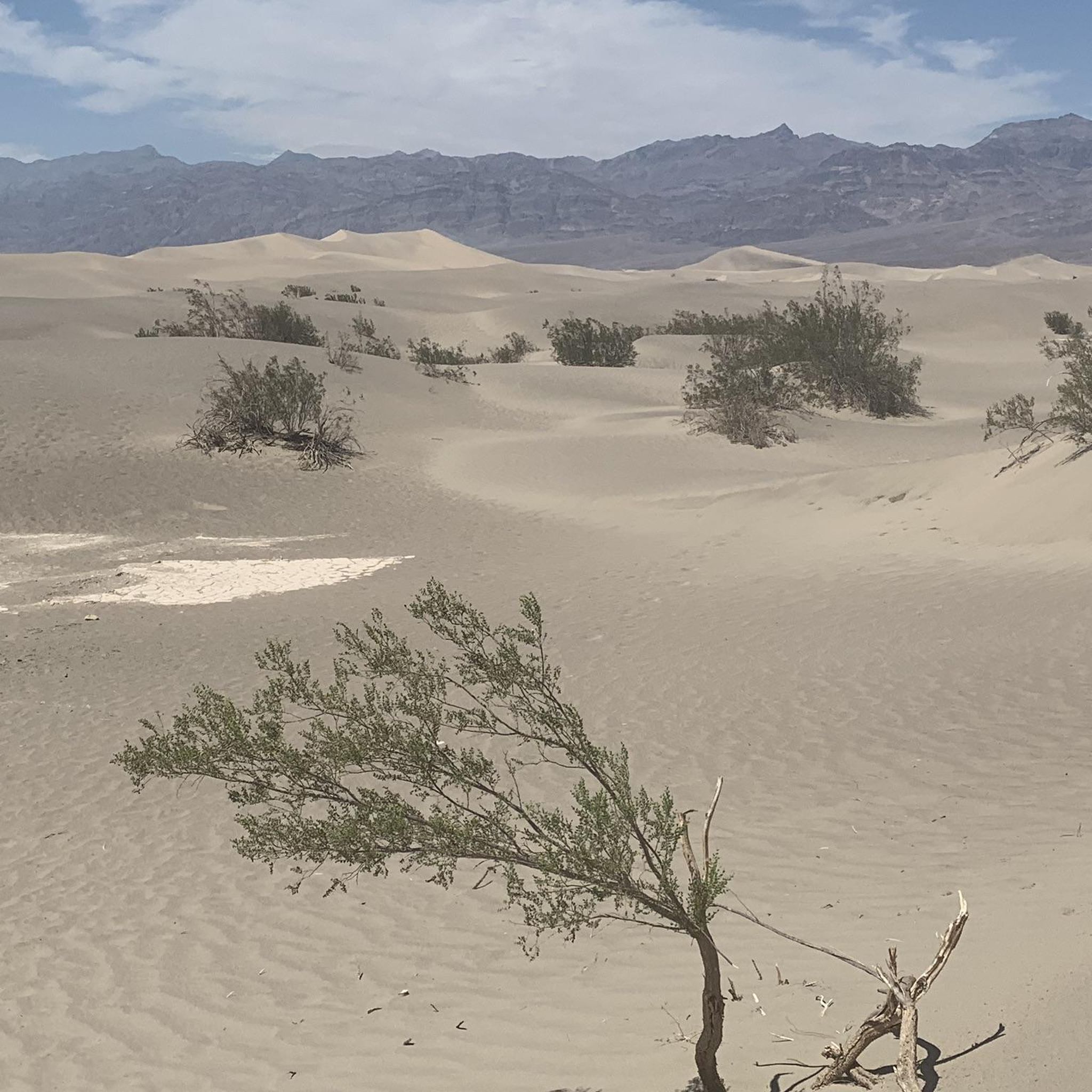
Although sand is present throughout the park, there are few places where large dune fields are created. To create sand dunes, you need a source of sand (in this case, the eroding mountains to the north), wind to move that sand, and a barrier to keep it from blowing further (the mountains to the south). The conditions at Mesquite Flat Sand Dunes are perfect for creating dunes, and while individual grains of sand move and ripple, the dune field remains. These dunes are named for the mesquite tree that grows in abundance in the area. The trees must turn and grow to avoid being buried, and bare, brown trunks are often exposed by the drifting sand. The arrival of spring brings an explosion of bright green leaves and yellow flowers from the upper branches of the trees. Mesquite bean pods are a traditional food of the Timbisha Shoshone, and the flour from these pods is now available in specialty stores. Sand dunes provide habitat for many animals, including nocturnal kangaroo rats and horned rattlesnakes. There are no official walking trails in the dunes, so be careful when exploring and do not disturb any burrows.
5
3
This is one of the famous viewpoints of the park. It is surrounded by wild, sandy, barren mountains.
4
1

This is the lowest point of the continental USA. Badwater is about 282 feet (85.5 meters) below sea level. It is also one of the hottest places in the world with temperatures around 50 degrees Celsius in the summer months. A short walk across the salt desert is still worthwhile in any heat.
3
1

Incredibly hot but very beautiful.
1
0
Frequently Asked Questions
What are some of the most impressive natural features to see in Death Valley National Park?
Death Valley National Park is home to many unique natural features. You can visit Badwater Basin Salt Flats, the lowest point in North America, where you can walk on vast salt formations. Another must-see is Zabriskie Point, offering panoramic views of eroded badlands, especially stunning at sunrise or sunset. Don't miss the Mesquite Flat Sand Dunes, which are easily accessible and great for exploration, or the colorful mineral deposits along Artist's Drive and Artist's Palette.
Are there any historical or cultural sites to explore in Death Valley National Park?
Yes, Death Valley has a rich history. You can visit the Harmony Borax Works, a historic site detailing the park's borax mining past and the famous 'twenty mule teams'. The Wildrose Charcoal Kilns are also worth seeing, showcasing beehive-shaped structures used in the late 1800s. Additionally, remnants of boom-and-bust ghost towns like Rhyolite and Leadfield offer a glimpse into the gold and borax rushes.
What are some family-friendly attractions or activities in Death Valley National Park?
Many attractions in Death Valley National Park are suitable for families. Badwater Basin Salt Flats and Zabriskie Point are both marked as family-friendly and offer easy access and stunning views. The Mesquite Flat Sand Dunes are also a popular spot for families to explore and play. For a scenic drive, Artist's Drive with its vibrant Artist's Palette is a great option.
Which hiking trails are recommended for visitors to Death Valley National Park?
Death Valley offers a variety of hiking experiences. The Golden Canyon Trail is highly recommended for its scenic landscapes with golden-hued walls and red cliffs. Another popular choice is the Mosaic Canyon Trail, known for its polished marble walls and unique geological formations. For more hiking options, including easy and moderate trails, you can explore the Hiking in Death Valley National Park guide.
Are there any wheelchair-accessible viewpoints in Death Valley National Park?
Yes, Zabriskie Point is noted as being wheelchair accessible, offering stunning panoramic views of the badlands and salt flats. This allows visitors with mobility challenges to enjoy one of the park's most iconic vistas.
What is the best time of year to visit Death Valley National Park?
The best time to visit Death Valley National Park is typically from late fall through early spring (October to April) when temperatures are milder and more comfortable for outdoor activities. Summer months can be extremely hot, with temperatures often exceeding 50°C (120°F), making extensive outdoor exploration challenging.
What are some less crowded attractions or 'hidden gems' in Death Valley National Park?
For those looking to escape the crowds, consider visiting Ubehebe Crater, a remote volcanic crater offering a dramatic landscape. Titus Canyon is another unique option where you can drive through towering canyon walls. The upper sections of Mosaic Canyon Trail also tend to see fewer visitors, offering a more secluded hiking experience.
What kind of outdoor activities, besides hiking, can I do near the attractions in Death Valley National Park?
Beyond hiking, Death Valley National Park offers opportunities for mountain biking. You can find various MTB trails, including challenging routes like Echo Canyon Road to Inyo Mine or more moderate options like Chloride Cliffs Road. For detailed information and routes, check out the MTB Trails in Death Valley National Park guide.
Where can I experience stargazing in Death Valley National Park?
Death Valley National Park is renowned for its exceptionally dark night skies, making it an excellent location for stargazing. Due to minimal light pollution across its vast expanse, almost any open area away from developed facilities can offer incredible views of the stars. Popular spots include Badwater Basin, Mesquite Flat Sand Dunes, and Harmony Borax Works, where the open landscape provides an unobstructed view of the celestial sphere.
What do visitors enjoy most about the attractions in Death Valley National Park?
Visitors frequently praise the unique and extreme landscapes of Death Valley. Many are captivated by the surreal salt formations at Badwater Basin, the breathtaking panoramic views from Zabriskie Point, and the vibrant colors found in places like Golden Canyon. The sense of awe from being in such a vast and unique environment, often described as feeling like another planet, is a common highlight.
Are there any attractions in Death Valley National Park that are particularly interesting in winter?
While all attractions are generally accessible in winter, the cooler temperatures make it an ideal time to explore areas that might be too hot in summer. This includes longer hikes into canyons like Golden Canyon or Mosaic Canyon, and extended walks across the Badwater Basin Salt Flats. Winter also offers excellent conditions for stargazing due to clearer skies.
Most popular routes in Death Valley National Park
Most popular attractions in Death Valley National Park

Get inspired with the komoot mobile app


Explore more
Still not found the Highlight you’re looking for? See guides of the top attractions in other regions:
