Attractions and Places To See around Güevéjar - Top 20
Best attractions and places to see around Güevéjar, a municipality in the Vega de Granada region, offers a mix of historical and natural sites. The town's current location resulted from 18th and 19th-century earthquake relocations, with remnants of the old town visible at Peñón de Bartolo. The area features diverse landscapes, including the prominent Peñón de Bartolo and karstic caves. Güevéjar also serves as part of the historical Caliphate Trail, connecting it to larger historical routes.
Best attractions and places…
Last updated: July 7, 2026
Granada Cathedral
Highlight • Religious Site
Translated by Google •
Tip by

San Nicolás Viewpoint
Highlight • Viewpoint
Translated by Google •
Tip by

Sign up now to discover places like this
Get recommendations on the best single tracks, peaks, & plenty of other exciting outdoor places.
Sign up for free
Plaza Nueva, Granada
Highlight • Historical Site
Translated by Google •
Tip by
Alhambra
Highlight • Historical Site
Translated by Google •
Tip by
Partal Palace 🏰 Alhambra
Highlight • Historical Site
Translated by Google •
Tip by
Sign up for free to discover even more attractions around Güevéjar.
Sign up for free
Already have an account?
Start today with a free account
Your next adventure awaits.
Login or Signup
Tips from the Community

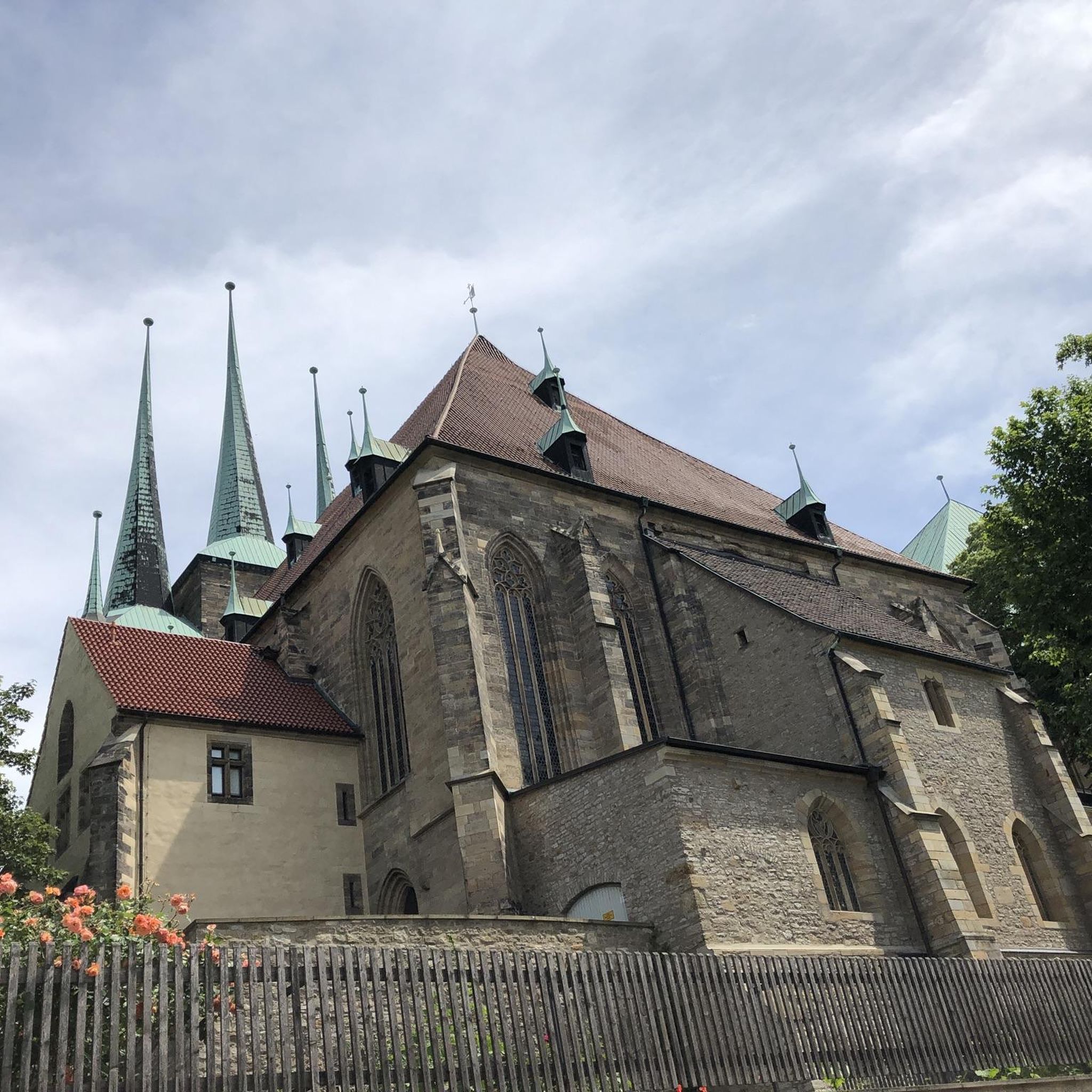
Construction of the Cathedral began in 1523 under an initial Gothic design led by Enrique Egas. In 1528, Diego de Siloé took over and transformed the project into a grand Renaissance masterpiece, making it one of the most important cathedrals of the Spanish Renaissance. Construction continued into the 18th century, and its Baroque façade was designed by Alonso Cano in 1667. It is the first great Renaissance cathedral in Spain and a masterpiece of Spanish art.
12
1
Nasrid origin (11th century): it served the old Azitini Mosque and was supplied by the Aynadamar irrigation ditch, a sophisticated Andalusian hydraulic system. Christian reconstruction (17th century): on top of the original Muslim cistern, next to the current Church of San Nicolás. The current structure dates from 1646 according to Henríquez de Jorquera.
9
0
Granada Cathedral is considered a jewel of the Spanish Renaissance and a must-see in the city. Unique architecture: a fusion of Gothic and Renaissance styles, with contributions from Diego de Siloé and Alonso Cano. Highlights include the Porte del Perdón (Forgiveness Portal), the Main Chapel, and the Plateresque choir stalls.
12
1

Here, people dance in the square on Saturday evenings 🤩. The older students really dressed up. They played everything that works as a couple's dance. There was a slow waltz, a rumba... if you don't want to dance yourself, you can just watch the others. A fantastic experience and a fantastic atmosphere 😍
6
0

The Plaza Nueva is one of the oldest squares in Granada, despite its name suggesting it is new. It is located in the heart of the city, between the modern shopping malls and the charming Carrera del Darro. The square has a rich history and is surrounded by historic buildings such as the Real Chancillería (now the Highest Courts of Andalusia) and the Casa de los Pisa. The square is also home to the beautiful Pilar del Toro, a 16th-century Renaissance column with a fountain that pours water from the head of a bull.
7
0
The Plaza Nueva in Granada is, despite its name, the oldest square in the city. It is located in a strategic point between the modern commercial centre and the picturesque Carrera del Darro. This square is a vibrant and lively place, ideal for starting or ending a tour of Granada. From the Plaza Nueva, you can easily access several points of interest, such as the Alhambra, the Albaicín and the Real Chancillería. In addition, it is a great place to enjoy a drink on one of its terraces, try tapas in the nearby bars or simply relax and observe the atmosphere.
6
0

The chancel is representative of the building's beauty. The chancel's dome is decorated with beautiful windows and sculptures and paintings by Alonso Cano. The three wonderful portals are Ecce Homo, San Jerónimo and El Perdón, the latter with excellent reliefs of Faith and Justice. The main façade is Baroque. The choir stalls are Plateresque. The side chapels contain excellent altarpieces and paintings. The former chapter house now houses the cathedral treasury. Some exhibits are on display in the sacristy and in the cathedral museum. Particularly noteworthy is an Immaculate Conception by Alonso Cano.
8
0
The Metropolitan Cathedral Basilica of the Incarnation is an impressive Catholic temple in the Spanish city of Granada. It is the seat of the local archdiocese and one of the masterpieces of the Spanish Renaissance. The cathedral is dedicated to the mystery of the Incarnation of the Lord. Its construction began in 1526 and was completed in 1561 under the direction of the architect Diego de Siloé. The building combines Renaissance and Baroque elements, and its length is 116 meters with a width of 67 meters. 🌟
18
1
Frequently Asked Questions
What historical landmarks can I explore in and around Güevéjar?
Güevéjar itself offers historical ruins like El Castillejo de Nívar y Güevéjar and the notable La Iglesia de San Idelfonso y Santa Cristina. The town is also part of The Caliphate Trail, a historical route connecting Córdoba and Granada. Just 10 kilometers away in Granada, you can visit the magnificent Alhambra, the oldest square Plaza Nueva, and the impressive Granada Cathedral.
Are there any significant religious sites nearby?
Yes, in Güevéjar, you can visit La Iglesia de San Idelfonso y Santa Cristina. A short distance away in Granada, the Granada Cathedral is a masterpiece of Spanish Renaissance architecture, dedicated to the Incarnation of the Lord.
Where can I find the best views of the area?
For stunning panoramic views, head to the San Nicolás Viewpoint in Granada, which offers breathtaking vistas of the city, the Alhambra, and the Sierra Nevada mountains. Closer to Güevéjar, Peñón de Bartolo provides excellent vantage points and is also where remnants of the old town can be seen.
What natural features are there to explore around Güevéjar?
The area around Güevéjar is known for its karstic caves, offering opportunities for exploration. Additionally, Peñón de Bartolo is a prominent natural feature perfect for excursions and horseback riding, with historical significance as the site of Güevéjar's old town.
Are there hiking opportunities near Güevéjar?
Absolutely. The region offers various hiking trails. Popular options include the 'Caves and Crosses of the Sierra de la Alfaguara Trail' and the 'Cogollos de la Vega Integral Trail'. You can find more details and routes on the Hiking around Güevéjar guide.
What cycling routes are available around Güevéjar?
Cyclists can enjoy several routes, such as the 'Sierra de Huétor — circular desde Alfacar' or the 'Cueva del Gato Viewpoint – Víznar Viewpoint loop from Güevéjar'. For a comprehensive list of options, refer to the Cycling around Güevéjar guide.
Are there any mountain biking trails in the area?
Yes, mountain biking enthusiasts will find trails like the 'Collado del Agua – Path Among Tall Pines loop from Jaén' and the 'Víznar Viewpoint – Cueva del Gato Viewpoint loop from Alfacar'. Explore more options on the MTB Trails around Güevéjar guide.
Are there family-friendly attractions around Güevéjar?
Many of the attractions are suitable for families. In Granada, Plaza Nueva is a central square with cafes and a lively atmosphere. The Granada Cathedral and San Nicolás Viewpoint are also popular with families. Closer to Güevéjar, excursions to Peñón de Bartolo can be a fun outdoor activity for all ages.
Are there accessible trails or attractions for visitors with mobility concerns?
In Granada, Plaza Nueva is noted as being wheelchair accessible, offering a central and easy-to-navigate historical site. For other attractions, it's advisable to check specific accessibility details beforehand, as some historical sites or natural trails may have uneven terrain.
What is the best time of year to visit Güevéjar for outdoor activities?
The spring and autumn months generally offer the most pleasant weather for outdoor activities like hiking and cycling, with milder temperatures. Summers can be quite hot, especially for strenuous activities, while winters are cooler but can still be suitable for walks, particularly on sunny days.
How can I get to the main attractions around Güevéjar using public transport?
Güevéjar is conveniently located just 10 kilometers from Granada, which is well-served by public transport. Local bus services connect Güevéjar to Granada, from where you can access major attractions like the Alhambra, Granada Cathedral, and San Nicolás Viewpoint via city buses or by walking.
What do visitors particularly enjoy about the attractions near Güevéjar?
Visitors frequently praise the historical depth and architectural beauty of sites like the Granada Cathedral, often noting its unique Renaissance and Baroque elements. The panoramic views from San Nicolás Viewpoint are consistently highlighted as breathtaking, especially at sunset. The central and lively atmosphere of Plaza Nueva is also a favorite for its cafes and historical setting.
What is the historical significance of Güevéjar itself?
Güevéjar's present location is a result of relocation following significant earthquakes in 1755 and 1884. Remnants of the old town can still be seen at the base of Peña de Bartolo. The urban area, rebuilt in the late 19th century, features a distinctive layout of straight streets converging at the Plaza de la Constitución, where the town hall and parish church are located.
Most popular routes around Güevéjar
Most popular attractions around Güevéjar

Get inspired with the komoot mobile app


Explore more
Still not found the Highlight you’re looking for? See guides of the top attractions in other regions:
