Attractions and Places To See around Lillo - Top 20
Attractions and places to see around Lillo, a municipality in the province of Toledo, Spain, encompass a range of historical sites and natural landscapes. The area is characterized by its connection to the Don Quixote Route, offering cultural and historical exploration. Visitors can find significant examples of Castilian Baroque architecture and unique saline wetlands. The region provides opportunities for exploring both cultural heritage and natural features.
Best attractions and places to see around Lillo
- The most popular attractions is Church of Nuestra Señora de la Asunción (Tembleque), a religious building constructed between the Gothic and Renaissance styles. Its construction was supported by Cardinal Cisneros in the 16th century, and modifications were supervised by Nicolás Vergara el Mozo.
- Another must-see spot is Casa de las Torres, a historical site. This 18th-century Baroque palace-house features a square plan with a central patio, Tuscan stone columns, and an ornate facade.
- Visitors also love La Guardia, a settlement rich in heritage. This hilltop town offers panoramic views and streets steeped in history, and it is part of a renowned wine-producing region.
- Lillo is known for its historical sites, religious buildings, and natural landscapes. The area offers a variety of attractions to explore, from architectural landmarks to unique wetlands.
- The attractions around Lillo are appreciated by the komoot community, with 8 upvotes and 23 photos shared by visitors.
Last updated: August 26, 2026
Church of Nuestra Señora de la Asunción (Tembleque)
Highlight • Religious Site
It is a transitional building between Gothic and Renaissance. Essentially built in the first half of the 16th century, the modifications carried out between 1582 and 1596 were supervised by Nicolás Vergara el Mozo. It has a Latin cross plan, a single nave of considerable height and a polygonal head. The factory is made of ashlar with powerful buttresses on the outside.
Translated by Google •
Tip by

La Guardia
Highlight • Settlement
Furthermore, it's part of a renowned wine-producing region: within its boundaries lies the Pago Campo de La Guardia vineyard, a wine with a protected designation of origin, adding value for wine tourism enthusiasts.
Translated by Google •
Tip by
Sign up now to discover places like this
Get recommendations on the best single tracks, peaks, & plenty of other exciting outdoor places.
Sign up for free
Plaza Mayor of Tembleque
Highlight • Historical Site
Translated by Google •
Tip by
Casa de las Torres
Highlight • Historical Site
Translated by Google •
Tip by
Villacañas
Highlight • Trail
Translated by Google •
Tip by
Sign up for free to discover even more attractions around Lillo.
Sign up for free
Already have an account?
Start today with a free account
Your next adventure awaits.
Login or Signup


Tips from the Community

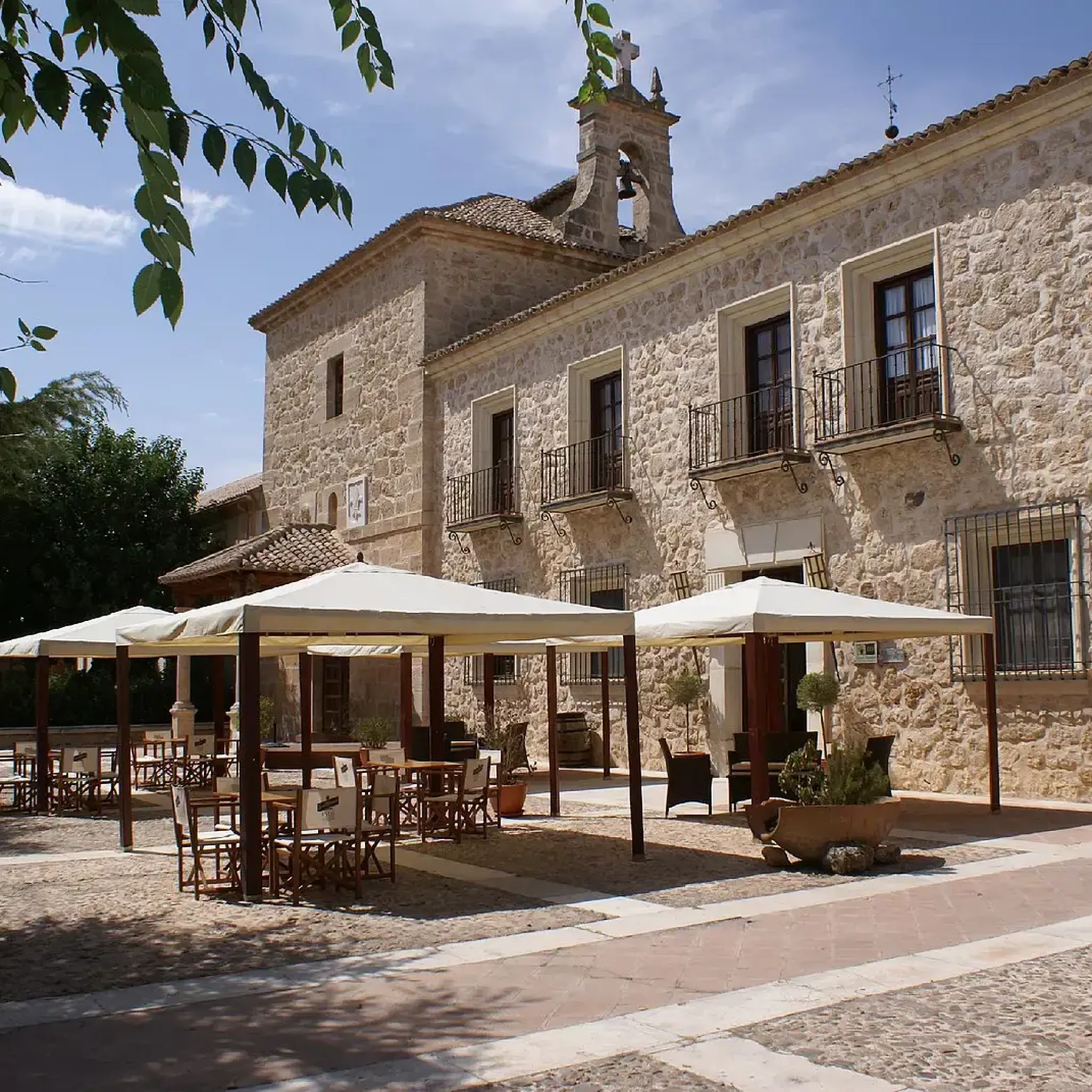
What to see in La Guardia (Toledo) Palace-House of the Jaenes (Ethnological Museum) Church of Our Lady of the Assumption Hermitage of the Holy Child Historic town center and castle ruins Cave houses and dwellings carved into the rock Natural surroundings of the Cedrón Stream and the La Guardia Lagoon Wineries and wine from the Campo de La Guardia region Main Square
12
0
La Guardia is considered a small town, but surprisingly rich in heritage, ideal for a peaceful getaway from Madrid or Toledo. Its hilltop location affords panoramic views, streets steeped in history, and a distinctive character. Although it seems like a town you could visit in a morning, it holds more history, architecture, and scenery than meets the eye. Furthermore, it's part of a renowned wine-producing region: within its boundaries lies the Pago Campo de La Guardia vineyard, a wine with a protected designation of origin, adding value for wine tourism enthusiasts.
13
0
Villacañas (Toledo), in the heart of Toledo's La Mancha region, is a destination that combines cultural heritage, unique nature, and singular traditions.
5
0
The Plaza Mayor of Tembleque, located in the province of Toledo, is one of the most outstanding examples of Castilian popular Baroque and an architectural gem of La Mancha. Construction: Completed in 1598, following the layout of traditional comedy theaters and inns.
15
0

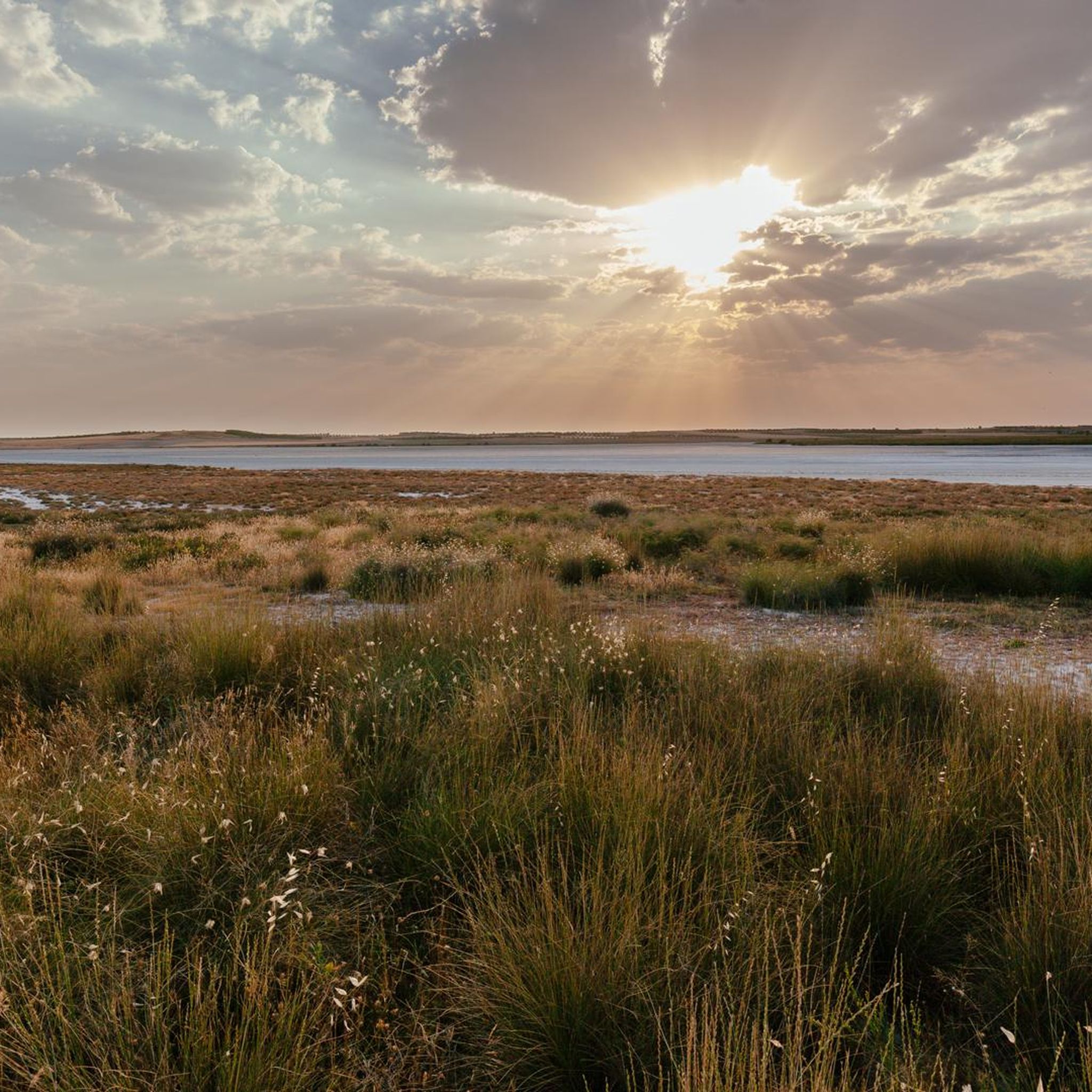
Stage 1. Villacañas/Pedro Muñoz 94 kilometers. 480 positive meters. At the railway station in the Toledo town of Villacañas there is a comfortable parking lot on the side of the town to pack your bags on your bicycle, it is the starting point of the tourist cycle trip to the lake wonders of La Mancha Húmeda. First you have to cross the train tracks through a pedestrian crossing, which can be done without getting off the bike with good balance, and as soon as you cross to the other side the surface of the Trenillo Natural Trail begins. The greenway information panel is a few meters to the right, outside the route, on the esplanade of the old station. The roadbed of the old La Mancha railway goes straight towards Quintanar de la Orden, passes through a roundabout and a kilometer later the detour to the La Mancha Wetlands Natural Trail appears, well signposted on the wall of a country house. The path crosses the La Villa de Don Fadrique road and the show begins, in a large hollow emerges the blue patina of the Larga Lagoon and a detour towards the ornithological observatory on the edge of the wetland. Binoculars are recommended to see the birds up close, sometimes they are far from the shore and at first glance they are small specks on the surface of the water. The road surface is completely gravel, flat, comfortable and fast, it continues through the La Mancha plateau and enters the Cañada Real Soriana Oriental, one of the great pastoral routes that runs through the Iberian Peninsula between the Iberian System and Andalusia. The cattle glen is marked with milestones on the road posts and the route appears perfectly clear on the ground. The 90 Castilian varas (72.22 meters) wide of the livestock route define a natural highway between the agricultural fields, evoking the glorious era of the Mesta and transhumance, from its creation in the 13th century and throughout the Age. Middle, practically until the 19th century, when the powerful migratory routes marked the pulse of the culture, economy and progress of rural societies, they were channels of commerce and communication with a constant social life and it is always pleasant to plan by bicycle over the traces of history, culture and landscape that have had essential meaning over time. The ravine passes through Las Casas Romanas and there is a detour to the left towards the Taray lagoon, which is really a shortcut from the main itinerary. The route continues straight ahead and crosses the Villafranca de los Caballeros road, on the edge of the Tirez lagoon wetland. At the crossroads there is a rest area of the Don Quixote Route, a network of routes for cyclists, horseback riders and hikers of 2,500 kilometers following the places and places narrated in the work Don Quixote of La Mancha, by Miguel de Cervantes, discovering the adventures and misadventures of the knight errant and the faithful squire Sancho. The shore of the extensive Tirez lagoon is far away, it is a huge hypersaline steppe wetland where saltpeter was extracted until recently and it is common to see flamingos, little bustards and curlews. The path runs through the hills that surround the lagoon and changes direction to visit the unique group of Peñahueca lagoons, a saline wetland that looks like a lake setting of the Andean highlands. The wetland is shallow and when the salt precipitates it creates curious saline concretions adorning the small islands and sand corridors that appear within the lagoon. And shortly after there is the detour to the Taray lagoon, which would be the direct shortcut from the royal canyon. The ornithological observatory is one kilometer to the left.
0
1
At the same entrance is the Cross of the Fallen of Tembleque.
29
0
The church of Our Lady of the Assumption of Tembleque owes its construction to the expedition to Oran in 1509, commanded by Cardinal Cisneros. Indeed, in gratitude for the million maravedíes and the company of soldiers supplied by the town of Tembleque, Cisneros made large donations for the construction of the temple, to which were added the contributions of the Priors of San Juan and those of the residents of San Juan. Wobbly. It is a transitional building between Gothic and Renaissance. Essentially built in the first half of the 16th century, the modifications carried out between 1582 and 1596 were supervised by Nicolás Vergara el Mozo. It has a Latin cross plan, a single nave of considerable height and a polygonal head. The factory is made of ashlar with powerful buttresses on the outside.
40
0
In it we can find the tourist office and the Town Hall.
30
0
Frequently Asked Questions
What historical sites can I explore around Lillo?
The area around Lillo is rich in history. You can visit the Church of Nuestra Señora de la Asunción (Tembleque), a significant 16th-century building transitioning between Gothic and Renaissance styles. Another notable site is the Casa de las Torres, an 18th-century Baroque palace-house known for its ornate facade and central patio. Don't miss the Plaza Mayor of Tembleque, an outstanding example of Castilian popular Baroque architecture.
What natural features are there to see near Lillo?
Lillo is surrounded by unique natural landscapes, particularly its saline wetlands. The Tirez Lagoon, part of the Don Quixote Route, is an extensive hypersaline steppe wetland known for attracting flamingos and other birds. You can also discover the Peñahueca Lagoons, a distinctive group of saline wetlands that resemble an Andean high-altitude lake, featuring curious saline concretions.
Are there any family-friendly attractions in the Lillo area?
Yes, several attractions are suitable for families. The La Guardia settlement is considered family-friendly, offering a chance to explore a hilltop town with historical streets and panoramic views. The Plaza Mayor of Tembleque is also a great spot for families to experience local culture and architecture in a central, open space.
What kind of architecture can I expect to see in Lillo and its surroundings?
The region showcases significant examples of Castilian Baroque architecture, particularly in nearby Tembleque. The Plaza Mayor of Tembleque, completed in 1598, is a prime example with its square plan, granite columns, and wooden corridors. The Casa de las Torres is another 18th-century Baroque palace-house with distinctive ornamental motifs.
What is the Don Quixote Route and how does it relate to Lillo?
The Don Quixote Route is a 2,500-kilometer network of routes for cyclists, horseback riders, and hikers that follows the places narrated in Miguel de Cervantes's famous work. The area around Lillo is part of this route, allowing visitors to explore landscapes and towns that inspired the novel, including the Tirez Lagoon. You can find more information about routes in the area on the Cycling around Lillo guide.
What outdoor activities can I do near Lillo?
Lillo offers various outdoor activities, especially around its natural wetlands and historical towns. You can enjoy running, mountain biking, and touring cycling. For specific routes, check out the Running Trails around Lillo, MTB Trails around Lillo, and Cycling around Lillo guides.
Are there hiking or running trails near Lillo?
Yes, there are several trails for running and hiking. For example, you can find routes like 'Laguna Larga – circular from Villacañas' or 'Laguna del Longar Loop Trail'. These trails often take you through the unique wetland landscapes. More options are available in the Running Trails around Lillo guide.
Can I go cycling around Lillo?
Absolutely. The region provides excellent opportunities for cycling, including routes that are part of the Don Quixote Route. You can explore trails like 'La Guardia and its surroundings - circular route' or 'Villacañas Lagoons and La Guardia Loop'. For detailed cycling routes, refer to the Cycling around Lillo guide.
What is the best time of year to visit Lillo's nature reserves?
While specific seasonal tips are not available, visiting during spring or autumn generally offers pleasant weather for exploring nature reserves like the Tirez and Peñahueca Lagoons. These seasons often provide comfortable temperatures for birdwatching and enjoying the unique landscapes without extreme heat.
Are there any viewpoints offering panoramic views near Lillo?
Yes, the hilltop town of La Guardia is known for offering panoramic views of the surrounding area. Its elevated position provides a great vantage point to appreciate the landscape and historical architecture.
What do visitors particularly enjoy about the attractions around Lillo?
Visitors appreciate the blend of historical heritage and unique natural landscapes. The architectural beauty of sites like the Church of Nuestra Señora de la Asunción (Tembleque) and the charm of towns like La Guardia are highly rated. The distinct saline wetlands also offer a memorable experience for nature enthusiasts.
How can I explore the wetlands and lagoons near Lillo?
The wetlands and lagoons, such as the Tirez Lagoon and Peñahueca Lagoons, can be explored via walking, running, or cycling routes. The area is part of the Don Quixote Route, offering designated paths. Binoculars are recommended for birdwatching, especially for spotting flamingos and other species in the Tirez Lagoon.
Most popular attractions around Lillo

Get inspired with the komoot mobile app


Explore more
Still not found the Highlight you’re looking for? See guides of the top attractions in other regions:
