The 7 Most Amazing Peaks around Cullera
Best mountain peaks around Cullera are characterized by the prominent Muntanya de Cullera, a singular geographical feature rising directly from the town and coastline. This area offers strategic views of the Júcar River alluvial plain, the Albufera Natural Park, and the Mediterranean Sea. The region is rich in historical significance, featuring ancient sites and the Cullera Castle, alongside diverse natural landscapes. Its unique position as the last foothills of the Iberian System before the sea makes it a notable landmark.
…Last updated: June 29, 2026
L'Ouet
Highlight • Summit
Translated by Google •
Tip by

Creu del Cardenal
Highlight • Summit
Translated by Google •
Tip by

Sign up now to discover places like this
Get recommendations on the best single tracks, peaks, & plenty of other exciting outdoor places.
Sign up for free
La Ratlla
Highlight • Summit
Translated by Google •
Tip by
L'Esquellot on the Penyal de Ferragut
Highlight • Summit
Translated by Google •
Tip by

Cavall Bernat
Highlight • Summit
Translated by Google •
Tip by
Sign up for free to discover even more peaks around Cullera.
Sign up for free
Already have an account?
Start today with a free account
Your next adventure awaits.
Login or Signup

Other adventures around Cullera

Tips from the Community

L'Ouet is a peak in the Sierra de Corberá, near Alzira. It is a popular destination for hiking enthusiasts due to its stunning panoramic views and natural surroundings. The route to L'Ouet is quite accessible and well signposted, making it suitable for hikers of different levels.
3
0

L'Esquellot, in Spanish the cowbell, is located at the top of the Ferragut Rock. We can get there by two paths from behind the Safor service area, next to the BP gas station on the E-15 at the height of Xeraco. L'Esquellot is located there thanks to a challenge that the Xeraco mountain club (Club Muntanyer Xeraco) once placed, to encourage people to climb the mountain and ring the bell. From this point we have magnificent views of the sea, we can also see the town of Xeraco, the Vaca River that flows towards the sea, and the Guaita de Xeraco tower.
4
0
From the top of La Creu the views are spectacular wherever you look.
11
0

The walk to Carvalho Bernat was beautiful, but once over the top the follow-up route was no longer visible and we had to take the same (very steep) route back to the start/end point.
0
0

From Favara through the Barranco de Infierno. Classified as dangerous according to Komoot, which is not true. Very interesting prospects for La Mola. A safety cable is stretched across the rock face. Climb up the last bit. Extensive views over the coast from the Montgo to Valencia. View of L'Ouet.
0
1

A great hiking area. Check out the area and my hike in the video: https://youtu.be/jKT0SaA3j6g
2
0

The best views towards La Ribera Baja and the Levante coast of Cullera and El Brosquil. The climb is quite a challenge but the views are more than rewarding. The path is well signposted and in good condition, it becomes more entertaining and challenging as you gain height.
2
1
Frequently Asked Questions
What are the most popular mountain peaks to visit around Cullera?
Visitors frequently enjoy the panoramic views from peaks like Creu del Cardenal, which offers spectacular vistas towards La Ribera Baja and the Levantine coast. Another favorite is L'Ouet, known for its beautiful views of the Vall de La Casella and the coast. The Muntanya de Cullera itself is a prominent landmark, offering expansive views of the Júcar River alluvial plain, the Albufera Natural Park, and the Mediterranean Sea.
Are there any family-friendly mountain hikes in Cullera?
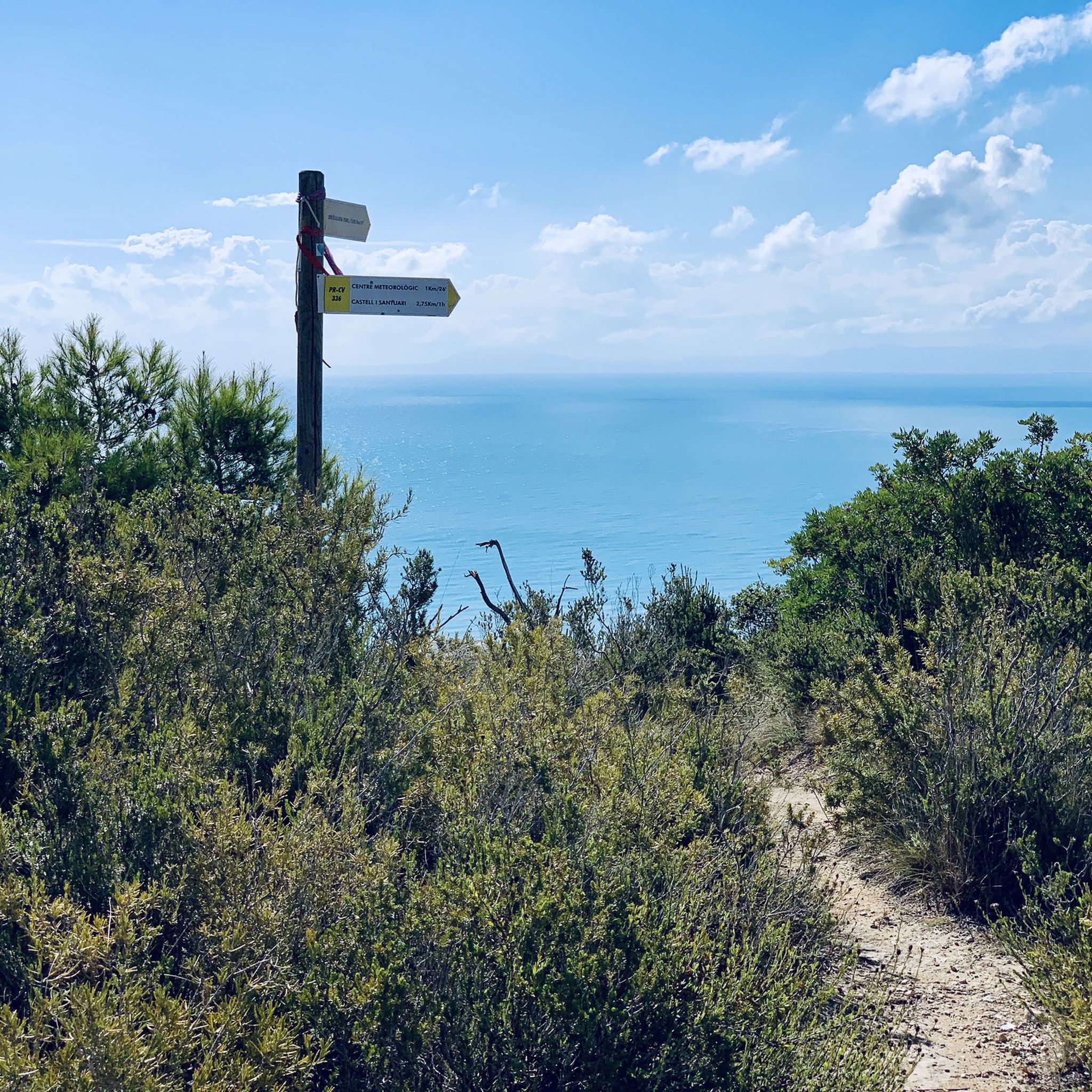
The Muntanya de Cullera, also known as Muntanya de les Raboses, is generally accessible for many, with its gentle profile and less steep gradients. Climbing times typically range from 45 to 75 minutes, making it suitable for families looking for a moderate outdoor experience. The Senda de la Lloma (PR-CV 336) is a popular circular route on this mountain that showcases both natural beauty and historical sites.
What kind of historical and cultural sites can I find on the mountains near Cullera?
The Muntanya de Cullera is rich in history. It features the impressive Cullera Castle (Castillo-Santuario de Cullera), an Arab fortress with a hermitage and a Neo-Romanesque sanctuary. You can also find archaeological sites dating back to the Upper Paleolithic period, the Fortí (a Carlist-era fort), and stations of the Via Crucis along the Calvary Walk.
What are the best viewpoints in the Cullera mountains?
Many peaks offer stunning views. Creu del Cardenal provides spectacular views of La Ribera Baja and the Levantine coast. From La Ratlla, you can see the Levantine coast, Cullera, Tavernes, and the Serra de les Agulles. L'Ouet offers panoramic views of the Vall de La Casella and the coast. The Muntanya de Cullera itself is a prime spot for panoramic vistas of the town, its beaches, and the Mediterranean Sea.
Are there challenging mountain trails for experienced hikers around Cullera?
Yes, for more experienced hikers, peaks like Cavall Bernat offer routes with some technical difficulty, including rocky sections and steep steps. This summit provides incredible views of the Serra de Corbera and the Valley of La Murta and can be combined with the ascent to Creu del Cardenal for a longer, more challenging hike.
What natural features can I observe on the Muntanya de Cullera?
The Muntanya de Cullera, despite urban development, still offers natural areas like the Sant Llorenç Pond (Bassa de Sant Llorenç) and the Racó de Santa Marta. Its Mediterranean ecosystem, combined with proximity to the Albufera and Sant Llorenç Pond, makes it a good location for observing marine birds during migratory periods. Geologically, it's a calcareous monocline with karstification features like caves and shelters.
What outdoor activities can I do near the mountain peaks of Cullera?
Beyond hiking, the region around Cullera offers various outdoor activities. You can explore numerous road cycling routes, including loops around the Albufera Lake or to the Cullera Lighthouse. There are also many running trails, such as circular routes around the Muntanya and the beaches. For mountain biking enthusiasts, MTB trails lead to viewpoints and through diverse landscapes.
How long does it typically take to hike the Muntanya de Cullera?
Hiking the Muntanya de Cullera, with its gentle profile, typically takes between 45 to 75 minutes to reach the summit, depending on your pace and starting point. This makes it a manageable hike for many visitors.
What makes L'Esquellot on the Penyal de Ferragut unique?
L'Esquellot, meaning 'cowbell' in Spanish, is located at the top of the Ferragut Rock. A cowbell was placed there by the Xeraco mountain club as a challenge to encourage people to climb and ring it. From this point, you get magnificent views of the sea, the town of Xeraco, and the Vaca River.
What is the best time of year to hike the mountains around Cullera?
While specific data isn't provided, the Mediterranean climate of Cullera suggests that spring (April-May) and autumn (September-October) would be ideal for hiking. During these seasons, temperatures are milder, and the weather is generally pleasant, avoiding the intense heat of summer and potential winter rains.
Are there any circular walking routes available on the mountains near Cullera?
Yes, the Senda de la Lloma (PR-CV 336) is a well-known circular route on the Muntanya de Cullera. This trail allows hikers to explore the mountain from north to south, passing by the castle-sanctuary and the fort, and ascending to the summit, offering a comprehensive experience of the area.
Most popular routes around Cullera
Most popular attractions around Cullera

Get inspired with the komoot mobile app


Explore more
See even more amazing summits around Cullera with these guides:
