Attractions and Places To See around Aguilar De Segarra - Top 20
Best attractions and places to see around Aguilar De Segarra, a municipality in Catalonia, include historical fortifications, ancient churches, and diverse natural landscapes. The area features a rugged terrain of hills and valleys, offering numerous mountain paths and forest trails. Visitors can explore medieval vestiges and traditional farmhouses, reflecting the region's rich cultural and architectural heritage.
Best attractions and places to see around Aguilar De Segarra
- The most popular attractions is Collbaix Summit, a summit that is a 543-meter…
Last updated: July 7, 2026
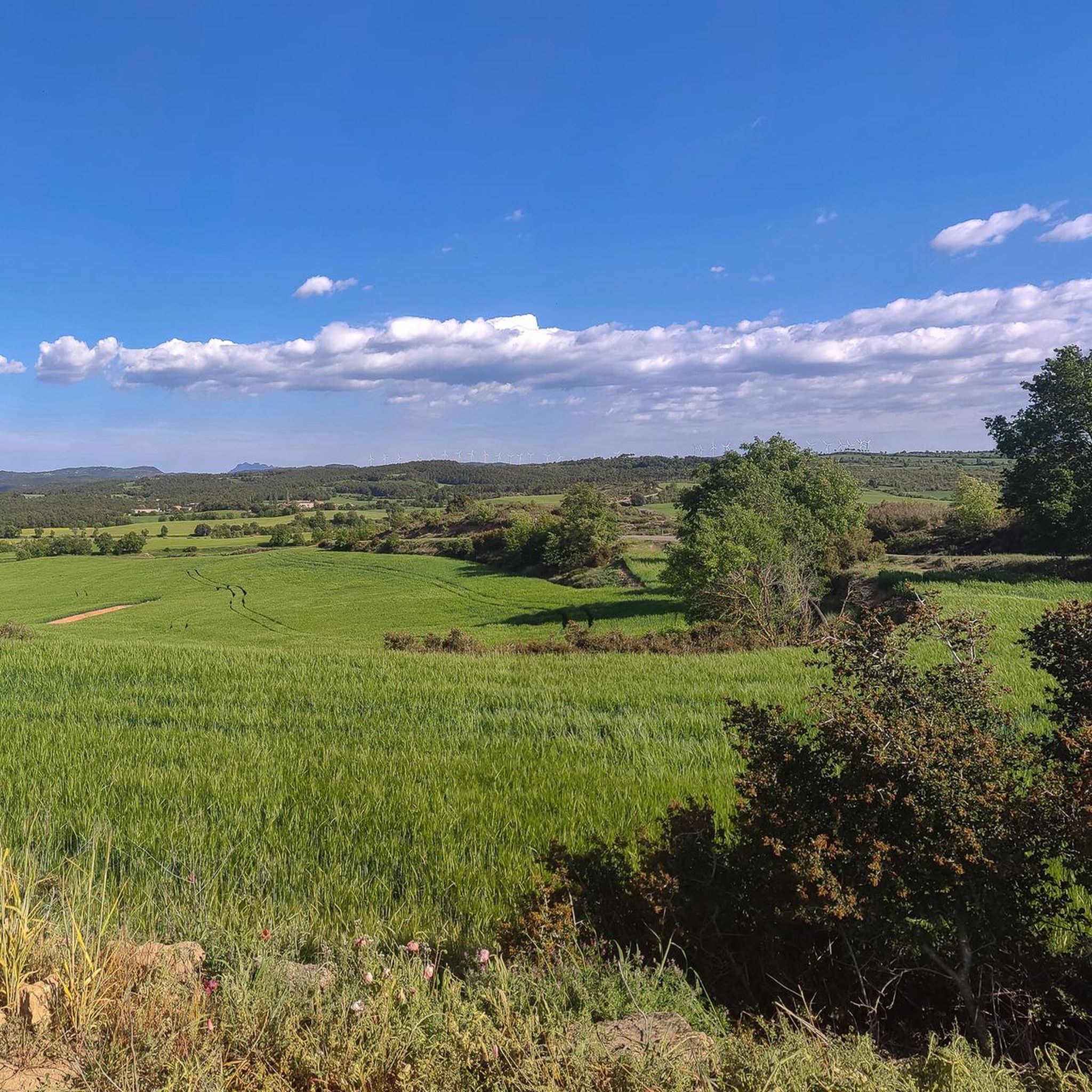
Collbaix Summit
Highlight • Summit
Translated by Google •
Tip by

Cal Jepot wine vat
Highlight • Monument
Translated by Google •
Tip by
Sign up now to discover places like this
Get recommendations on the best single tracks, peaks, & plenty of other exciting outdoor places.
Sign up for free
Cogulló of Can Torra
Highlight • Summit
Translated by Google •
Tip by

Castelltallat Castle and astronomical observatory
Highlight • Castle
Showing Translation
Tip by

Santuari de Pinós
Highlight • Religious Site
Translated by Google •
Tip by

Sign up for free to discover even more attractions around Aguilar De Segarra.
Sign up for free
Already have an account?
Start today with a free account
Your next adventure awaits.
Login or Signup

Tips from the Community

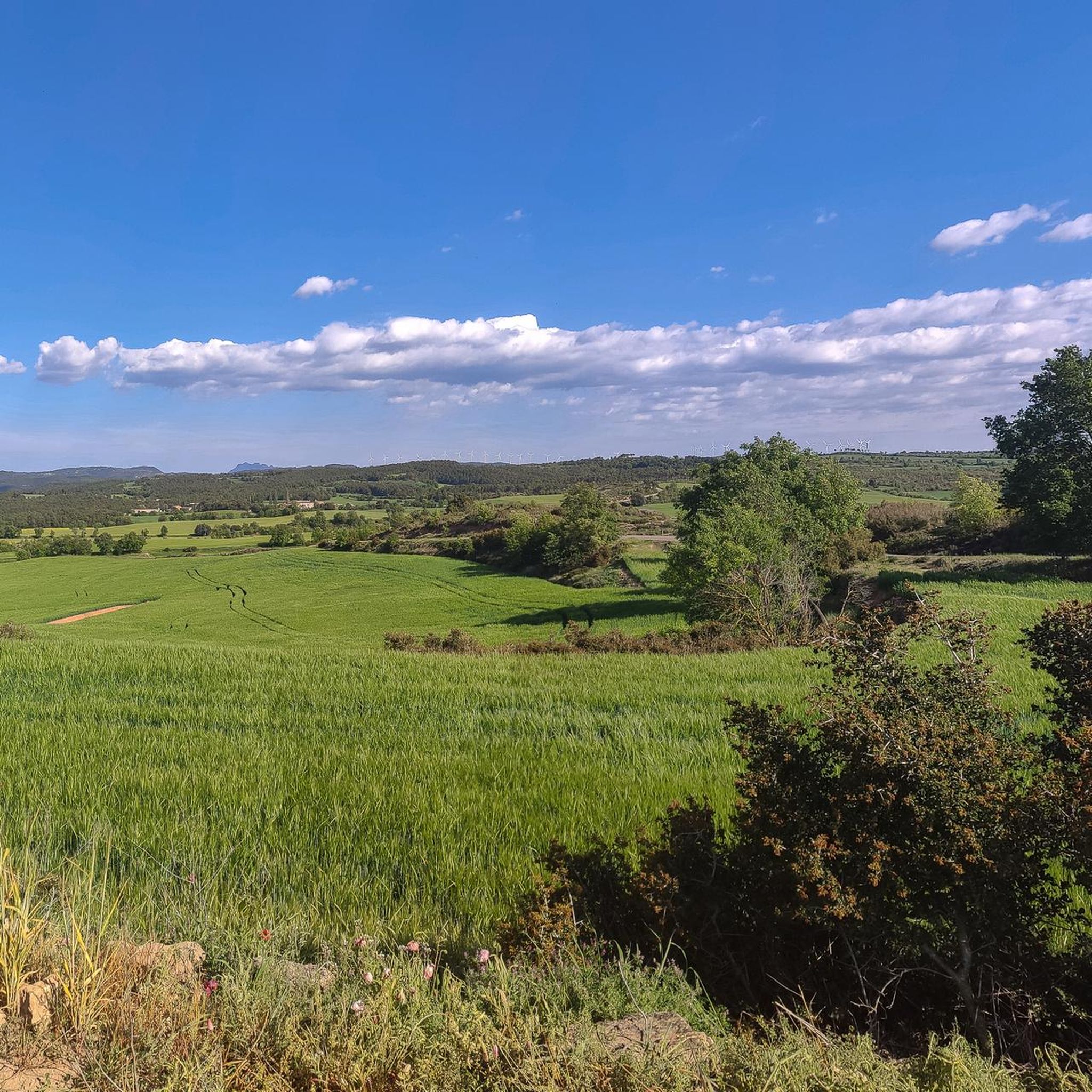
The ascent to the castle and observatory of Castelltallat is one of the cycling classics of this sparsely populated area. In this mountain range there are only a few farmhouses, which contributes to the low light pollution and makes the installation of an observatory ideal. On the ascent, the views of Montserrat are spectacular.
1
0

Santa Maria de Pinós or Sanctuary of Pinós or Our Lady of Pinós is a church of the municipality of Pinós al (Solsonès) included in the Inventory of the Architectural Heritage of Catalonia. Source: Wikipedia
0
0

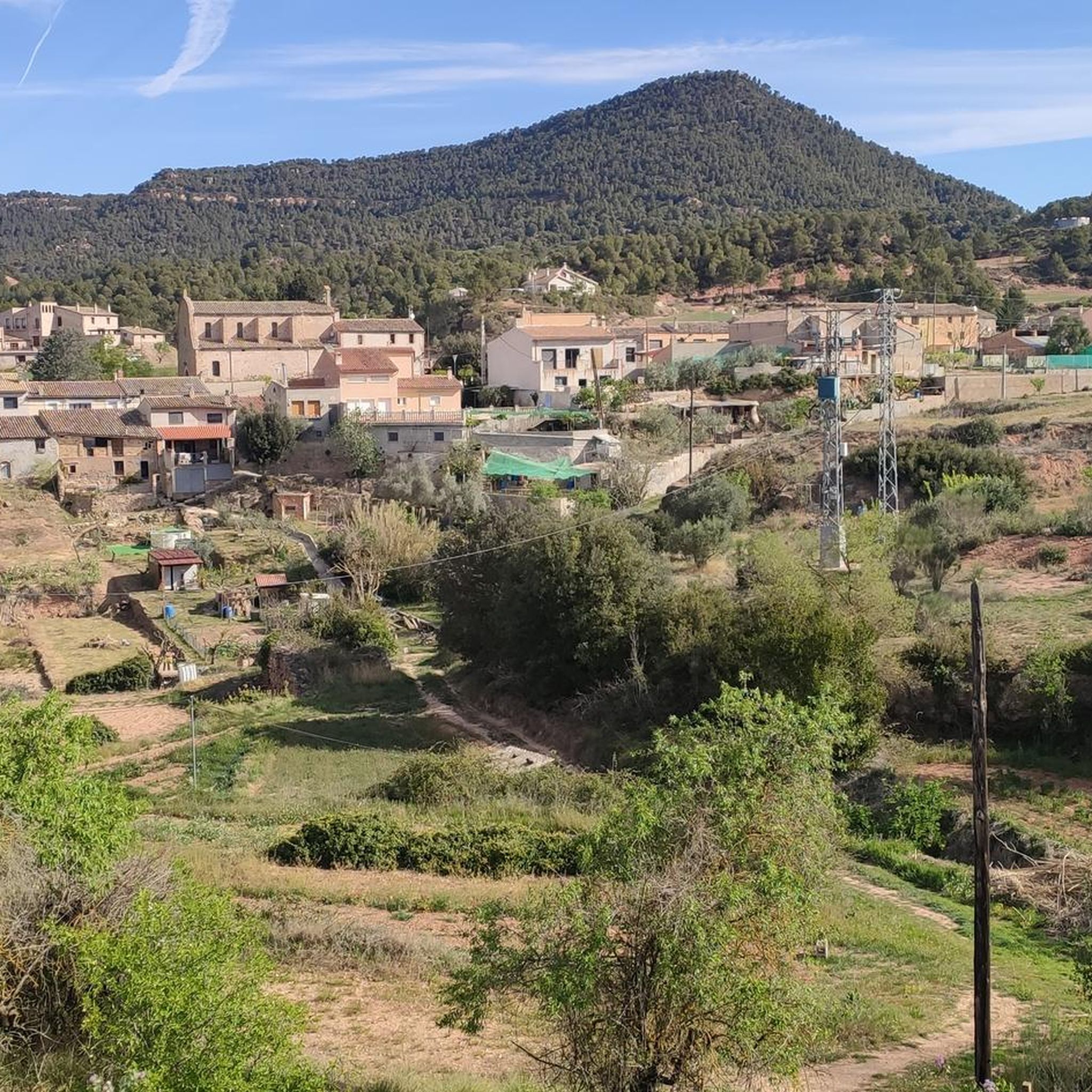
I grew up there, long before the observatory and the archaeological works at the Castle. When we were little, it seemed to us that the idea that there was a castle behind the church was a chimera. When it was brought to light, it seemed like magic.
0
0
Historic center of Catalonia, more beautiful than the official one.
0
0

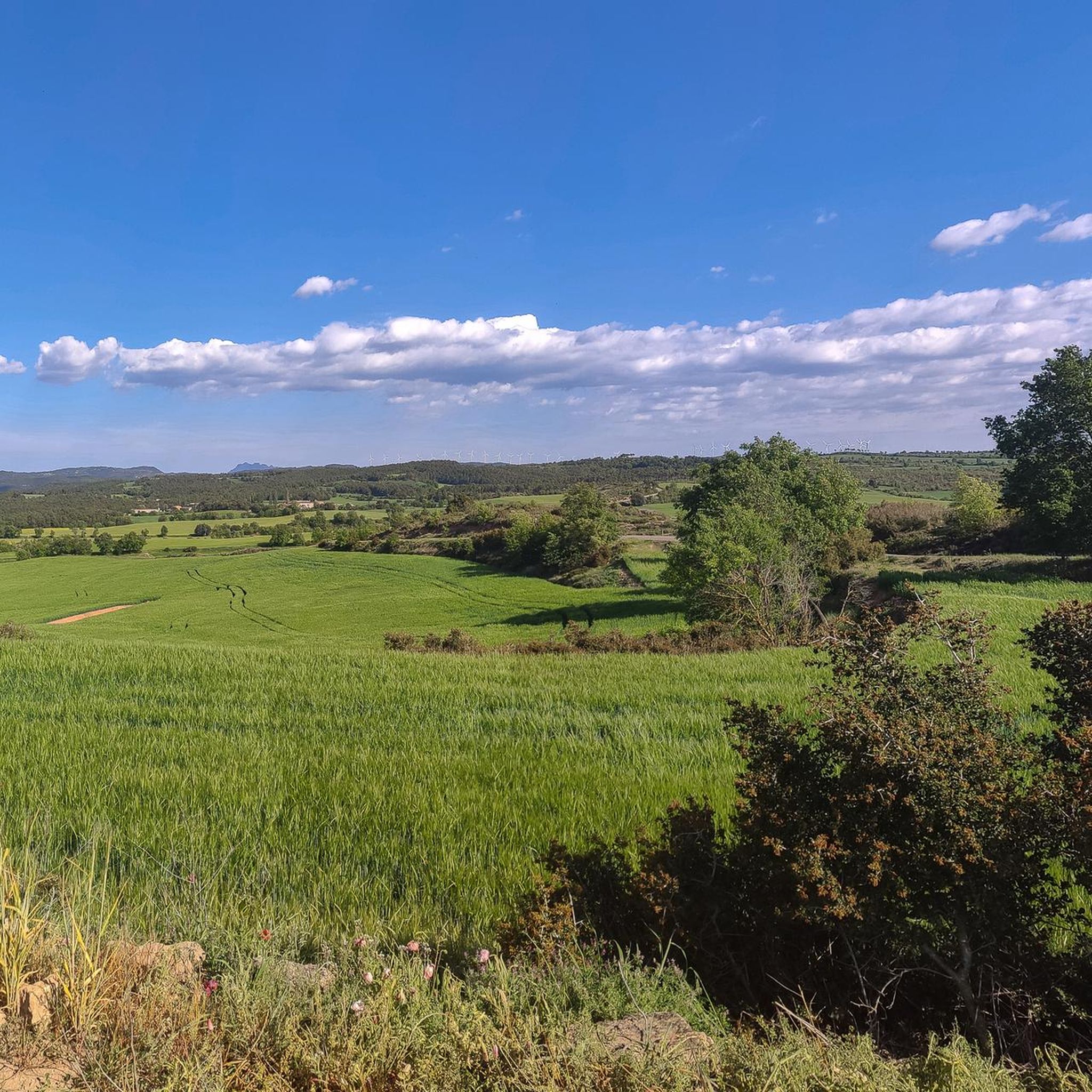
Collbaix is a 543 meter peak, located in Sant Joan de Vilatorrada. It is the highest in the district of Manresa, to the west of Pla de Bages, which has an excellent observation point. It is listed as a large park by the Planning Plan of Manresa. The mountain is located between the streams of Rajadell and Fonollosa. The south side belongs to Manresa, the east to Sant Joan de Vilatorrada, where the town's expansion area is located. Rajadell has the area of Punta Sabata and Fonollosa with most of the summit, the west and the obac slope. Collbaix originated from the erosion of the surrounding land. A resistant layer of conglomerates protects the flat top from erosion, forming a plateau. The summit is made up of large blocks of stone separated from each other. At the top we can find a geodesic vertex (reference 280109001) A metal table with an engraved map of the region. This peak is included in the list of the 100 peaks of the FEEC.
1
0
The tubs are constructions that have very similar characteristics. Its exterior plan can be quadrangular or circular, but the interior structure is basically the same. The lower part of it is made with stone and mortar. The interior is usually circular, and is covered with varnished ceramic pieces. Then, as an extension of the tub, some dry stone walls were built that gave its square or circular outer structure, where an opening was built. The roof is usually formed by a conical vault of dry stone covered with earth to make it waterproof. The vat usually has an upper access from where the must was poured once pressed, and at the bottom were the spouts through which it was emptied. Sometimes they have an attached hut that closes the access to the tub from the bottom and can also be used to store tools. In the area of Sant Joan de Vilatorrada and Sant Martí de Torruella some tubs are preserved as isolated architectural elements, in some cases it is simply the tub without any other element in the middle of a field. On other occasions it is a group of tubs (three or four) to which a hut has been added at the foot of each tub.
1
0
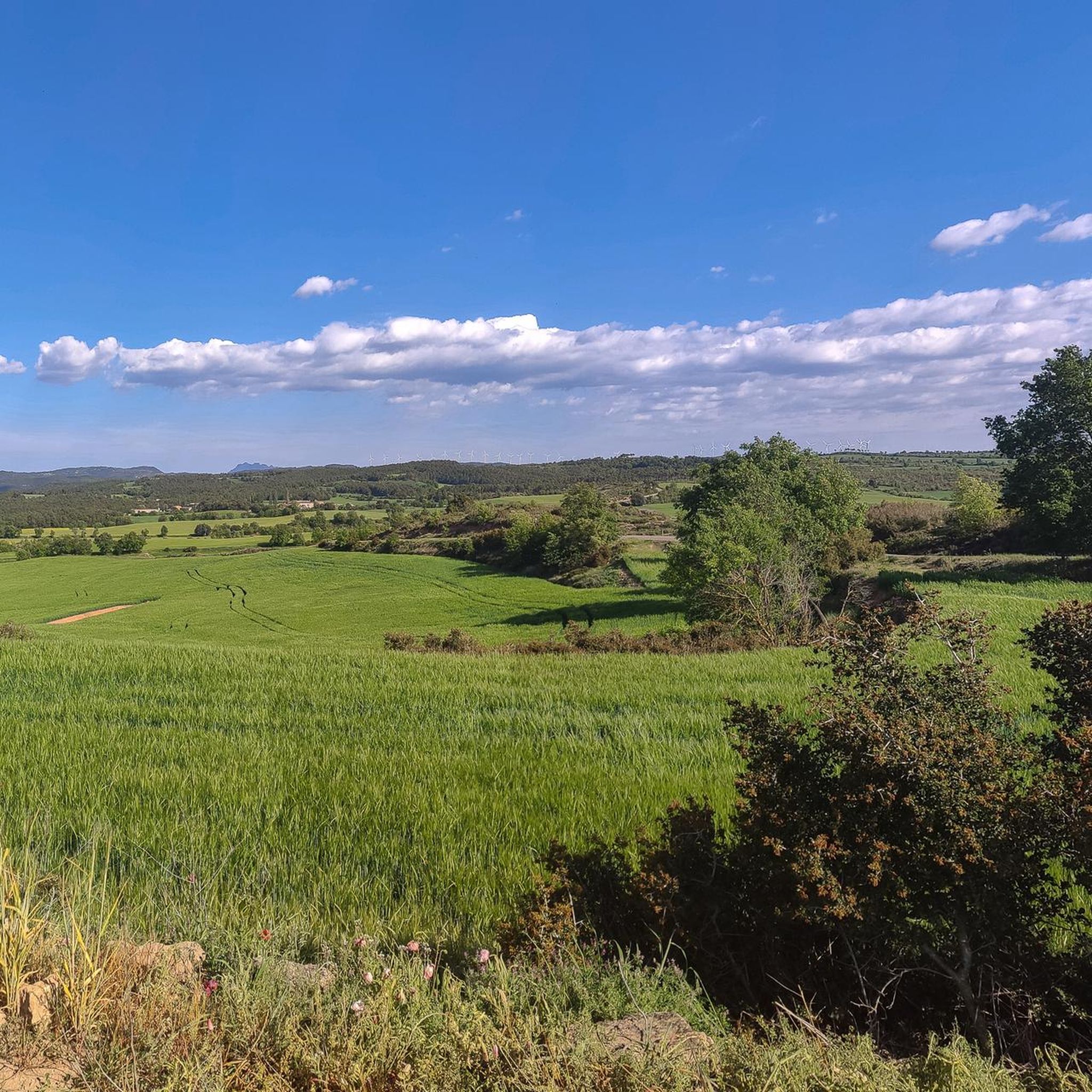
peak of Cogulló de Cal Torre, a mountain included in the list of the 100 Peaks of the FEEC and bordering the municipalities of Rajadell and Castellfollit del Foix. At its summit, the ridges of the Serra del Colomer (which we climbed), the Serra de Cal Torre (parallel to the first and also called the Palomes on some maps), and the ridge of La Serra converge , through which we will continue the path. From the top we have magnificent views of Montserrat, Sant Llorenç, Montseny and part of Central Catalonia. But on clear days we can also see the Pyrenees, such as Pedraforca, Gallina Pelada or Cadí. At the top we will find a wooden fire watch house as well as a geodesic vertex (reference 277112001). This peak is one of the disputed points for the centrality of Catalonia, for which, every September 11, a very crowded gathering is held there. Unfortunately, the summit is accessible to motor vehicles, motorbikes but also all-terrain vehicles, which damages the balance of the environment.
0
0

Very close to the Geographical Center of Catalonia.
0
0
Frequently Asked Questions
What historical sites can I explore around Aguilar de Segarra?
The region is rich in history. You can visit the historic Castelltallat Castle, which also hosts an astronomical observatory. Other significant historical sites include the Castle of Aguilar and the Castle of Castellar, both medieval fortifications. The Romanesque Church of Sant Andreu d'Aguilar and the Gothic Church of Santa María from the 13th century are also notable cultural sites.
Are there any natural viewpoints or summits to visit?
Yes, the area offers several excellent viewpoints. The Collbaix Summit is a 543-meter peak and the highest point in the Manresa district, offering an excellent observation point. Another great option is the Cogulló of Can Torra, which provides magnificent views of Montserrat, Sant Llorenç, Montseny, and even the Pyrenees on clear days. The Sanctuary of Pinós, located at 904 meters, also offers a magnificent panoramic view.
What kind of outdoor activities can I do near Aguilar de Segarra?
Aguilar de Segarra's rugged terrain is ideal for outdoor enthusiasts. You can find numerous mountain paths and forest trails for hiking. There are also options for gravel biking and cycling. For detailed routes, you can explore guides like Hiking around Aguilar De Segarra, Gravel biking around Aguilar De Segarra, and Cycling around Aguilar De Segarra.
Are there family-friendly attractions in the area?
Yes, the Castelltallat Castle (astronomical observatory) is considered family-friendly and offers activities designed for all types of audiences, including sky observation. Additionally, the Wild Forest Reserve provides tours and workshops related to wildlife care and environmental education, which can be an engaging experience for families.
Where can I learn about the region's wine-making history?
Aguilar de Segarra has a historical connection to wine production. You can visit the Cal Jepot wine vat, a historical site showcasing traditional wine vats (tinas) and their associated structures. Some nearby farmhouses still produce wine, offering a glimpse into this tradition.
What are some unique cultural points of interest?
Beyond castles and churches, you can explore traditional farmhouses (Masías) like Cal Ros or Cal Cots, which reflect the agricultural heritage. The ancient wine vats (tinas) found in areas like Sant Joan de Vilatorrada and Sant Martí de Torruella are also unique architectural elements. The region also preserves various medieval vestiges.
Are there any specific hiking trails recommended for exploring the natural landscape?
The area is perfect for hiking. The Geological Itinerary of Castellar offers an educational journey through local geology. The PR-C74 Route is a circular trail with panoramic views of fields, forests, and farmhouses. More challenging trails can be found around Puig Pedrós. For more options, refer to the Hiking around Aguilar De Segarra guide.
What is the Wild Forest Reserve and what does it offer?
The Wild Forest Reserve is a natural sanctuary dedicated to wildlife rehabilitation and conservation. Visitors can take tours to learn about their efforts, observe wild animals, and even participate in workshops focused on wildlife care and environmental education. It's a great opportunity to connect with nature and support conservation.
Can I observe the night sky in Aguilar de Segarra?
Yes, the Castelltallat Castle (astronomical observatory) is an excellent spot for astrotourism. Located at 911 meters above sea level in a very unpopulated area, it offers a privileged location for sky observation with minimal light pollution.
What kind of views can I expect from the summits?
From summits like Collbaix Summit and Cogulló of Can Torra, you can expect extensive panoramic views. These include the Pla de Bages, Montserrat, Sant Llorenç, Montseny, and on clear days, even the distant Pyrenees. The Sanctuary of Pinós also provides magnificent all-round views of the surrounding lands.
Are there any religious buildings of historical significance?
Absolutely. The Romanesque Church of Sant Andreu d'Aguilar is an important cultural site. Other notable churches include Sant Miquel de Castellar, Santa Magdalena de Còdol-Rodon, Santa Maria de les Coromines, and Santa Maria del Grauet. The Gothic-style Church of Santa María from the 13th century is also a significant testament to the region's architectural heritage. Additionally, the Sanctuary of Pinós, built by the Templars in 1312, holds historical and religious importance.
Most popular routes around Aguilar De Segarra
Most popular attractions around Aguilar De Segarra

Get inspired with the komoot mobile app


Explore more
Still not found the Highlight you’re looking for? See guides of the top attractions in other regions:
