The best cycling routes around Carnac-Rouffiac
4.4
(281)
1,615
riders
154
rides
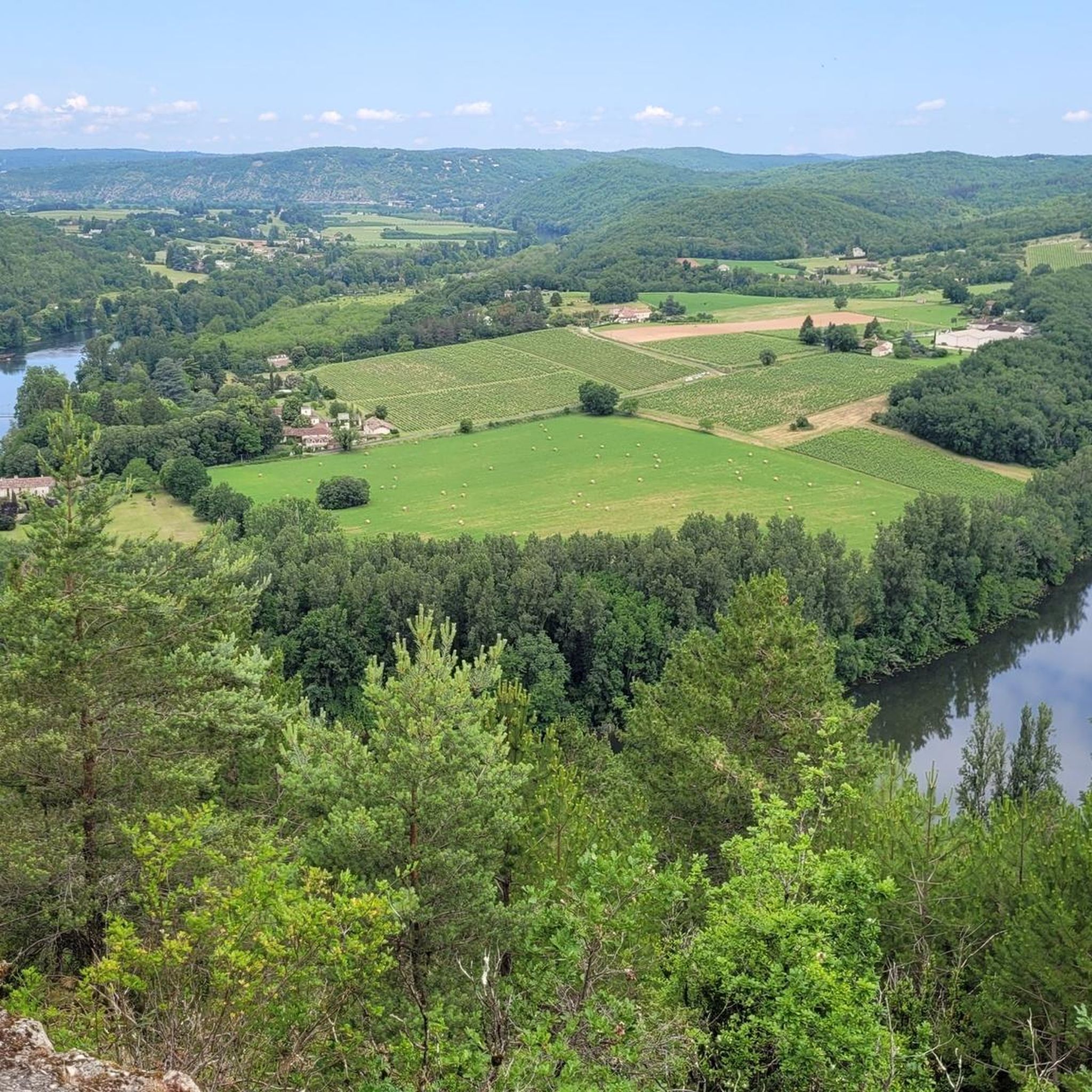
Touring cycling around Carnac-Rouffiac, nestled in France's Lot department, offers routes through the distinctive Quercy Blanc region. This area is characterized by its white limestone geology, varied topography with elevations ranging from 130m to 300m, and the presence of the Séoune and Lissourgues rivers. The landscape features a mix of river valleys and limestone plateaus, providing diverse scenery for cyclists.
Best touring cycling routes around Carnac-Rouffiac
- The most popular touring cycling route is Albas – Luzech loop from Sauzet,…
Last updated: October 11, 2026
4.6
(5)
5
riders
17.3km
01:16
310m
310m
Moderate bike ride. Good fitness required. Mostly paved surfaces. Suitable for all skill levels.
4.3
(7)
6
riders
23.3km
01:31
310m
310m
Moderate bike ride. Good fitness required. Mostly paved surfaces. Suitable for all skill levels.

3.0
(1)
8
riders
39.8km
02:34
510m
510m
Hard bike ride. Very good fitness required. Mostly paved surfaces. Suitable for all skill levels.
5
riders
11.3km
01:04
220m
220m
Moderate bike ride. Good fitness required. Mostly paved surfaces. Suitable for all skill levels.
5
riders
Moderate bike ride. Good fitness required. Mostly paved surfaces. Suitable for all skill levels.
Get access to more routes and recommendations from other explorers.
Already have an account?
Our route recommendations are based on thousands of hikes, rides, and runs completed by other people on komoot.
Start today with a free account
Your next adventure awaits.



Tips from the Community

The Valentré Bridge is one of the few fortified medieval bridges remaining in the world. Its Gothic military architecture makes it a masterpiece of defense and engineering. 1308: The start of construction: The decision to build the bridge was made by the consuls of Cahors to secure the western access to the city and adapt to the flourishing trade. 1308-1378: An endless construction site: The work lasted nearly 70 years, slowed down by the Black Death and the Hundred Years' War. It is from this legendary slowness that the famous legend of the Devil was born. 1879: The great restoration: Having become dilapidated, the bridge underwent a major restoration led by the architect Paul Gout (a student of Viollet-le-Duc). He chose to add the famous sculpture of the little devil on the central tower to immortalize the legend. 1998: Worldwide recognition: The bridge was inscribed on the UNESCO World Heritage list as part of the Routes of Santiago de Compostela.
0
0
The first bridge of Cabessut, called the "Pont Neuf", was built of stone in the 13th century by the consuls and clergy of the town. It originally had two defensive towers which were destroyed in 1816. The old stone bridge was demolished in the early 20th century (around 1906) to make way for a wider structure.
0
0
The Valentré Bridge is one of the few fortified medieval bridges in the world. Its Gothic military architecture makes it a masterpiece of defense and engineering. 1308: The start of construction: The decision to build the bridge was made by the consuls of Cahors to secure the western access to the city and adapt to the flourishing trade. 1308-1378: An endless construction site: The work lasted nearly 70 years, slowed down by the Black Death and the Hundred Years' War. It is from this legendary slowness that the famous legend of the Devil was born. 1879: The great restoration: Having become dilapidated, the bridge underwent a major restoration led by the architect Paul Gout (a student of Viollet-le-Duc). He chose to add the famous sculpture of the little devil on the central tower to immortalize the legend. 1998: Worldwide recognition: The bridge was inscribed on the UNESCO World Heritage list as part of the Routes of Santiago de Compostela.
0
0
L'Ange de Lazaret, a monumental bronze by sculptor Marc Petit (born in Saint-Céré in the Lot), is placed facing the tympanum of the north portal of the cathedral.
0
0
An essential monument of the Occitanie region, it is distinguished by its large domes on pendentives, among the largest in France. The cathedral is doubly classified: as a Historic Monument in France and as a UNESCO World Heritage Site as part of the Routes of Santiago de Compostela.
0
0
Built within a wide meander of the Lot river, the town features a unique fortified silhouette and preserved heritage that earns it the label of "City of Art and History".
0
0
The Halle de Cahors (historically known as the Halle aux grains) is the heart and soul of Cahors' commercial life in the Lot department. This magnificent historic covered market is home to many artisans and food producers, offering the best of Quercy's local products.
1
0
Place François-Mitterrand in Cahors is a vast mineral and tree-lined esplanade that forms the cultural and modern heart of the city of Cahors. Located on the edge of Boulevard Léon Gambetta, it serves as an ideal link for exploring the city and hosts numerous events throughout the year.
0
0
Frequently Asked Questions
How many touring cycling routes are available around Carnac-Rouffiac?
The Carnac-Rouffiac area offers a wide selection of touring cycling routes, with over 150 different options to explore. These routes cater to various skill levels, from easy rides to more challenging excursions.
What kind of landscape can I expect while cycling in the Carnac-Rouffiac area?
You'll be cycling through the distinctive Quercy Blanc region, characterized by its unique white limestone geology. The landscape features a beautiful mix of river valleys, such as those formed by the Séoune and Lissourgues rivers, and limestone plateaus, offering diverse and picturesque scenery.
What do other touring cyclists enjoy the most about cycling in Carnac-Rouffiac?
The touring cycling routes in Carnac-Rouffiac are highly rated by the komoot community, with an average score of 4.3 stars from over 200 reviews. Cyclists often praise the varied terrain, the scenic views of the Lot river area, and the charming historical sites encountered along the way.
Are there touring cycling routes suitable for beginners or less experienced cyclists in Carnac-Rouffiac?
Yes, there are options for less experienced cyclists. The region offers 19 easy touring cycling routes. For example, the Viewpoint historic Belaye – Medieval village of Bélaye loop from Bélaye is a moderate 11.3 km route that can be completed in just over an hour, offering a taste of the area's history and views.
Are there challenging touring cycling routes for experienced cyclists?
Absolutely. For those seeking a more demanding ride, there are 67 difficult touring cycling routes in the area. An example is the Lauzerte – Montcuq Old Town loop from Barguelonne-en-Quercy, a challenging 59 km route with over 700 meters of elevation gain, perfect for cyclists with good fitness.
Can I find circular touring cycling routes in the Carnac-Rouffiac region?
Yes, many of the touring cycling routes in the area are designed as loops, allowing you to start and finish in the same location. Popular circular routes include the Albas – Luzech loop from Sauzet and the Luzech – Albas loop from Albas, both offering scenic rides through river valleys and plateaus.
What historical villages or towns can I visit along the cycling routes near Carnac-Rouffiac?
The region is rich in historical sites. You can cycle to charming villages like Albas, located about 6 km away, or Montcuq Old Town, about 8 km distant. The picturesque village of Puy-l'Évêque, known as one of the most beautiful along the Lot river, is also accessible by bike.
Are there any notable landmarks or natural features to see while cycling?
Beyond the charming villages, you can encounter several interesting landmarks. The Albas suspension bridge is a notable feature near the village of Albas. The broader Lot department is also known for its natural beauty, including impressive caves further afield, though these require a longer detour.
Is it possible to cycle with family or children on these routes?
While the guide doesn't specifically list 'family-friendly' routes, the 19 easy routes available could be suitable for families with older children or those comfortable with moderate distances and some elevation. Always check the route details for distance and elevation before heading out with younger family members.
What is the best time of year for touring cycling in Carnac-Rouffiac?
The spring and autumn months generally offer the most pleasant conditions for touring cycling in the Lot department. The weather is typically milder, and the landscapes are vibrant, making for a comfortable and scenic experience. Summers can be warm, so early morning rides are often preferred during peak season.
Are there options for parking near the cycling routes?
While specific parking locations aren't detailed for every route, many villages and towns that serve as starting points for these tours, such as Albas, Luzech, or Bélaye, typically offer public parking facilities. It's advisable to check local information for parking availability in your chosen starting village.
Can I access the cycling routes using public transport?
Public transport options directly to the starting points of all cycling routes around Carnac-Rouffiac may be limited. The region is more rural, so having your own transport or cycling to the starting points from nearby towns is often the most practical approach. Larger towns like Cahors (17 km away) have more public transport connections.
Are there any specific permits or regulations for cycling in the Lot department?
Generally, there are no specific permits required for touring cycling on public roads and designated paths in the Lot department. However, always respect local traffic laws, private property, and any signage indicating restricted access or specific regulations for certain areas.
Most popular routes around Carnac-Rouffiac
Most popular attractions around Carnac-Rouffiac

Get inspired with the komoot mobile app


Explore more
Browse the best Cycling routes in other regions.
