The best walks and hikes around Les Gonds
4.5
(143)
855
hikers
142
hikes
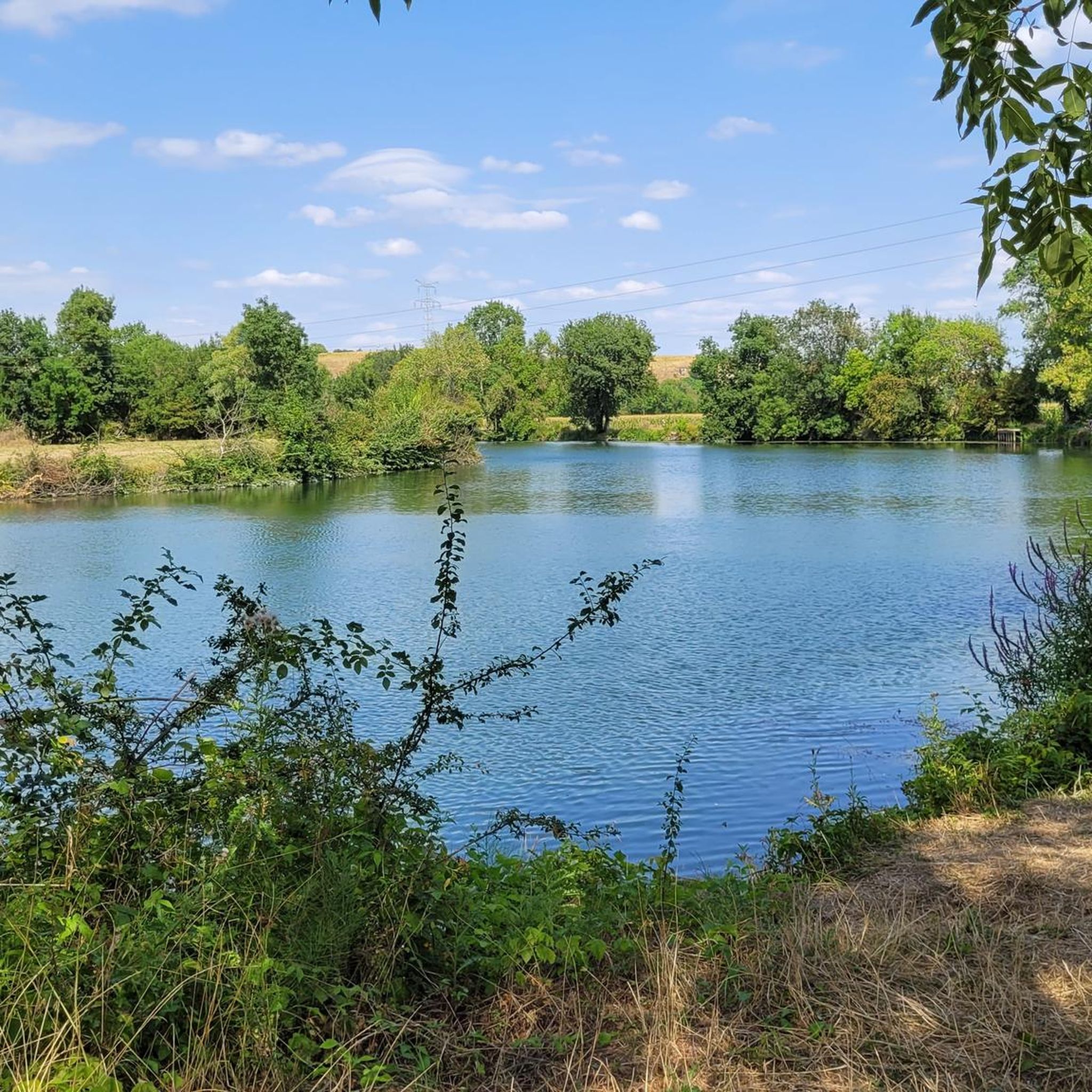
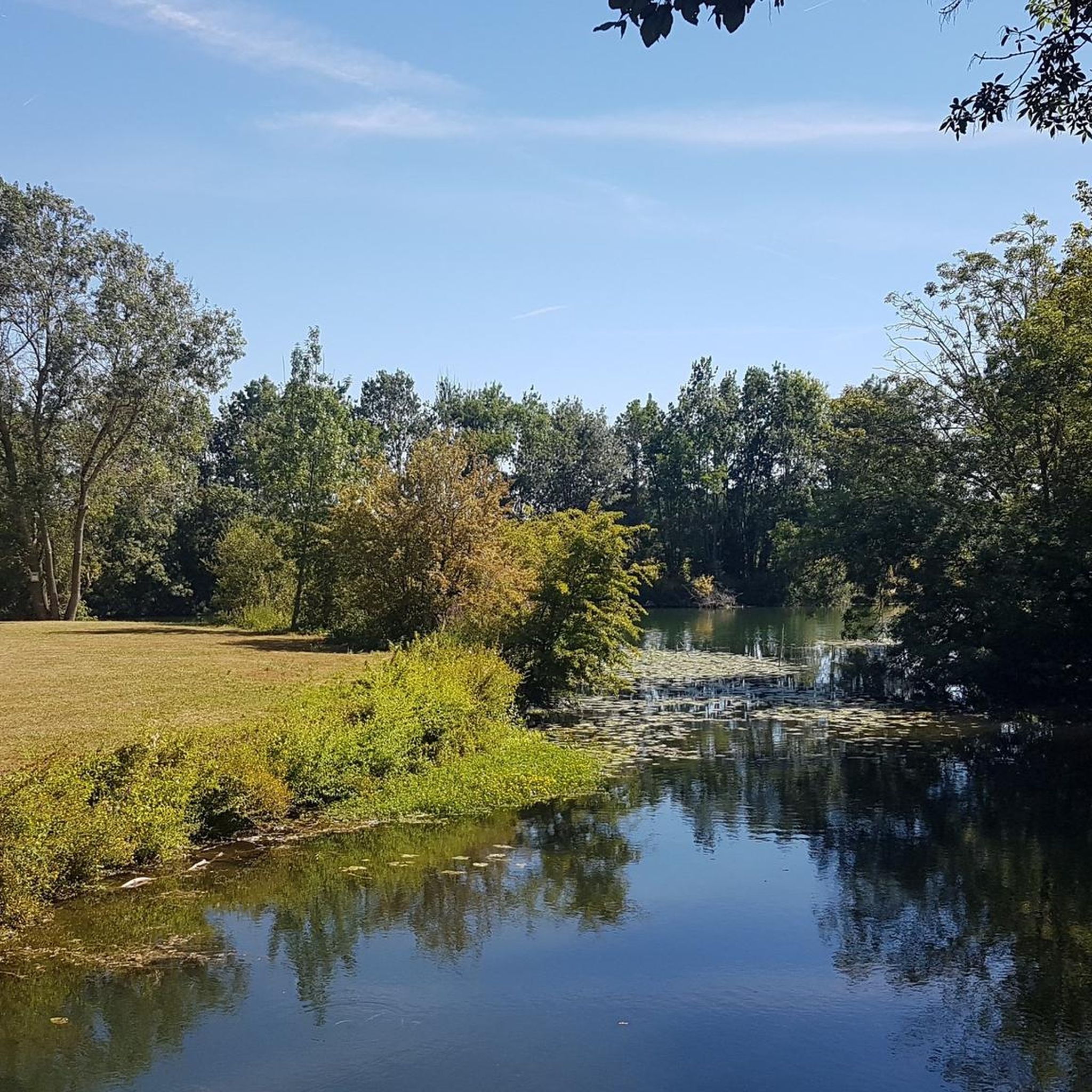
Hiking around Les Gonds offers a blend of historical exploration and natural landscapes. The region features gentle terrain, with routes often following riverbanks and passing through areas with historical architecture. Elevation gains are generally low, making many trails accessible for various fitness levels. The landscape includes open fields, some wooded sections, and proximity to the Charente River.
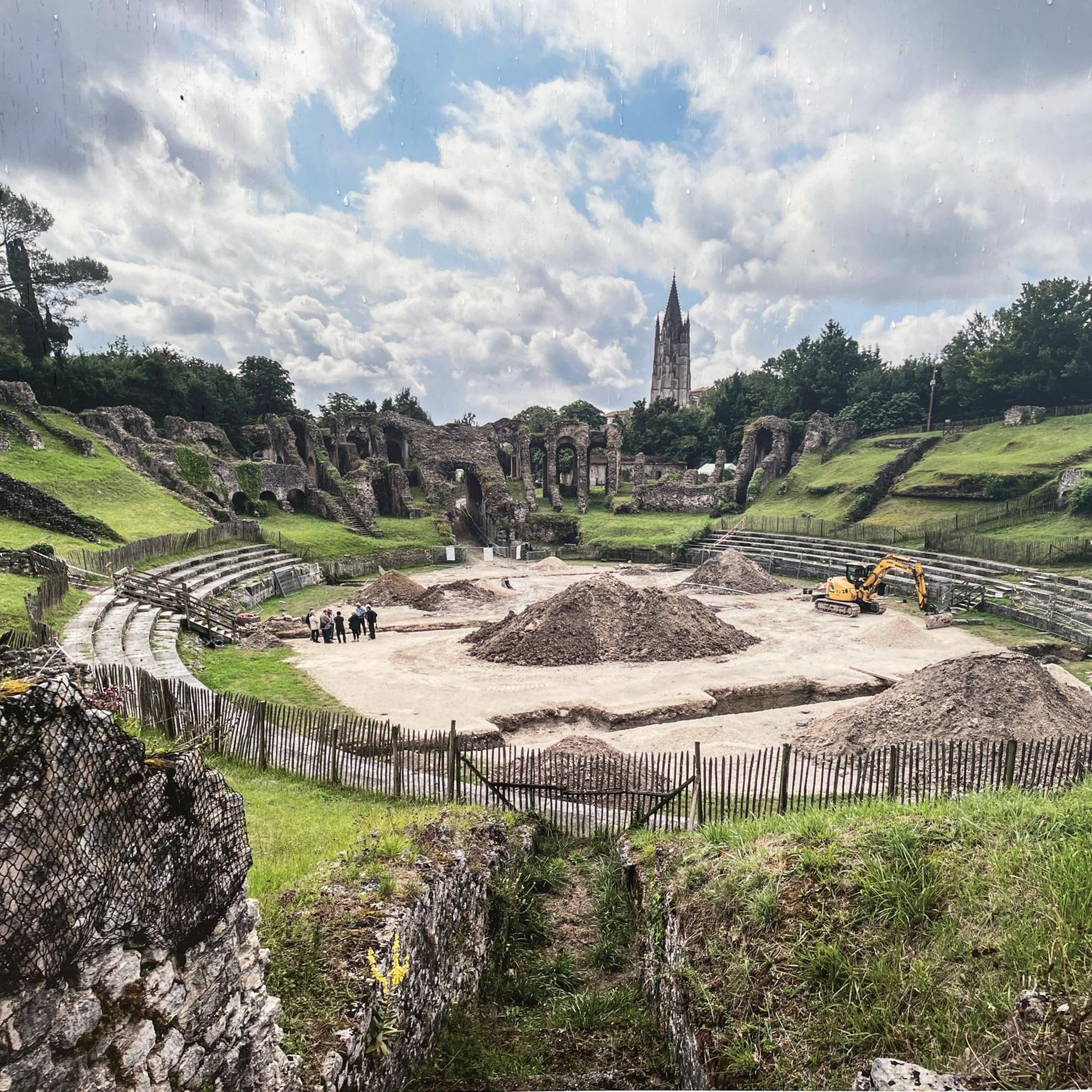
Best hiking trails around Les Gonds
- The most popular hiking route is Basilica of Saint-Eutrope – Saintes Public Garden loop from Saintes,…
Last updated: October 18, 2026
5.0
(10)
90
hikers
Easy hike. Great for any fitness level. Easily-accessible paths. Suitable for all skill levels.
5.0
(1)
14
hikers
13.2km
03:26
80m
80m
Moderate hike. Good fitness required. Easily-accessible paths. Suitable for all skill levels.

4.0
(1)
14
hikers
19.3km
04:59
100m
100m
Moderate hike. Good fitness required. Easily-accessible paths. Suitable for all skill levels.
14
hikers
Easy hike. Great for any fitness level. Easily-accessible paths. Suitable for all skill levels.
4.0
(1)
4
hikers
10.9km
02:50
80m
80m
Moderate hike. Good fitness required. Easily-accessible paths. Suitable for all skill levels.
Get access to more routes and recommendations from other explorers.
Already have an account?
Our route recommendations are based on thousands of hikes, rides, and runs completed by other people on komoot.
Start today with a free account
Your next adventure awaits.


Tips from the Community

🏛️ Construction: 18-19 AD The arch was built around 18-19 AD, during the reign of Emperor Tiberius. It stood at the entrance to the Roman bridge crossing the Charente, at the outlet of the Via Agrippa, which connected Lyon to Saintes. It is therefore not truly a "triumphal arch": it was both a road monument and a monumental gate marking the entrance to Mediolanum Santonum, the capital of Roman Aquitaine. 👤 Who had it built? The arch was financed by Caius Julius Rufus, a Romanized notable from Saintonge. He dedicated it to Tiberius as well as his nephew Germanicus. The inscriptions engraved on the entablature still allow us today to know the figures to whom it was dedicated. The name "Arch of Germanicus" therefore comes from this dedication, and not from the fact that Germanicus personally had the arch built or crossed it. 🏗️ A rather exceptional monument The arch has two bays, likely allowing for the differentiation of traffic flows. It measures approximately 15 m high by 16 m wide. Its Corinthian and composite capitals bear witness to particularly meticulous Roman architecture. It constituted a true demonstration of the power and Romanization of Saintes. ⚠️ The moment the arch almost disappeared This is probably the most interesting episode in its history. For centuries, the arch was always located at the level of the Roman bridge and then the medieval bridge, on the right bank of the Charente. In the 19th century, the old bridge had become dilapidated. When it was decided to demolish it, around 1843, the arch was also threatened with destruction. It was then that Prosper Mérimée, Inspector General of Historical Monuments, intervened. He advocated for its preservation and arranged for its dismantling, relocation, and reassembly on the new bank. Another figure is also associated with this preservation: Victor Hugo, who stayed in Saintes in September 1843 and intervened in favor of the monument's conservation with Mérimée. 📍 Why is the arch no longer exactly in its ancient location? The arch we see today, on Place Bassompierre, is therefore no longer in its original location. It was moved a few dozen meters during the transformation of the quays and the disappearance of the old bridge. It was dismantled stone by stone and then reassembled in order to preserve it. It is now located in the immediate vicinity of the ancient Roman bridge crossing. 🏛️ Protection The Arch of Germanicus was finally classified as a historical monument in July 1905. An interesting detail The Crazannes quarries, located near Saintes, supplied a limestone widely used in the region's ancient constructions. Crazannes stone was notably used for monuments such as the Arch of Germanicus. In summary: 18-19 → construction of the arch at the entrance to the Roman bridge ↓ Antiquity → Middle Ages → the arch remains associated with the crossing of the Charente ↓ 1843 → demolition of the old bridge and threat to the arch ↓ 1843-1844 → Mérimée's intervention and relocation of the arch ↓ 1905 → classified as a Historical Monument
0
0
🏛️ 1. La naissance du musée : 1815 Le Musée archéologique de Saintes est l’un des plus anciens musées archéologiques de France. Son origine remonte à 1815. À cette époque, Saintes connaît de nombreux travaux urbains. On met régulièrement au jour des blocs sculptés, inscriptions, fragments de colonnes et éléments architecturaux antiques, provenant notamment des monuments de la ville gallo-romaine. Le baron Alexandre Chaudruc de Crazannes, érudit et passionné d’archéologie, joue un rôle déterminant dans leur conservation. Avec des érudits locaux et le soutien de la municipalité, les fragments sont rassemblés afin d’éviter leur disparition. Le musée est ainsi créé pour conserver ce patrimoine. À l’origine, le musée est donc essentiellement un musée lapidaire : il conserve surtout des pierres provenant des monuments antiques. 🏺 2. D’où viennent les pierres ? Une particularité remarquable des collections de Saintes est leur relation avec l’ancienne enceinte de la ville. À la fin de l’Antiquité, probablement aux IIIe-IVe siècles, Saintes connaît une période d’insécurité. Une importante enceinte défensive est construite. Pour la bâtir rapidement, les habitants réutilisent les matériaux provenant de bâtiments plus anciens : temples, édifices publics, monuments funéraires et bâtiments monumentaux. Ainsi, des morceaux de monuments qui avaient probablement été magnifiques se retrouvent incorporés dans les murailles. Les fouilles de cette enceinte ont donc permis de récupérer une quantité considérable de sculptures et de blocs architecturaux. C’est une des raisons pour lesquelles le musée a longtemps possédé une exceptionnelle collection lapidaire. 📚 3. Le rôle de Louis Audiat Un autre personnage important est Louis Audiat, érudit et bibliothécaire de Saintes. En 1888, il publie un catalogue détaillé de la collection lapidaire de Saintes. C’est une étape importante : les pièces ne sont plus seulement conservées, elles commencent à être étudiées et documentées scientifiquement. Cela témoigne de l’évolution de la conception du musée : on passe progressivement d’un lieu où l’on conserve des « antiquités » à un véritable établissement consacré à l’étude de l’histoire antique de Saintes. 🏛️ 4. Le bâtiment actuel : 1931 L’étape majeure suivante intervient en 1931. Les collections sont alors installées dans l’ancien bâtiment des abattoirs municipaux, situé aujourd’hui sur l’esplanade André-Malraux. Le bâtiment est réaménagé pour accueillir les collections sous l’impulsion de Charles Dangibeaud, archéologue et érudit, qui est alors conservateur des musées de Saintes. Le choix peut sembler surprenant : un ancien abattoir devient un musée archéologique ! Mais l’aménagement est particulièrement intéressant. La cour et les éléments architecturaux antiques donnent au lieu une apparence volontairement évocatrice de l’Antiquité. 🗿 5. Le grand musée lapidaire Pendant une grande partie du XXe siècle, le musée est surtout célèbre pour son immense collection de blocs antiques. Il s’agit notamment : de fragments de colonnes ; de chapiteaux ; de corniches ; de frises ; de sculptures ; d’inscriptions ; d’éléments provenant de monuments publics ; de fragments provenant de l’enceinte antique. Une partie de ces éléments provenait directement des monuments détruits lors de la construction de l’enceinte de Saintes. La collection comptait plus de 700 blocs de pierre dans la seconde salle du musée. ⚠️ 6. Une transformation importante au XXIe siècle Le musée que l’on visite aujourd’hui est assez différent de celui du XXe siècle. Le bâtiment qui abritait une grande partie de la collection lapidaire a fait l’objet d’un diagnostic révélant des fragilités structurelles. Pour protéger les pièces, la collection lapidaire a été déposée et mise en réserve en 2018. C’est un point important : si vous avez connu le musée autrefois, vous pouvez donc avoir le souvenir d’un musée rempli de grandes pierres antiques ; ce n’est plus sa présentation actuelle. 🏺 7. Le musée actuel : découvrir Mediolanum La présentation actuelle privilégie davantage la compréhension de la vie quotidienne à Mediolanum Santonum, nom antique de Saintes. Les collections permettent notamment d’aborder : la maison et son décor ; les rites domestiques ; les jeux ; l’alimentation et la vaisselle ; la parure ; les soins du corps ; la coiffure ; les vêtements. La présentation est complétée par des restitutions graphiques et une borne interactive, permettant de replacer les objets dans la ville antique. Le musée s’intéresse ainsi davantage à la façon dont vivaient les habitants de Saintes qu’à la seule présentation de monuments. 🏺 8. Un musée lié à toute l’histoire de Mediolanum Le Musée archéologique est particulièrement intéressant parce qu’il faut le considérer avec les autres vestiges de Saintes. Mediolanum Santonum était une ville majeure de la Gaule romaine et la capitale de la civitas des Santons. Le musée se trouve d’ailleurs à proximité immédiate de l’arc de Germanicus, monument qui marquait l’entrée de la ville antique et l’arrivée de la voie romaine venant de Lyon. On peut donc pratiquement faire une lecture de la ville antique en partant du musée : Musée archéologique → Arc de Germanicus → Charente → amphithéâtre → anciens quartiers de Mediolanumun
0
0
The museum is open during high season: - Tuesday to Friday: 10 a.m. – 6 p.m. - Saturday and Sunday: 10 a.m. – 12:30 p.m. and 1:30 p.m. – 6 p.m. Archaeological Museum of Saintes — Esplanade André-Malraux, Saintes. The museum officially obtained the « Musée de France » label in 2003. And current tourist information indicates that after the floods of February 2026, the museum had been temporarily closed for renovation, with a reopening in May 2026 for the occasion of the European Museum Night. Note: the floods nevertheless damaged some collections, particularly wooden elements from the Courbiac shipwrecks, which had to be evacuated for treatment.
0
0

The Archaeological Museum of Saintes has been redesigned and its permanent exhibition renewed. Visitors are invited to discover the ancient city of Saintes through its urban planning and the lives of its inhabitants 2000 years ago.
5
0
Located in the heart of the city, the public garden is a place of life for the residents of Saintais, to be discovered by walkers. The kiosk, the orangery, the animals or the games. The park was designed in 1925 on the banks of the Charente and forms the connection between the city and the Palu.
5
0
The Abbaye-aux-Dames is built around the church of Sainte-Marie, built in the twelfth century. Famous for its facade and its characteristic "pinecone" bell tower, it is one of the emblematic monuments of Saintonge's Romanesque art. After several wars and fires, the place was restored in the 1970s and 1980s and is now a hotel. When you walk through the long corridors you feel like you have been transported back to the time when the abbey was still alive.
4
0
The Saint-Pierre Cathedral is located in the heart of the old town on the left bank of the Charente. According to tradition, the founding of this episcopal see goes back to Saint Eutrope. The construction of the first Christian building on the site of the current cathedral could not be dated with any precision. It probably dates back to the 6th century.
5
0
The Basilica of Saint-Eutrope de Saintes is a true masterpiece of Romanesque art and amazes with its two superimposed choirs and its crypt, one of the largest in Europe.
5
0
Frequently Asked Questions
How many hiking trails are available around Les Gonds?
Les Gonds offers a wide selection of hiking opportunities, with over 120 routes available. These trails cater to various preferences, ranging from easy strolls to more moderate excursions through the local landscape.
Are there easy hiking trails suitable for beginners or families in Les Gonds?
Yes, Les Gonds is well-suited for beginners and families, with 64 easy routes available. The region features gentle terrain and low elevation gains, making many trails accessible. An excellent option is the Abbaye aux Dames de Saintes – Saintes Public Garden loop from Saintes, which is 4.6 km long and features minimal elevation changes.
What kind of terrain can I expect on hikes around Les Gonds?
Hikes around Les Gonds typically feature gentle terrain, often following riverbanks and passing through open fields and some wooded sections. You can expect to encounter historical architecture and enjoy views of the Charente River, with generally low elevation gains throughout the routes.
Are there circular hiking routes available in Les Gonds?
Yes, many of the hiking routes around Les Gonds are circular, offering convenient starting and ending points. For example, the Étang du Clone Flanquet loop from Les Gonds is a 19.3 km circular trail that takes you through rural landscapes and around the Étang du Clone Flanquet.
What are some interesting places to explore or landmarks to see while hiking around Les Gonds?
The region around Les Gonds is rich in historical and architectural sights. Along your hikes, you can explore landmarks such as the Abbaye aux Dames de Saintes, the Saint-Pierre Cathedral (Saintes), and the Saint-Martin Church. These historical sites are often integrated into the hiking routes, providing cultural points of interest.
Is public transport available to reach hiking trailheads in Les Gonds?
While specific public transport connections directly to every trailhead in Les Gonds might be limited, the nearby city of Saintes serves as a regional hub with train and bus services. From Saintes, some trailheads are accessible, particularly those within or close to the city. It's advisable to check local bus schedules for routes connecting to smaller villages or specific starting points.
Where can I find parking for hiking trails in Les Gonds?
Parking is generally available in the villages and towns that serve as starting points for hikes, such as Les Gonds itself or Saintes. Look for designated public parking areas near town centers or popular attractions. For specific trailheads, roadside parking might be an option, but always ensure you are parking legally and safely.
What is the best time of year to go hiking in Les Gonds?
The best time to hike in Les Gonds is typically during the spring (April to June) and autumn (September to October). During these seasons, the weather is mild and pleasant, ideal for walking. Spring brings blooming flora, while autumn offers beautiful colors. Summer can be warm, but early mornings or late afternoons are still enjoyable. Winter hiking is possible, but some paths might be muddy.
Can I bring my dog on the hiking trails in Les Gonds?
Many trails in Les Gonds are dog-friendly, allowing you to enjoy the outdoors with your canine companion. However, it's always recommended to keep your dog on a leash, especially when passing through agricultural areas, near livestock, or in nature reserves. Please also ensure you clean up after your pet to maintain the cleanliness of the trails.
What do other hikers say about the trails in Les Gonds?
The hiking trails around Les Gonds are highly regarded by the komoot community, holding an average rating of 4.5 stars from over 100 reviews. Hikers frequently praise the region for its gentle terrain, historical points of interest, and the peaceful atmosphere along the river valleys and open countryside.
Are there opportunities for winter hiking in Les Gonds?
Yes, winter hiking is possible in Les Gonds, as the terrain is generally gentle and elevation gains are low. While some paths might be muddy after rain, the mild climate of the region often allows for enjoyable walks even in colder months. Be sure to wear appropriate waterproof footwear and layers.
Can I find cafes or places to eat near the hiking trails?
Yes, you can often find cafes, bakeries, or small restaurants in the villages and towns located along or near the hiking routes, particularly in larger centers like Saintes. These establishments offer opportunities to refuel and relax before, during, or after your hike. It's a good idea to check opening hours, especially in smaller communities.
Most popular routes around Les Gonds
Most popular attractions around Les Gonds

Get inspired with the komoot mobile app


Explore more
Browse the best Hikes in other regions.
