Attractions and Places To See around Frotey-Lès-Lure - Top 20
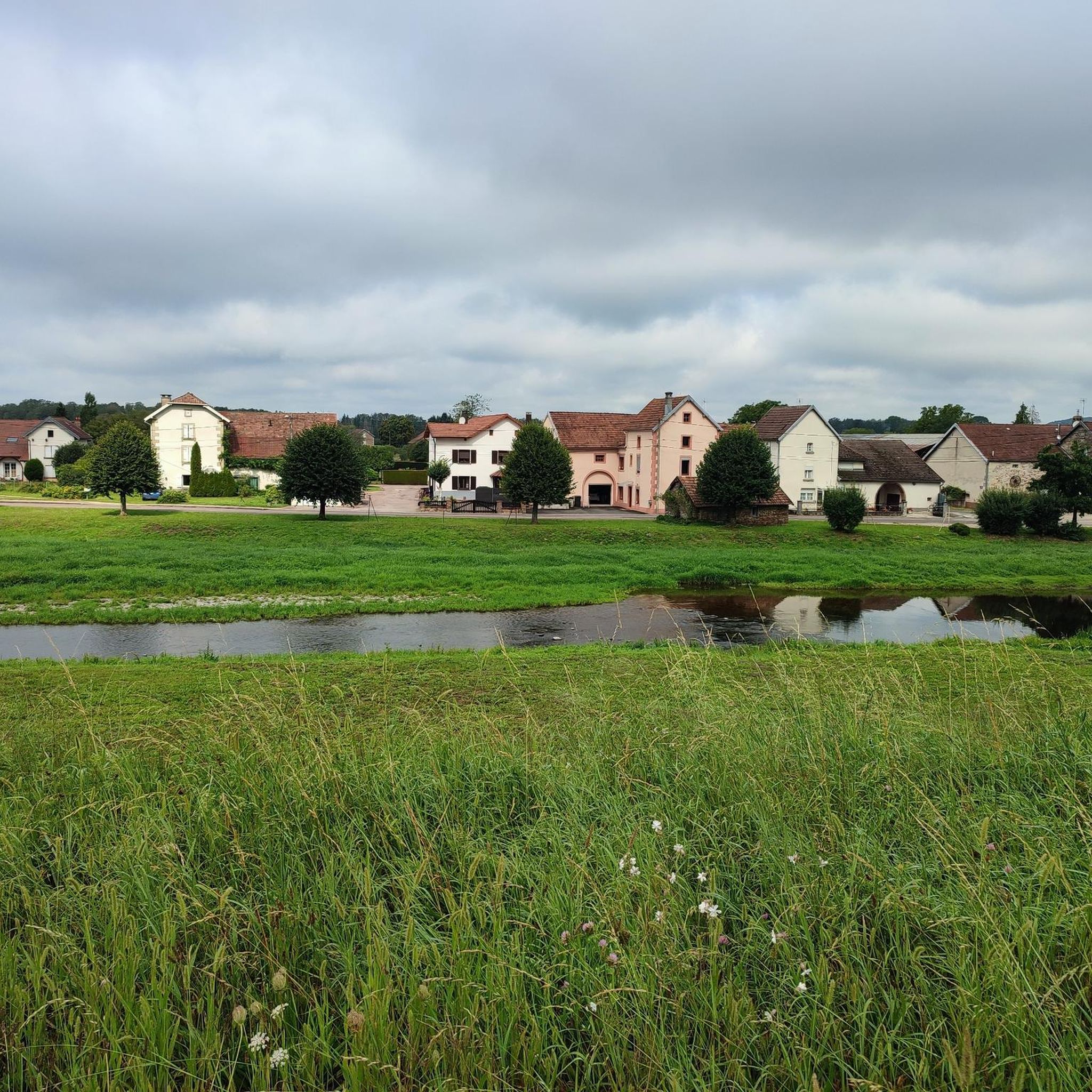
Best attractions and places to see around Frotey-Lès-Lure offers a blend of historical sites, cultural heritage, and natural beauty. This commune in the Haute-Saône department is situated on the southern slope of the Vosges massif, featuring vast rolling plains, numerous ponds, and surrounding forests. Visitors can explore a rich past, including Gallo-Roman and Neolithic traces, alongside well-preserved architectural landmarks. The area provides diverse opportunities for outdoor activities and cultural discovery.
Best attractions and places to see around Frotey-Lès-Lure
- The most…
Last updated: October 9, 2026
Notre-Dame-du-Haut Chapel
Highlight • Monument
The Notre-Dame-du-Haut chapel in Ronchamp is the icon of Christian sacred architecture that revolutionized church building in the 20th century.
The chapel is in a dominant …
Translated by Google •
Tip by

Puits Sainte-Marie
Highlight • Other
Translated by Google •
Tip by

Sign up now to discover places like this
Get recommendations on the best single tracks, peaks, & plenty of other exciting outdoor places.
Ballastières Beach
Highlight • Beach
Translated by Google •
Tip by

Lure
Highlight • Other
Translated by Google •
Tip by

Ronchamp
Highlight • Other
Translated by Google •
Tip by

Sign up for free to discover even more attractions around Frotey-Lès-Lure.
Already have an account?
Start today with a free account
Your next adventure awaits.





Tips from the Community

Good for cooling off, but little shade.
0
0

The notice translates as follows: The Rahin and Chérimont Community, owner of the Ballastières Open Air Pool site, is therefore obliged to enforce the decree of May 18, 1993, prohibiting swimming in all bodies of water and rivers in the municipality of Champagney. Due to the lack of a lifeguard (no applicant for the position), the supervised pool cannot be opened for the period from July 1 to August 31, 2024.
0
0
Unfortunately, according to the notice board, swimming is prohibited at this beautifully landscaped beach. Apparently, the municipality can't find anyone willing to supervise it. In other words, a lifeguard is urgently needed.
0
0

Notre-Dame-du-Haut pilgrimage chapel, 1950 The Notre-Dame-du-Haut chapel in Ronchamp is the icon of Christian sacred architecture that revolutionized church building in the 20th century. The chapel is in a dominant position on a hill at the Burgundian Gate near Belfort. Apart from its rather bare summit, this hill is wooded, as are the neighboring hills. Le Corbusier took into account the trees, the views into the distance and the horizon line in his design. The basic features of the design for the chapel were created in just a few days: an asymmetrical building, curved walls, vaulted by a roof whose shape is reminiscent of the shell of a crab. The asymmetry broke with the traditional idea of a cruciform church floor plan. A unified church space was created, without a side or transept, which is nevertheless oriented towards the east.
9
0
In addition to the chapel, Le Corbusier built two smaller buildings, the guard's house and the pilgrim's house, which contains bedrooms and a kitchen. A step pyramid, also built from ruined stones and dedicated to the victims of the fighting in 1944, completes the architectural ensemble.
6
0

Last architectural witness to the Ronchamp coal mines.
0
0

Closes at 6pm so arrive on time.
1
0

The Sainte-Marie pit is a coal mine pit of the Houillères de Ronchamp. It worked from 1866 to 1958. The shaft is now backfilled but the surface framework remains. A fascinating insight into history.
2
0
Frequently Asked Questions
What historical sites can I visit in Frotey-Lès-Lure?
Frotey-lès-Lure boasts a rich history. You can explore the 13th-century Église Saint-Laurent, which features beautiful wooden bas-reliefs and a classified wooden statue of Saint Lawrence. Other notable historical structures include the 19th-century Château (Manoir) and the Mairie (Town Hall), both designed by architect Colard. The village also has a Fountain-Wash House (Lavoir) dating from 1881, a Monument aux Morts, and traces of a Gallo-Roman settlement and a Neolithic tool workshop.
Are there any unique architectural landmarks to see near Frotey-Lès-Lure?
Yes, a significant architectural landmark nearby is the Notre-Dame-du-Haut Chapel in Ronchamp. Designed by Le Corbusier, this chapel is considered an icon of 20th-century Christian sacred architecture. Its unique, asymmetrical design and curved walls make it a must-see.
What natural features define the landscape around Frotey-Lès-Lure?
Frotey-lès-Lure is nestled within a landscape characterized by vast rolling plains and its position on the southern slope of the Vosges massif. The commune is known for its numerous ponds and is surrounded by extensive forests, offering picturesque scenery. The village itself is also remarkably well-flowered each year.
What outdoor activities are available near Frotey-Lès-Lure?
The area around Frotey-Lès-Lure offers various outdoor activities, particularly hiking, cycling, and mountain biking. You can find numerous trails that crisscross the commune, such as the 'Chemin des Essarts' through flower-filled villages and the 'Chemin de la Sylve' through forests. For more detailed routes, explore the hiking, cycling, and MTB guides for the region.
Are there family-friendly attractions in the Frotey-Lès-Lure area?
Yes, the Ballastières Beach is a beautifully landscaped spot that is generally family-friendly, though swimming may be prohibited depending on lifeguard availability. The Notre-Dame-du-Haut Chapel is also listed as family-friendly, offering a cultural experience for all ages.
What is the Puits Sainte-Marie and why is it significant?
The Puits Sainte-Marie is a former coal mine that was active between 1866 and 1958. Its reinforced concrete hoisting tower, dating back to 1924, is a significant architectural witness to the region's coal mining history and has been classified as a monument historique since 2001. You can still find remains of the fan, control room, and boiler house next to the main building.
What can I expect when visiting the town of Lure?
The town of Lure is situated at the gates of the Natural Park of the Ballons des Vosges Saônoises. It is renowned for its abbey, which adjoins the Etang de la Font, a resurgence of the Ognon River. The abbey park provides a very pleasant setting for visitors.
What do visitors enjoy most about the attractions around Frotey-Lès-Lure?
Visitors particularly appreciate the unique architecture of sites like the Notre-Dame-du-Haut Chapel, often described as an architectural icon. The historical significance of places like the Puits Sainte-Marie also draws interest. The overall blend of historical sites, cultural heritage, and natural beauty, including the picturesque forests and ponds, is highly valued by the komoot community.
Are there any specific hiking trails recommended for exploring the natural beauty of Frotey-Lès-Lure?
Yes, Frotey-lès-Lure offers several hiking trails. The 'Chemin des Essarts' is known for leading through flower-filled villages, while the 'Chemin de la Sylve' primarily traverses the surrounding forests. Both trails are suitable for walking or mountain biking, allowing you to discover the local nature. You can find more options in the Hiking around Frotey-Lès-Lure guide.
What is the best time of year to visit Frotey-Lès-Lure?
Frotey-lès-Lure is known for being remarkably well-flowered each year, suggesting that spring and summer offer particularly picturesque scenery. These seasons would be ideal for enjoying the hiking trails and the natural beauty of the rolling plains, ponds, and forests.
Can I find any information about the region's ancient past?
Yes, archaeological excavations in 1989 revealed evidence of a Gallo-Roman settlement, including a well and a monetary treasure from the 2nd century. There are also suggestions of a pre-existing Neolithic tool workshop at a site called 'le Creux de l'Enfer', indicated by the discovery of an aphanite axe. These findings highlight the region's deep historical roots.
Most popular routes around Frotey-Lès-Lure

Get inspired with the komoot mobile app


Explore more
Still not found the Highlight you’re looking for? See guides of the top attractions in other regions:
