Attractions and Places To See around Saint-Hilaire-La-Gravelle - Top 17
Best attractions and places to see around Saint-Hilaire-La-Gravelle, a small commune in the Loir-et-Cher department of France, serves as a base for exploring the surrounding region. The area is characterized by its proximity to historical towns and the châteaux of the Loire Valley. Visitors can find a variety of historical sites and cultural landmarks within a short distance. The region offers opportunities to explore French heritage and architecture.
Best attractions and places to see around Saint-Hilaire-La-Gravelle
- The most popular attractions…
Last updated: July 2, 2026
Château de Montigny-le-Gannelon
Highlight • Castle
Montigny-le-Gannelon Castle dates from the Renaissance period; it was redesigned …
Translated by Google •
Tip by

Feudal Castle of Fréteval
Highlight • Castle
Translated by Google •
Tip by

Sign up now to discover places like this
Get recommendations on the best single tracks, peaks, & plenty of other exciting outdoor places.
Sign up for free
Saint George's Church
Highlight • Other
Translated by Google •
Tip by

Saint Peter's Church
Highlight • Other
Translated by Google •
Tip by
La Gaudinière Castle (ruins)
Highlight • Castle
Translated by Google •
Tip by

Sign up for free to discover even more attractions around Saint-Hilaire-La-Gravelle.
Sign up for free
Already have an account?
Start today with a free account
Your next adventure awaits.
Login or Signup




Tips from the Community


Before the 13th century there were two parishes, Saint-Sauveur and Saint-Gilles, in 1300 the bishop of Chartres united them into one by a charter of Berchères, because of the smallness of the two parishes. The church dates from the beginning of the 17th century. Rebuilt on the foundations of an old Romanesque church, its originality comes from its bell tower with saddle roof, its caquetoire and its paneled vault redone in 2003. At the initiative of the Prince Duke of Montmorency-Laval, it has contained the reliquary of Sainte-Félicité since 1838. Saint Félicité, whose relics are in Montigny-le-Gannelon, is a martyr whose life is unknown, whose body was taken from the sacred cemeteries of Rome. We have his body, the skull, the bones of his arms, fingers and feet. They were removed from the Saint-Cyriaque cemetery in 1828 and placed in their respective places on a body artistically modeled in wax and measuring more than 1.40 meters in length. A magnificent chase, of the shape and size of an altar tomb, all furnished with glazing and embellished with gilding received this precious deposit. Pope Leo XII donated it to the Duke of Laval, then Charles X's ambassador to Rome. On his death, he bequeathed it by will to the church of Montigny-le-Gannelon where the old historic castle of Laval-Montmorency is located. The venerated hunt is now placed under the main altar of which it forms the tomb.
0
0

Almost nothing is reliably known about the life of Saint George (Saint-GEORGES), to whom the church of Cloyes-sur-le-Loir was dedicated, but the veneration of his person goes back to early Christianity. A martyr identified with George is said to have lived in the third century. However, the legend of St. George as a dragon slayer is well known and widespread; he is usually depicted - in paintings or as a statue - as the conqueror of the monster, often as a knight on horseback. The memorial day of the very popular George - he is, among other things, patron of the English kingdom - in the calendar of saints is April 23rd.
2
0
This church in Romilly-sur-Aigre was dedicated to Saint Peter (Saint Pierre). Simon, nicknamed Peter (Rock), was a fisherman on the Sea of Galilee when he - together with his brother Andrew - was called by Jesus Christ to be "fishers of men". According to Catholic understanding, he is the supreme apostle, and the two millennia-long line of popes - currently Francis - are his successor. On statues and paintings, Peter is almost always depicted with two keys in his hand; this attribute refers to the biblical saying in Matthew: “I will give you the keys of the kingdom of heaven; Whatever you bind on earth will be bound in heaven, and whatever you loose on earth will be loosed in heaven” (Chapter 16, verse 19). Peter and Paul are also known as the “Princes of the Apostles”; their common feast day in the saints' calendar is June 29th.
3
2

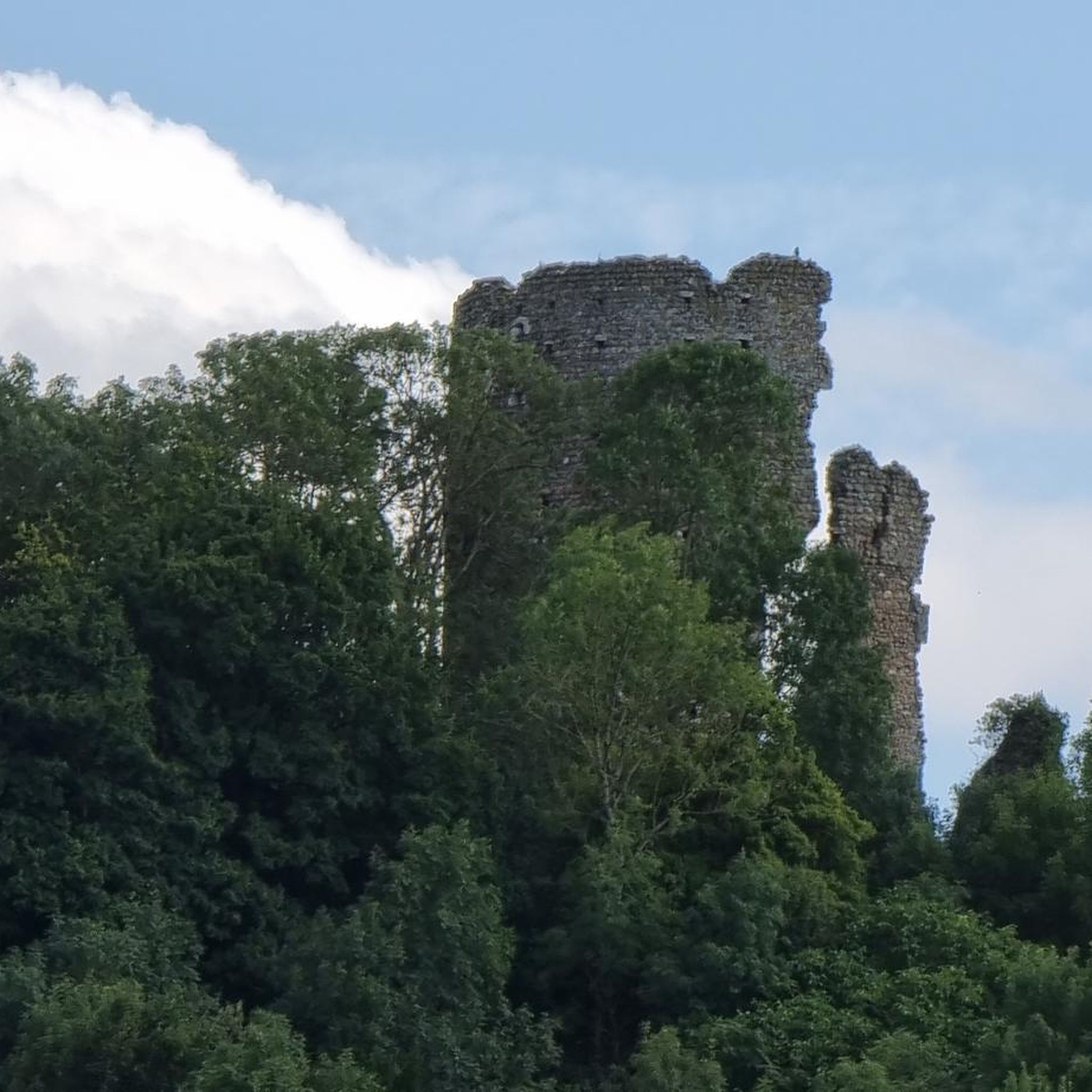
The feudal castle of Fréteval is a castle which dates from the 11th century. You can explore the ruins of the fortress, which covers 4.5 hectares and has three lines of defense. You will also be able to see the keep, one of the oldest circular stone towers in France, built of flint. The castle was a strategic location in the conflicts between the Plantagenet kings and the kings of France. The information panels will allow you to learn more about its history. The feudal castle of Fréteval is a remarkable place that will transport you to the Middle Ages.
2
0
The Feudal Castle of Fréteval is a castle which dates from the 11th century. You can explore the ruins of the fortress, which covers 4.5 hectares and has three lines of defense. You will also be able to see the keep, one of the oldest circular stone towers in France, built in flint. The castle was a strategic location in the conflicts between the Plantagenet kings and the kings of France, and you can learn more about its history from the information panels. The feudal castle of Fréteval is a remarkable place that will transport you to the Middle Ages.
3
0

The remains of the castle of Fréteval date from the 11th century. Its dungeon would be one of the first in a circular shape in France. As such, it is registered on the list of historical monuments. On site, you can picnic by sitting at one of the tables provided for this purpose near the site.
1
0

At the end of the 15th century, a first construction project made it possible to rebuild this church dedicated to Saint Peter. The current building consists of a nave, a choir bay and a three-sided apse. The bell tower was probably built at the beginning of the 20th century. The peculiarity of this building lies above all in the facade framed by two corner towers from the 18th century. Inside the porch, on the ground floor, you can still admire the old 16th-century gabled gate and two large western Gothic bay windows. Source: https://www.sauvegardeartfrancais.fr/projets/romilly-sur-aigre-eglise-saint-pierre/
4
0
Frequently Asked Questions
What historical sites can I visit near Saint-Hilaire-La-Gravelle?
The region around Saint-Hilaire-La-Gravelle is rich in history. You can explore the ruins of the Feudal Castle of Fréteval, an 11th-century fortress with one of France's oldest circular stone keeps. Additionally, the area is close to many Loire Valley castles, such as Château de Blois, Château de Chambord, and Château de Cheverny, offering a deep dive into French heritage.
Are there any notable churches or religious sites in the vicinity?
Yes, you can visit Saint Peter's Church in Romilly-sur-Aigre, known for its nave, choir bay, apse, and 18th-century corner towers. Another significant religious site is Saint George's Church in Cloyes-sur-le-Loir, dedicated to the legendary dragon slayer.
Where can I find scenic viewpoints around Saint-Hilaire-La-Gravelle?
For a picturesque view, head to the bridge crossing the Loir at Montigny-le-Gannelon. From there, you get a clear and beautiful perspective of the Renaissance-style facades of Montigny-le-Gannelon Castle.
What kind of outdoor activities can I do near Saint-Hilaire-La-Gravelle?
The area offers various outdoor activities. For hiking, you can explore trails like the 'Tour de Grisset' or routes around Étang de Saint-Lubin. Cyclists can enjoy road cycling routes such as the 'Étang de Saint-Lubin – Meslay Castle loop' or the 'Meslay Castle – Vendôme loop'. You can find more details on these activities in the hiking guide, road cycling guide, and running guide for the region.
Are there family-friendly attractions or activities available?
Many of the historical sites, such as the Feudal Castle of Fréteval, can be engaging for families, offering a glimpse into medieval history. Exploring the charming towns and castles in the wider Loire Valley region also provides educational and enjoyable experiences for all ages.
What are some notable towns to visit near Saint-Hilaire-La-Gravelle?
Several charming towns are within easy reach. Vendôme, known as a 'town of art and history,' is about 18 km away. Châteaudun, with its significant castle, is 19 km northeast. Lavardin, listed among France's 'Most Beautiful Villages,' is about 31 km away, featuring an ancient bridge and castle ruins.
What is the best time of year to visit Saint-Hilaire-La-Gravelle and its surroundings?
The spring and autumn months generally offer pleasant weather for exploring the historical sites and enjoying outdoor activities. The Loire Valley castles are beautiful year-round, but the mild temperatures and fewer crowds outside of peak summer can enhance your visit.
Are there any dog-friendly trails or places to visit?
While specific dog-friendly policies vary by attraction, many of the outdoor trails around Saint-Hilaire-La-Gravelle, such as those around Étang de Saint-Lubin, are suitable for walks with dogs, provided they are kept on a leash. Always check local regulations for specific sites.
What do visitors enjoy most about the attractions around Saint-Hilaire-La-Gravelle?
Visitors particularly appreciate the historical depth and architectural beauty of the region. The opportunity to explore ancient castles like the Feudal Castle of Fréteval and enjoy scenic views, such as that of Montigny-le-Gannelon Castle, are frequently highlighted. The peaceful rural setting combined with rich cultural heritage makes for a rewarding experience.
Where can I find parking for hiking trails near Saint-Hilaire-La-Gravelle?
Parking availability varies by trailhead. For trails like those around Étang de Saint-Lubin or the 'Tour de Grisset' starting from Fréteval, you can typically find designated parking areas in or near the villages. It's advisable to check specific route details for precise parking information.
Are there any castle ruins to explore in the area?
Yes, you can explore the ruins of the Feudal Castle of Fréteval, which dates back to the 11th century and features one of France's oldest circular stone keeps. Another ruin is La Gaudinière Castle (ruins), which has a fascinating history of construction and subsequent demolition.
What are the options for dining and accommodation in Saint-Hilaire-La-Gravelle?
Saint-Hilaire-La-Gravelle is a small commune, so dining and accommodation options within the village itself may be limited. However, you will find more choices for restaurants, cafes, and hotels in the larger nearby towns such as Vendôme, Châteaudun, and Blois, which are all within a reasonable driving distance.
Most popular routes around Saint-Hilaire-La-Gravelle
Most popular attractions around Saint-Hilaire-La-Gravelle

Get inspired with the komoot mobile app


Explore more
Still not found the Highlight you’re looking for? See guides of the top attractions in other regions:
