The best road cycling routes around Saint-Hilaire-La-Gravelle
4.6
(29)
430
riders
149
rides
Road cycling around Saint-Hilaire-La-Gravelle features a landscape characterized by agricultural plains, river valleys, and gentle rolling terrain. The region offers a network of paved roads suitable for various road cycling experiences. Routes often pass through rural villages and alongside natural features like ponds and forests, providing varied scenery. The elevation gains are generally moderate, with no significant peaks, making it accessible for different fitness levels.
Best road cycling routes around Saint-Hilaire-La-Gravelle
- The most popular road cycling route is Étang de…
Last updated: July 5, 2026
5.0
(3)
38
riders
82.8km
03:36
520m
520m
Moderate road ride. Good fitness required. Mostly well-paved surfaces and easy to ride.
4.5
(2)
26
riders
46.4km
02:02
250m
250m
Moderate road ride. Good fitness required. Mostly well-paved surfaces and easy to ride.

Sign up for free
24
riders
43.5km
01:58
220m
220m
Easy road ride. Great for any fitness level. Mostly well-paved surfaces and easy to ride.
8
riders
62.2km
02:42
300m
300m
Moderate road ride. Good fitness required. Some segments of this route may be unpaved and difficult to ride.
5.0
(1)
8
riders
27.8km
01:16
170m
170m
Moderate road ride. Great for any fitness level. Some segments of this route may be unpaved and difficult to ride.
Get access to more routes and recommendations from other explorers.
Sign up for free
Already have an account?
Our route recommendations are based on thousands of hikes, rides, and runs completed by other people on komoot.
Start today with a free account
Your next adventure awaits.
Login or Signup



Tips from the Community

Placed under the patronage of Saint Hilaire, this parish was given by Gannelon de Montigny, lord of the place, to the abbey of Marmoutier around 1042. Its reconstruction probably dates from this period; it then became a priory. The church has a rectangular nave ending in a choir with a flat chevet. An examination of the masonry easily reveals two distinct periods of construction: the Romanesque period and the Renaissance. Built of flint rubble with rendering, the western part of the building appears to date from the 11th or 12th century. A limestone cornice supported by rather crude corbels underlines the base of the roof. To the south, two narrow Romanesque windows flared inwards light the nave. To the north, the bays were later reworked and enlarged. On this same side, a Romanesque doorway was walled up; It allowed the church to connect with a building whose traces of detachment remain. The bell tower was built to the north of the Romanesque nave, extending the western façade. The absence of a connection between the east and west walls of the bell tower and the north wall of the nave clearly indicates that it is an entirely later construction. However, its crowning is much later, as evidenced by its cornice, whose molding is in the classical style. Flanked by obliquely angled buttresses, it is covered with a saddleback roof. The eastern half of the church appears to be an extension built during the Renaissance period. Its ogee-shaped cornice and the decoration of the eastern gable, as well as the moldings of the buttress bands, attest to this dating. A vast rectangular choir then appears to have replaced a semicircular Romanesque apse; the eastern gable and the southern and northern façades were then pierced with networked bays. In the lower part of the north façade, projecting ashlars appear to have supported the roof of a lean-to building. To the south, a sacristy was built in the 19th century. Inside, the entire building is covered with a paneled vault with exposed tie beams and kingposts. The 18th-century high altar is surmounted by an Assumption of the Virgin inspired by Murillo's. For the restoration of the roofs and façades, the Sauvegarde de l'Art Français (French National Art Protection Agency) awarded a grant of €30,490 in 2001.
0
0
The Church of Saint Sauveur La Trinité, probably built in the 12th century, is notable for its Romanesque windows with columns and capitals. On its walls, alternating with the consecration crosses, one can admire a Stations of the Cross in blue enamel on earthenware. The choir is lit by five Romanesque windows decorated with stained glass depicting Our Lord and the four Evangelists.
0
0

Although the Notre-Dame church in the town of Areines may seem modest in size, the richness of its interior decoration is remarkable. It consists of a rectangular nave from the 11th century that extends into a narrower choir and ends with a semi-circular apse from the 12th century. The bell tower was added in the Gothic period. All the walls are covered with murals. The restoration of those in the choir and apse dating from the middle of the 12th century allows us to see: Christ in Majesty, the Lamb with a halo, the Annunciation, the Visitation, the Nativity, saints and apostles. Some of these primitive frescoes were covered by paintings from the 15th, 16th and 18th centuries. Many traces are visible on the walls of the nave and will be restored in the years to come.
0
0
This is a church dating from the 12th and 15th centuries. The nave of the church was paneled in the 15th century. A statue representing Saint Martin on horseback, sharing his cloak, was placed in a niche above the portal.
0
0

Very beautifully restored church with a beautiful courtyard.
4
1

Located approximately 700 meters from the village, the Saint Lubin pond offers a vast body of water of approximately 16 ha, ideal for fishing and relaxation.
0
0

Vendôme benefits from an extraordinary heritage with numerous exceptional sites and monuments. The city is also renowned for the excellence of its artistic crafts. Crossed by the Loir, it is located in an environment that will delight nature lovers.
1
0
Frequently Asked Questions
What kind of terrain can I expect when road cycling around Saint-Hilaire-La-Gravelle?
The region features a landscape of agricultural plains, river valleys, and gentle rolling terrain. You'll find a network of paved roads that often pass through rural villages, alongside natural features like ponds, and through small forests, offering varied scenery.
Are there many easy road cycling routes suitable for beginners or families?
Yes, Saint-Hilaire-La-Gravelle offers a good selection of easy routes. Out of 144 total routes, 42 are classified as easy. An example is the Château de Meslay – Saint-Georges Gate, Vendôme loop from Fréteval, which is 26.9 miles (43.2 km) with moderate elevation gain.
What are the typical distances and elevation gains for road cycling routes in this area?
Routes vary, but many fall into the moderate distance range. For example, the Étang de Saint-Lubin – Meslay Castle loop from Fréteval is 28.8 miles (46.4 km) with about 247 meters of elevation gain. The elevation gains are generally moderate, making the area accessible for various fitness levels without significant peaks.
Are there any more challenging road cycling routes for advanced riders?
While the region is known for its gentle terrain, there are a few routes that offer a bit more challenge. There are 4 routes classified as difficult. These routes typically feature longer distances and slightly more sustained climbs compared to the easier options.
What historical sites or landmarks can I see along the road cycling routes?
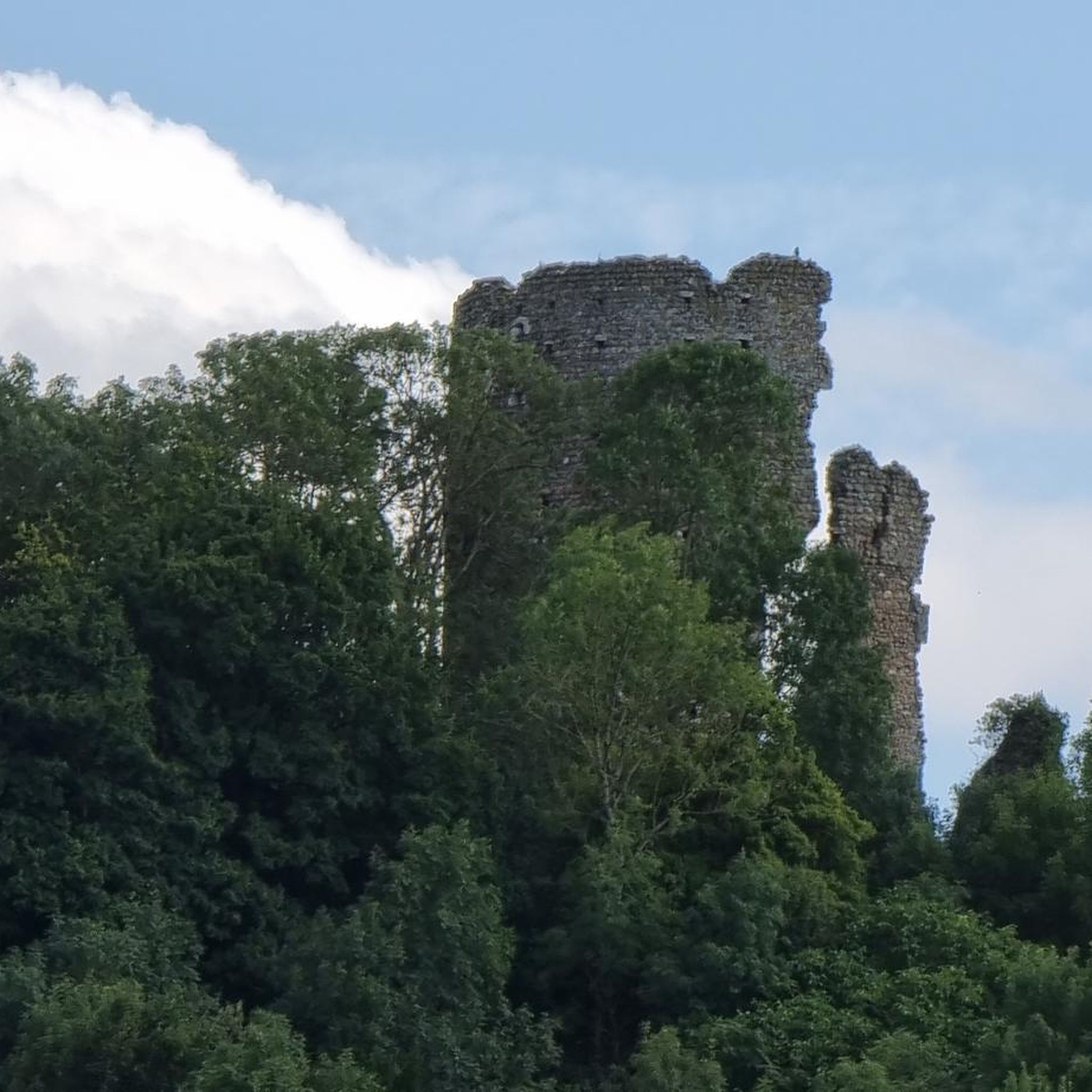
Many routes pass by historical architecture and sites. You can explore places like the Feudal Castle of Fréteval, the View of Montigny-le-Gannelon Castle, or the Saint Peter's Church. The Meslay Castle – Vendôme loop from Fréteval is a good example of a route that leads past historical sites.
What is the best time of year for road cycling in Saint-Hilaire-La-Gravelle?
The moderate climate and generally gentle terrain make road cycling enjoyable for much of the year. Spring and autumn offer pleasant temperatures and beautiful scenery, while summer is also suitable, though it can be warmer. The paved roads are generally well-maintained, making conditions favorable outside of extreme weather.
Are most of the road cycling routes in Saint-Hilaire-La-Gravelle circular?
Yes, many of the road cycling routes around Saint-Hilaire-La-Gravelle are designed as loops, allowing you to start and finish at the same point. This is convenient for planning your ride, especially if you're driving to a starting point.
What do other road cyclists say about the routes in Saint-Hilaire-La-Gravelle?
The komoot community highly rates the road cycling experience here, with an average score of 4.5 stars from over 28 reviews. Cyclists often praise the varied terrain, the peaceful rural landscapes, and the historical sites encountered along the way.
Are there any routes that pass by ponds or natural water features?
Yes, the region's landscape includes natural features like ponds. The Étang de Saint-Lubin – Saint Peter's Church loop from Fréteval, for instance, features a loop around a pond, offering scenic views and a refreshing atmosphere.
What kind of road conditions can I expect on the routes?
The routes primarily utilize a network of paved roads. These roads are generally well-suited for road bikes, passing through rural areas and villages. While specific conditions can vary, the infrastructure is designed to support cycling.
Can I find routes that take me through charming rural villages?
Absolutely. Many road cycling routes in Saint-Hilaire-La-Gravelle are designed to pass through picturesque rural villages, allowing you to experience the local charm and potentially find places to stop for a break or refreshments.
How many road cycling routes are available in total around Saint-Hilaire-La-Gravelle?
There are over 140 road cycling routes available around Saint-Hilaire-La-Gravelle, offering a wide variety of options for different skill levels and preferences.
Most popular routes around Saint-Hilaire-La-Gravelle
Most popular attractions around Saint-Hilaire-La-Gravelle

Get inspired with the komoot mobile app


Explore more
Browse the best Road cycling routes in other regions.
