The best road cycling routes around Billancelles
4.2
(39)
482
riders
215
rides
Road cycling around Billancelles traverses the Eure-et-Loir department, characterized by its rolling agricultural landscapes and river valleys. The terrain offers a mix of gentle gradients and more challenging ascents, with some routes featuring elevation gains of several hundred meters. Cyclists can expect to pass through rural villages and past historical landmarks such as châteaux and churches. The area provides diverse road cycling opportunities across its varied topography.
Best road cycling routes around Billancelles
- The most popular road cycling route is…
Last updated: July 2, 2026
5.0
(1)
61
riders
138km
05:36
820m
820m
Hard road ride. Very good fitness required. Mostly well-paved surfaces and easy to ride.
11
riders
98.2km
03:49
370m
370m
Moderate road ride. Good fitness required. Mostly well-paved surfaces and easy to ride.

Sign up for free
7
riders
58.9km
02:23
270m
280m
Moderate road ride. Good fitness required. Mostly well-paved surfaces and easy to ride.
7
riders
49.8km
01:56
180m
180m
Easy road ride. Great for any fitness level. Mostly well-paved surfaces and easy to ride.
9
riders
7.42km
00:18
30m
30m
Easy road ride. Great for any fitness level. Mostly well-paved surfaces and easy to ride.
Get access to more routes and recommendations from other explorers.
Sign up for free
Already have an account?
Our route recommendations are based on thousands of hikes, rides, and runs completed by other people on komoot.
Start today with a free account
Your next adventure awaits.
Login or Signup




Tips from the Community

Magnificent ceiling with the possibility of lighting it up
0
0

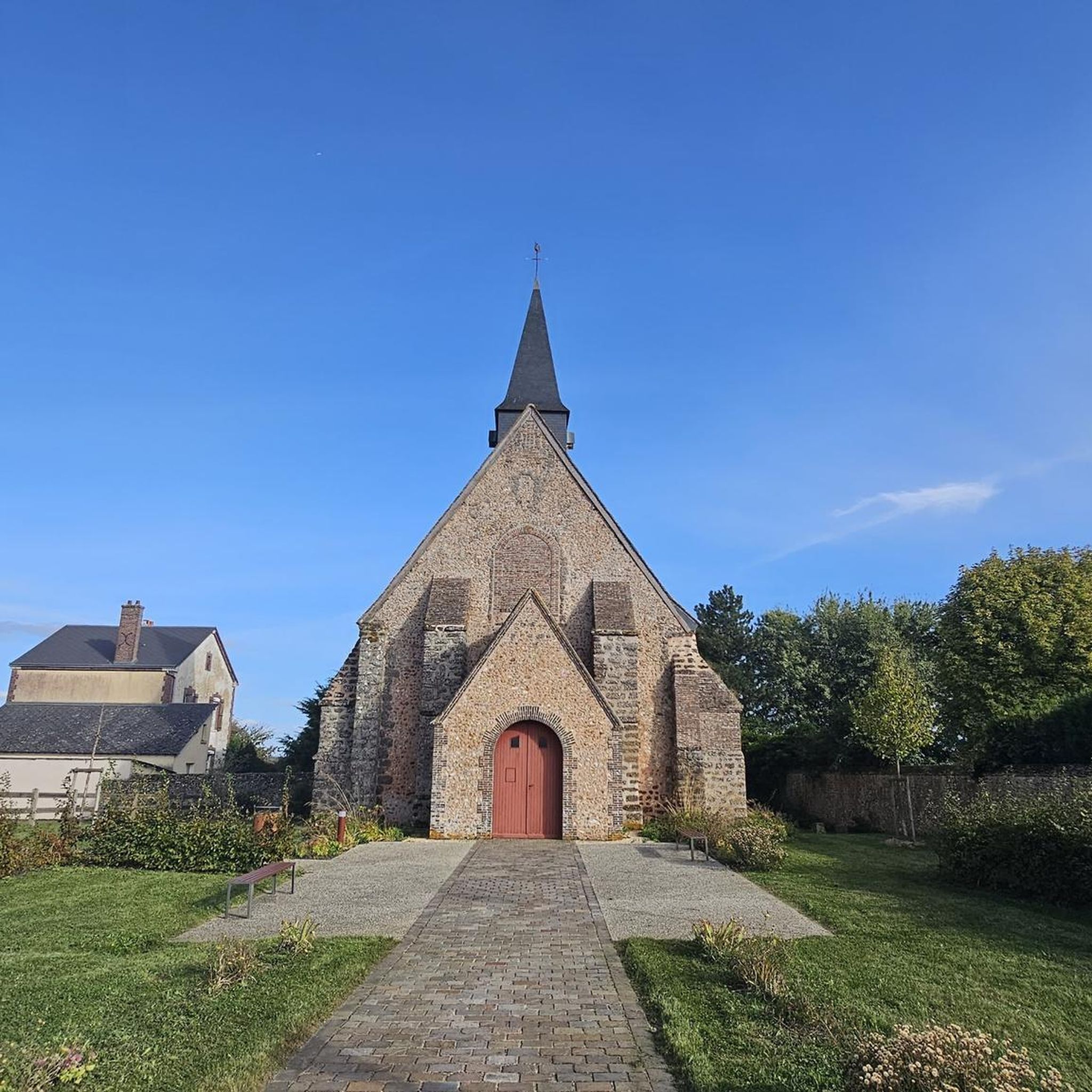
According to tradition, the church choir covers the remains of an older building, possibly dating back to the 6th century, which was built to house the saint's body. According to current knowledge, the commune of Saint-Piat (Sanctus Piatus in Latin) officially appeared in 1087, mentioned in a charter of the Nottonville Priory (Eure-et-Loir), on which it depended. The current building was rebuilt during the time of Francis I, as suggested by the date 1535 engraved on two buttresses of the apse and the date 1542 engraved on a piece of wood from the vault. This is according to a study by the SAEL (Eure-et-Loir Archaeological Society). The three-sided apses, the dripstone towers (horizontal members projecting from a wall), and the sculpted roof structures are a testament to the importance of the reconstructions carried out in the department during the 16th century. The church of Saint-Piat is one of them. While the church has not been officially recognized, it nevertheless contains objects that have attracted attention both for their antiquity and quality, but not always for good reason. Their artistic value, far from attracting only religious or aesthetic interest, has also aroused a covetousness that, unfortunately, remains for some of them. Fortunately, those still in place are carefully cared for and offer the curious a story to discover, a beauty to slowly ponder as they progress toward the choir.
0
0


Unfortunately, the church was not accessible when I visited (mid-September 2024). You could only look in through a gate and the dance of death depictions on the left side were not really visible. In front of them were transparencies with skeleton drawings. Maybe those were the depictions...
0
0

Of course there is the castle but the rest of the village is really worth a stop (church, wash house, half-timbered house, etc.)
0
0
This church has Saint Martin as patron or rather protector, chosen for his holiness, example of charity, faith and mercy. This charity he showed by offering half of his coat to a shivering poor man to warm him. His radiant faith as a hermit and monk, founder in Ligugé in 460 of the first monastic community in Gaul...
0
0
The Saint-Martin church of La Croix-du-Perche, composed of a single nave without aisles, dates from the 12th century. At this date, the church is the chapel of a priory founded around 1250 by the Abbey of the Holy Trinity of Tiron. The church only became a parish when the monks left, towards the end of the 16th century. The monument is remarkable for its 16th century framework, entirely decorated with paintings dated 1537. The building was classified as a historic monument in 1934.
1
0
Frequently Asked Questions
How many road cycling routes are available around Billancelles?
There are over 230 road cycling routes around Billancelles, offering a wide range of options for different skill levels. This includes 122 easy routes, 102 moderate routes, and 8 more challenging routes.
What kind of terrain can I expect on road cycling routes near Billancelles?
Road cycling around Billancelles traverses the Eure-et-Loir department, characterized by rolling agricultural landscapes and river valleys. The terrain offers a mix of gentle gradients and more challenging ascents, with some routes featuring elevation gains of several hundred meters.
Are there any easy road cycling routes suitable for beginners around Billancelles?
Yes, Billancelles offers a good selection of easy routes. For instance, the Villebon Castle – Orrouer Church loop from Courville-sur-Eure is an easy 49.8 km trail, and the Saint Martin Church loop from Favières is a shorter, easy 7.4 km option.
What are some notable landmarks or points of interest I might see along the routes?
Cyclists can expect to pass through rural villages and past historical landmarks. Some routes feature attractions like Vérigny Castle, Orrouer Church, and Château de Fontaine-la-Guyon. The Château de Fontaine-la-Guyon – Vaux Castle loop from Courville-sur-Eure specifically leads past historical castles.
Are there any challenging road cycling routes for experienced riders?
Yes, there are challenging options available. The Ponds of Fontenay sur Eure – Château de Frazé loop from Courville-sur-Eure is a difficult 138.6 km route with significant elevation gain, taking approximately 5 hours 38 minutes to complete.
What do other road cyclists say about the routes in Billancelles?
The routes in Billancelles are highly rated by the komoot community, with an average score of 4.2 stars from over 30 reviews. Cyclists often praise the varied rural scenery and the diverse road cycling opportunities across the area's topography.
Can I find circular road cycling routes around Billancelles?
Yes, many of the routes around Billancelles are designed as loops. Examples include the Ponds of Fontenay-sur-Eure – Fontenay-sur-Eure Church loop from Courville-sur-Eure and the Villebon Castle – Orrouer Church loop from Courville-sur-Eure, allowing you to start and finish in the same location.
Are there any cafes or places to stop for refreshments along the cycling routes?
While specific cafes directly on every route are not detailed, the area does feature local establishments. For example, Bar de la Rivière is listed as a cafe highlight in the region, suggesting options for refreshments are available.
What is the typical length of road cycling routes in the Billancelles area?
Route lengths vary significantly. You can find shorter rides like the 7.4 km Saint Martin Church loop from Favières, moderate options around 40-60 km such as the 41.5 km Ponds of Fontenay-sur-Eure – Fontenay-sur-Eure Church loop from Courville-sur-Eure, and much longer, more challenging routes exceeding 130 km.
Is the Billancelles region suitable for family-friendly road cycling?
The region offers a variety of routes, including 122 easy options, which can be suitable for families depending on their experience level. These easier routes typically have less elevation gain and shorter distances, making them more accessible for a leisurely family ride.
What kind of historical sites can be explored by road bike in Billancelles?
The Billancelles area is rich in historical sites. Cyclists can discover various châteaux and churches. Beyond the castles mentioned, the Rond du Roi is another historical site that can be found in the vicinity, offering glimpses into the region's past.
Most popular routes around Billancelles
Most popular attractions around Billancelles

Get inspired with the komoot mobile app


Explore more
Browse the best Road cycling routes in other regions.
