Top 14 Mountain Passes around Valcebollère
Best mountain passes around Valcebollère are found in the Cerdanya region of the French Pyrénées-Orientales, where Valcebollère serves as a starting point for various outdoor activities. This small mountain commune is nestled within a landscape characterized by high-mountain passes and scenic routes. The wider Cerdanya region provides access to several notable mountain passes, offering diverse features for exploration. These passes often connect different valleys and regions, providing panoramic views and historical significance.
Best mountain passes around Valcebollère
- The most popular…
Last updated: October 13, 2026
Coll de la Creueta
Highlight • Mountain Pass
Translated by Google •
Tip by

Collada de Toses Pass
Highlight • Mountain Pass
Translated by Google •
Tip by

Sign up now to discover places like this
Get recommendations on the best single tracks, peaks, & plenty of other exciting outdoor places.
Collada de Fontalba (approx. 2000 m)
Highlight • Mountain Pass
Translated by Google •
Tip by

Pas dels Lladres (2,534 m)
Highlight • Mountain Pass
Translated by Google •
Tip by

Coll de la Creueta Ascent from Das (Cerdanya)
Highlight (Segment) • Mountain Pass
Translated by Google •
Tip by

Sign up for free to discover even more mountain passes around Valcebollère.
Already have an account?
Start today with a free account
Your next adventure awaits.
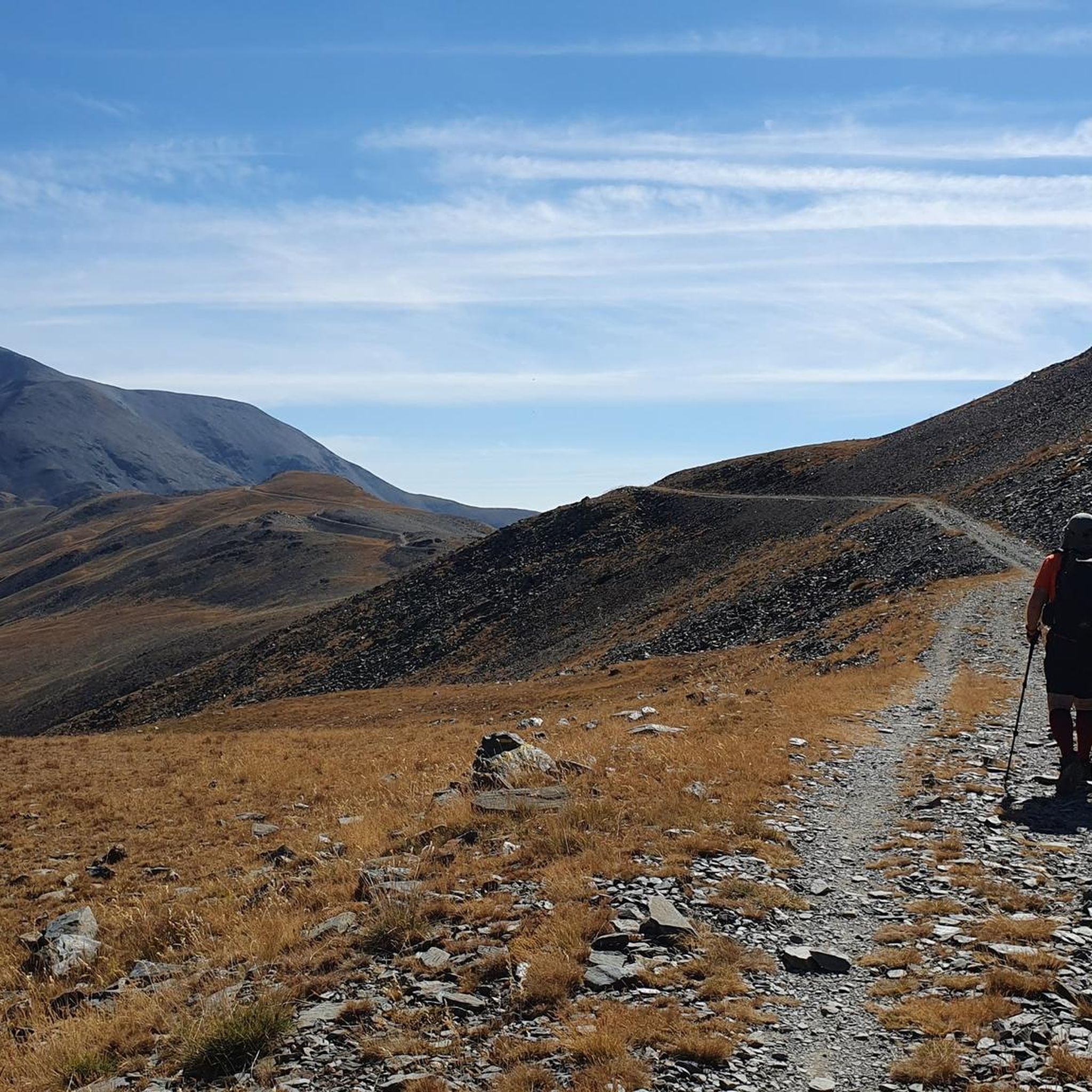


Tips from the Community

Regular asphalt if it's downhill Bones vistas
0
0

Access to the site is restricted in summer by vehicle, and a reserved spot is required for €5. Overnight parking is not permitted.
1
0

Second port of the 4cims. Long but very laid out. It is worth enjoying its views without putting down the big plate at many times. :)
0
0

The parking area in Fontalba, with a fee during the summer, is the optimal starting point for those who wish to start conquering 3000 meter peaks, starting with Puigmal. This route is not only accessible and direct, but also provides stunning scenery, making it the ideal choice for aspiring mountaineers.
1
0

Ascent to Coll de la Creueta, natural border between Cerdanya, in Das, and Berguedà, towards Castellar de N'Hug, passing through Massella and Molina.
0
0

It is one of the many variants that there are to climb the Coll de la Creueta from the Cerdaña valley. In this case, the climb starts from the town of Das, where there is a detour that indicates Masella. Here you will face the hardest 2 km of the entire climb, with ramps that reach 15%. Once you reach the junction with the road that comes from Alp, the slope softens and remains constant until shortly before reaching the base of the Masella station (Pla de Masella). When leaving here towards La Molina station, we face an uphill section, a downhill section and another uphill section again with some hard ramps. From the base of La Molina, we take the road that goes to the Collada de Toses and the Coll de la Creueta. We turn right after 3 km where the Coll de la Creueta is pointed out. The landscape, from this point to the top of the pass, is completely high mountain, without any trees, with abundant meadows. Be careful with the last 3 km of the climb because the wind usually hits you in the face on some straight lines.
0
0
Coll de Muntanya is a mandatory pass between Cerdanya, Ripollès and Berguedà. Its slopes offer long ports (15-20 kms) and with a good gradient (+700). The descent to Ribes de Freser is spectacular. Crossing point for routes such as the 4 Peaks or the RAG.
0
1
La Collada de Toses is a port that has 4 main slopes, some of these with small variations. This day we climb the Cerdaña slope that begins in Alp and crosses the stations of Masella and Molina. It is a climb with 3 well differentiated sections: - 1st section from Alp to Masella with some km above 8%. It is the hardest section. - 2nd section from Masella to Molina, which has an uphill section and a downhill section. - 3rd section From Molina to Collada de Tosas, very constant.
0
0
Frequently Asked Questions
What are some notable mountain passes in the wider Cerdanya region accessible from Valcebollère?
Beyond the immediate vicinity, the Cerdanya region offers several significant mountain passes. These include the Col de Puymorens, known for its panoramic views and historical significance, the Col de la Perche, which features the scenic "Yellow Train" railway, and the Col du Calvaire near Font-Romeu, offering quieter routes and mountain scenery.
Are there any mountain passes around Valcebollère that are good for cycling?
Yes, several passes in the region are popular with cyclists. The Collada de Toses Pass is an important route uniting the Ripollès with the Cerdanya region, offering spectacular views on its north side. The Coll d'Egat Ascent from Llívia via Estavar is also a challenging climb with beautiful views of Cerdanya. Additionally, the Col de Puymorens is well-regarded by road cyclists for its scenic yet challenging climb.
Which mountain passes offer the best viewpoints for scenic photography?
Many passes in the region provide stunning vistas. The Collada de Fontalba is a great starting point for routes to Vall de Núria and Puigmal peak, offering green slopes and expansive views. The Col de Puymorens is also a major draw for its panoramic views of the Pyrenees. The Col de la Perche provides stunning views, including those of the iconic Canigó mountain.
Are there challenging mountain passes for experienced hikers or cyclists?
Absolutely. For hikers, the Pas dels Lladres (2,534 m) is a key mountain pass for the ascent to Puigmal from Collet de les Barraques, located between Pic de Dorria and the pass of Pas dels Lladres. For cyclists, the Coll d'Egat Ascent from Llívia via Estavar is considered the most beautiful and hardest slope of this pass, with several kilometers above 8% gradient.
What kind of historical significance do the mountain passes in this region hold?
The mountain passes in the Cerdanya region often have a rich history as ancient crossing points. For instance, the Col de Puymorens has historical significance as a major crossing point and has been featured multiple times in the Tour de France. The Col de la Perche also has a historical role as a passage, further enhanced by the presence of the Cerdagne railway, known as the "Yellow Train," which is a significant tourist attraction.
Are there any mountain passes that are good starting points for longer hiking routes?
Yes, the Collada de Fontalba (approx. 2000 m) is an excellent starting point for routes leading to Vall de Núria and the Puigmal peak. Similarly, the Coll de Finestrelles (2,605 m) is a classic pass overlooking Núria and serves as a point where paths from Vall de Núria converge.
What outdoor activities can I do near these mountain passes?
The region around Valcebollère offers a variety of outdoor activities. You can explore numerous road cycling routes, such as the "Backside of Envalira – Puymorens Pass loop from Err," or gravel biking adventures like the "Collada de Toses Pass – Coll de la Creueta loop from la Molina." There are also challenging MTB trails, including the "Pla de les Forques – View of Vilar loop from Osséja." You can find more details on these activities in the respective guides: Road Cycling Routes around Valcebollère, Gravel biking around Valcebollère, and MTB Trails around Valcebollère.
Are there parking facilities available at the mountain passes?
Yes, some mountain passes offer parking facilities. For instance, the Collada de Fontalba has a dusty parking lot, which is often used as an ideal spot for overnight stays with a van, accessible via an 11-kilometer dirt track from Queralbs.
What do visitors enjoy most about the mountain passes around Valcebollère?
Visitors appreciate the diverse experiences offered by these mountain passes. Many enjoy the challenging climbs and scenic routes for cycling, the panoramic viewpoints, and the access to extensive trail networks for hiking. The historical significance and natural beauty, such as the green slopes of Fontalba and the spectacular views from Collada de Toses, are frequently highlighted.
Can I find accommodation or amenities near any of the mountain passes?
While Valcebollère itself is a small commune, some mountain passes in the wider Cerdanya region do offer nearby facilities. For example, there are accommodation facilities available near the Col de Puymorens. The Col du Calvaire is also conveniently located near the popular town and ski resort of Font-Romeu, providing access to various amenities.
What is the best time of year to visit the mountain passes in the Valcebollère region?
The best time to visit largely depends on your planned activities. For hiking and cycling, late spring through early autumn (May to October) generally offers the most favorable weather conditions, with clear paths and pleasant temperatures. During winter, some passes, like the Collada de Toses, are frequented by skiers, but access for other activities might be limited due to snow and ice.
Most popular routes around Valcebollère
Most popular attractions around Valcebollère

Get inspired with the komoot mobile app


Explore more
See even more epic mountain passes by checking out these guides around Valcebollère:
