Attractions and Places To See around Saulnières - Top 8
Best attractions and places to see around Saulnières, a commune in Brittany, France, offer insights into local history and culture. Historically linked to the salt trade, the area features ancient paths and architectural landmarks. While specific points of interest are within the commune, many natural features and cultural sites are found in the surrounding region.
Best attractions and places to see around Saulnières
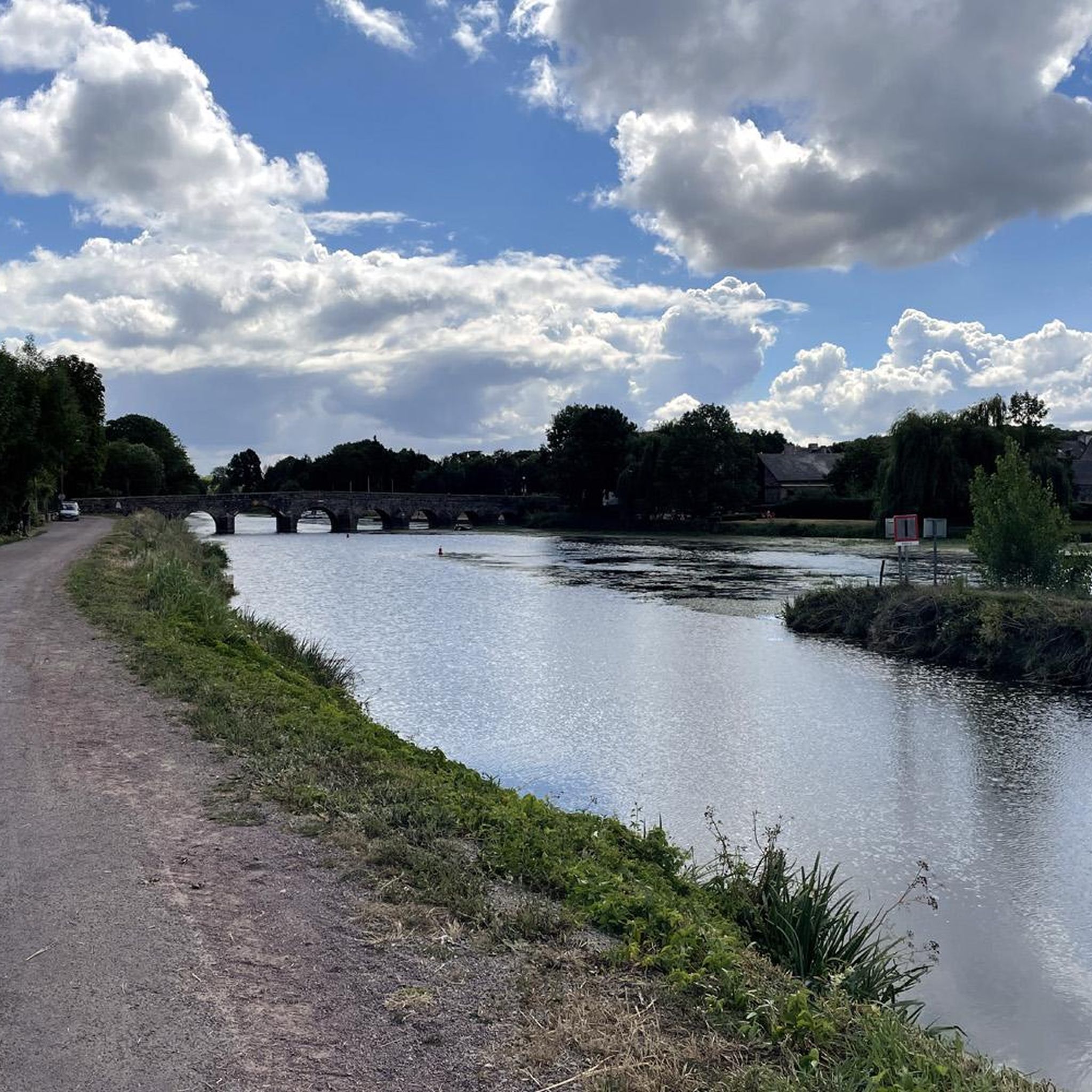
- The most popular attractions is Mill trail, a trail where nature is present. This path can…
Last updated: August 25, 2026
Saint-Maximilien-Kolbé Church
Highlight • Religious Site
Translated by Google •
Tip by

Mill trail
Highlight (Segment) • Trail
Translated by Google •
Tip by

Sign up now to discover places like this
Get recommendations on the best single tracks, peaks, & plenty of other exciting outdoor places.
Sign up for free
Corps-Nuds
Highlight • Settlement
Translated by Google •
Tip by

Steep Mountain Bike Descent
Highlight (Segment) • MTB Park
Translated by Google •
Tip by

Railway station
Highlight • Trail
Translated by Google •
Tip by

Sign up for free to discover even more attractions around Saulnières.
Sign up for free
Already have an account?
Start today with a free account
Your next adventure awaits.
Login or Signup





Tips from the Community

Nice but some passages with lots of brambles and nettles impossible to avoid in summer.
0
0

This church stands in the middle of the countryside, you can see it from afar, it is magnificent! The bell tower in the form of a "bulb", characteristic of the Byzantine style, made it pass for an Orthodox church, while it is just linked to the originality of the architect in 1875. Anecdote of the German occupation: in 1941, the Nazi propaganda filmed a film there ("Threshing wheat in Ukraine") to make believe in an advance of German troops in Ukraine (against the Soviet Union). Until 2011, the church was under the patronage of St. Peter the Apostle. On this date, his patronage was changed to that of Saint-Maximilien-Kolbé (1894-1941), a Polish priest with exceptional charisma, especially in the face of Nazism. Held in the Auschwitz concentration camp, he offered himself to take the place of a father sentenced to death. He was canonized (recognized as a "saint" by the Catholic Church in Rome) in 1982.
1
0

The line from Châteaubriant to Ploërmel is an old railway line, this route was closed and classified as "Voie Verte" it linked the station of Châteaubriant in Loire-Atlantique to that of Ploërmel in Morbihan. To this day there is still the building of the chief station as well as the station
1
0

Very sloping single (-10% and more) To do only by mountain bike! The rest will struggle to come down
0
0


"The building, which is intriguing at first sight by its Neobyzantine bulbous bell tower, is signed by the French architect Arthur Regnault, born in 1839 in Bain-de-Bretagne, who died in 1932. Centralian by training, we owe the construction to him many churches in Ille-et-Vilaine. He is best known for its Western-inspired churches such as the Sainte-Jeanne-d'Arc church in Rennes or the churches of Saint-Senoux and Corps-Nuds with the bell towers in Neobyzantine bulbs, very atypical in the Breton landscape ".
0
0


Frequently Asked Questions
What historical sites can I explore in Saulnières?
Saulnières offers several historical points of interest. You can visit the Church of Saint-Martin, a prominent architectural feature built between 1894 and 1902. The commune also features several old manors and a 17th-century presbytery. Historically, the ancient Gallo-Roman road known as the Chemin des Saulniers, once used for salt transport, is also near the town center. Additionally, the Saint-Maximilien-Kolbé Church is notable for its unique "Byzantine" style architecture.
What is the significance of Saulnières' name?
The name "Saulnières" is derived from "saulniers," which means salt merchants. This highlights the commune's historical connection to the salt trade, particularly through the ancient salt merchants' path, the Chemin des Saulniers.
Are there any unique architectural styles to see in the area?
Yes, the region features distinctive architecture. The Saint-Maximilien-Kolbé Church is known for its "Byzantine" style, designed by Arthur Regnault. Similarly, the settlement of Corps-Nuds features a Neobyzantine bulbous bell tower, an atypical architectural style in the Breton landscape, also attributed to Arthur Regnault.
What kind of hiking trails are available near Saulnières?
You'll find a variety of hiking trails around Saulnières. The Mill trail is a popular option, known for its natural setting, though it can be narrow and humid. For more options, you can explore routes like the 'Charmes loop from Tresbœuf' (6.8 km, easy) or the 'Pierre des Fées loop' (7.8 km, moderate). Find more hiking routes on the Hiking around Saulnières guide.
Are there cycling routes for road bikes near Saulnières?
Yes, there are several road cycling routes. Options include the 'Étang de la Haye Guin – Manoir de Saint-Armel loop from Les Sept Fours' (34.1 km, easy) or the 'Saint-Senoux Church – La Halte loop from Les Sept Fours' (46 km, moderate). You can discover more routes on the Road Cycling Routes around Saulnières guide.
Are there mountain biking opportunities in the area?
For mountain biking enthusiasts, there is a Steep Mountain Bike Descent available. Visitors describe it as a good descent with solid grip, though some parts may have brambles. The Mill trail also has sections that require care due to narrow passages.
What natural features can I expect to see on trails around Saulnières?
Trails like the Mill trail are rich in nature. You'll encounter small paths where greenery is abundant, and some sections, particularly from the mill to Ourmais, can be quite humid even in warm weather, indicating lush, natural environments.
What do visitors enjoy most about the attractions near Saulnières?
Visitors particularly appreciate the unique architecture, such as the "Byzantine" style of the Saint-Maximilien-Kolbé Church and the Neobyzantine bulbous bell tower at Corps-Nuds. The natural presence on trails like the Mill trail is also highly valued, offering a serene outdoor experience.
Are there any easy walking trails suitable for families?
Yes, there are easy walking trails that could be suitable for families. For instance, the 'Charmes loop from Tresbœuf' is an easy 6.8 km hike, and the 'Chapel to visit loop from Le Sel-de-Bretagne' is another easy option at 5.9 km. These shorter, less challenging routes are generally good for a family outing. More details can be found in the Hiking around Saulnières guide.
What is the 'Railway station' highlight about?
The Railway station highlight refers to a section of the old railway line from Châteaubriant to Ploërmel. This route has been closed and reclassified as a 'Voie Verte' (greenway). You can still see the original station building, offering a glimpse into the region's past transportation history.
When is the best time to visit Saulnières for outdoor activities?
While specific seasonal recommendations aren't provided, the region of Brittany generally enjoys pleasant weather from spring through early autumn (April to October) for outdoor activities. During these months, temperatures are milder, making hiking, cycling, and exploring historical sites more comfortable. Be aware that some trails, like the Mill trail, can be humid even in warm weather.
Most popular routes around Saulnières

Get inspired with the komoot mobile app


Explore more
Still not found the Highlight you’re looking for? See guides of the top attractions in other regions:
