Attractions and Places To See around Bihucourt - Top 20
Best attractions and places to see around Bihucourt include historical sites and war memorials. Bihucourt, a commune in the Pas-de-Calais department in northern France, is situated in a region profoundly affected by World War I. It serves as a gateway to numerous significant historical sites. Visitors to Bihucourt often explore the rich history of the surrounding battlefields and memorials.
Best attractions and places to see around Bihucourt
- The most popular attractions is Ulster Tower, a British war memorial. It…
Last updated: May 20, 2026
Delville Wood South African National Memorial
Highlight • Monument
Translated by Google •
Tip by

Ulster Tower
Highlight • Other
Translated by Google •
Tip by

Sign up now to discover places like this
Get recommendations on the best single tracks, peaks, & plenty of other exciting outdoor places.
Sign up for free
1917 — Écoust-Saint-Mein
Highlight • Other
Translated by Google •
Tip by

Chapel of Our Lady of La Salette
Highlight • Other
It is a small square building. On the facade is the entrance door. On each …
Translated by Google •
Tip by
Bapaume Town Hall
Highlight • Monument
Translated by Google •
Tip by
Sign up for free to discover even more attractions around Bihucourt.
Sign up for free
Already have an account?
Start today with a free account
Your next adventure awaits.
Login or Signup




Tips from the Community

The Tour d'Ulster, also known as the Helen Tower or Tour de Belfast, is a British war memorial. It was built in 1921 to commemorate the soldiers of the 36th Ulster Division who died during the Battle of the Somme in World War I. The tower is a replica of a neo-Gothic tower in Clandeboye Park, near Belfast, where the 36th Division trained. An interesting anecdote is that the 36th Ulster Division was the first to attack during the Battle of the Somme on 1 July 1916, but suffered heavy losses from both German and British artillery fire. The division lost over 5,500 men in just a few hours. The Tour d'Ulster has a cafeteria where you can enjoy a cup of tea, scones or Tayto chips, a specialty from Northern Ireland. It is a nice place to relax.
6
0
Tour d'Ulster has a cafeteria where you can enjoy a cup of tea, scones or Tayto chips, a specialty from Northern Ireland. It is a nice place to relax for a while.
1
0
The Tour d'Ulster, also known as the Helen Tower or Tour de Belfast, is a British war memorial. It was built in 1921 to commemorate the soldiers of the 36th Ulster Division who died during the Battle of the Somme in World War I. The tower is a replica of a neo-Gothic tower in Clandeboye Park, near Belfast, where the 36th Division trained. An interesting anecdote is that the 36th Ulster Division was the first to attack during the Battle of the Somme on 1 July 1916, but suffered heavy casualties from both German and British artillery fire. The division lost over 5,500 men in just a few hours.
1
0
The town of Bapaume built its first Town Hall, a symbol of the city's independence, during the 12th century. The ground floor served as a market hall for merchants. Upstairs are the council chamber and the hall where public festivals were celebrated. The current architecture of the Town Hall is similar to the previous one, built between 1583 and 1611 and destroyed on March 25, 1917 following the explosion of a time bomb left by the Germans. After a slow and dangerous mine-clearing operation, it was rebuilt in its original location in 1931 and 1932 according to the plans of Mr. Eugène Bidard. The town's coat of arms is sculpted on the keystone of the entrance door. The slate roof is decorated with pointed dormers. At the top of the tower, an outdoor gallery allows you to admire the panorama. The belfry spire peaks at 55m.
6
0
Today the chapel is primarily a pilgrim chapel and resting place with a guest book.
7
0
Chapel built in 1934. The chapel is located outside the village on a hiking trail. It is a small square building. On the facade is the entrance door. On each side are two Corinthian-style pilasters. Above the door is the name of the chapel and above it is a triangular molding. Then we have a cornice. On each side of the wall, a bay in a pointed arch. The roof is a bulbous roof with four sides. The chevet is a regular apse, Inside is a niche where you can see a statue of the Virgin. Just below the Virgin is a small altar. On each side of the walls there are two small shelves.
7
0

A small British tower that can be visited.
1
0

The South African National Memorial at Delville Wood is a First World War memorial located on the territory of the municipality of Longueval, in the Somme department. It commemorates the engagement of South African troops during the Great War. A commemorative museum traces the history of South Africa's participation in World War I, World War II and the various conflicts of the Cold War. The British Military Cemetery at Delville Wood is located opposite the memorial. Delville Wood represents, for South Africans, the place where South African Union soldiers were first engaged on the Western Front. On July 14, 1916, the South African brigade, made up of four battalions, about 3,150 men, had been ordered to hold its positions "at all costs". Under the incessant fire of the enemy artillery, they had resisted and known a true hell (Delville wood will be renamed Devil wood, the wood of the Devil). When they were relieved on July 20, they left 1,080 of theirs, killed or missing, and 1,735 wounded. Wikipedia
2
0
Frequently Asked Questions
What historical sites related to World War I can I visit near Bihucourt?
The region around Bihucourt is rich with World War I history. Key sites include the Ulster Tower, the Delville Wood South African National Memorial, and the area around 1917 — Écoust-Saint-Mein, known for its connection to the Battle of Arras. Other significant memorials and museums in the surrounding area include the Beaumont-Hamel Newfoundland Memorial, the Thiepval Memorial to the Missing of the Somme, the Thiepval Museum, and the Lochnagar Crater WW1.
Are there specific memorials commemorating WWI events or soldiers near Bihucourt?
Yes, several poignant memorials honor the soldiers of World War I. You can visit the Ulster Tower, which commemorates the 36th Ulster Division, and the Delville Wood South African National Memorial, dedicated to South African troops. Additionally, the Pipers' Memorial Longueval pays tribute to all pipers who fell during the Great War.
What is the significance of the Ulster Tower?
The Ulster Tower is a British war memorial built in 1921 to commemorate the soldiers of the 36th Ulster Division who died during the Battle of the Somme in World War I. It's a replica of a neo-Gothic tower in Clandeboye Park, near Belfast, where the division trained. It stands on the side where the 36th Ulster Division advanced on July 1, 1916.
Can I learn about the South African involvement in WWI near Bihucourt?
Absolutely. The Delville Wood South African National Memorial is a key site. It commemorates the engagement of South African troops during the Great War and includes a commemorative museum tracing South Africa's participation in various 20th-century conflicts. Delville Wood holds significant meaning for South Africans as the place where their Union soldiers were first engaged on the Western Front.
Is there anything to see in Bihucourt itself, beyond the surrounding battlefields?
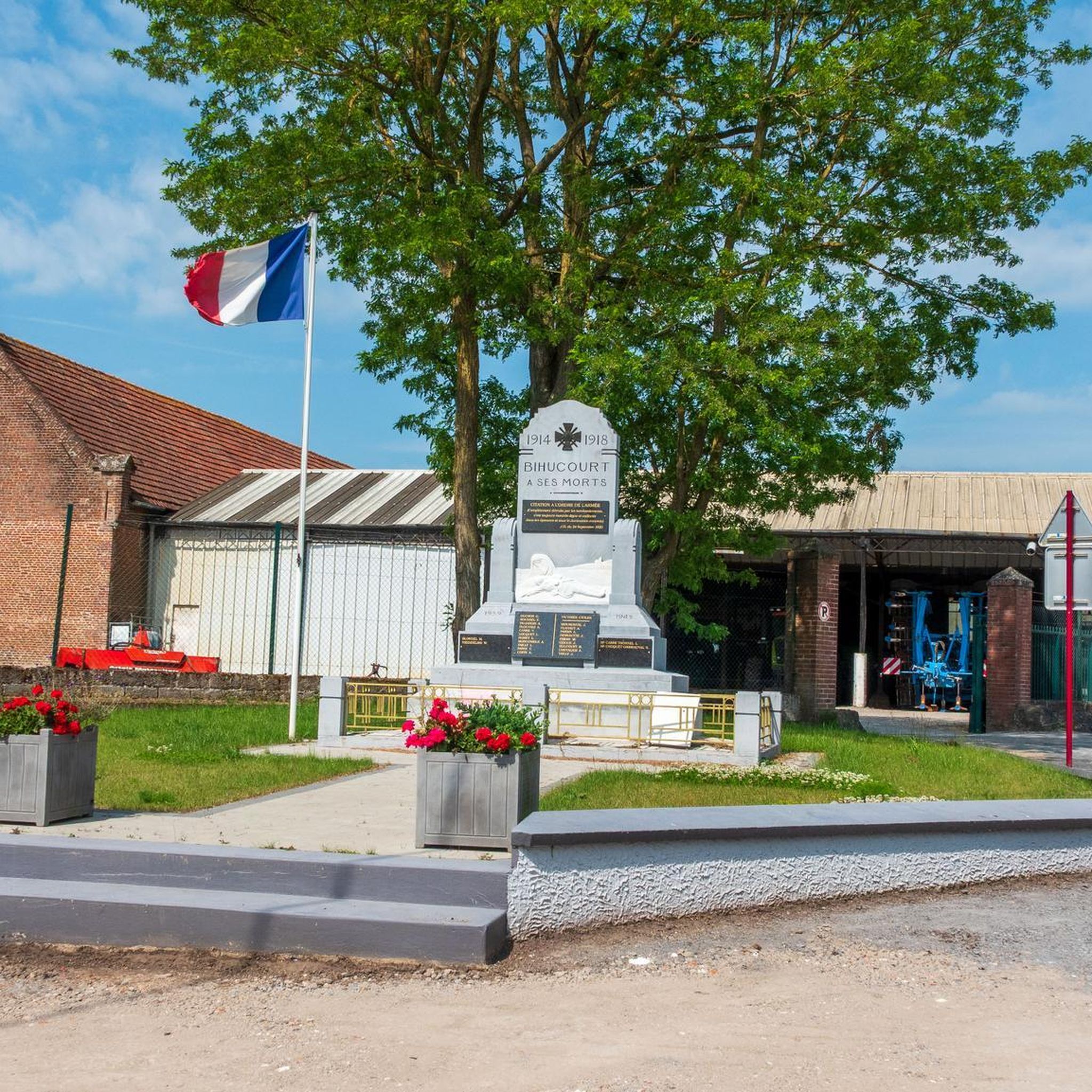
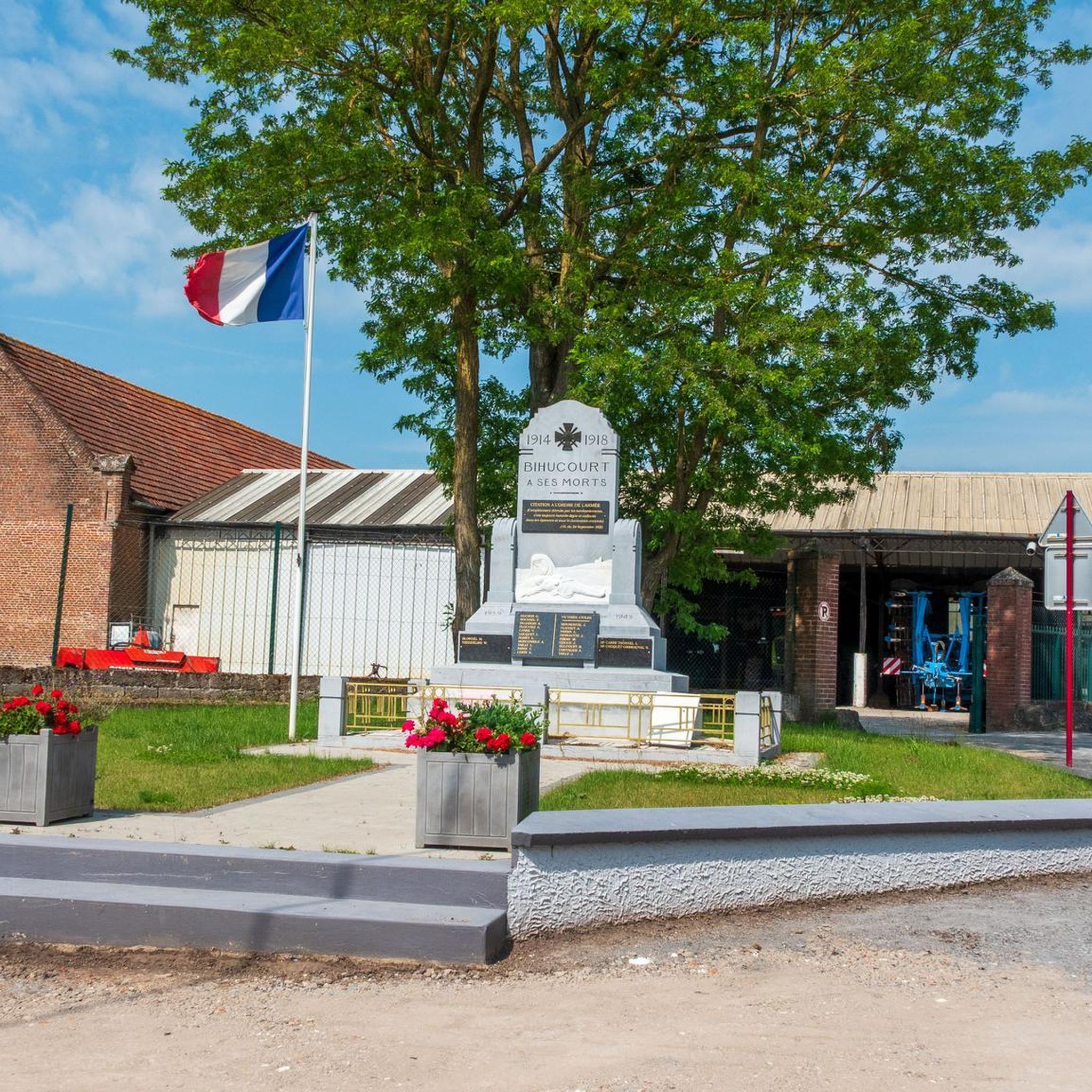
Bihucourt itself is a small farming village with its own local points of interest. You can visit the Church of St. Vaast, which was rebuilt after World War I, symbolizing the community's resilience. The village also features a War Memorial, commemorating local sacrifices. While its primary historical significance is tied to the surrounding WWI sites, these local landmarks offer insight into the village's history.
What is the Bapaume Town Hall and its historical significance?
The Bapaume Town Hall is a significant historical site. The original 12th-century building was destroyed in 1917 by a German time bomb. The current Town Hall, rebuilt in the 1930s, mirrors the previous architecture. Its belfry spire peaks at 55m, offering a panorama from its outdoor gallery, and its coat of arms is sculpted above the entrance.
Are there cycling routes available near Bihucourt's attractions?
Yes, there are several cycling routes in the area. For example, you can explore routes like the 'Connaught Cemetery – Ulster Tower loop from Miraumont' (difficult, 53.4 km) or the 'Favreuil – Bapaume Town Hall loop from Bapaume' (moderate, 29.9 km). You can find more cycling options in the Cycling around Bihucourt guide.
What running trails can I find around Bihucourt?
If you enjoy running, options include the 'Bois Loupart – abri avion loop from Grévillers' (difficult, 16.8 km) or the 'Le Bois Flahaut loop from Bihucourt' (moderate, 5.7 km). For more detailed information on running trails, refer to the Running Trails around Bihucourt guide.
Are there options for gravel biking in the Bihucourt area?
Yes, the region offers gravel biking opportunities. Routes like the 'Newfoundland Memorial – Beaumont-Hamel trails loop from Bucquoy' (moderate, 40.7 km) or the 'Ulster Tower – Beaumont-Hamel trails loop from Miraumont' (moderate, 31.5 km) are available. Discover more routes in the Gravel biking around Bihucourt guide.
What do visitors typically enjoy most about the attractions near Bihucourt?
Visitors are deeply moved by the historical significance of the World War I memorials and sites. They appreciate the opportunity to reflect on the past, learn about the sacrifices made, and experience the resilience of the region. The detailed exhibits and preserved battlefields offer a powerful and educational experience.
Are there any family-friendly historical sites in the area?
Many of the historical sites, such as the Delville Wood South African National Memorial and the Bapaume Town Hall, are considered family-friendly. They offer educational experiences that can be engaging for older children and teenagers interested in history. The museums associated with some memorials provide context in an accessible way.
Are any of the memorials or sites wheelchair accessible?
The Pipers' Memorial Longueval is noted as wheelchair accessible. For other specific sites, it's advisable to check their individual accessibility information, as some historical terrains or older buildings might have limitations.
When is the best time to visit the World War I memorials and sites around Bihucourt?
The spring (April-June) and autumn (September-October) months generally offer pleasant weather for exploring the outdoor memorials and battlefields. During these periods, temperatures are milder, and the natural landscape can be quite beautiful. Summer can also be a good time, though it may be warmer and potentially busier.
Most popular routes around Bihucourt

Get inspired with the komoot mobile app


Explore more
Still not found the Highlight you’re looking for? See guides of the top attractions in other regions:
