Attractions and Places To See around Saint-Étienne-De-Lugdarès - Top 20
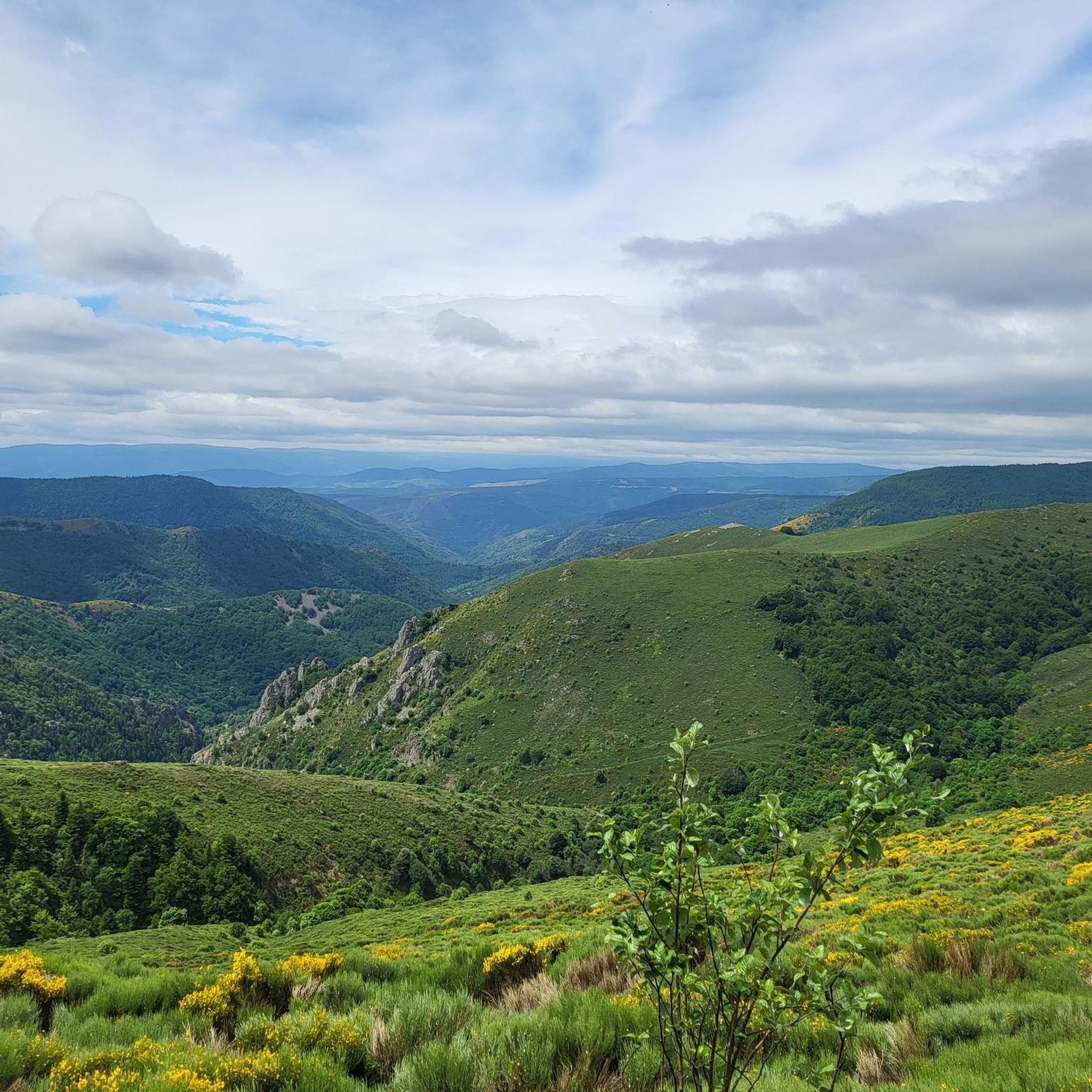
Best attractions and places to see around Saint-Étienne-De-Lugdarès include historical sites and natural features within the Ardèche department. Situated at an altitude of 1,033 meters, this region is part of the Tanargue Massif and lies in the Masméjean Valley, where the Atlantic and Mediterranean watersheds divide. The area offers a blend of historical intrigue, including connections to Henri Charrière and the Beast of Gévaudan, alongside diverse natural landscapes. Visitors can explore landmarks near Saint-Étienne-De-Lugdarès that highlight the area's rich past…
Last updated: July 7, 2026
Luc Castle
Highlight • Other
Translated by Google •
Tip by

Mazan-l'Abbaye
Highlight • Settlement
Tip by

Sign up now to discover places like this
Get recommendations on the best single tracks, peaks, & plenty of other exciting outdoor places.
Sign up for free
Langogne
Highlight • Bridge
Translated by Google •
Tip by
Ron de la Baoume
Highlight • Other
Translated by Google •
Tip by

Auradoux Pond
Highlight • Lake
Translated by Google •
Tip by
Sign up for free to discover even more attractions around Saint-Étienne-De-Lugdarès.
Sign up for free
Already have an account?
Start today with a free account
Your next adventure awaits.
Login or Signup
Popular around Saint-Étienne-De-Lugdarès

Tips from the Community

Etymology: comes from Mas d’Adam, name of the old domain which was located at the site of the current village which was ceded by the lord of Géorant to the bishop of Viviers to allow him to found the abbey of Mazan. It all begins with the foundation of the Cistercian abbey in the heart of the village. This takes place between 1119 and 1122. At the beginning of the 12th century, canons came to settle on the site of Mas d’Adam (toponym that would evolve towards MAZAN), and were joined by monks from the abbey of Bonnevaux. These religious men built an immense abbey, of which only the remains are left today, which experienced a period of apogee that lasted until the Hundred Years' War. It gave birth to four other abbeys which are Bonneval, Sénanque, Sylvanès and le Thoronet as well as establishments of nuns. After this prosperous period, misfortunes followed one another at the abbey of Mazan: it was plundered by the great companies of the Hundred Years' War, then attacked by the Huguenots in the modern period. Before this last pillage, the monks, according to legend, would have melted a golden bell with all their treasures, which they would have buried somewhere, opposite and in front of the bull's eye, within earshot of the cock's crow. https://www.montagnedardeche.com/patrimoine-culturel/village-de-mazan-labbaye-2387/
0
0


This charming rural town located in the heart of Margeride offers an ideal setting for cycling. Its cafes and restaurants allow you to stop there in the middle or end of your outing.
1
0

Work "A circle and a thousand fragments" by Felice Varini. https://www.ardeche-guide.com/lieux-de-visites/sites-historical-monuments/oeuvre-un-cercle-et-mille-fragments-de-felice-varini-4827079
0
0

In 1978, a few friends founded an association to safeguard and enhance the Château de Luc. Its purpose is to preserve and restore these vestiges, but also to deepen their history and make it known to the public. The work carried out jointly, association and successive municipal teams allowed the restoration of the keep in 1994 with the installation of orientation tables, then that of the main building in 2008 thus allowing the organization of animations at the Castle. THE MUNICIPALITY OF LUC AND THE ASSOCIATION OF FRIENDS OF THE CHÂTEAU DE LUC INVITE VISITORS TO RESPECT THESE PLACES THAT WILL SEE OUR HISTORY.
4
0
Around 1380, during the Hundred Years War, a large troop of Englishmen and road warriors tried to seize it, but in vain. During the Wars of Religion, a garrison on foot and on horseback was installed in this fortress to defend the region. Luc's castle seems to have been dismantled around 1630, on the order of Richelieu. In 1878, a statue of Notre Dame de Luc was erected on the keep. A few months later, Robert Louis Stevenson, on his trip to the Cévennes, passed in front of the castle and stopped at Luc. The Revolution, the abolition of feudal rights, the harsh climate, the challenge of time had greatly degraded it.
4
0
LUC, from the Latin LUCUS "Sacred Wood", is one of the oldest inhabited sites in Gévaudan. In Celtic times, the promontory on which this castle stands today was a place of worship dedicated to the God Mercury who gave his name to the forest of Mercoire. From the 12th century, a fortified castle replaced the dwellings. It becomes one of the most important in the region. The first owners bear the title of Prince of Luc, Count of Luc. Enlarged over the alliances, it has kept despite its state the imposing signs of a military fortress. Guardian of the Chemin de Regordane, the pilgrimage route of Saint Gilles, a nerve center between the provinces of Gévaudan and Vivarais, it came under the bishop of Le Puy. But over the centuries, the preponderance of the Bishop of Mende was recognized and the castle passed under his suzerainty. Seat of a co-lordship with the lords Bourbal des Choisinets, Agrain des Hubacs, it successively belonged to the most illustrious families of the region.
4
0
This natural monument is located 60 m next to the Stevenson path in the forest. If you're not careful you can easily walk past it. These granite rocks are house-high, about 7 m. There are many granite boulders in this area, some of which are lined up along the side of the road so that the fields can be cultivated better. But this collection is of natural origin and worth seeing. If you then walk a little further along the Stevenson path, you will pass a nice rest area with many benches and tables and very large spruce trees, some of which were already there in Stevenson's time.
2
0
Frequently Asked Questions
What historical and cultural sites can I explore in Saint-Étienne-De-Lugdarès?
The region is rich in history. You can visit the imposing Église Saint-Étienne, often called 'the Cathedral of the Mountain,' known for its granite and volcanic stone construction and baroque high altar. Explore the ruins of Mazan-l'Abbaye, which features a unique contemporary art installation. Don't miss Luc Castle, a medieval fortress on the border of Lozère and Ardèche, which is free to access year-round. The village is also the birthplace of Henri Charrière ('Papillon') and has the Fountain of Jeanne Boulet, commemorating the first official victim of the Beast of Gévaudan.
Are there natural attractions or scenic viewpoints in the area?
Yes, Saint-Étienne-De-Lugdarès offers several natural highlights. You can enjoy a break at Auradoux Pond, surrounded by a beautiful forest perfect for family strolls. Discover the unique natural granite formation known as Ron de la Baoume, located near the Stevenson trail. The area is part of the Tanargue Massif and the Masméjean Valley, where you can witness the geological fault of volcanic origin. For panoramic views, hike to Le sommet des Trois Seigneurs or explore the artistic installations along the Watershed hiking trail at Suc de Montat.
What hiking opportunities are available around Saint-Étienne-De-Lugdarès?
The region is a paradise for hikers, offering numerous marked trails. The famous GR 70, also known as the Stevenson trail, passes through the area, notably by Auradoux Pond and Ron de la Baoume. Other significant routes include the GR4, GR7, and the 'Tour de la Montagne Ardéchoise'. The 'la Randoliènne' trail above Moulin de Masméjean also offers great views of the Ardèche and Lozère mountains.
What other outdoor activities can I do near these attractions?
Beyond hiking, the region provides opportunities for mountain biking, canyoning in the gorges of the Borne, and climbing. Nearby stations like Croix de Bauzon and Chavade Bel Air offer a full range of outdoor activities throughout the year. For specific routes, you can explore options like Road Cycling Routes, Gravel Biking, and Running Trails around Saint-Étienne-De-Lugdarès.
Are there any family-friendly attractions or activities?
Yes, the area offers several family-friendly options. Auradoux Pond is ideal for family strolls in the surrounding forest. Many hiking trails, including parts of the GR 70, are suitable for families. The Moulin de Masméjean, which houses the Renewable Energy House, can also be an educational and interesting visit for all ages.
What is the significance of the Watershed (Ligne de Partage des Eaux) in this region?
The Watershed is a significant natural feature in the Tanargue Massif, where the Atlantic and Mediterranean drainage basins divide. There's a dedicated hiking trail adorned with contemporary artworks that highlights this natural and cultural heritage. Artistic installations called 'Mires' at Suc de Montat offer an immersive experience of the landscape along this line.
What can I expect to see at Moulin de Masméjean?
The Moulin de Masméjean is a mill that also houses the Renewable Energy House, offering insights into sustainable energy. Above the mill, you can follow the marked trail 'la Randoliènne,' which leads to Cham-Long and provides panoramic views of the Ardèche and Lozère mountains, featuring 14 wind turbines.
What do visitors enjoy most about the attractions around Saint-Étienne-De-Lugdarès?
Visitors particularly appreciate the blend of historical immersion and natural beauty. For instance, Luc Castle is praised for offering a real immersion into the Middle Ages. Auradoux Pond is a favorite spot for taking a break during hikes, described as a 'beautiful lake with a small headland' and a 'wonderful place to take a break after a long climb.' The contemporary art installation at Mazan-l'Abbaye also receives positive remarks for its unique blend of history and modern art.
Is there a connection to Robert Louis Stevenson in the area?
Yes, the region has a notable connection to Robert Louis Stevenson. The famous GR 70 hiking trail, also known as the Stevenson trail, passes through the area, including by Auradoux Pond and Ron de la Baoume. Stevenson himself stopped at Luc Castle during his travels in the Cévennes in the 19th century.
What is the story behind the Fountain of Jeanne Boulet?
The Fountain of Jeanne Boulet, located in the Place du Jumelage, commemorates Jeanne Boulet, who is considered the first official victim of the Beast of Gévaudan. This historical event occurred in 1764 in the nearby hamlet of Les Hubacs, a place rich in history and legends, once home to a medieval lordship.
Can I find any unique geological formations in Saint-Étienne-De-Lugdarès?
Absolutely. The area is known for its 'chaos granitique,' such as Ron de la Baoume, a natural granite formation approximately seven meters high. The Masméjean Valley itself is carved through rocks formed by a geological fault of volcanic origin, showcasing the region's unique geological history.
What is the significance of Le sommet des Trois Seigneurs?
Le sommet des Trois Seigneurs is a historical site on the Prasoncoupe-les-Ubas volcano. Here, three large granite stones are visible, engraved with the coats of arms of three lords who won a significant battle in 1324. It's a site accessible to hikers, offering both historical intrigue and scenic views.
Most popular routes around Saint-Étienne-De-Lugdarès

Get inspired with the komoot mobile app


Explore more
Still not found the Highlight you’re looking for? See guides of the top attractions in other regions:
