Attractions and Places To See around Saint-Alban-En-Montagne - Top 20
Best attractions and places to see around Saint-Alban-En-Montagne include a variety of natural features, cultural sites, and points of interest. This small, rural commune is nestled in the mountainous Ardèche department of southern France. The region is known for its tranquil natural surroundings and high elevation, offering cool mountain air and scenic views. Visitors can explore historic landmarks and picturesque villages in the vicinity.
Best attractions and places to see around Saint-Alban-En-Montagne
- The most popular attractions is Luc Castle,…
Last updated: July 7, 2026
Luc Castle
Highlight • Other
Translated by Google •
Tip by

Chapel of Our Lady at Saint James Hospital
Highlight • Other
Translated by Google •
Tip by

Sign up now to discover places like this
Get recommendations on the best single tracks, peaks, & plenty of other exciting outdoor places.
Sign up for free
Saint-Pierre Church
Highlight • Other
Translated by Google •
Tip by
Besset Gate
Highlight • Historical Site
Translated by Google •
Tip by
Langogne
Highlight • Bridge
Translated by Google •
Tip by
Sign up for free to discover even more attractions around Saint-Alban-En-Montagne.
Sign up for free
Already have an account?
Start today with a free account
Your next adventure awaits.
Login or Signup
Tips from the Community

The faithful trust in the help of the Mother of God – who in France is always venerated under the title “Notre-Dame” (which corresponds to the German name “Our Lady”) – was expressed by the French nun, mystic and Doctor of the Church, Saint Thérèse of Lisieux (religious name Thérèse of the Child Jesus and the Holy Face, 1873 to 1897) as follows: “In trials or difficulties I turn to Mother Mary, whose gaze alone is enough to dispel all fear.”
0
0

South gate of the fortified town of Pradelles, an unmissable vestige during your visit
0
0


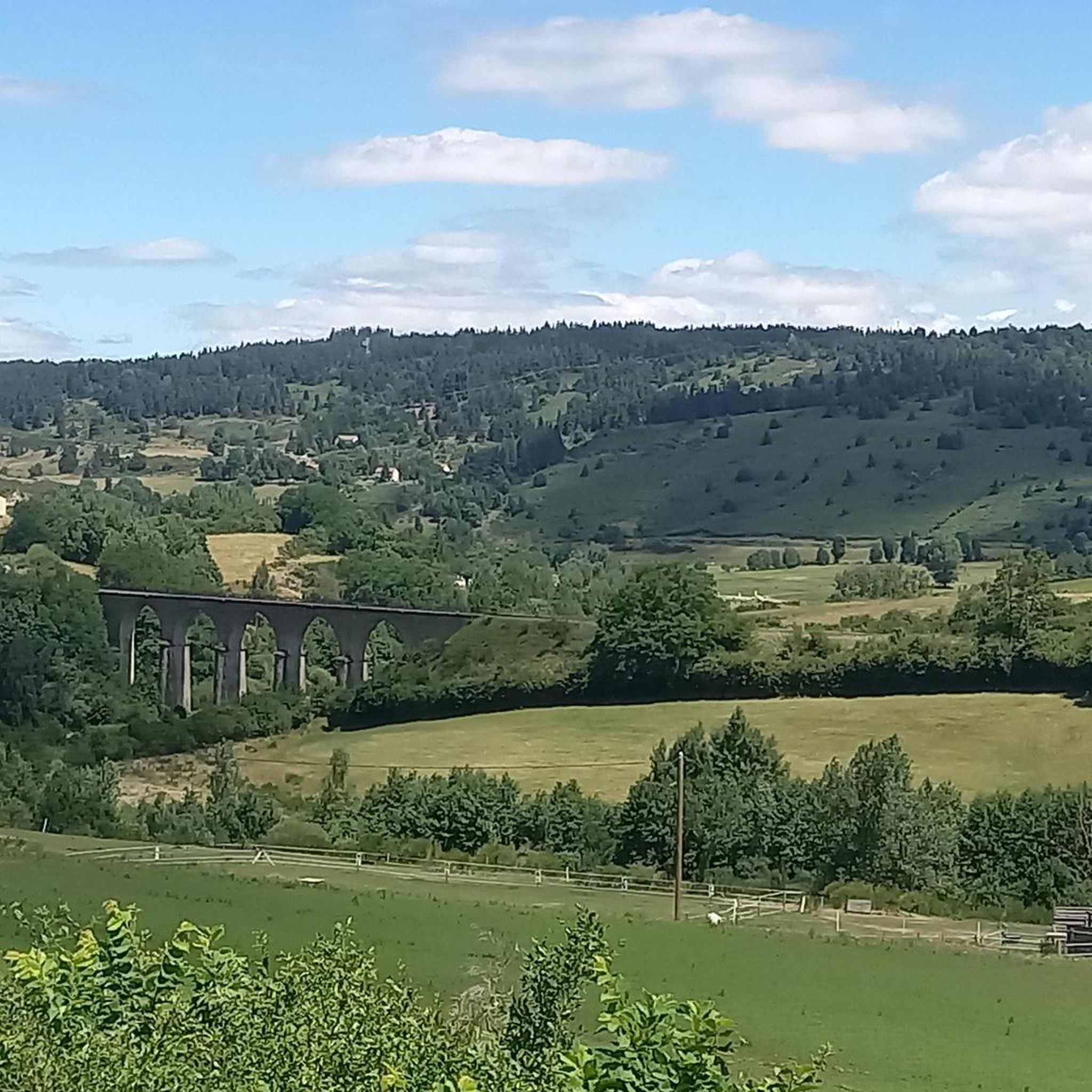
This charming rural town located in the heart of Margeride offers an ideal setting for cycling. Its cafes and restaurants allow you to stop there in the middle or end of your outing.
1
0

In 1978, a few friends founded an association to safeguard and enhance the Château de Luc. Its purpose is to preserve and restore these vestiges, but also to deepen their history and make it known to the public. The work carried out jointly, association and successive municipal teams allowed the restoration of the keep in 1994 with the installation of orientation tables, then that of the main building in 2008 thus allowing the organization of animations at the Castle. THE MUNICIPALITY OF LUC AND THE ASSOCIATION OF FRIENDS OF THE CHÂTEAU DE LUC INVITE VISITORS TO RESPECT THESE PLACES THAT WILL SEE OUR HISTORY.
4
0
Around 1380, during the Hundred Years War, a large troop of Englishmen and road warriors tried to seize it, but in vain. During the Wars of Religion, a garrison on foot and on horseback was installed in this fortress to defend the region. Luc's castle seems to have been dismantled around 1630, on the order of Richelieu. In 1878, a statue of Notre Dame de Luc was erected on the keep. A few months later, Robert Louis Stevenson, on his trip to the Cévennes, passed in front of the castle and stopped at Luc. The Revolution, the abolition of feudal rights, the harsh climate, the challenge of time had greatly degraded it.
4
0
LUC, from the Latin LUCUS "Sacred Wood", is one of the oldest inhabited sites in Gévaudan. In Celtic times, the promontory on which this castle stands today was a place of worship dedicated to the God Mercury who gave his name to the forest of Mercoire. From the 12th century, a fortified castle replaced the dwellings. It becomes one of the most important in the region. The first owners bear the title of Prince of Luc, Count of Luc. Enlarged over the alliances, it has kept despite its state the imposing signs of a military fortress. Guardian of the Chemin de Regordane, the pilgrimage route of Saint Gilles, a nerve center between the provinces of Gévaudan and Vivarais, it came under the bishop of Le Puy. But over the centuries, the preponderance of the Bishop of Mende was recognized and the castle passed under his suzerainty. Seat of a co-lordship with the lords Bourbal des Choisinets, Agrain des Hubacs, it successively belonged to the most illustrious families of the region.
4
0
Located on the “chemin de Saint-Gilles”, Pradelles had a “Road Hospital”. This hospital is located below the city, because, if charity ordered passing pilgrims to be accommodated, prudence with regard to brigands and epidemics advised to do so "outside the walls". The statue of Notre-Dame, of which Robert-Louis Stevenson wrote, in 1878, "that it worked many miracles although it was made of wood", was discovered in 1512 near this hospital in a wooden chest buried at a unknown period. She was placed in the chapel adjoining the hospital. The current Notre-Dame chapel was built by the Dominicans, the first stone was laid on May 8, 1613. The bell tower was raised in 1655. The chapel was restored and redecorated from 1867 to 1876, the bell tower was remodeled in 1879, to accommodate the Bourdon (large bell with a deep sound). The stone dome topped with the statue of the Virgin was completed in 1889.
4
0
Frequently Asked Questions
What historical sites can I visit near Saint-Alban-en-Montagne?
The region offers several significant historical sites. You can explore Luc Castle, which provides an immersion into the Middle Ages and was once visited by Robert Louis Stevenson. In the nearby village of Pradelles, you'll find the historic Besset Gate, a vestige of the fortified town, and the Chapel of Our Lady at Saint James Hospital, a site associated with pilgrims on the “chemin de Saint-Gilles”.
Are there any picturesque villages worth visiting in the vicinity?
Yes, several picturesque villages are highly recommended. Pradelles, only 8 km away, is noted for its historic center and views. Arlempdes, about 18 km distant, offers unique character and ruined structures. La Garde-Guerin, 20 km away, is another beautiful option. Further afield, Le Puy-en-Velay (38 km) is a significant pilgrimage town with notable heritage sites.
What natural attractions are there for outdoor enthusiasts?
The area is rich in natural beauty. You can explore the stunning rock formations carved by erosion in the Païolive Wood, where the Chassezac river flows, offering opportunities for swimming, mountain biking, hiking, climbing, and canoeing. The region is also close to impressive natural wonders like the Gorges du Gardon, Gorges de l'Ardèche, and Gorges du Tarn, and the unique Tourbières de Lanarce peat bogs.
What kind of outdoor activities can I do around Saint-Alban-en-Montagne?
The mountainous Ardèche department is ideal for outdoor activities. You can find numerous hiking opportunities, including trails around Langogne and near the Lac de Langogne and Cascade du Donozau. For cycling, gravel biking, and running, you can explore various routes. For more detailed information on routes, check out the guides for Cycling around Saint-Alban-En-Montagne, Gravel biking around Saint-Alban-En-Montagne, and Running Trails around Saint-Alban-En-Montagne.
Are there any family-friendly attractions or activities?
While specific family-friendly categories aren't listed for all attractions, the natural surroundings offer plenty for families. The Païolive Wood provides opportunities for gentle walks, swimming in the Chassezac river, and exploring unique rock formations. The nearby town of Langogne is a good base for outdoor activities suitable for various ages, and its local market can be an interesting experience for children.
What is the best time to visit Saint-Alban-en-Montagne?
Given its high elevation of around 1,003 meters, Saint-Alban-en-Montagne offers cool mountain air, making it particularly pleasant during the warmer months. Spring and summer are ideal for hiking, cycling, and enjoying the natural landscapes. The region also hosts festivals, such as the Interfolk 48 Festival in Langogne in July, which can add to your visit.
Where can I experience local culture and markets?
To experience local life, visit the markets in nearby towns. Langogne hosts a market on Saturdays, Pradelles on Thursdays, and Coucouron on Wednesdays. These markets are great places to find local produce and crafts. Additionally, the town of Langogne itself has cultural gems like the Chastanier sacred art museum and the Filature des Calquières museum.
Are there any significant religious or pilgrimage sites nearby?
Yes, the region has strong ties to pilgrimage routes. The Chapel of Our Lady at Saint James Hospital in Pradelles is located on the “chemin de Saint-Gilles” and is associated with pilgrims. Le Puy-en-Velay, a short drive away, is a major pilgrimage town with its Cathédrale Notre-Dame and Hotel-Dieu St Jacques, both recognized monuments on French pilgrim routes. Saint-Alban-sur-Limagnole is also an unmissable stop for pilgrims on the Camino de Compostela.
What are the most popular attractions according to visitors?
Visitors particularly appreciate Luc Castle for its historical immersion and free access. The Besset Gate in Pradelles is also a popular historical vestige. The region's natural beauty, including the high elevation and scenic views, is consistently enjoyed by those seeking tranquil surroundings.
Can I find places to eat and drink near the attractions?
While Saint-Alban-en-Montagne is a small commune, nearby towns like Langogne and Pradelles offer options for dining. Langogne, in particular, has cafes and restaurants, making it a good stop during or after your outdoor excursions.
What are the prominent natural features of the Ardèche Mountains in this area?
The area is characterized by its high elevation, offering cool mountain air and scenic views, often filled with forests and hills. Key natural features include the Ardèche Mountains themselves, the impressive Gorges du Gardon, Gorges de l'Ardèche, and Gorges du Tarn, and the unique geological formations of the Païolive Wood. Mont Mézenc and Mont Gerbier-de-Jonc are also significant peaks in the broader region.
Most popular routes around Saint-Alban-En-Montagne

Get inspired with the komoot mobile app


Explore more
Still not found the Highlight you’re looking for? See guides of the top attractions in other regions:
