Attractions and Places To See around Chatonnay - Top 20
Best attractions and places to see around Chatonnay, located in the Isère department of France, offers a mix of historical landmarks and natural features. The area is characterized by its position within the Bonnevaux forest massif, featuring numerous ponds and valleys. Visitors can explore remnants of ancient fortresses and discover natural points of interest. This region provides opportunities for those interested in history and natural landscapes.
Best attractions and places to see around Chatonnay
- The most popular attractions is View…
Last updated: October 5, 2026
Vouglans Dam
Highlight • Lake
Translated by Google •
Tip by

Church of Saint-Hymetière
Highlight • Religious Site
Translated by Google •
Tip by

Sign up now to discover places like this
Get recommendations on the best single tracks, peaks, & plenty of other exciting outdoor places.
Quinquenouille Waterfall
Highlight • Waterfall
Translated by Google •
Tip by

Ox Cave
Highlight • Forest
Translated by Google •
Tip by
Church of Dramelay-le-Château
Highlight • Religious Site
Tip by

Sign up for free to discover even more attractions around Chatonnay.
Already have an account?
Start today with a free account
Your next adventure awaits.
Tips from the Community

worth cycling past
0
0

Beautiful church with a small market unfortunately the string for the bell tower is broken and the cross is no longer inside
0
0

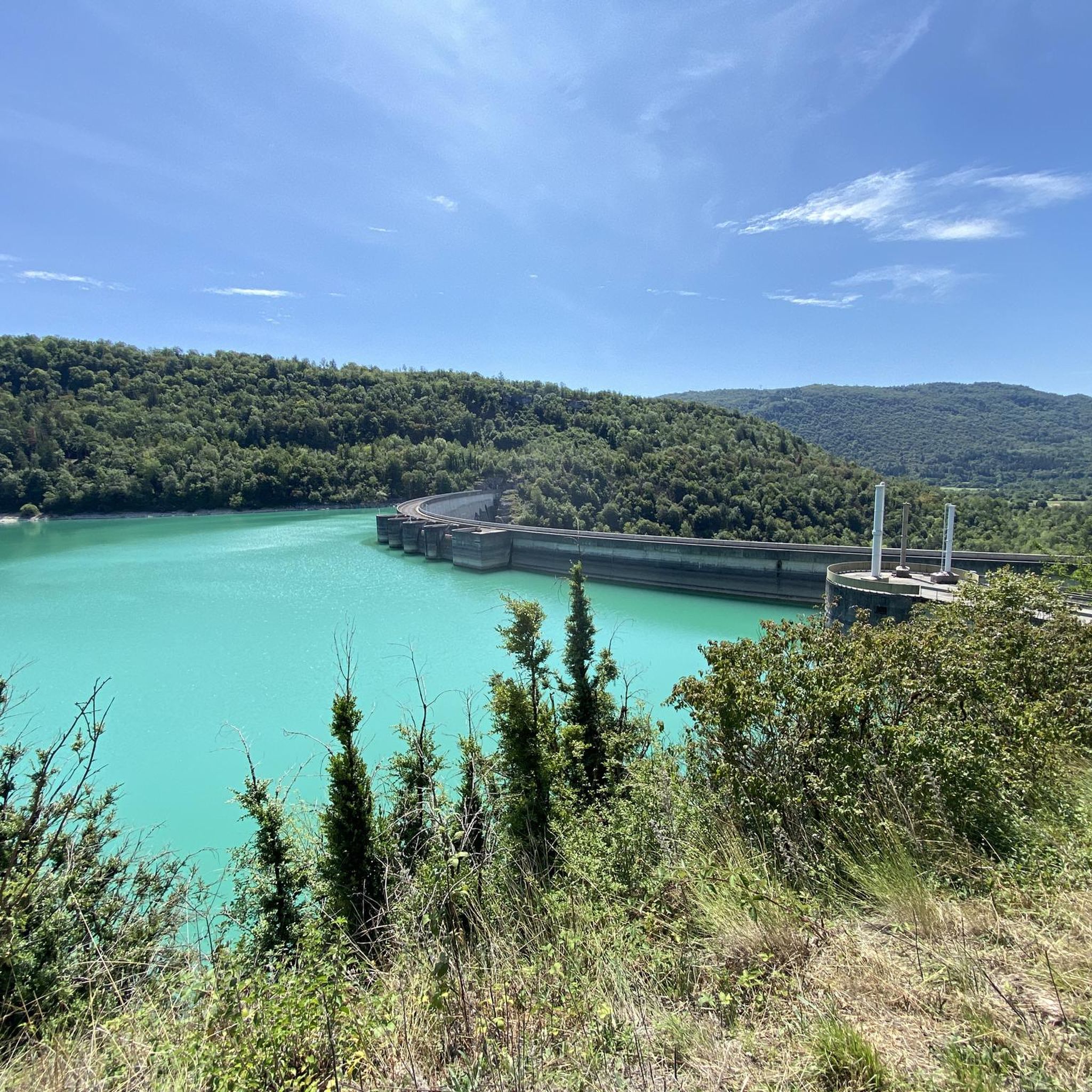
Reservoir in the Jura Park with an interesting construction.
0
0

Commissioned in 1968, the Vouglans dam retains the waters of the Ain to form the eponymous artificial lake, the third largest in France. The scope of the work impresses.
0
0

Abandoned church with a working bell 🔔 I highly recommend to ring it!
0
0

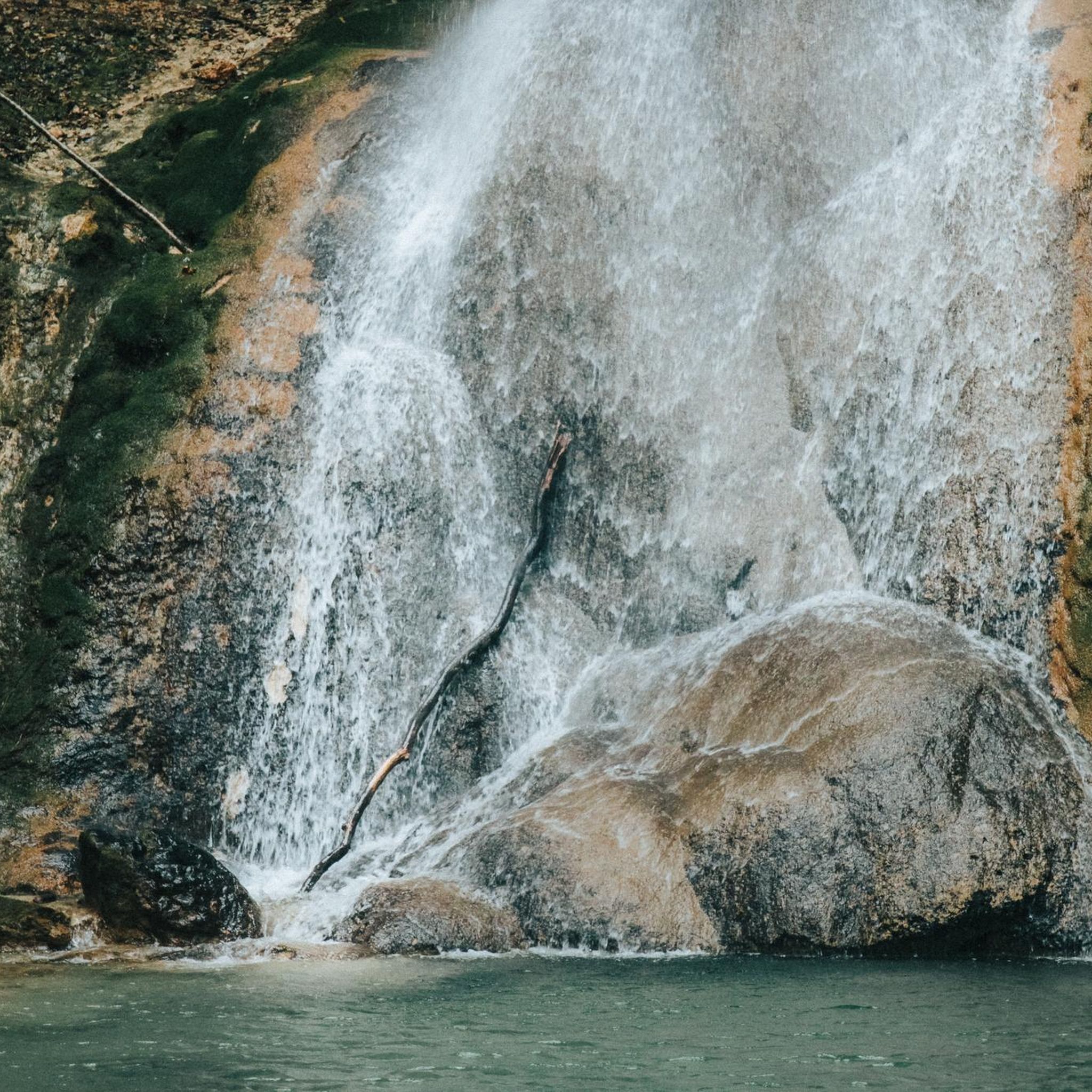
A fantastic waterfall full of interest. The water falling on the limestone indeed creates a stalagmite at the bottom and one can even make your way behind the water for a quite remarkable view. It is worth taking a detour on your journey.
2
0
The entrance to this cave is perhaps one of the grandest. Its 20 meter high overhang is reminiscent of a grand palace.
2
0
A fantastic waterfall full of interest. The water falling on the limestone indeed creates a stalagmite at the bottom and one can even make your way behind the water for a quite remarkable view.
2
1
Frequently Asked Questions
What historical landmarks can I explore in Châtonnay?
Châtonnay offers several historical sites. You can visit La Tour du Calvaire, a 19th-century clock tower built on the ruins of an 11th-century fortified castle, offering panoramic views. The area also features other castle mounds like Motte Castrale de Chateauvieux, and fortified houses such as Maison forte Jocteur-Monrozier. Additionally, the Church of Saint-Hymetière, built in the 11th century, is a fine example of rural Romanesque architecture.
Are there any notable natural attractions around Châtonnay?
Yes, the region boasts several natural attractions. The territory is part of the Bonnevaux forest massif, featuring numerous ponds and the Vallon de la Bielle. You can also visit the impressive Quinquenouille Waterfall, known for its unique limestone formations, and the Ox Cave, which features a grand 20-meter high overhang at its entrance.
Where can I find panoramic views in the Châtonnay area?
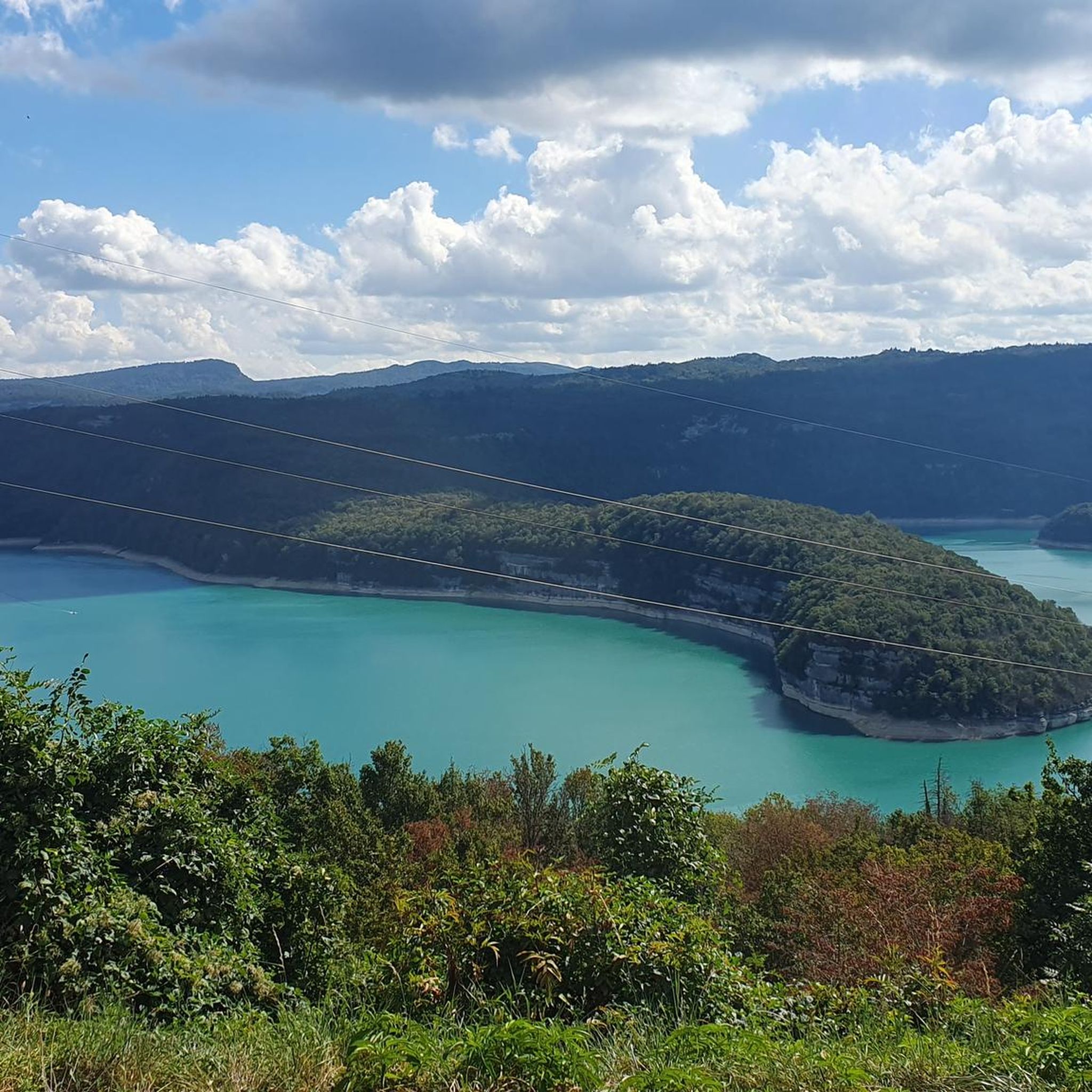
For panoramic views, La Tour du Calvaire provides a great vantage point over the village. Another excellent spot is the View of Lac de Vouglans, where a parking lot on the road offers magnificent vistas of the lake, which is crossed by the Ain river.
What kind of outdoor activities are available near Châtonnay?
The natural landscapes around Châtonnay are ideal for various outdoor activities. You can find numerous routes for hiking, walking, and cycling. For specific cycling routes, explore the Cycling around Chatonnay guide or the Road Cycling Routes around Chatonnay guide. Mountain biking enthusiasts can check out the MTB Trails around Chatonnay guide.
Are there specific hiking trails recommended around Châtonnay?
While specific hiking trails are not detailed in the highlights, the surrounding Bonnevaux forest massif and Vallon de la Bielle offer suitable terrain for hiking and walking. Many cycling routes also pass by natural attractions, which can be adapted for walking. For more detailed route information, you can explore the various guides available on komoot for the region.
Are there any family-friendly attractions in Châtonnay?
Yes, several attractions are suitable for families. The Church of Saint-Hymetière is considered family-friendly, offering a glimpse into local history. The View of Lac de Vouglans is also family-friendly and easily accessible, providing a beautiful spot for a short stop.
What is the Vouglans Dam and why is it significant?
The Vouglans Dam, built in 1968, is a significant structure as it forms the third largest water reservoir in France by volumetric capacity. The lake's distinctive emerald color is of natural origin, attributed to calcite grains attaching to phytoplankton. It's an impressive feat of engineering and a beautiful natural feature.
Are there any wheelchair-accessible viewpoints or attractions?
Yes, the View of Lac de Vouglans is noted as wheelchair-accessible, with a parking lot directly on the road providing easy access to the beautiful lake views.
What do visitors enjoy most about the attractions around Châtonnay?
Visitors particularly appreciate the stunning natural beauty, such as the magnificent views from the View of Lac de Vouglans and the impressive formations at Quinquenouille Waterfall. The historical charm of sites like the Church of Saint-Hymetière also receives positive feedback for its unique isolated setting and architectural elegance.
Are there opportunities for cycling near Châtonnay?
Absolutely. The area around Châtonnay is well-suited for cycling. You can find various routes for touring bicycles in the Cycling around Chatonnay guide, including routes like the 'View of the lake – View of Lac de Vouglans loop'. For road cycling, the Road Cycling Routes around Chatonnay guide offers options such as the 'Jura Lakes and Petite Montagne Loop'.
What is the Forest of Bonnevaux and what can I find there?
The Forest of Bonnevaux is a significant natural area that Châtonnay is partly situated within. This forest massif is characterized by numerous ponds, many of which were created by the monks of Bonnevaux Abbey. It's a rich ecosystem supporting diverse flora and fauna, making it an excellent spot for nature walks and observing local wildlife.
Is there a specific religious site of interest in the area?
Yes, the Saint Hugon Chapel, located in 'les Monts' at the border of Châtonnay, Lieudieu, and St Jean de Bournay, is a historical religious site. It was traditionally a pilgrimage destination where locals would pray for rain during droughts. Additionally, the Church of Saint-Hymetière is a notable religious building with a rich history dating back to the 11th century.
Most popular attractions around Chatonnay

Get inspired with the komoot mobile app


Explore more
Still not found the Highlight you’re looking for? See guides of the top attractions in other regions:
