The best road cycling routes around Port-Sainte-Marie
4.3
(27)
1,040
riders
144
rides
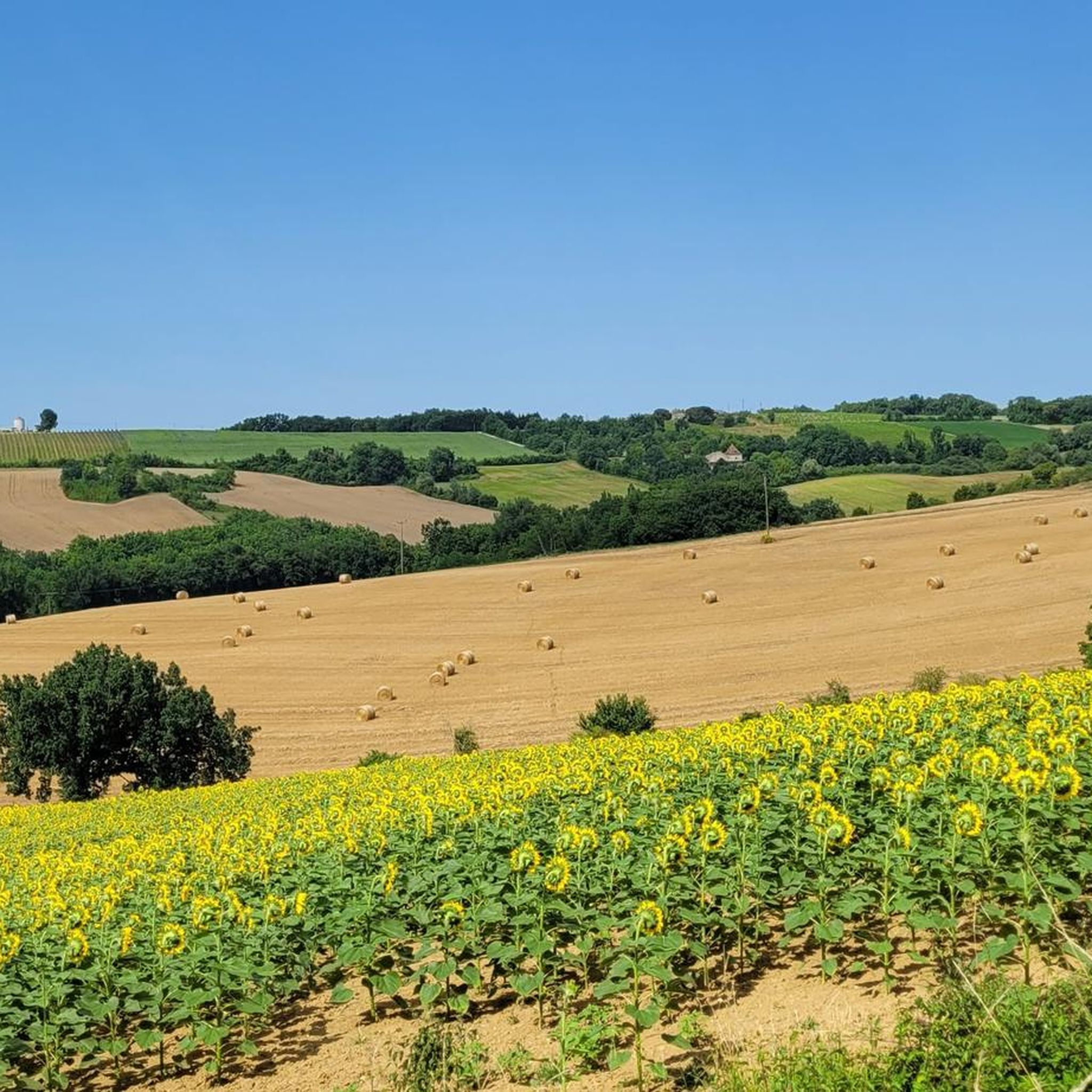
Road cycling routes around Port-Sainte-Marie traverse a diverse landscape characterized by the Garonne River and the Canal Latéral à la Garonne, offering picturesque waterside paths. The region features rolling countryside and hillsides, providing varied elevation for cyclists. Orchards and historical towns contribute to the pastoral beauty and cultural points of interest along the routes.
Best road cycling routes around Port-Sainte-Marie
- The most popular road cycling route is Pujols-le-Haut – Pujols loop from Port-Sainte-Marie, an 89.9 miles (144.7 km) difficult…
Last updated: July 8, 2026
85
riders
145km
06:55
1,690m
1,690m
Hard road ride. Very good fitness required. Mostly well-paved surfaces and easy to ride.
15
riders
Easy road ride. Great for any fitness level. Mostly well-paved surfaces and easy to ride.

Sign up for free
12
riders
Moderate road ride. Good fitness required. Mostly well-paved surfaces and easy to ride.
8
riders
76.0km
03:20
680m
680m
Moderate road ride. Good fitness required. Mostly well-paved surfaces and easy to ride.
7
riders
74.6km
03:21
560m
560m
Moderate road ride. Good fitness required. Mostly well-paved surfaces and easy to ride.
Get access to more routes and recommendations from other explorers.
Sign up for free
Already have an account?
Our route recommendations are based on thousands of hikes, rides, and runs completed by other people on komoot.
Start today with a free account
Your next adventure awaits.
Login or Signup


Other adventures around Port-Sainte-Marie

Tips from the Community

The Château Henri IV of Nérac, former residence of the lords of Albret, bears witness to the city's rich Renaissance past. Overlooking the Baïse, it was one of the living places of the future King Henri IV and remains today a must-see to discover the history of Albret.
0
0

Nérac Castle was founded in the 14th century, within a medieval town surrounded by walls and backing onto the Baïse River. Beginning in 1491, Alain d'Albret modernized this first tower and had three wings built. The west wing included the drawbridge and service rooms, the north wing housed Jeanne d'Albret's apartments, and the east wing constituted the main building of the castle. It was in this castle that Marguerite de Navarre, sister of Francis I and author of the Heptaméron, lived. A committed humanist, she brought Jacques Lefèvre d'Étaples, nicknamed the French Erasmus, to Nérac. Jeanne d'Albret, her daughter, was also sensitive to the ideas of her time and brought Théodore de Bèze to her court, before converting to Protestantism. It was in this context that Henry III of Navarre, the future King Henry IV, lived. He lived in this château for about ten years with Queen Marguerite de Valois, known as Queen Margot. The latter was responsible for the creation of the 3000-Step Avenue in the Parc de la Garenne, along the Baïse. This avenue, punctuated over the years with new fountains, was then surrounded by walls and accessible from the château by a bridge. The years following the assassination of Henri IV by Ravaillac in 1610 marked the decline of the château, first due to royal reprisals against Protestants and then due to the destruction caused by the French Revolution in 1793, when the château was declared national property. After the revolutionary destruction, only the north wing of the château remained, with its twisted columns so characteristic of the Renaissance style. The château was divided into lots and inhabited by several owners. Gradually, the municipality became interested in restoring the château, and a restoration project was drawn up by Eugène Viollet-le-Duc, whose sketches are on display in the museum. However, it wasn't until 1925 that the city became the owner of the entire building and began a restoration project to house the municipal museum. Since then, the royal residence and writer's home, the Château-Musée Henri IV, has offered visitors a permanent exhibition dedicated to Henri IV and the d'Albret family on the first floor, and the art of living during the Renaissance on the ground floor through various themes.
0
0

From the Route des Crêtes, you can enjoy beautiful views of the fortified village of Clermont-Dessous. Situated on a hillside, it preserves the remains of ramparts, a beautiful Romanesque church, and a typically Gascon charm.
0
0
Located in the heart of the Lot-et-Garonne hills, Preyssas is a charming village typical of the Albret region. Surrounded by orchards and rolling countryside, it reveals peaceful lanes, a beautiful stone church, and retains a true rural authenticity. The town hall square is an ideal spot for a relaxing break on a terrace.
0
0
Nestled on the banks of the Baïse River, Nérac offers a peaceful atmosphere. Formerly the residence of Henry of Navarre, the future Henry IV, the town preserves a rich heritage with its castle, cobbled streets, and half-timbered houses.
0
0
Perched on a rocky promontory, the village of Pujols is listed among the "Most Beautiful Villages of France." It overlooks the Lot and Mail valleys. Its medieval streets, stronghold, and imposing fortifications make this a charming place for a stroll.
0
0

[In Advent] "we hear in the Gospel the beginning of the ministry of John the Baptist. He appears in the desert and calls people to conversion so that they may prepare for the coming of the Lord. His call reminds us that Advent is not only a time of waiting, but also of interior preparation. "Prepare the way of the Lord, make straight his paths" (Luke 3:4). John's message challenges us to examine our lives. What "rough paths" and "crooked roads" are there in our hearts? Where have we perhaps distanced ourselves from God or lost sight of our fellow human beings? John invites us to remove these obstacles and reorient our lives. But his call has not only a personal dimension, but also a social one: the way of the Lord is a way of justice, peace and reconciliation. When we pave the way of the Lord, we bring light into the darkness of the world and hope into the hearts of people." (Text: Michael Inden, Diocesan President of the KAB in the Archdiocese of Cologne)
1
0

Very beautiful little medieval village. There is also a beautiful view from the top.
1
0
Frequently Asked Questions
What kind of terrain can I expect on road cycling routes around Port-Sainte-Marie?
The region offers a diverse landscape for road cyclists. You'll find picturesque waterside paths along the Garonne River and the Canal Latéral à la Garonne, as well as engaging rolling countryside and hillsides that provide varied elevation. This mix ensures options for different preferences, from flatter, scenic rides to more challenging climbs.
How many road cycling routes are available in the Port-Sainte-Marie area?
There are over 140 road cycling routes around Port-Sainte-Marie, catering to various skill levels and preferences. This extensive network ensures plenty of options for exploration.
Are there easy road cycling routes suitable for beginners or leisurely rides?
Yes, Port-Sainte-Marie offers a good selection of routes for those seeking easier rides. There are 18 routes specifically graded as easy, often following the flatter paths along the Garonne River and Canal Latéral à la Garonne, perfect for a relaxed pace.
What are some challenging road cycling routes for experienced riders?
For experienced road cyclists looking for a challenge, there are 14 difficult routes in the area. One notable option is the Pujols-le-Haut – Pujols loop from Port-Sainte-Marie, an 89.9-mile (144.7 km) trail with significant elevation gain, offering a long-distance and demanding experience.
What historical sites or natural features can I see along the road cycling routes?
Road cycling routes in Port-Sainte-Marie often pass by significant historical and natural attractions. You can cycle along the scenic Canal Latéral à la Garonne, explore charming villages like Prayssas, or encounter historical churches such as the Saint Christopher's Church in Vianne or the Saint John the Baptist Church. The region's rolling countryside is also dotted with orchards, adding to the pastoral beauty.
Are there any family-friendly road cycling options in Port-Sainte-Marie?
While specific 'family-friendly' designations are less common for road cycling, the flatter sections along the Canal Latéral à la Garonne provide safer and more accessible paths suitable for families with older children or those looking for a relaxed ride away from heavy traffic. The easy-graded routes are generally a good starting point for families.
What do other road cyclists say about the routes in Port-Sainte-Marie?
The road cycling routes in Port-Sainte-Marie are highly regarded by the komoot community, holding an average rating of 4.5 stars from over 20 reviews. Cyclists frequently praise the varied terrain, from riverside paths to engaging hillsides, and the opportunity to explore historical sites and picturesque countryside.
What is the best time of year for road cycling in Port-Sainte-Marie?
The region's climate generally makes spring and autumn ideal for road cycling, offering pleasant temperatures and beautiful scenery. Summer can also be enjoyable, especially for early morning or late afternoon rides to avoid the midday heat, while enjoying the lush orchards and vibrant landscapes.
Are there any circular road cycling routes available?
Yes, many of the road cycling routes around Port-Sainte-Marie are designed as loops, allowing you to start and finish in the same location. For example, the Nérac – Bastide of Vianne loop from Thouars-sur-Garonne is a popular moderate circular route connecting scenic countryside with historical towns.
Where can I find parking for road cycling routes in Port-Sainte-Marie?
Port-Sainte-Marie, as a town, offers various parking options. For specific routes, it's often convenient to park in or near the starting point of the route, especially in town centers or designated parking areas. Many routes begin from accessible locations within or close to the town.
Are there routes that combine cycling with exploring historical towns?
Absolutely. The region is rich in history, and many routes are designed to pass through or near charming historical towns and villages. The Saint John the Baptist Church – Château de Clermont-Dessous loop from Saint-Laurent is a great example, leading through historical sites and open countryside.
Can I find routes that follow the Canal Latéral à la Garonne?
Yes, the Canal Latéral à la Garonne is a prominent feature of the region, and many road cycling routes incorporate its scenic towpaths. These sections often provide flat, tranquil riding experiences, perfect for enjoying the waterside views. The 'Vallée de la Baïse cycle route' also commences from Port-Sainte-Marie, offering organized paths along waterways.
Most popular attractions around Port-Sainte-Marie

Get inspired with the komoot mobile app


Explore more
Browse the best Road cycling routes in other regions.
