The best road cycling routes around La Chapelle-Fortin
4.7
(59)
462
riders
70
rides
Road cycling routes around La Chapelle-Fortin traverse a landscape characterized by undulating terrain and rural roads, offering varied conditions for cyclists. The region features moderate elevation gains spread across longer distances, making it suitable for endurance rides. Cyclists can expect to pass through lush countryside, forests, and charming villages within the Perche Regional Natural Park. The area provides numerous small country roads with very little traffic, creating an ideal environment for road cycling.
Best road cycling routes around La Chapelle-Fortin
…Last updated: July 16, 2026
16
riders
Moderate road ride. Good fitness required. Mostly well-paved surfaces and easy to ride.
10
riders
Moderate road ride. Good fitness required. Mostly well-paved surfaces and easy to ride.

Sign up for free
2
riders
46.3km
01:53
250m
250m
Easy road ride. Great for any fitness level. Mostly well-paved surfaces and easy to ride.
4
riders
Easy road ride. Great for any fitness level. Mostly well-paved surfaces and easy to ride.
4
riders
46.8km
01:55
240m
240m
Easy road ride. Great for any fitness level. Mostly well-paved surfaces and easy to ride.
Get access to more routes and recommendations from other explorers.
Sign up for free
Already have an account?
Our route recommendations are based on thousands of hikes, rides, and runs completed by other people on komoot.
Start today with a free account
Your next adventure awaits.
Login or Signup
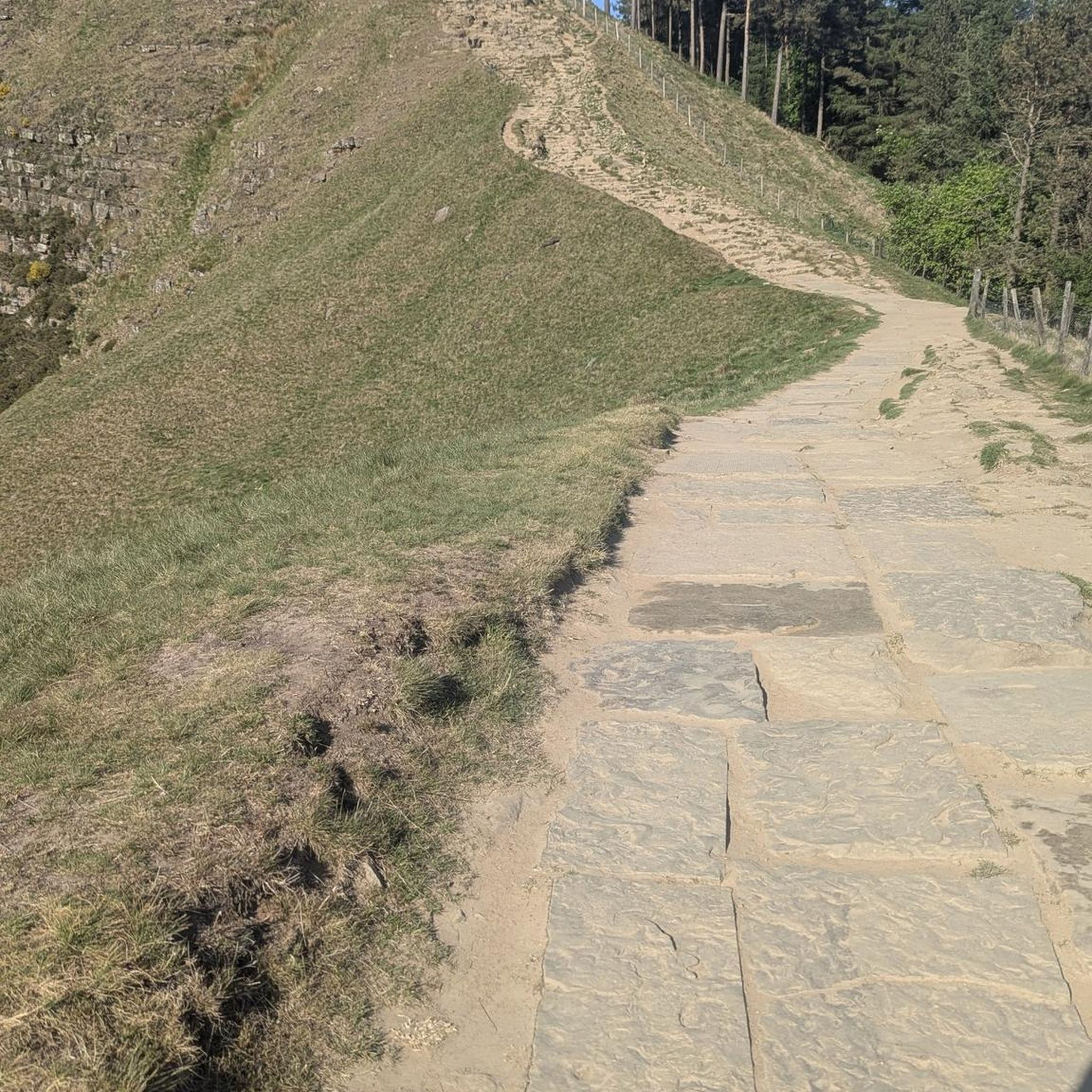
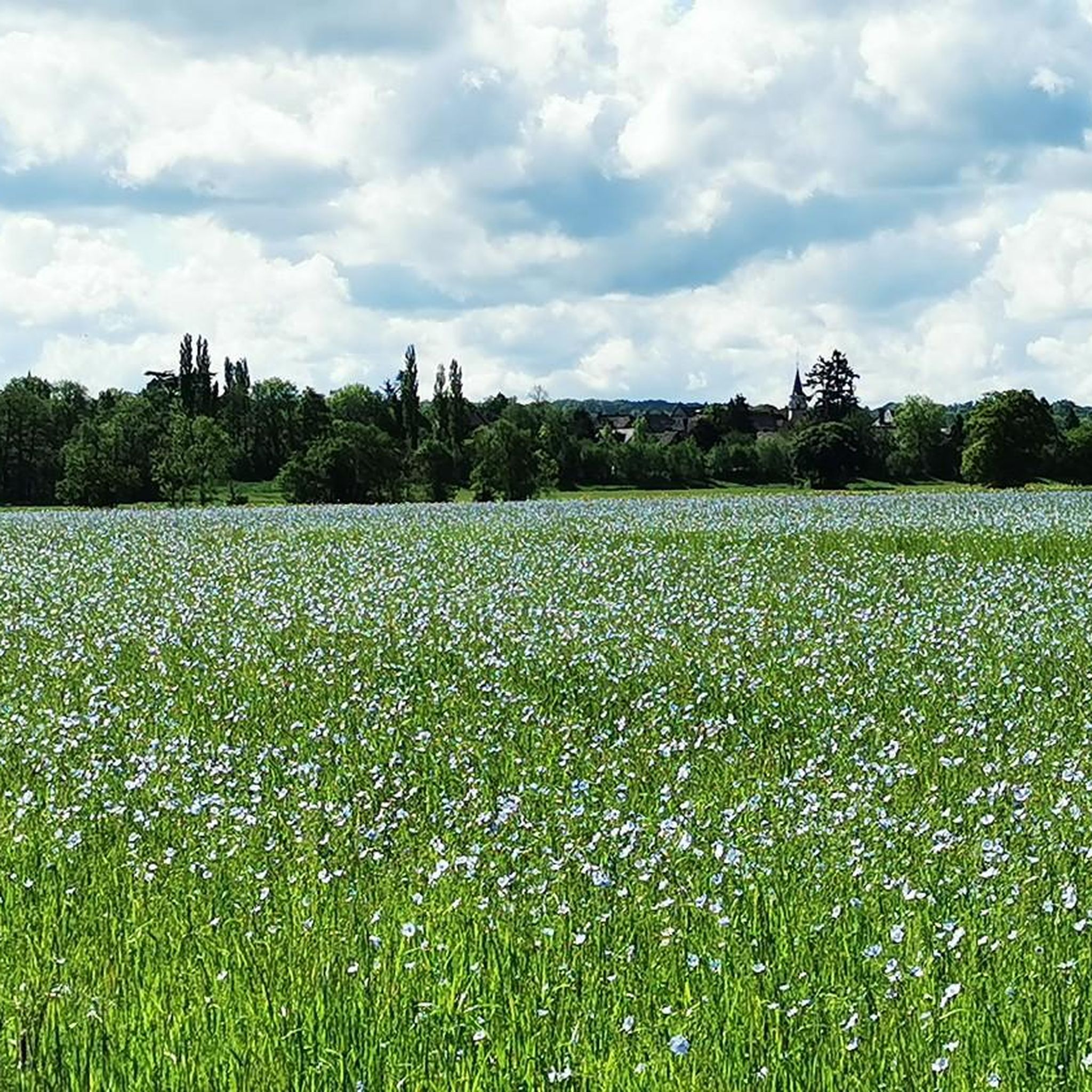
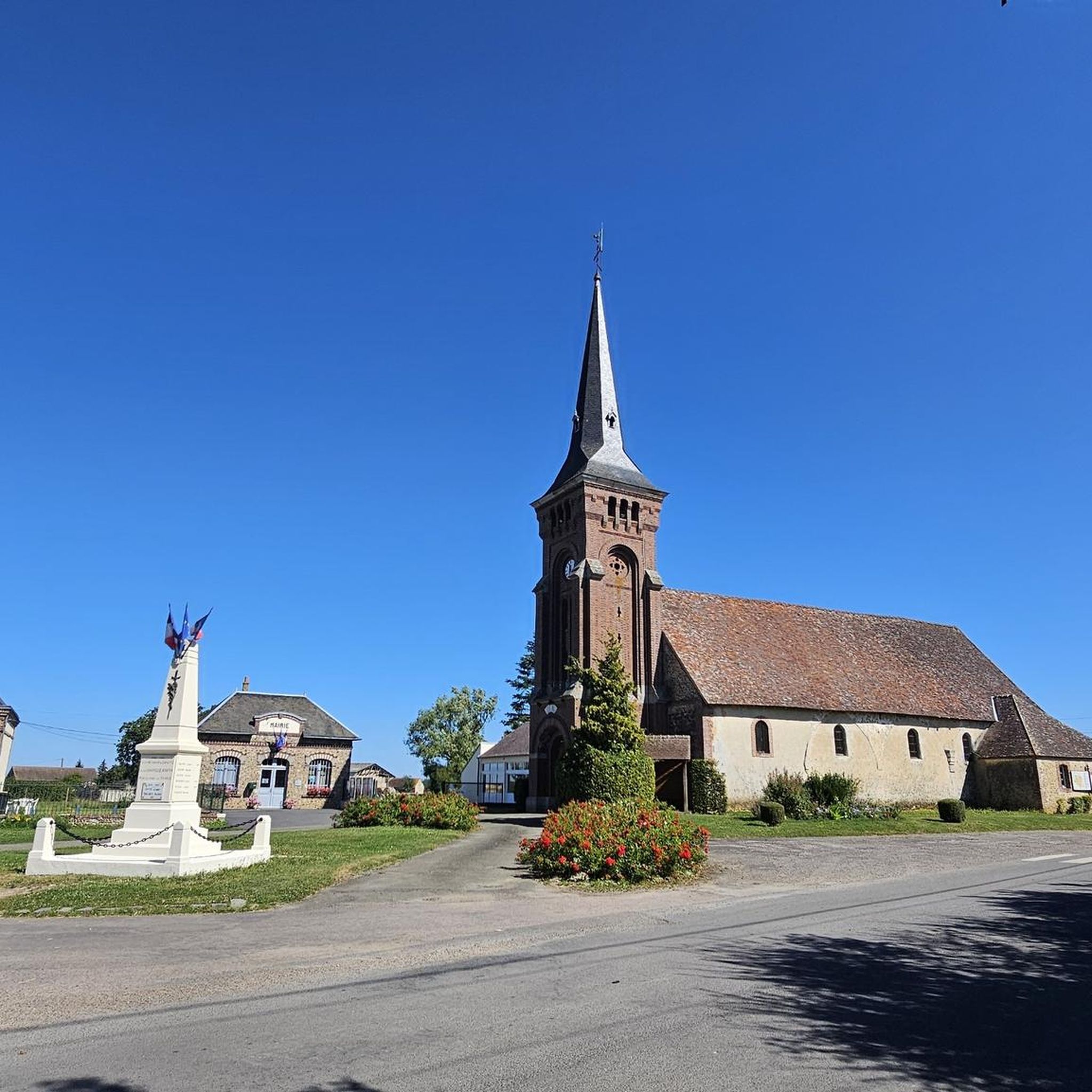


Tips from the Community

very good craft beers, friendly welcome and beautiful setting
0
0

A lovely castle when leaving the Senonches forest in a very cute village.
0
0

Of Romanesque foundation, the church of Saint-Maurice-lès-Charencey, dedicated to Saint Maurice, was remodeled at the end of the Middle Ages and then extensively renovated in the 19th century. It consists of a nave of four bays ending in a semicircular apse. This nave constitutes the oldest part of the building onto which several elements were grafted to the north. The building is indeed flanked on this side by a side aisle opening onto the nave by a series of large arches with a broken profile. This side aisle, the first bay of which serves as the base of the bell tower, opens onto the north arm of a transept of which only this part was built or remains. Its construction probably predates that of the side aisle, as would tend to prove, thanks to the careful examination of the framework, the presence of an old valley ridge, visible under the current roof. During the Restoration, the church's western façade was completely rebuilt; the current bell tower, likely erected in place of an older one, belongs to this same renovation project, which can be dated to 1821 according to an inscription inserted in the gable wall. Finally, a sacristy was built later in the northeast corner of the building, against the apse and the transept arm. Constructed of rubble stone covered in some parts with an old lime render, and in others with a hydraulic binder-based render that was quite unsightly and would eventually deteriorate, it rests on a basement partially uncovered during the work on the western façade. Its current slate roof does not appear to be original: the church was once covered with flat tiles. Several types of bays bear witness to the successive interventions in the building: the choir retains three examples of small, semicircular bays made of Grison stone, two of which were partially walled up during the installation of the great high altar and altarpiece in the choir. The workmanship of the other bays pierced in the south wall, with their broken profiles and brick frames, testifies to 19th-century work. As for the stones and limestone latticework of the large window, of fine quality, with flamboyant tracery that illuminates the north arm of the transept, they show worrying alterations. While the exterior of the church attracts little attention—its unfinished and rather unsightly surroundings contribute to this—the interior presents a rich and interesting decoration. Indeed, the nave is covered by a beautiful, high-volume, paneled timber vault with a broken profile, the entire surface of which is decorated with stencils with highlights of red, blue-gray, and black. The hallmarks and tie beams are carved and painted. Emblazoned engolante heads decorate the central sections of the tie beams. The choir vault features a particularly elaborate blue scrollwork decoration, probably reworked in the 19th century, but of high decorative quality. The choir is occupied by a substantial high altar with a reredos, with three sides, which therefore does not follow the curve of the masonry and conceals the roof posts decorated with Ionic pilasters. The central panel, crowned by a pointed pediment, is framed by side panels with triangular pediments. Niches, pilasters with Corinthian capitals, and obelisks complete this work. The aisle is also covered by a paneled vault decorated with painted red, gray-blue, and black bands, with white festoons and plant motifs. For masonry, framework and roofing work, the Sauvegarde de l’Art français granted a grant of €18,294 in 2001.
0
0


Located 5 km northeast of La Ferté-Vidame, the Saint-Denis de Morvilliers church stands in the very center of the village. The rectory was the abbot of Saint-Père de Chartres, whose monks owned the church from the beginning of the 12th century. Two charters, dated 1126 and 1127, attest to this. This building comprises a single nave ending in a semicircular chevet. A timber-framed bell tower has crowned the western part of the roof since the 18th century. The west portal through which one enters this building is made of gray stone, unfortunately cemented with a decoration of false stones. The south wall is pierced by five narrow bays, probably from the 12th century. Four windows were installed in the 15th century on the north facade. A fifth, now blocked, was pierced in the apse at the same time. Inside, despite alterations, the church retains an exposed rafter frame forming a medieval truss. Curiously independent of the church structure, it rests on two rows of posts along the drip walls. The vault is paneled. The presence of frescoes could be detected under the plasterwork of the north wall. For the restoration of the apse's frame and roof, the Sauvegarde de l'Art Français (French Art Protection Agency) awarded a grant of €16,769 in 2001.
0
0

Église Saint Madeleine is a church where beautiful various statues of Saints, famous and less famous. The reason for so many different statues is that the school of sculpture was established here.
0
0
It was heavily remodeled in the 19th century. The bell tower, previously in the center of the roof, was rebuilt as a gable in the 19th century. At that time, the eleven windows were enlarged. Near the Meuvette, to the northeast of the town, are the ruins of an old fortified castle destroyed in 1793.
0
0
Frequently Asked Questions
How many road cycling routes are available around La Chapelle-Fortin?
There are over 75 road cycling routes available in the La Chapelle-Fortin region, offering a variety of options for different skill levels. You'll find a good mix of easy and moderate routes to explore.
Are there easy road cycling routes suitable for beginners in La Chapelle-Fortin?
Yes, La Chapelle-Fortin offers 38 easy road cycling routes perfect for beginners or those looking for a relaxed ride. An example is the Manou Castle – Ferté-Vidame Castle loop from La Ferté-Vidame, which is 28.8 miles (46.3 km) long and features gentle terrain.
What are some longer road cycling routes in the La Chapelle-Fortin area?
For longer rides, consider routes like the Tour Grise (Verneuil-sur-Avre) – Eglise de la Madeleine loop from La Chapelle-Fortin, which spans 44.0 miles (70.9 km). Another substantial option is the Château de Saint-Simon 🏰✨⚜️ – Ferté-Vidame Castle loop from La Lande-sur-Eure, covering 43.5 miles (70.1 km).
Are there challenging climbs for experienced road cyclists in La Chapelle-Fortin?
While the region is characterized by rolling hills and moderate elevation gains, there are no routes classified as 'difficult' in La Chapelle-Fortin. Experienced cyclists can still find a good workout on longer moderate routes with cumulative ascents, such as the Château de Senonches – Mairie la Lande sur Eure loop from La Chapelle-Fortin, which includes over 300 meters of elevation gain.
What kind of scenery can I expect on road cycling routes around La Chapelle-Fortin?
Road cycling routes in La Chapelle-Fortin typically pass through picturesque agricultural areas, charming rural roads, and rolling hills. You'll experience the tranquil French countryside, often encountering historical landmarks and traditional villages along the way.
What historical landmarks can I see along the road cycling routes?
Many routes pass by historical sites. For instance, the Château de Senonches – Mairie la Lande sur Eure loop from La Chapelle-Fortin navigates past the Château de Senonches. Other routes may lead you near the Ferté-Vidame Castle or the La Madeleine Church, Verneuil-d'Avre-et-d'Iton.
What is the best season for road biking in La Chapelle-Fortin?
The spring and autumn months generally offer the most pleasant conditions for road cycling in La Chapelle-Fortin, with mild temperatures and beautiful scenery. Summer can also be enjoyable, though it's advisable to start earlier in the day to avoid the midday heat. Winters are typically cooler and can be wet, but routes remain accessible.
Are there any circular road cycling routes available?
Yes, many of the road cycling routes around La Chapelle-Fortin are designed as loops, allowing you to start and finish at the same point. Examples include the popular Tour Grise (Verneuil-sur-Avre) – Eglise de la Madeleine loop from La Chapelle-Fortin and the Mairie la Lande sur Eure – Saint-Pierre Church loop from La Chapelle-Fortin.
What do other road cyclists say about the routes in La Chapelle-Fortin?
The road cycling routes in La Chapelle-Fortin are highly regarded by the komoot community, holding an average rating of 4.6 stars from over 50 reviews. Cyclists often praise the well-maintained rural roads, the peaceful countryside, and the varied terrain that makes for engaging rides.
Are there any specific castles or historical ruins to look out for?
Absolutely. The region is rich in history. You can explore the Ruins of the Château de La Ferté-Vidame, or spot the Bois Francs Castle. The Gray Tower of Verneuil-sur-Avre is another notable historical landmark in the vicinity.
Can I find places to stop for refreshments or cafes along the routes?
While specific cafes are not always marked on every route, the routes often pass through small villages and towns where you can find local bakeries (boulangeries) or cafes for a break and refreshments. Planning your route with komoot allows you to identify potential stops in advance.
Most popular routes around La Chapelle-Fortin
Most popular attractions around La Chapelle-Fortin

Get inspired with the komoot mobile app


Explore more
Browse the best Road cycling routes in other regions.
