Attractions and Places To See around Oger - Top 20
Best attractions and places to see around Oger are concentrated in the Champagne region of France, offering a blend of historical sites and cultural experiences. The area is characterized by its renowned champagne houses and significant architectural landmarks. Visitors can explore a variety of urban and historical attractions, including museums and notable avenues. This region provides insights into the history of champagne production and local heritage.
Best attractions and places to see around Oger
- The most popular attractions is Avenue de Champagne, a historical site that is home to several great Champagne houses. Visitors can explore prestigious buildings and their cellars, with options for champagne tasting.
- Another must-see spot is Champagne Wine and Regional Archaeology Museum (Château Perrier), a historical site housed in Château Perrier. It features one of France's most significant archaeological exhibits and artifacts related to Champagne wine history.
- Visitors also love Town Hall, a historical site with an adjacent park. The park, featuring French and English styles, includes pools, an artificial island, and a rocky grotto.
- Oger is known for historical sites, religious buildings, and man-made monuments. The region offers a variety of attractions to see and explore, from famous avenues to local churches.
- The attractions around Oger are appreciated by the komoot community, with more than 160 upvotes and 30 photos shared by visitors.
Last updated: May 21, 2026
Blue Bridge and Saint-Hilaire Church, Mareuil-sur-Ay
Highlight • Bridge
Translated by Google •
Tip by

Avenue de Champagne
Highlight • Historical Site
Translated by Google •
Tip by
Sign up now to discover places like this
Get recommendations on the best single tracks, peaks, & plenty of other exciting outdoor places.
Sign up for free
Town Hall
Highlight • Historical Site
Translated by Google •
Tip by

Champagne Wine and Regional Archaeology Museum (Château Perrier)
Highlight • Historical Site
Translated by Google •
Tip by
Statue of Dom Pérignon at Moët & Chandon
Highlight • Monument
Translated by Google •
Tip by
Sign up for free to discover even more attractions around Oger.
Sign up for free
Already have an account?
Start today with a free account
Your next adventure awaits.
Login or Signup

Tips from the Community

Some of the buildings are monumental and an expression of capital - but even the small winemakers have very good champagnes to offer that are in no way inferior to the big houses!
1
0

In 2011[9], the idea for the current Museum of Champagne and Regional Archaeology was born. The project was approved by the French Ministry of Culture in 2014, and in 2016 the renovation work was entrusted to the architectural firm Frenak + Jullien. Work began in 2018, under the supervision of the chief architect of historical monuments Lionel Dubois. Château Perrier has now been restored and contains one of the most important archaeological exhibits in France, with some 80,000 regional artefacts (dating from the Paleolithic to the Early Middle Period) and 4,000 artefacts relating to the history of Champagne wine (since 1960).[10]
4
0
The Château Perrier, at number 13, was built from 1852 to 1857[9] by the architect Pierre-Eugène Cordier, in an eclectic Louis XIII style. In 1854[10], the couple Pierre-Nicolas Perrier, a cork manufacturer, and Adèle Jouët (the founders of the Perrier-Jouët champagne house), who had married in 1811, commissioned the construction of this castle. The four facades are inspired by the architecture of the French Renaissance, to the Parisian image of the Palais du Luxembourg, the Palais des Tuileries or the Lescot of the Louvre. The facades are a play of colours with materials such as brick, natural stone, slate and glass.
4
0
Between 1872 and 1884, the concierge and the orangery were built on the outer edge of a vast park, according to plans by the architect Alphonse Gosset (1835-1914)[5]. In 1920, the park was acquired by the municipality with the Auban-Moët mansion and opened to the public. The part of the park around the town hall is laid out in the French style, to emphasise the classical and sober facade of the building. It consists of a grass path and two symmetrical access paths arranged in a horseshoe shape around a fountain. It is decorated with two bronze lions, cast iron statues of ancient gods and various other statues. The other part of the park is laid out in the English style: it is crossed by hilly paths, groves, two pools of water, an artificial island and a rocky grotto with a waterfall. On this side of the garden is a temple of love, built of limestone. This belvedere with Corinthian columns has a coffered ceiling. It is inspired by the Temple of Love in the Petit Trianon in Versailles. The City Hall Park has the label "Remarkable Garden".🪴 In
7
0
Épernay Town Hall is located at number 7bis in the former Auban-Moët mansion, built in 1858 by Victor Moët (1797–1881)[5] to a design by the architect Victor Le Noir, who also designed the Montparnasse railway station in Paris. In the early 19th century, Jean-Baptiste Isabey had the building redesigned in a classical style for Jean-Remy Moët, owner of the Hôtel Auban-Moët and mayor of Épernay. The current layout dates from 1857 and is the work of the brothers Denis and Eugène Bühler. It was donated to the city in 1919, which took it into use as a town hall in 1920. The building houses luxurious rooms, including the wedding hall and the council chamber. The building has been listed as a French Historical Monument since 26 June 2012.[5][6]
7
0
In his day, the fermentation of wine in the bottle, which produces sparkling wine, was a huge problem for winemakers. When colder weather arrived in autumn, the fermentation process would sometimes halt before all the fermenting sugar in the wine had been converted into alcohol. If this wine was bottled at this stage, it literally became a time bomb. When the weather warmed in spring, the remaining yeast would begin to work again, producing carbon dioxide, which would at least force the cork out of the bottle and often cause the bottle to explode, setting off a chain reaction in nearby bottles. This posed a danger to workers and sometimes destroyed an entire year's worth of wine production.[citation needed] Dom Pérignon sought to prevent this imperfect fermentation and introduced several improvements that are still in use in the Champagne region today, such as the extensive blending of wines from different winemakers.
4
0
Pierre Pérignon (Sainte-Menehould, 1639 - Hautvillers, 24 September 1715) known as Dom Pérignon was a Benedictine monk to whom the méthode champenoise, the method of making champagne, is often attributed. The best champagne of the Moët et Chandon winery is also named after him: champagne Dom Pérignon. Legend has it that he exclaimed: "Come quickly, I'm tasting the stars!" when he tasted the first sparkling champagne. The reality is, however, that although the Dom worked tirelessly to improve the wines of the Champagne region, he invented neither sparkling wine nor champagne.
4
0

simply fantastic and enjoy at least 1 glass of champagne ;)
4
1
Frequently Asked Questions
What are some must-see historical sites around Oger?
The Champagne region around Oger is rich in history. A must-see is the Avenue de Champagne in Épernay, home to prestigious Champagne houses and their cellars. Another significant site is the Champagne Wine and Regional Archaeology Museum (Château Perrier), which houses one of France's most important archaeological collections related to Champagne wine history.
Are there any family-friendly attractions in the Oger area?
Yes, several attractions around Oger are suitable for families. The Avenue de Champagne offers an engaging walk through Épernay's historic district. The Town Hall in Épernay features a beautiful adjacent park with French and English garden styles, including pools and an artificial island, perfect for a leisurely stroll. The Champagne Wine and Regional Archaeology Museum (Château Perrier) can also be an educational experience for older children.
What kind of outdoor activities can I do near Oger?
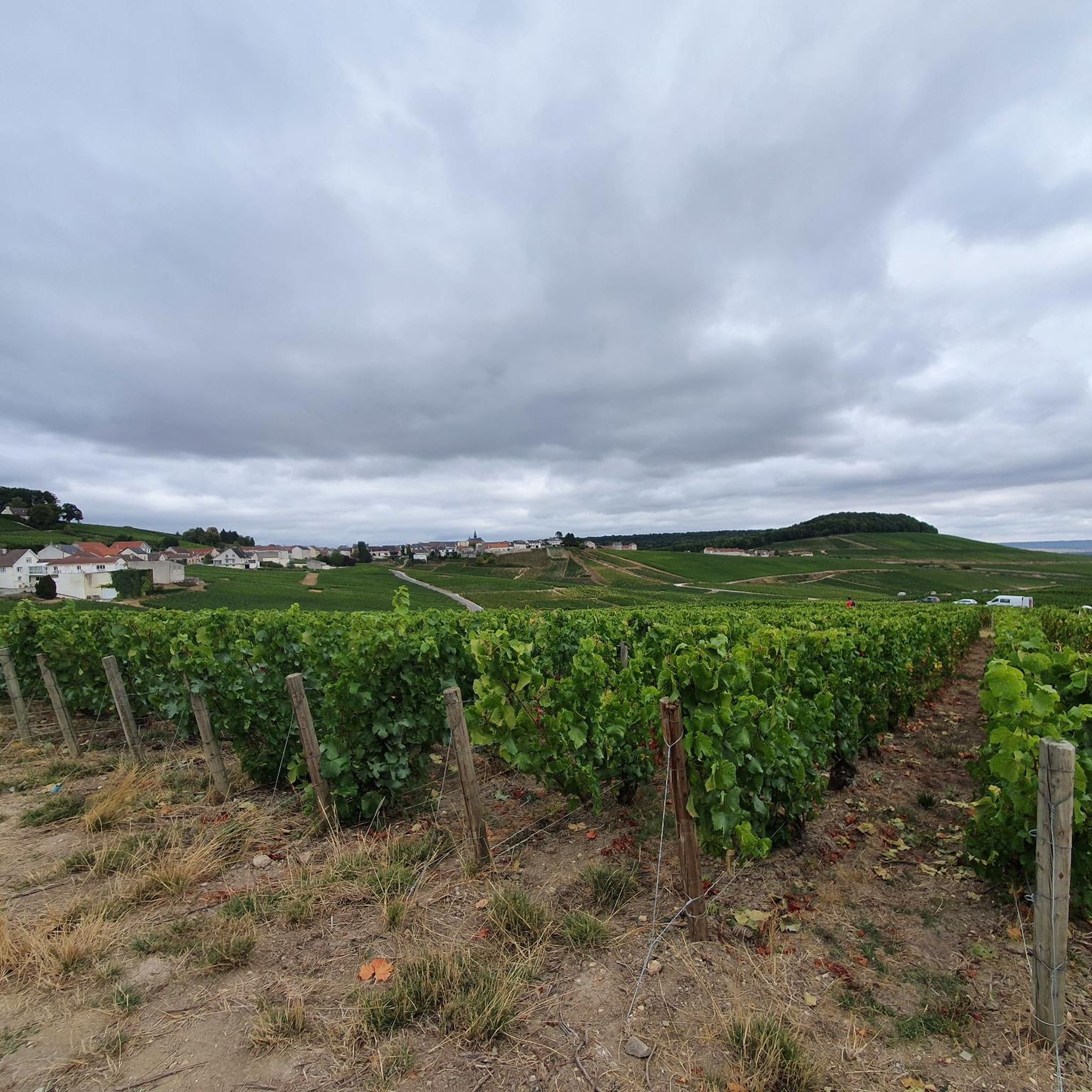
The area around Oger offers various outdoor activities, especially cycling and hiking through the scenic Champagne vineyards. You can find numerous routes for cycling, hiking, and mountain biking. Popular routes include the 'View of Oger loop' for an easy hike or more challenging cycling routes like 'Saran Castle – Town Hall loop from Vertus'.
Where can I find scenic viewpoints around Oger?
While the guide highlights urban attractions, the Champagne region is known for its rolling vineyards and picturesque landscapes. The Avenue de Champagne itself offers a grand view of historic architecture. For broader scenic views, consider exploring the numerous hiking and cycling trails in the surrounding area, many of which offer panoramic vistas of the vineyards, such as the 'View of Cramant and Vineyards' cycling route.
Are there any religious buildings or significant monuments to visit?
Yes, the region features notable religious buildings and monuments. The Saint-Hilaire Church in Mareuil-sur-Ay, dating back to the 11th century, is a beautiful example of historical architecture. Additionally, the Statue of Dom Pérignon at Moët & Chandon is a significant monument honoring the Benedictine monk often associated with the development of Champagne.
What is the best time of year to visit Oger and the Champagne region?
The best time to visit Oger and the Champagne region generally depends on your interests. Spring (April-May) offers blooming vineyards and pleasant weather for outdoor activities. Summer (June-August) is vibrant with longer days and harvest festivals, though it can be busier. Autumn (September-October) is particularly beautiful during the grape harvest, with golden hues across the landscape and cooler temperatures ideal for hiking and cycling.
Are there easy hiking trails suitable for beginners near Oger?
Yes, there are easy hiking trails available. For instance, the 'View of Oger loop from Oger' is an easy 6.7 km hike. You can find more options and details on the hiking guide for Oger, which includes various routes with different difficulty levels.
What kind of cycling routes are available around Oger?
The Oger area offers a range of cycling routes, from moderate to difficult, perfect for exploring the Champagne vineyards. Examples include 'The beautiful Mairie – Avize loop from Vertus' (moderate, 31.7 km) and 'Saran Castle – Town Hall loop from Vertus' (difficult, 43.7 km). More routes can be found on the cycling guide for Oger.
What do visitors enjoy most about the attractions around Oger?
Visitors particularly appreciate the blend of historical significance and the prestige of the Champagne houses. The Avenue de Champagne is often highlighted for its beautiful properties and the opportunity for champagne tasting. The well-maintained parks, like the one adjacent to the Town Hall, are also frequently praised for their beauty and tranquility.
Can I visit Champagne cellars and do tastings near Oger?
Absolutely. The Avenue de Champagne in Épernay is renowned for its numerous Champagne houses, including Moët et Chandon, where you can visit their prestigious buildings and cellars. Many offer the added bonus of champagne tasting experiences.
Are there any castles or grand estates to see?
Yes, the region boasts impressive estates. The Champagne Wine and Regional Archaeology Museum is housed within Château Perrier, a magnificent castle built in an eclectic Louis XIII style. The Town Hall in Épernay is also located in the former Auban-Moët mansion, a grand building with luxurious rooms and a remarkable garden.
What are some unique cultural experiences in the Oger area?
Beyond wine tasting, a unique cultural experience is exploring the Champagne Wine and Regional Archaeology Museum (Château Perrier). It offers deep insights into the region's history, from ancient archaeological finds to the evolution of Champagne wine production. Visiting the historic Avenue de Champagne also provides a glimpse into the heritage and prestige of the Champagne industry.

Get inspired with the komoot mobile app


Explore more
Still not found the Highlight you’re looking for? See guides of the top attractions in other regions:
