The best road cycling routes around Laons
3.9
(31)
392
riders
179
rides
Road cycling around Laons is characterized by gentle rolling hills and open countryside, offering routes that traverse agricultural landscapes and small villages. The region's terrain features moderate elevation changes, making it suitable for various fitness levels. Routes often follow quiet country roads, providing views of rural France.
Best road cycling routes around Laons
- The most popular road cycling route is Saint Sulpice Church – Saint-Hilaire Church loop from Escorpain, a 25.6 miles (41.1 km) easy trail that takes 1…
Last updated: October 12, 2026
12
riders
Easy road ride. Great for any fitness level. Mostly well-paved surfaces and easy to ride.
5.0
(2)
5
riders
41.5km
01:42
270m
270m
Easy road ride. Great for any fitness level. Mostly well-paved surfaces and easy to ride.

4.0
(1)
3
riders
47.0km
01:55
260m
260m
Easy road ride. Great for any fitness level. Mostly well-paved surfaces and easy to ride.
4
riders
Easy road ride. Great for any fitness level. Mostly well-paved surfaces and easy to ride.
4.0
(1)
5
riders
26.2km
01:06
180m
180m
Easy road ride. Great for any fitness level. Mostly well-paved surfaces and easy to ride.
Get access to more routes and recommendations from other explorers.
Already have an account?
Our route recommendations are based on thousands of hikes, rides, and runs completed by other people on komoot.
Start today with a free account
Your next adventure awaits.
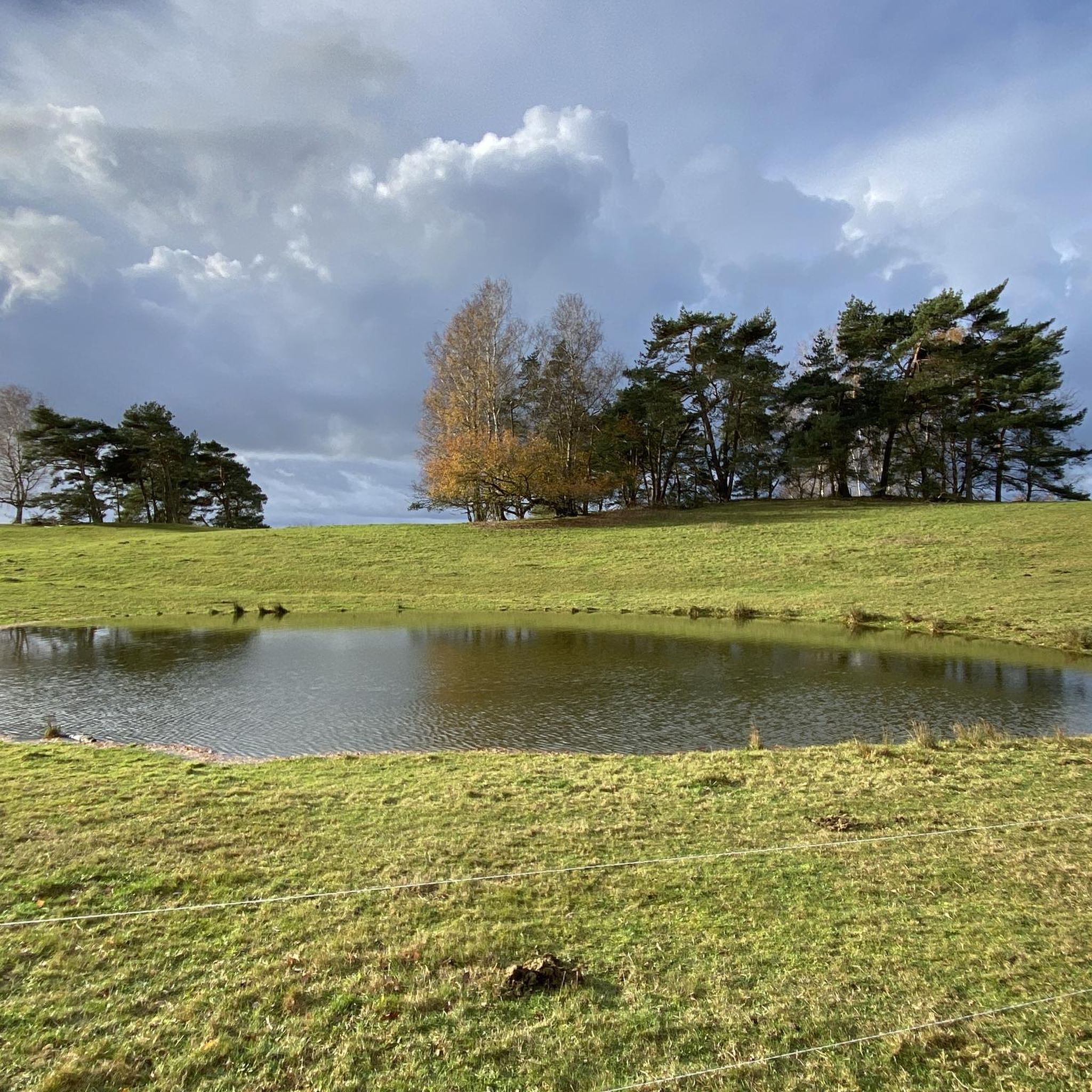
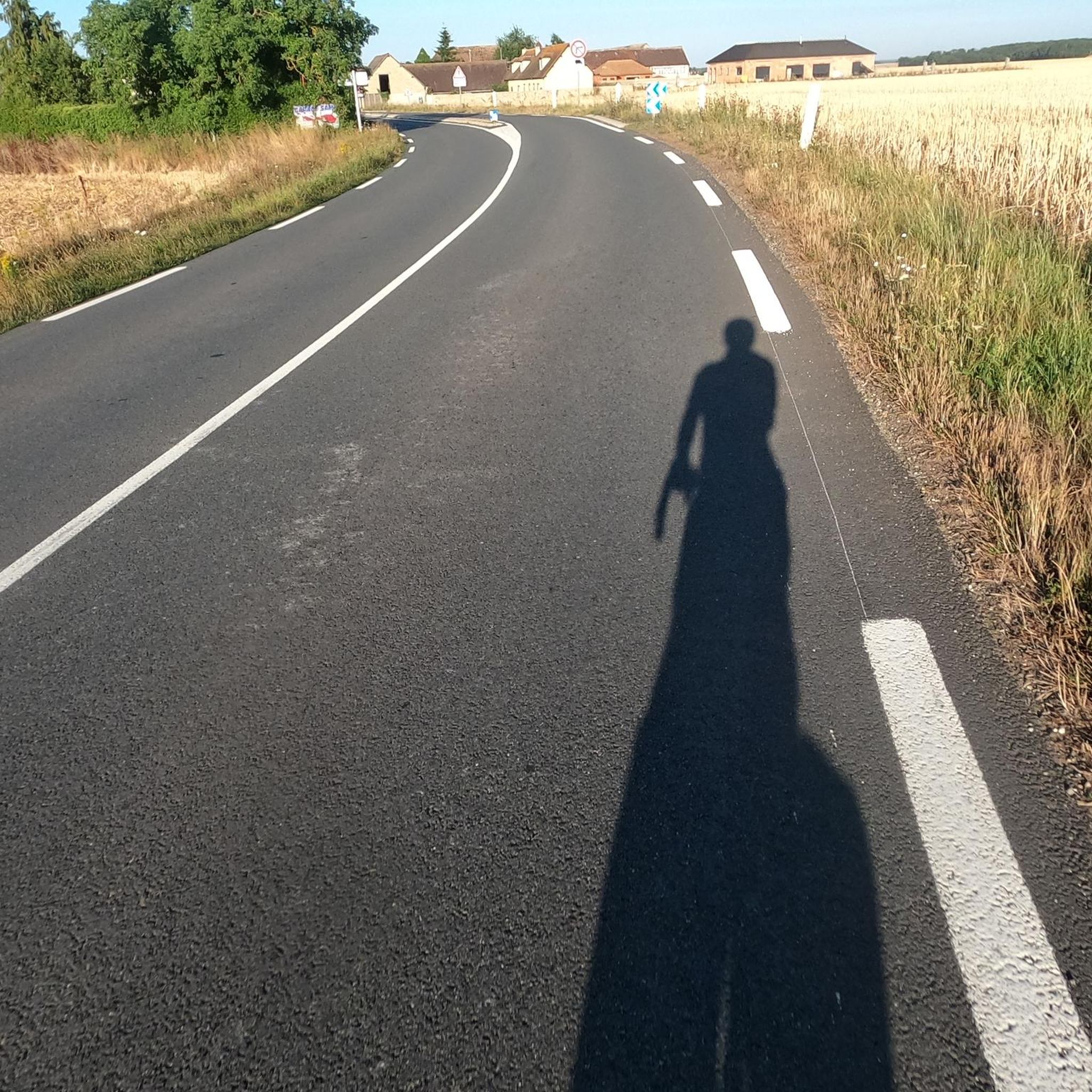


Tips from the Community

The Saint-Martin church, located in Châtaincourt, was not always the only place of worship in the commune. A small chapel did indeed exist between Châtaincourt and the hamlet of Boutaincourt at a very ancient date, since Louis VII the Young, King of the Franks from 1137 to 1180, came there on pilgrimage in 1155. The Saint-Jacques chapel, such was its name, and the place of the same name no longer exist today, they were destroyed during the Wars of Religion.
0
0
The first mention of the existence of the Church of Saint-Martin de Nonancourt is a 12th-century charter, but the original building probably dates back to the 7th or 8th century. The bell tower that now occupies the middle of the façade dates from the reconstructions of 1204. During the Hundred Years' War, the church was largely destroyed, like many buildings in the region. The side aisles, nave, and choir were rebuilt in the 16th century. The Chapel of the Virgin, also known as the Chapel of the Rosary, was also added. The Church of Saint-Martin contains numerous works of art, some of which are listed: neo-Gothic and Renaissance furnishings, including the centerpiece, the pulpit, a veritable wooden lacework; a variety of statuary, a 16th-century organ case and finally an enigmatic fresco discovered during recent works in 2001. The stained-glass windows of the church constitute a truly remarkable collection, both in terms of their number (26 in total) and their quality. The lower windows of the nave are the oldest pieces, dating from the 1500s, while the upper windows date from the 1520s and 1530s.
0
0
Built in the 15th century on the foundations of a chapel whose origins can be traced back to a papal bull from Pope Alexander in 1142, Saint Apollonia was worshipped there.
0
0
The Notre-Dame Priory, founded around 1128 by Rahier de Muzy, was dependent on Coulombs Abbey and housed a community of Benedictines. This community was apparently never very large, as Eudes Rigaud's repeated visits in the 13th century only recorded four monks. In 1255, the monks no longer lived together at the priory due to lack of space. By 1269, the buildings were in too poor condition to accommodate the archbishop. Adjoining the convent buildings, the choir of the parish church of Saint John the Baptist was used by the monks. This 12th-century church, built "in a single heap," underwent several embellishments in the 18th century, but on July 21, 1794, it was probably converted into a saltpeter works, along with the entire priory. The church reopened for worship on March 22, 1795. A campaign of renovations restored the buttresses of the west facade with bricks at the end of the 19th century. The bell tower, damaged in 1944 during the fighting on the Avre, was restored in 1959. The monument was closed for another period from 1939 to 1950. The bells were electrified in 1985. Heating was installed in 1990. A restoration project for the entire building was adopted by the municipality in 2003. The roofing work—repairing the roof box—and the complete restoration of the north facade—raising the apron of the openings by approximately 40 centimeters, repairing all the buttresses and old lime plaster—were completed in 2006. The Church of St. John the Baptist has been listed on the supplementary list of historic monuments since December 2005. A competition to select a master glassmaker was held in April 2009. The winning candidate, Coline Fabre, was entrusted with the task of creating The stained-glass windows throughout the building. Four bays were installed in the spring of 2010 and eight in the summer of 2014, so that all bays on the north, east, and south facades were fitted with stained-glass windows. Rehabilitation work on the east and west facades and the installation of the stained-glass windows on the west facade began on November 20, 2018, and was completed at the end of June 2019. The stained-glass windows were inaugurated on September 13, 2019. Since February 2021, the bells have once again rung daily at 12:00 p.m. and 7:00 p.m.
0
0
Every year, during the Heritage Days, the association "Au Cœur de Nos Villages" opens the doors of the Saint-Pierre church. A building from the 12th and 15th centuries, listed as a historical monument, whose bell tower, clock, and five renovated altarpieces, including Saint Michael slaying the dragon, are to be discovered. For the benefit of the Restos du Cœur Walkers will also be able to get to know the Atelier Arc-en-ciel (plastic arts) which exhibits the works of the adult group. Paintings, in red chalk, white pencil, sepia, etc., representing views of the church, statues, etc., will be put on sale for the benefit of the association Au Cœur de Nos Villages.
0
0
The Saint-Rémy church in Saint-Rémy-sur-Avre is dedicated to Saint Remi of Reims, Bishop of Reims who baptized Clovis in 496 in the Notre-Dame Cathedral of Reims. In the 12th century, it marked the border between the Duchy of Normandy and the French royal domain on which Saint-Rémy-sur-Avre depends. It is a flamboyant Gothic church from the 15th century, probably rebuilt since we have mention of its existence since the end of the 11th century.
0
0
Placed under the patronage of Saint-Lubin, bishop of Chartres in the 6th century, the church of Prudemanche has experienced many vicissitudes over the centuries. Ruined during the English invasions and then devastated by the Protestants, the current building is said to be the third construction, undertaken at the dawn of the 17th century. Its style, very simple, is even said to have been deliberate so as not to offend the austerity of a part of the population who remained Calvinist. Rectangular in plan, the nave is extended by a choir with a flat chevet of the same width. To the northeast of the church, a sacristy has been added, accessible by a side door of the choir. The nave is pierced with semicircular bays probably coming from the original Romanesque building. The raftered nave frame supporting the truss is paneled. The walls are made up of a wooden frame with flint masonry infill mounted with lime mortar. The façades and the chevet are supported by powerful buttresses of grison. According to a drawing from 1852, the initial portal to the west had a double bay occupying the width of this arch. The roof is made of old flat tiles, while the bell tower with a quadrangular base is covered in slate. The furniture consists of a single altar, a bench, a pulpit, a glory beam and two statues remaining from the old altarpiece of the 15th century. On the north side of the nave, wall paintings appear under the 19th century rendering. For the consolidation of the masonry of the choir, the repair of the roof and the framework, the Sauvegarde de l’Art Français granted, in 1997, a grant of 15,000 F.
0
0
small church and its cemetery
0
0
Frequently Asked Questions
How many road cycling routes are available around Laons?
There are over 170 road cycling routes available around Laons on komoot, catering to various skill levels. You'll find a wide selection of paths to explore the region.
What kind of terrain can I expect when road cycling in Laons?
Road cycling around Laons is characterized by gentle rolling hills and open countryside. Routes often traverse agricultural landscapes and small villages, with moderate elevation changes that suit various fitness levels. You'll primarily follow quiet country roads, offering scenic views of rural France.
Are there easy road cycling routes suitable for beginners in Laons?
Yes, Laons offers a good selection of easy road cycling routes. For instance, the Saint Sulpice Church – Saint-Hilaire Church loop from Escorpain is an easy 25.6-mile (41.1 km) trail that connects historical churches through the local countryside. There are 48 easy routes in total.
Are there more challenging road cycling routes for experienced cyclists in Laons?
While Laons is known for its gentle terrain, there are moderate routes that offer a bit more challenge. The Château de Senonches – Ferté-Vidame Castle loop from Maillebois is a 50.3-mile (81.0 km) moderate trail with varied landscapes and historical landmarks. In total, there are 130 moderate routes and one difficult route for those seeking a greater challenge.
Can I find long-distance road cycling routes in the Laons area?
Yes, you can find longer routes for extended rides. The Château de Senonches – Ferté-Vidame Castle loop from Maillebois is a notable option, covering 50.3 miles (81.0 km) and typically taking around 3 hours 19 minutes to complete, leading through varied landscapes.
Are there circular road cycling routes around Laons?
Many of the road cycling routes in Laons are designed as circular loops, allowing you to start and end at the same point. Examples include the Saint Peter's Church, Blévy – Saint-Meme Church loop from Châtaincourt and the Bridge over the Avre – Saint-Lubin-des-Joncherets loop from Dampierre-sur-Avre.
What interesting sights or landmarks can I see while road cycling around Laons?
Many routes pass by historical sites and charming villages. You might cycle past landmarks such as Escorpain Castle, The Donjon of Gilles, or Château de Maillebois. The routes often connect these points of interest, offering a blend of cycling and sightseeing.
What is the best time of year for road cycling in Laons?
The spring and autumn months generally offer the most pleasant conditions for road cycling in Laons, with mild temperatures and beautiful scenery. Summer can also be enjoyable, though it's advisable to start early to avoid the midday heat. Winter cycling is possible, but be prepared for colder temperatures and potentially wet conditions.
Are there any cafes or places to stop for refreshments along the road cycling routes in Laons?
While specific cafes are not listed for every route, the routes often pass through small villages where you may find local bakeries or small shops. It's always a good idea to carry sufficient water and snacks, especially on longer rides, and check village amenities beforehand if you plan to stop.
Is parking available near the road cycling routes in Laons?
Many road cycling routes in Laons start from villages or towns where public parking is typically available. For routes starting from specific points like Escorpain or Maillebois, you can often find parking in the vicinity. Always check local signage for parking regulations.
What do other road cyclists enjoy the most about road cycling in Laons?
The area is highly rated by the komoot community, with an average score of 4.0 stars from over 20 reviews. Road cyclists often praise the quiet country roads, the gentle rolling terrain, and the charming rural landscapes that define the region's cycling experience.
Most popular attractions around Laons

Get inspired with the komoot mobile app


Explore more
Browse the best Road cycling routes in other regions.
