Attractions and Places To See around Louignac - Top 20
Best attractions and places to see around Louignac, a commune in the Corrèze department of Nouvelle-Aquitaine, France, include a mix of historical sites and natural features. This Louignac location France provides access to significant landmarks and cultural heritage. Visitors can explore ancient churches, castles, and unique archaeological sites, alongside notable gardens and natural formations in the surrounding region. The area offers diverse Louignac attractions touristiques for exploration.
Best attractions and places to see around Louignac
- The most popular attractions is…
Last updated: August 26, 2026
Château de Hautefort and Gardens
Highlight • Castle
Translated by Google •
Tip by

Church of the Transfiguration of Our Lord
Highlight • Other
Translated by Google •
Tip by

Sign up now to discover places like this
Get recommendations on the best single tracks, peaks, & plenty of other exciting outdoor places.
Sign up for free
Path to Hautefort Castle
Highlight (Segment) • Other
Translated by Google •
Tip by

The Gardens of the Imagination
Highlight • Natural Monument
Translated by Google •
Tip by

Waterfall and historic buildings in Condat-sur-Vézère
Highlight • Historical Site
Translated by Google •
Tip by
Sign up for free to discover even more attractions around Louignac.
Sign up for free
Already have an account?
Start today with a free account
Your next adventure awaits.
Login or Signup



Tips from the Community

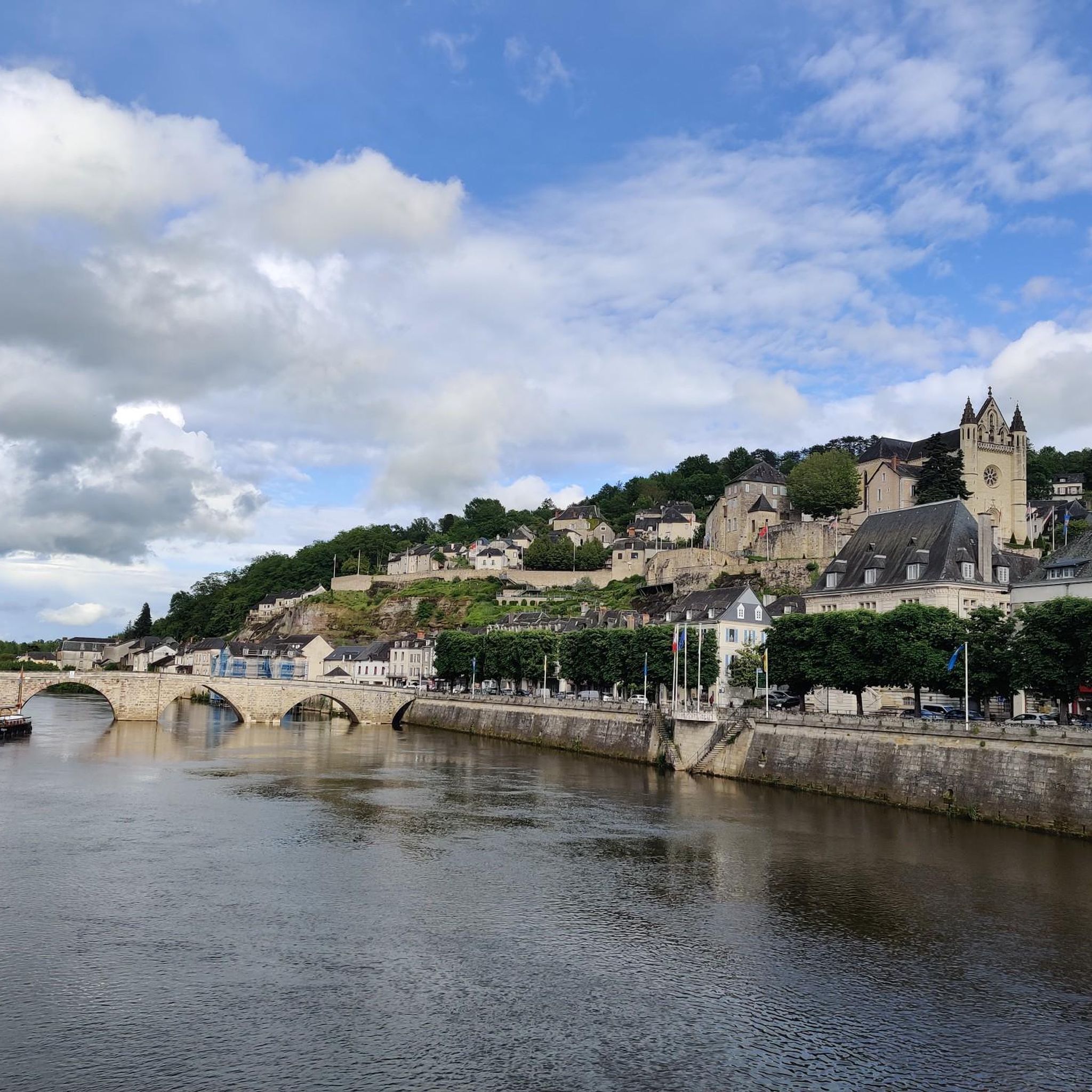
Great spot to cool off, even if swimming is prohibited!
0
0

Hautefort Castle, located on a rocky outcrop overlooking the town and village of Hautefort, is a rare example of classical architecture in the Dordogne. Built from the 16th to the 17th century on the foundations of an old castle, its architecture is reminiscent of the castles of the Loire. The construction, led by architects Nicolas Rambourg and Jacques Maigret, was intended for the family of the Marquis de Hautefort, close to the king and influential at Court, renowned for their generosity towards the poor. During the Revolution, the castle was protected by the inhabitants of Hautefort, who repelled a revolutionary troop from Excideuil wanting to destroy it. At the beginning of the 20th century, the castle was in ruins, having lost its furniture, its woodwork and parquet floors. In 1929, it was bought by the Baron and Baroness de Bastard, who undertook a complete restoration. After the Baron's death in 1957, the Baroness continued the work alone. A fire in 1968 destroyed the central building, leaving only the charred exterior walls. Thanks to national and local generosity, as well as the support of personalities, Baroness de Bastard undertook a second restoration, even selling her works of art to finance the work. The facades, frames, ceilings, decorations and rooms were reconstructed identically from photos. The woodwork of the Château de Kerlaudy was recovered and the castle was completely refurnished. In 1977, Baroness de Bastard moved back into the castle and opened it to visitors. In 1984, she created the Château de Hautefort Foundation, to which she donated the building, its estate and its furniture. Today, the interiors not open to the public are still being restored. The French gardens, recreated by the baron and baroness, extend into terraces around the castle, with flowered boxwood embroidery beds and are classified as historic monuments. An English-style park of 30 hectares extends on the hill to the west of the castle.
0
0

This church is not - as is usually the case - dedicated to one of the many people we venerate as saints, or to Mary the Mother of God or her son. Instead, it bears a biblical event as its patronage title, namely the "TRANSFIGURATION de NOTRE SEIGNEUR" (called "Transfiguration of the Lord" in German-speaking countries). => "In the middle of everyday life, three disciples have an Easter experience with Jesus: They see Jesus in a mysterious light, and Moses and Elijah talk to him. In this way, the deepest identity of Jesus as the "beloved son" of God is revealed to the disciples." This is what is said in brief in a work aid from the Bible work for the Feast of Transfiguration, which is celebrated in all Christian denominations on August 6th. This event, which is attested to in the New Testament - see Mark (chapter 9) and Luke (chapter 9) as well as Matthew (chapter 17) - is located on Mount Tabor in Israel. A basilica was built there to commemorate (see https://www.komoot.de/highlight/266239), which can therefore be considered the original church for the patronage of this place of worship.
2
0

Pretty little village strewn with vegetation and right next to the Vézère for a break by the water
0
0
Uphill path to reach the castle of Hautefort. A very well maintained castle. The gardens are absolutely stunning. It's like being in a cartoon at times, the paths and the flowerbeds are cut with a line. But with original shapes and it's surprising.
2
0

Mentioned in 1264 in the will of Aimeric de la Serre, Bishop of Limoges, it was given in 922 by King Charles the Simple to SOlignac Abbey.
1
0


Final steep gravelpush to the chateau of Hautefort
1
1
Frequently Asked Questions
What historical sites can I visit within Louignac itself?
Within the commune of Louignac, you can explore the historic Château de Loms. Another significant site is the Romanesque Church of Saint-Julien, which features 11th-century capitals, distinctive corbels, and an ancient baptismal font. Additionally, near La Reynie Haute, you'll find Les Sarcophages de Louignac, an archaeological site with stone sarcophagi carved directly into the rock, some dating back to the Merovingian period. Nearby is also "la grotte des Farges," a well-preserved underground refuge.
Are there notable gardens to visit near Louignac?
Yes, two magnificent garden attractions are within a short distance. The Château de Hautefort and Gardens, about 11 km away, features meticulously recreated French gardens with elaborate boxwood embroidery and an extensive English-style park. Approximately 12 km from Louignac, in Terrasson-Lavilledieu, are the Gardens of the Imagination, which showcase 13 distinct natural landscapes narrating the evolution of garden design.
What unique natural attractions are there in the surrounding region?
The region offers several natural wonders. The Vézère Valley, about 21 km away, is a heritage site known for its picturesque landscapes. You can also visit the Gouffre de la Fage, a notable chasm located approximately 24 km from Louignac. For a blend of nature and history, the world-famous Lascaux Caves (Lascaux International Center of Parietal Art), renowned for prehistoric cave paintings, are about 21 km away.
Are there other charming villages to explore near Louignac?
Absolutely. Just 3 km north-north-east, Saint-Robert is classified among France's "most beautiful villages" and features a 12th-century church. Badefols d'Ans, about 6 km west, is a small village with a historic castle and church. Terrasson-Lavilledieu, 11 km south-south-east, is a tranquil town near the Jardins de l'Imaginaire. Saint-Amand-de-Coly, 18 km south-south-west, is another beautiful village in the Dordogne with a historic abbey. Finally, Montignac, 20 km south-west, is the gateway to the Lascaux Caves.
What are some family-friendly attractions around Louignac?
Several attractions are suitable for families. The Château de Hautefort and Gardens offers expansive grounds and classical architecture that can captivate all ages. The Gardens of the Imagination provide an engaging and educational experience with their diverse landscapes. Additionally, the Waterfall and historic buildings in Condat-sur-Vézère is a lovely spot to cool off by the water and explore a charming village.
What kind of outdoor activities can I do near Louignac?
The area around Louignac is excellent for various outdoor activities. You can find numerous routes for mountain biking, gravel biking, and road cycling. For detailed routes and difficulty levels, explore the MTB Trails around Louignac, Gravel biking around Louignac, and Cycling around Louignac guides.
Are there cycling routes available around Louignac?
Yes, there are several cycling routes suitable for different skill levels. For example, you can find routes like the 'Hautefort – Hautefort Castle loop' or the 'Saint-Robert loop'. These routes vary in distance and difficulty. You can find more details and specific routes in the Cycling around Louignac guide.
Can I find mountain biking trails near Louignac?
Yes, mountain biking enthusiasts will find a selection of trails. Options include the 'Sauveboeuf Castle – Jolie vue loop' which is a difficult 53 km ride, or the 'Le passage des lutins!' loop, a moderate 20.5 km trail. For a comprehensive list of routes and their details, refer to the MTB Trails around Louignac guide.
What is the best time of year to visit Louignac and its attractions?
The best time to visit Louignac and its attractions is generally during the spring (April to June) and early autumn (September to October). During these months, the weather is typically pleasant for exploring historical sites, gardens, and engaging in outdoor activities, avoiding the peak heat of summer and larger crowds.
What do visitors enjoy most about the attractions near Louignac?
Visitors particularly enjoy the blend of historical grandeur and natural beauty. The Château de Hautefort and Gardens is praised for its stunning classical architecture and meticulously maintained gardens. The Waterfall and historic buildings in Condat-sur-Vézère is appreciated as a pretty village and a great spot to relax by the water. The unique historical significance of sites like the Romanesque Church of Saint-Julien and Les Sarcophages de Louignac also captivates visitors.
Are there any specific religious or architectural sites of interest?
Yes, the Romanesque Church of Saint-Julien in Louignac is notable for its 11th-century capitals and ancient baptismal font. Another significant site is the Church of the Transfiguration of Our Lord, mentioned as early as 1264, which is unique for being dedicated to a biblical event rather than a saint. Nearby villages like Saint-Robert also boast impressive 12th-century churches and historic abbeys.
Most popular routes around Louignac

Get inspired with the komoot mobile app


Explore more
Still not found the Highlight you’re looking for? See guides of the top attractions in other regions:
