The best walks and hikes around Saint-Trojan
4.5
(99)
744
hikers
76
hikes
Hiking around Saint-Trojan offers diverse natural landscapes on the southern tip of Île d'Oléron. The region is characterized by the vast Saint-Trojan Forest, composed primarily of maritime pines, alongside picturesque dunes and serene marshes. Coastal paths along beaches like La Grande Plage and Gatseau Beach provide varied terrain for exploration. This blend of forest, dune, marsh, and coastal environments creates a range of hiking opportunities.
Best hiking trails around Saint-Trojan
- The most popular hiking route is Estuary Trail, a…
Last updated: June 29, 2026
3.0
(4)
15
hikers
8.93km
02:23
100m
100m
Moderate hike. Good fitness required. Easily-accessible paths. Suitable for all skill levels.
21
hikers
7.51km
02:03
110m
110m
Moderate hike. Good fitness required. Easily-accessible paths. Suitable for all skill levels.

Sign up for free
5.0
(3)
8
hikers
17.6km
04:43
210m
210m
Moderate hike. Good fitness required. Easily-accessible paths. Suitable for all skill levels.
4.0
(1)
12
hikers
9.13km
02:26
90m
90m
Moderate hike. Good fitness required. Easily-accessible paths. Suitable for all skill levels.
5.0
(3)
6
hikers
5.58km
01:33
90m
90m
Easy hike. Great for any fitness level. Easily-accessible paths. Suitable for all skill levels.
Get access to more routes and recommendations from other explorers.
Sign up for free
Already have an account?
Our route recommendations are based on thousands of hikes, rides, and runs completed by other people on komoot.
Start today with a free account
Your next adventure awaits.
Login or Signup




Tips from the Community

Former covered outdoor halls, now used for events
1
0

This neo-Gothic church was built to replace the dilapidated church of the Recollect Fathers, a men's convent founded in 1627. In the 19th century, the church wanted to encourage a revival of Catholic worship; it encouraged the construction of new religious buildings in Gironde. Thus, in 1856, the Saint-Géronce church was consecrated. Due to lack of space, its apse was oriented towards the south, contrary to what the liturgy provided. The organ, which has its original construction from 1861, is remarkable. Mass is celebrated there every Sunday morning at 10:00 a.m.
0
0
Attention ⚠️ to beginners!
0
0

The view of the castle from the cypress-lined path and the valley behind it from the path is very beautiful.
1
0

Legacy of the priory of Milhegrand, stronghold of the abbey of Lagrasse in the 12th century, the estate then became a smallholding, maintained by a whole line of winegrowers. Josiane and Jean-Pierre OROSQUETTE, themselves from these families dedicated to the vineyard, have in turn perpetuated this long chain. In the 1970s, they decided to leave the cooperative cellar to settle in their own private cellar. They therefore settled on the La Grave estate where the vineyard, due to lack of maintenance, was in poor condition. From the first harvest, they discovered a lot of white grapes. Surprise ! The majority grape variety is Maccabeu, very appreciated for its aromas, it allows La Grave to obtain a great reputation for its white wines! This is the legendary grape variety of La Grave! Today, their son Jean-François has taken over. While continuing to produce excellent white wines, he developed red (and rosé) wines, bringing them elegance and finesse. The next generation arrives with nephew Tristan (vineyard side) and Jean-François' son, Julien... his sister Marie follows closely behind him! Château La Grave produces its wines under 3 appellations (white, rosé and red).
1
0

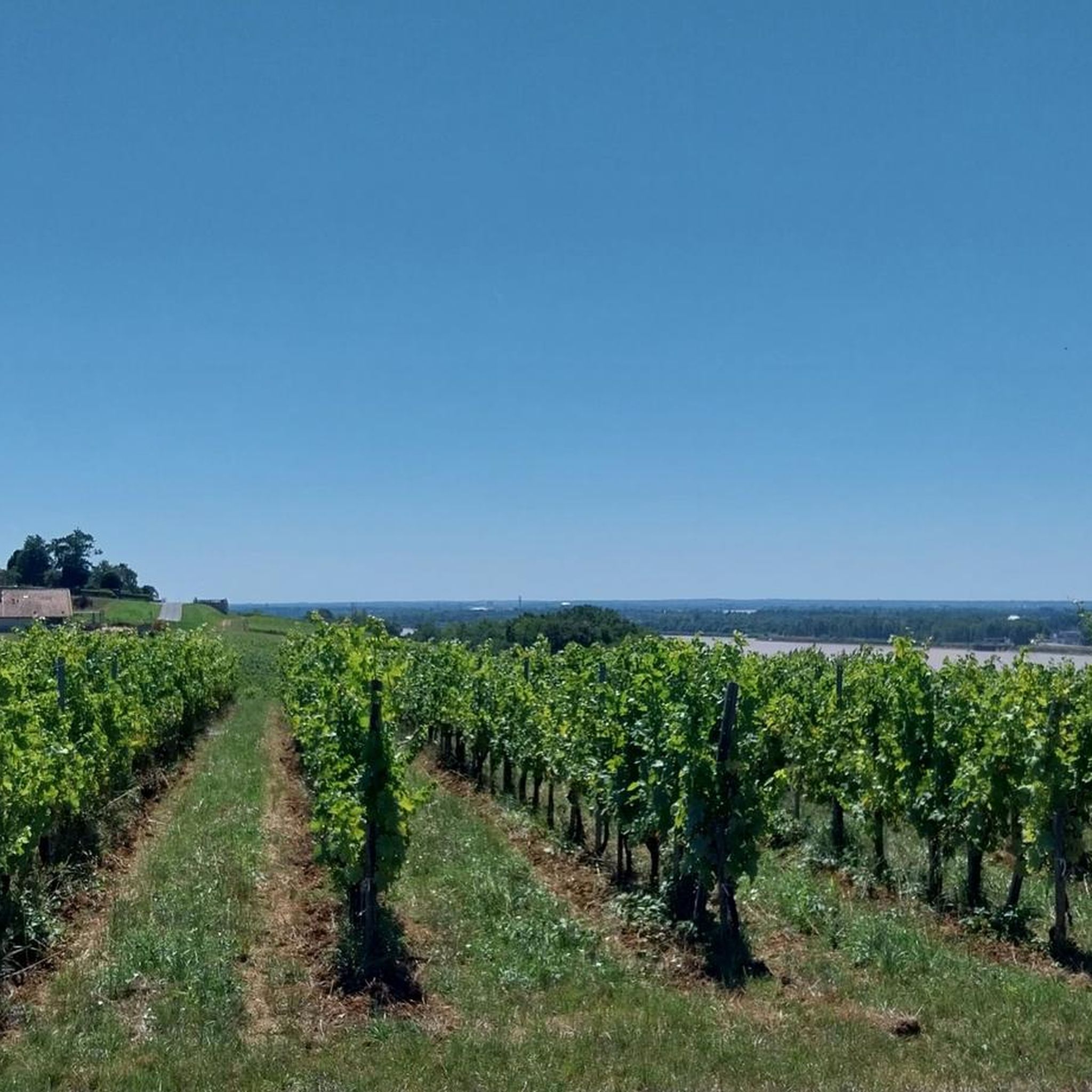
nice course with magnificent views of the Gironde
0
0
The Château de Thau is very old and known since the 12th century. It belongs to the defense line of the Côte Girondine. Set slightly back from the shore, it dominates the ebb and flow without showing itself, like a carpet behind thick groves. Here and there, the name of Thau comes and goes at the bend of a manuscript but it is at the beginning of the 1400s that historians find traces of the successive owners - the Math family, from 1400 to 1480, - the Sudre family 1540 , the Hague, then the President of the Parliament of Bordeaux, Louis de Grimard owned everything between 1680 and 1700… In 1700 we know the state of the place: “vast lower rooms, all well furnished and the walls decorated with vast series of tapestries”. Today, the Albert Schweitzer family owns and administers the estate which is the flagship of Gauriac. Facing the Médoc, a few steps from the Gironde estuary, 41 hectares of vineyards are planted with 40% Cabernet Sauvignon and 60% Merlot, on silty-limestone soil and extend over the Bourgeais region. The excellent geographical location allows the vineyard to benefit from favorable maturity criteria.
3
0
Frequently Asked Questions
How many hiking trails are available in Saint-Trojan-les-Bains?
There are over 70 hiking routes available around Saint-Trojan-les-Bains. These trails offer a variety of experiences, from easy strolls to more challenging hikes, exploring the diverse landscapes of the region.
What kind of terrain can I expect on hikes around Saint-Trojan-les-Bains?
Hiking in Saint-Trojan-les-Bains offers a rich variety of terrain. You can expect to traverse the vast Saint-Trojan Forest, primarily composed of maritime pines, as well as picturesque dunes, serene marshlands, and scenic coastal paths along beaches like La Grande Plage and Gatseau Beach. This blend of environments provides diverse walking surfaces and views.
What do other hikers say about the trails in Saint-Trojan-les-Bains?
The hiking trails in Saint-Trojan-les-Bains are highly regarded by the komoot community, with an average rating of 4.5 stars from over 90 reviews. Hikers often praise the region's varied natural beauty, from the tranquil forests to the stunning coastal views and well-maintained paths.
Are there any easy hiking trails suitable for beginners or families in Saint-Trojan-les-Bains?
Yes, Saint-Trojan-les-Bains offers many easy hiking options. There are over 25 easy routes, perfect for beginners or families looking for a relaxed walk. An example is the At the junction between the Dordogne and the Garonne trail, which is 3.1 miles (5.0 km) long and explores the confluence of two major rivers.
Are there more challenging hikes available for experienced hikers?
While most trails are easy to moderate, there are a few more challenging options for experienced hikers. The region's diverse landscapes, including coastal cliffs and longer forest paths, can provide a good workout. For example, the Bourg Citadel – Bourg-sur-Gironde Citadel loop from Lansac is a moderate 10.9 miles (17.6 km) route with over 200 meters of elevation gain.
Can I find hikes that feature coastal views or beaches?
Absolutely. Many trails in Saint-Trojan-les-Bains incorporate stunning coastal views and walks along the beaches. You can explore routes that lead to or along La Grande Plage, Gatseau Beach, or Pertuis de Maumusson, offering expansive views where the sea meets the marshlands. The La Corniche Cliff loop from Villeneuve is a great option for coastal scenery.
Are there any circular hiking routes in Saint-Trojan-les-Bains?
Yes, the region offers several circular hiking routes, allowing you to start and end your journey in the same location. Examples include the "Saint-Trojan-les-Bains – loop" and the "Between sea and marsh – Cyprès de Lambert loop" mentioned in local guides, providing varied scenery from forest to marsh.
What are some interesting landmarks or attractions I can see near the hiking trails?
Beyond the natural beauty, you can explore several historical and cultural landmarks. Notable attractions include the impressive Citadel of Blaye, the charming Bourg-sur-Gironde Citadel, and various religious buildings like the Saint-Géronce Church. The area also features several castles such as Rudel Castle and Château Malescasse.
Is Saint-Trojan-les-Bains suitable for dog-friendly hiking?
Saint-Trojan-les-Bains is generally welcoming for dog owners, with many trails passing through natural areas like the Saint-Trojan Forest. However, it's always recommended to check local regulations for specific beaches or protected areas, and to keep dogs on a leash to protect local wildlife and ensure a pleasant experience for all hikers.
What is the best time of year to go hiking in Saint-Trojan-les-Bains?
The best time to hike in Saint-Trojan-les-Bains is typically during the spring and autumn months. The weather is milder, and the natural landscapes are vibrant. Summer can also be pleasant, especially for coastal walks, but it can get quite warm, so early morning or late afternoon hikes are advisable. Winter offers a quieter experience, though some facilities might have reduced hours.
Are there any hikes that offer views of rivers or estuaries?
Yes, the region's proximity to major waterways means you can find trails with river and estuary views. The Estuary Trail is a prime example, offering scenic views of the local estuary. Another route, At the junction between the Dordogne and the Garonne, explores the confluence of these two significant rivers.
Can I combine hiking with other activities in Saint-Trojan-les-Bains?
Absolutely! Saint-Trojan-les-Bains is ideal for combining hiking with other outdoor activities. After a walk, you can enjoy water sports on the beaches, explore oyster-farming villages, or even take a ride on Le Petit Train de Saint-Trojan, which offers a unique way to see the landscape and access remote beaches.
Most popular routes around Saint-Trojan
Most popular attractions around Saint-Trojan

Get inspired with the komoot mobile app


Explore more
Browse the best Hikes in other regions.
