The best cycling routes around Liesse-Notre-Dame
4.2
(14)
99
riders
30
rides
Touring cycling routes around Liesse-Notre-Dame traverse a landscape characterized by rolling countryside and varied topography in the Hauts-de-France region. The area features serene towpaths along canals like the Canal de l'Oise à l'Aisne, offering flat and picturesque routes. Cyclists can also explore routes through the Forêt Domaniale De Saint-Gobain, providing shaded paths and a sense of immersion in nature. The region's terrain includes gentle ascents and descents, with some routes venturing into more challenging climbs.
Best touring cycling routes around…
Last updated: June 29, 2026
4.0
(2)
5
riders
24.6km
01:56
70m
70m
Easy bike ride. Great for any fitness level. Mostly paved surfaces. Suitable for all skill levels.
5
riders
49.5km
02:53
220m
220m
Moderate bike ride. Good fitness required. Mostly paved surfaces. Suitable for all skill levels.

Sign up for free
7
riders
34.3km
02:24
170m
170m
Moderate bike ride. Good fitness required. Mostly paved surfaces. Suitable for all skill levels.
4
riders
Moderate bike ride. Good fitness required. Mostly paved surfaces. Suitable for all skill levels.
4
riders
21.9km
01:27
100m
100m
Easy bike ride. Great for any fitness level. Mostly paved surfaces. Suitable for all skill levels.
Get access to more routes and recommendations from other explorers.
Sign up for free
Already have an account?
Our route recommendations are based on thousands of hikes, rides, and runs completed by other people on komoot.
Start today with a free account
Your next adventure awaits.
Login or Signup


Tips from the Community

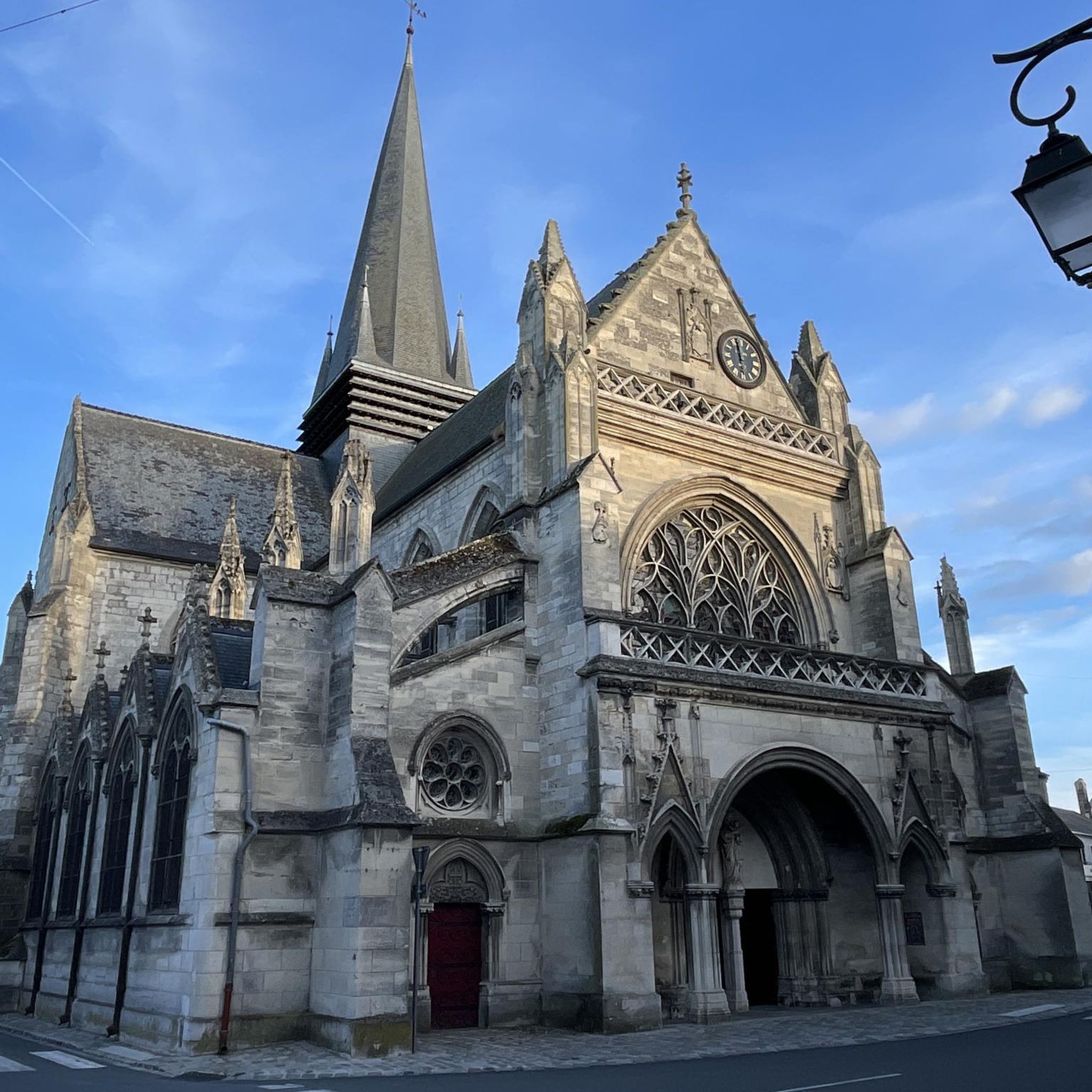
The church of Saint-Jean-Baptiste is listed as a historical monument: nave from the twelfth century, square tower of the crossing from the thirteenth century, traces of fortifications on the walls of the transept and on the bell tower from the fifteenth century. The rose window was influenced by that of the cathedral Notre-Dame de Laon.
8
0
Vorges is a small village located approximately 6 km south of Laon, in the Hauts-de-France region. The village has a rich history dating back to Roman times, when it was part of the territory of the Rèmois, a Gallic tribe. In the 5th century, the Germanic and Frankish people settled in the area, which led to the further development of the village. During the early Middle Ages, under the rule of Clovis and the influence of Bishop Saint Rémy, Christian influence began to grow in Vorges. Archaeological excavations have uncovered Merovingian tombs, which contain some of the first Christian cemeteries in the region. In the 12th century, Vorges was mentioned in several historical documents and had a thriving wine-growing sector with 512 vineyards owned by various abbeys. The village also has a fortified church, built between 1180 and 1230, which was reinforced during the Hundred Years' War to withstand attacks from the English and Burgundians.
8
0

The Basilica of Notre Dame de Liesse is a Gothic basilica dating from the 12th century and dedicated to the Virgin Mary, who is said to have miraculously freed three knights from captivity during the Crusades. The basilica was a place of pilgrimage for many kings and queens of France, who came to pray for various favors and blessings. You can admire the beautiful architecture, the statue of the Black Madonna, the frescoes and relics of the basilica, and learn about its rich history and culture. The basilica is located in the town of Liesse-Notre-Dame.
2
0
Central to the city is the town hall, the church and the monument of the dead. But as is the custom in the region you will find many photos, but little explanation.
1
0
As is the custom in this region, you will find thousands of photos, but almost no explanation. The monument is recognized as a memorial to the war in '14 -'18 and is on the list of public works of art in the Aisne.
1
0
Church of Saint-Pierre-et-Saint-Paul, listed as a historic monument on August 12, 1909
1
0
The village of Pierrepont already stands out - even on comments on the internet - by the presence of a bakery and a bar. This compared to the other villages in the region that only house a church and a municipal school. We also noticed two beautiful scenes in the form of a letterbox incorporated into a bicycle and a fisherman on the other. The cross next to the Visser is also listed as a monument on Wikipedia.
3
0
A cozy village center of Ebouleau with, among other things: - a dries (In a dries one finds houses around a central central square, which usually has a triangular shape) - the Saint-Martin church; - the town hall with school;
2
0
Frequently Asked Questions
Are there easy touring cycling routes suitable for beginners in Liesse-Notre-Dame?
Yes, Liesse-Notre-Dame offers a good selection of easy touring cycling routes. There are 15 easy routes available, many of which feature mostly paved surfaces and minimal elevation gain. A popular choice is the Basilica of Our Lady of Liesse loop from Liesse-Notre-Dame, an easy 24.6 km ride that takes you past the significant religious site of the Basilica.
What kind of challenges can I expect on more difficult touring cycling routes around Liesse-Notre-Dame?
For those seeking a greater challenge, Liesse-Notre-Dame has 2 difficult touring cycling routes. These routes often involve more significant climbs and longer distances. For example, the Notre-Dame de Plomion Church – Fortified Church of Prisces loop from Goudelancourt-lès-Pierrepont is a demanding 99.5 km trail with over 590 meters of elevation gain, leading through historical churches and villages.
What natural features can I explore while touring cycling in Liesse-Notre-Dame?
The region around Liesse-Notre-Dame is rich in natural beauty. You can cycle along the serene towpaths of the Canal de l'Oise à l'Aisne, which offer flat and picturesque routes. The Forêt Domaniale De Saint-Gobain provides shaded paths and a sense of immersion in nature. Additionally, routes like the 'Souche Marsh – Basilica of Our Lady of Liesse loop' indicate the presence of unique wetland areas.
Are there any historical or cultural landmarks to see along the touring cycling routes?
Absolutely. Many routes incorporate historical and cultural points of interest. The Basilica of Our Lady of Liesse is a central attraction, known for its architecture and the Black Madonna statue. You can also pass through charming historical villages like Pierrepont Village, as seen on the Organ of Notre-Dame de Liesse – The village of Pierrepont loop from Liesse-Notre-Dame.
What do other touring cyclists enjoy most about cycling in Liesse-Notre-Dame?
The touring cycling routes in Liesse-Notre-Dame are highly rated by the komoot community, with an average score of 4.15 stars from 17 reviews. Cyclists often praise the varied terrain, which includes canal towpaths, forested areas, and rolling countryside, offering options for all ability levels. The blend of natural scenery and historical sites is also a highlight.
Are there any circular touring cycling routes available?
Yes, many of the touring cycling routes around Liesse-Notre-Dame are designed as loops, allowing you to start and end in the same location. Examples include the Basilica of Our Lady of Liesse loop from Liesse-Notre-Dame and the Organ of Notre-Dame de Liesse – The village of Pierrepont loop from Liesse-Notre-Dame, making planning convenient.
What is the best time of year for touring cycling in Liesse-Notre-Dame?
While specific weather patterns vary, the Hauts-de-France region generally offers pleasant cycling conditions from spring through early autumn. These seasons provide milder temperatures and more stable weather, ideal for exploring the canals, forests, and villages. It's always advisable to check the local forecast before your ride.
Are there family-friendly touring cycling routes in the area?
Yes, with 15 easy routes available, many are suitable for families. The flat towpaths along canals like the Canal de l'Oise à l'Aisne provide safe and enjoyable options for cyclists of all ages. Routes with minimal elevation, such as the Basilica of Our Lady of Liesse loop, are particularly well-suited for family outings.
What kind of terrain can I expect on the touring cycling routes?
The terrain around Liesse-Notre-Dame is quite varied. You'll find serene, flat towpaths along canals, shaded routes through forested areas like the Forêt Domaniale De Saint-Gobain, and rolling countryside with gentle ascents and descents. Many routes feature mostly paved surfaces, making them suitable for touring bikes, though some may include sections on quieter country roads.
Are there places to eat or stay near the cycling routes in Liesse-Notre-Dame?
Liesse-Notre-Dame and its surrounding villages offer various options for refreshments and accommodation. While specific establishments are not detailed in the route information, the presence of villages and cultural sites suggests that cafes, pubs, and restaurants are available for cyclists to refuel. For accommodation, you can find options in Liesse-Notre-Dame itself or nearby towns.
Is public transport available for cyclists in Liesse-Notre-Dame?
While the region is well-suited for cycling, specific information on public transport options that accommodate bicycles in Liesse-Notre-Dame is not readily available. It is recommended to check local transport services or regional train lines for their bicycle policies if you plan to combine cycling with public transport.
Where can I find parking facilities for my car when starting a touring cycling route?
For routes starting directly from Liesse-Notre-Dame, such as the Basilica of Our Lady of Liesse loop, you can typically find parking within the village. For routes starting from other nearby locations, like Goudelancourt-lès-Pierrepont for the Notre-Dame de Plomion Church – Fortified Church of Prisces loop, parking is usually available in or near the starting village.
Are there any other notable attractions nearby that I could visit?
Beyond the immediate cycling routes, the region offers other points of interest. The German cemetery of Montaigu is a historical site that can be visited, and the German cemetery of Montaigu loop from Coucy-lès-Eppes incorporates it into a longer ride. The broader area is also close to Laon, which boasts a cathedral and other historical buildings, approximately 13.9 km away.
Most popular attractions around Liesse-Notre-Dame

Get inspired with the komoot mobile app


Explore more
Browse the best Cycling routes in other regions.
