Attractions and Places To See around Cumières-Le-Mort-Homme - Top 20
Attractions and places to see around Cumières-Le-Mort-Homme primarily focus on its historical significance as a "ghost commune" destroyed during World War I. The area, including the prominent Mort-Homme hill, was a key battleground during the Battle of Verdun. Visitors can explore various memorials and sites of remembrance that testify to the events that unfolded here. The landscape offers a solemn setting for reflection on the impact of modern warfare.
Best attractions and places to see around Cumières-Le-Mort-Homme
- The most popular…
Last updated: October 17, 2026
Douaumont Ossuary
Highlight • Monument
Let us never forget this horror!
Translated by Google •
Tip by

Bell Tower of the Douaumont Ossuary
Highlight • Monument
Translated by Google •
Tip by
Sign up now to discover places like this
Get recommendations on the best single tracks, peaks, & plenty of other exciting outdoor places.
Monument to Muslim Soldiers
Highlight • Monument
Translated by Google •
Tip by
Bayonet Trench Memorial
Highlight • Other
“In memory of the French soldiers who sleep standing, rifle in hand, in this trench – their brothers in America.” This is the …
Translated by Google •
Tip by

Cumières-le-Mort-Homme
Highlight • Other
It was in February 1916 that the heaviest fighting took place. …
Translated by Google •
Tip by

Sign up for free to discover even more attractions around Cumières-Le-Mort-Homme.
Already have an account?
Start today with a free account
Your next adventure awaits.




Tips from the Community

An observation tower from which, apart from the cemetery, you can see the battlefield (now overgrown with trees) of Verdun.
3
0

The Ossuary of Douaumont is an impressive memorial that holds the remains of more than 130,000 unknown French and German soldiers who died during the Battle of Verdun (1916). The bones are visible through small windows in the base – a confronting reminder of the horrors of war. In front of the ossuary is the Nécropole nationale de Douaumont, the largest French military cemetery of the First World War, with 16,142 graves, including a Muslim and Jewish plot. The complex was recognized as a UNESCO World Heritage Site in 2023.
8
0
Since 2006, a monument has stood on the hill of Douaumont in memory of the 30,000 Muslim soldiers who died for France during the First World War. Inaugurated by President Jacques Chirac, it consists of a semicircular gallery with Arab architectural elements. In the middle is a column with the inscription: “À la mémoire des soldats musulmans morts pour la France”. The monument recognizes the diversity of the French army and honors the contribution of soldiers from North Africa and other parts of the then French empire.
8
0

The Ossuary tower, also known as the 'Lantern of Death', is 46 m high and offers a beautiful view of the battlefield. The bell tower was donated by the Americans and is, together with the chapel, one of the oldest parts of the monument. Halfway up the climb, you can see the equipment and some scenes highlighting the soldiers of each camp behind glass. At the top of the tower you can enjoy the view, signs indicate in which direction you are looking. Here you will also find the two symbols of the monument: the beacon and the bell. The red and white light of the beacon swings over the battlefield every night and can be seen from dozens of kilometres away. Louise Anne Charlotte, the bell of victory, was donated by the American Mrs. Thorburn Van Buren. She was cast in Orléans and is honoured in every procession through the towns in the vicinity of Douaumont. The bell was inaugurated in 1929 by the founder of the Ossuary, Monsignor Ginisty, and rings three times a day and during major ceremonies to remind everyone of the fate of the fallen soldiers.
2
0
The official name of this memorable location is 'Monument Muslim Soldiers'. The monument was built in memory of the 30,000 Muslim soldiers who died at Verdun in the First World War. On 26 June 2006, French President Chirac inaugurated this monument on the hill of Douaumont in memory of the thousands of Muslims who fell for France during the First World War. The monument is a circular gallery of 25 by 19 metres with an arched vault and Arabic battlements. Inside is a column with the text: 'To the soldiers Muslims Died for France " Source: Trace of War
4
0
The Myth of the First World War “In memory of the French soldiers who sleep standing, rifle in hand, in this trench – their brothers in America.” This is the inscription in front of the Memorial of the Battle of Verdun in the ghost town of Douaumont. The monument was financed by a wealthy American banker, George T. Rand, who was moved by the famous legend surrounding the site. It is said that French soldiers buried standing, with weapons in hand, died from enemy shells. Bayonet Trench is one of the myths of the First World War. In 1922, it was classified as a historical monument and in 2014 it was considered a site of national importance. After the war, excavations uncovered 21 bodies of French soldiers. Fourteen were identified and buried in the Necropolis of Fleury, opposite Douaumont. The seven other bodies that remained unknown were reburied in the "Bayonet Trench". For many, the myth persists, while others question it. Especially since no body was found standing upright. In any case, the legend of the "Bayonet Trenches" shows above all how much the Great War left an almost indelible mark on the collective imagination. As the bloody conflict of the Battle of Verdun drew to a close, glorious stories quickly emerged in which the nation sacrificed itself for the fatherland. Source: https://www.landofmemory.eu/sites-historiques/tranchee-des-baionnettes/
7
0
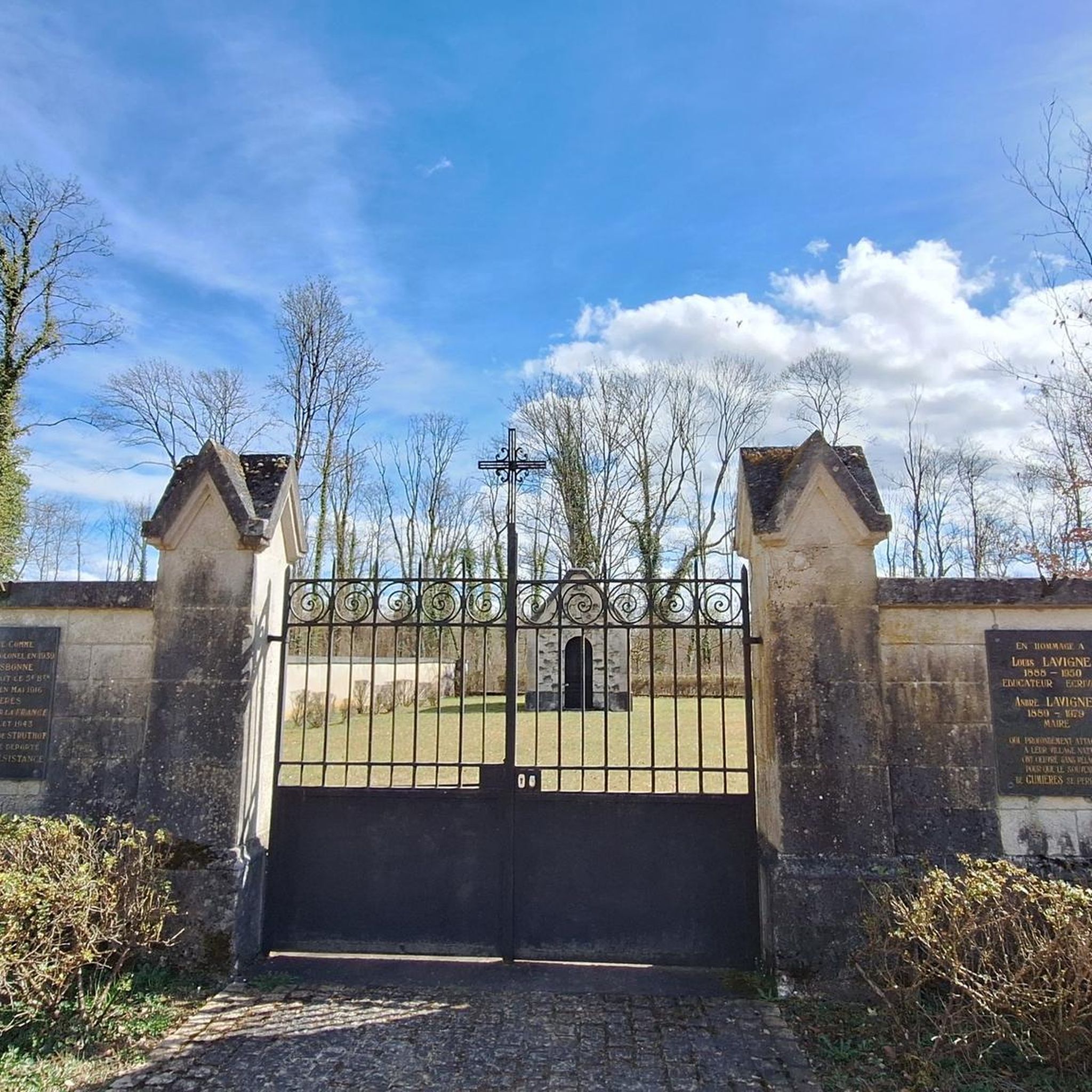
Villages détruits, Cumières-le-Mort-Homme is one of the nine villages that were destroyed during the Battle of Verdun. Historical context: Nine villages: Beaumont-en-Verdunois, Bezonvaux, Cumières-le-Mort-Homme, Douaumont, Fleury-devant-Douaumont, Haumont-près-Samogneux, Louvemont-Côte-du-poivre, Ornes and Vaux-devant-Damloup. They were all in the “Red Zone” of the front line in the Battle of Verdun. The villages were wiped off the map and never rebuilt. Erected chapels remind passers-by of this war horror. Triggered to the disappeared villages? Click through to https://www.landofmemory.eu/nl/sites-historiques/vernielde-dorpen/#:~:text=Vernielde%20dorpen,-In%20de%20Maasstreek&text=Deze%20dorpen%20zijn%20Beaumont%2Den,geveegd%20en%20never%20weer%20opopbouw.
4
1
This monument is in memory of the 30,000 Muslim soldiers who died at Verdun in the First World War. On 26 June 2006, French President Chirac inaugurated this monument on the hill of Douaumont in memory of the thousands of Muslims who fell for France during the First World War. The monument is a circular gallery of 25 by 19 metres with an arched vault and Arabic battlements. Inside is a column with the text: 'To the soldiers Muslims Died for France " Source: Trace of War
7
0
Frequently Asked Questions
What historical sites can I explore around Cumières-Le-Mort-Homme?
The area is rich in World War I history. You can visit the solemn Douaumont Ossuary, a memorial to the soldiers who died during the Battle of Verdun. Another significant site is the Bayonet Trench Memorial, marking a trench where French soldiers are said to have been buried standing. The site of Cumières-le-Mort-Homme itself, a 'ghost commune' destroyed in the war, offers a powerful reflection on the conflict.
Are there any viewpoints to observe the former battlefields?
Yes, the Bell Tower of the Douaumont Ossuary offers an impressive view from its 46-meter height, allowing visitors to observe the former battlefield and the surrounding cemetery. Additionally, Mort-Homme hill, a prominent natural feature, provides panoramic views that were once crucial for military observation and now offer a solemn landscape for reflection.
What outdoor activities are available near Cumières-Le-Mort-Homme?
The region offers various outdoor activities, particularly hiking and cycling. You can find numerous routes for hiking, cycling, and even gravel biking that explore the battlefield and surrounding natural features. These trails often highlight various vestiges and monuments from the battle, offering an immersive historical experience.
Are there family-friendly attractions in the area?
Many of the historical sites are suitable for families, offering an educational experience. The Douaumont Ossuary and the Monument to Muslim Soldiers are both categorized as family-friendly, providing important historical context in a respectful environment.
What is the significance of Mort-Homme hill?
Mort-Homme hill, or 'Dead Man's Hill,' was a strategically vital and fiercely contested point during the Battle of Verdun. It was the scene of intense fighting where approximately 10,000 French soldiers perished. Today, it stands as a powerful symbol of the battle, featuring a war memorial with a skeleton sculpture and offering panoramic views of the surrounding area.
Can I learn about the destroyed villages of World War I here?
Yes, Cumières-le-Mort-Homme is one of the 'ghost communes' completely destroyed during the Battle of Verdun and never rebuilt. The site itself is a powerful attraction, with informational diagrams available to depict the village's layout before its destruction. The Chapel of Saint-Rémi, built with stones from the old church, also serves as a memorial to the destroyed village.
What do visitors find most impactful about the Douaumont Ossuary?
Visitors often describe the Douaumont Ossuary as deeply impressive and a powerful reminder of the horrors of war. Many are moved by the sheer scale of the memorial and the visible storage of thousands of lost soldiers' remains. The experience prompts reflection on the immense suffering and loss of life from World War I.
Are there any specific monuments dedicated to different groups of soldiers?
Yes, beyond the main ossuary, you can find the Monument to Muslim Soldiers on the hill of Douaumont. This monument commemorates the 30,000 Muslim soldiers who died for France during the First World War, recognizing the diversity of the French army and their significant contribution.
What is the best time of year to visit Cumières-Le-Mort-Homme?
The area can be visited year-round, but spring and autumn offer pleasant weather for exploring the outdoor historical sites and hiking trails. During these seasons, the landscape is particularly poignant, and conditions are generally favorable for walking and reflection.
Are there any remains of German wartime defenses in the area?
Yes, on the northern hillside of Le Mort Homme, visitors can find the remains of the German Kronprinz Tunnel, also known as the Gallwitz tunnel complex. This offers further insight into the wartime defenses and the extensive network of fortifications used during the battle.
What is the legend behind the Bayonet Trench Memorial?
The Bayonet Trench Memorial is associated with a powerful legend from World War I. It is said that French soldiers were buried standing, rifle in hand, after being overwhelmed by enemy shells. While excavations later showed bodies were not found upright, the monument, financed by an American banker, commemorates this enduring myth and the sacrifice of the soldiers.
Can I find any remnants of the pre-war village of Cumières-le-Mort-Homme?
While little of the original village remains visible due to its complete destruction, visitors can still find the remains of the former mill's lock. This offers a tangible link to the village's pre-war existence and helps to visualize the community that once thrived there.
Most popular routes around Cumières-Le-Mort-Homme

Get inspired with the komoot mobile app


Explore more
Still not found the Highlight you’re looking for? See guides of the top attractions in other regions:
