The best road cycling routes around Forges-Sur-Meuse
4.3
(15)
498
riders
16
rides
Road cycling routes around Forges-Sur-Meuse navigate a landscape characterized by rolling terrain and historical sites. The region features a mix of quiet forest paths and open roads, often passing through areas with significant historical monuments. Road cyclists can expect varied elevation profiles, from gentle gradients suitable for leisure rides to more challenging sections.
Best road cycling routes around Forges-Sur-Meuse
- The most popular road cycling route is Citadel of Verdun – Chemin forestier tranquille loop from Consenvoye, a 29.3 miles…
Last updated: October 18, 2026
4.5
(4)
65
riders
84.9km
03:55
450m
450m
Moderate road ride. Good fitness required. Some segments of this route may be unpaved and difficult to ride.
5.0
(1)
47
riders
18.6km
00:45
40m
40m
Easy road ride. Great for any fitness level. Mostly well-paved surfaces and easy to ride.

4.3
(4)
14
riders
18.8km
00:47
100m
100m
Easy road ride. Great for any fitness level. Mostly well-paved surfaces and easy to ride.
9
riders
Hard road ride. Very good fitness required. Mostly well-paved surfaces and easy to ride.
8
riders
46.6km
02:31
460m
460m
Moderate road ride. Good fitness required. Some segments of this route may be unpaved and difficult to ride.
Get access to more routes and recommendations from other explorers.
Already have an account?
Our route recommendations are based on thousands of hikes, rides, and runs completed by other people on komoot.
Start today with a free account
Your next adventure awaits.




Tips from the Community

On June 23, during the lightning German advance, the assault waves crossed Fleury and reached the Froidterre fortification. Along the way, they encountered fierce pockets of resistance. On the southern slope of the Ravin des Vignes, 400 Poilus (French infantrymen) dug in a vaulted gallery, buried 12 meters underground, recognizable from afar by its four ventilation shafts. In the stifling, overcrowded June days, the survivors, wounded or not, struggled to breathe, watching for the moment when they might be buried, gassed, or burned alive by flamethrowers. Their salvation came on June 23, when the 114th Battalion of Alpine Chasseurs heroically cleared the entrances, bayonets fixed.
1
0

The Ossuary of Douaumont is an impressive memorial that holds the remains of more than 130,000 unknown French and German soldiers who died during the Battle of Verdun (1916). The bones are visible through small windows in the base – a confronting reminder of the horrors of war. In front of the ossuary is the Nécropole nationale de Douaumont, the largest French military cemetery of the First World War, with 16,142 graves, including a Muslim and Jewish plot. The complex was recognized as a UNESCO World Heritage Site in 2023.
8
0
The Mémorial de Verdun, located near the ruined village of Fleury-devant-Douaumont, is a leading museum and commemoration site for the Battle of Verdun (1916). The museum displays more than 2,000 objects and uses authentic objects, photographs and audiovisual installations to show how French and German soldiers experienced this battle – in the exact same place where they fought.
8
3
Located near the Porte Chaussée and the Verdun War Memorial, this contemporary metal sculpture was designed by the artist Jean-No and created by students from the Lycée Professionnel Eugène Freyssinet. Created to mark the centenary of the Battle of Verdun, it symbolises the living memory of the conflict. The installation connects the past and the future through education and art.
8
0
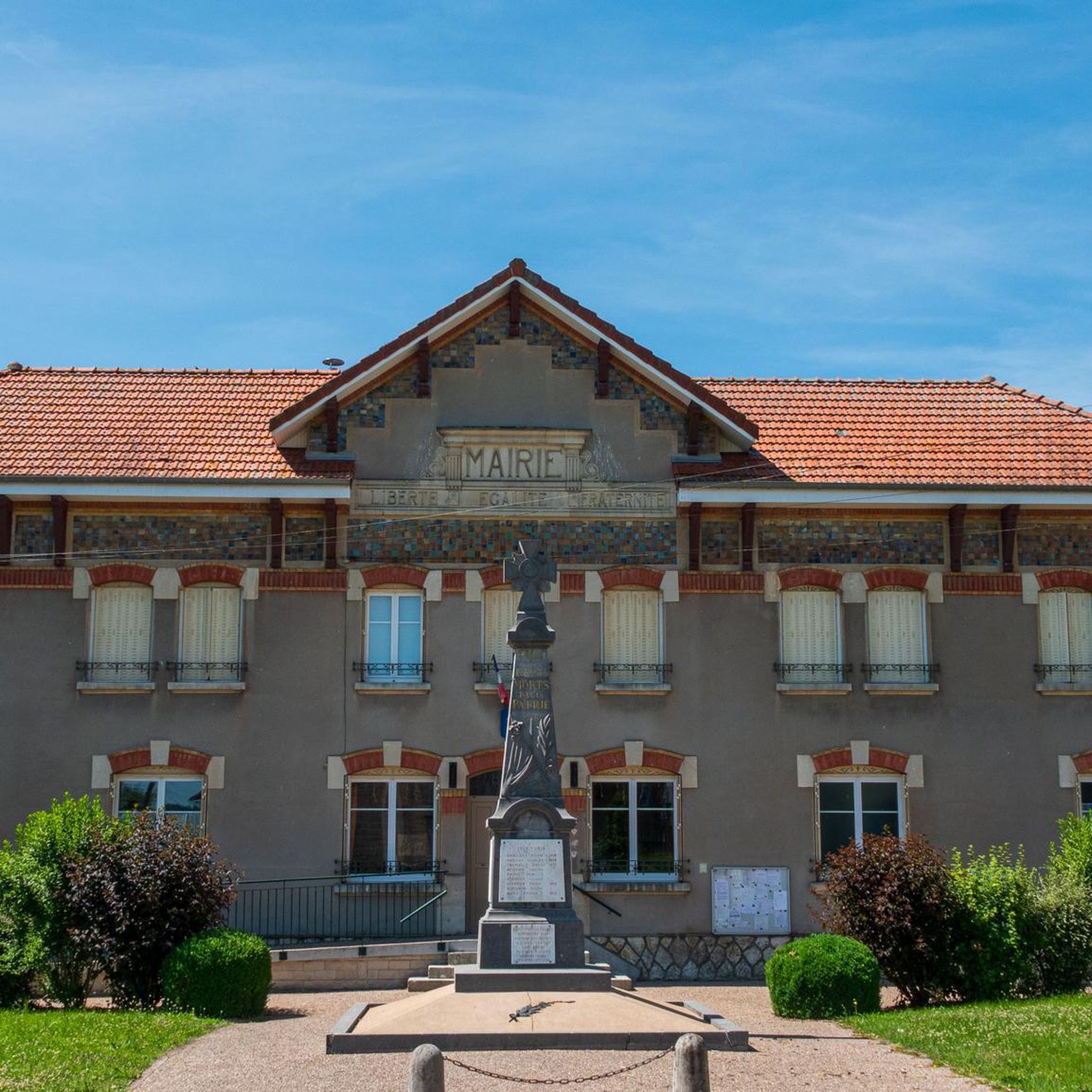
Inaugurated in 1928, this war memorial in Verdun honours the city’s inhabitants who died for France in both world wars. It was built on the remains of a military butcher’s shop, on the crescent of the Chaussée, a 17th-century fortification. The sculpture depicts five soldiers – a cavalier, an engineer, an infantryman (poilu), an artilleryman and a territorial – forming a symbolic wall under the motto of Verdun: “On ne passe pas”.
8
0

A huge monument honoring the fallen soldiers in and around Verdun. From the top, there's a magnificent view of the city.
6
0
Frequently Asked Questions
How many road cycling routes are available around Forges-Sur-Meuse?
There are over 20 road cycling routes documented on komoot for the Forges-Sur-Meuse region, offering a variety of experiences for different skill levels.
Are there easy road cycling routes suitable for beginners in Forges-Sur-Meuse?
Yes, the region offers several easy routes. For example, the Citadel of Verdun – Chemin forestier tranquille loop from Consenvoye is an easy 29.3-mile (47.1 km) trail known for its quiet forest paths and historical views.
What are some options for longer road cycling tours in the Forges-Sur-Meuse area?
For those seeking longer distances, the Torgny Village – RAVeL Ruette–Chenois Path loop from Verdun is a challenging 60.5-mile (97.4 km) route with significant elevation gain, extending through varied rural and village scenery.
Are there challenging road cycling routes for experienced riders in Forges-Sur-Meuse?
Yes, approximately 4 of the routes in the area are rated as difficult, providing a good challenge for experienced cyclists. These routes often feature significant elevation changes and longer distances, such as the Torgny Village – RAVeL Ruette–Chenois Path loop from Verdun.
When is the best time of year to go road cycling in Forges-Sur-Meuse?
The best time for road cycling in Forges-Sur-Meuse is typically from spring through early autumn (April to October), when the weather is generally mild and the landscape is most inviting. This period avoids the colder temperatures and potential for icy conditions in winter.
What historical landmarks can I see along road cycling routes in Forges-Sur-Meuse?
The region is rich in historical sites. You can cycle past landmarks like the Bell Tower of the Douaumont Ossuary, the Bayonet Trench Memorial, and the National Necropolis of Bras-sur-Meuse. The Douaumont Ossuary – Citadel of Verdun loop from Vacherauville is a great route for exploring these historical points.
Are there any circular road cycling routes around Forges-Sur-Meuse?
Many of the road cycling routes in Forges-Sur-Meuse are designed as loops, allowing you to start and end at the same point. Examples include the Citadel of Verdun – Chemin forestier tranquille loop from Consenvoye and the Verdun Memorials and Monuments – Water on both sides loop from Vacherauville.
What do other road cyclists enjoy most about road cycling in Forges-Sur-Meuse?
The area is highly rated by the komoot community, with an average score of 4.6 stars. Reviewers often praise the region's mix of quiet forest paths, open roads, and the opportunity to explore significant historical monuments while cycling.
Are there routes that combine natural scenery with historical exploration?
Absolutely. Many routes in Forges-Sur-Meuse offer this combination. For instance, the Verdun Memorials and Monuments – Water on both sides loop from Vacherauville takes you through both scenic landscapes and past important historical sites.
What are the typical terrain conditions for road cycling in Forges-Sur-Meuse?
Road cycling in Forges-Sur-Meuse is characterized by rolling terrain, offering a mix of gentle gradients and some more challenging sections. You'll encounter quiet forest paths and open roads, providing varied surfaces and views throughout your ride.
Where are common starting points for road cycling routes in the region?
Common starting points for road cycling routes in the Forges-Sur-Meuse area include towns like Consenvoye, Verdun, and Vacherauville. Many routes are designed as loops, making these convenient places to begin and end your ride.
Most popular routes around Forges-Sur-Meuse
Most popular attractions around Forges-Sur-Meuse

Get inspired with the komoot mobile app


Explore more
Browse the best Road cycling routes in other regions.
