Attractions and Places To See around Mangiennes - Top 11
Best attractions and places to see around Mangiennes include a variety of historical sites and natural observation points. The region offers opportunities for exploring the remnants of WWI villages and observing local wildlife. With 11 points of interest, Mangiennes provides diverse options for visitors interested in history and nature. The area is suitable for those looking for easy walking trails near Mangiennes and exploring local landmarks.
Best attractions and places to see around Mangiennes
- The most popular attractions is Bezonvaux…
Last updated: May 21, 2026
Amel Pond Observatory
Highlight • Other
Translated by Google •
Tip by

Longuyon Totem
Highlight • Other
Translated by Google •
Tip by

Sign up now to discover places like this
Get recommendations on the best single tracks, peaks, & plenty of other exciting outdoor places.
Sign up for free
Ruins of Église Saint-Michel
Highlight • Historical Site
Translated by Google •
Tip by

Bezonvaux
Highlight • Other
Translated by Google •
Tip by
Beaumont-en-Verdunois Destroyed Village
Highlight • Historical Site
Translated by Google •
Tip by
Sign up for free to discover even more attractions around Mangiennes.
Sign up for free
Already have an account?
Start today with a free account
Your next adventure awaits.
Login or Signup


Tips from the Community

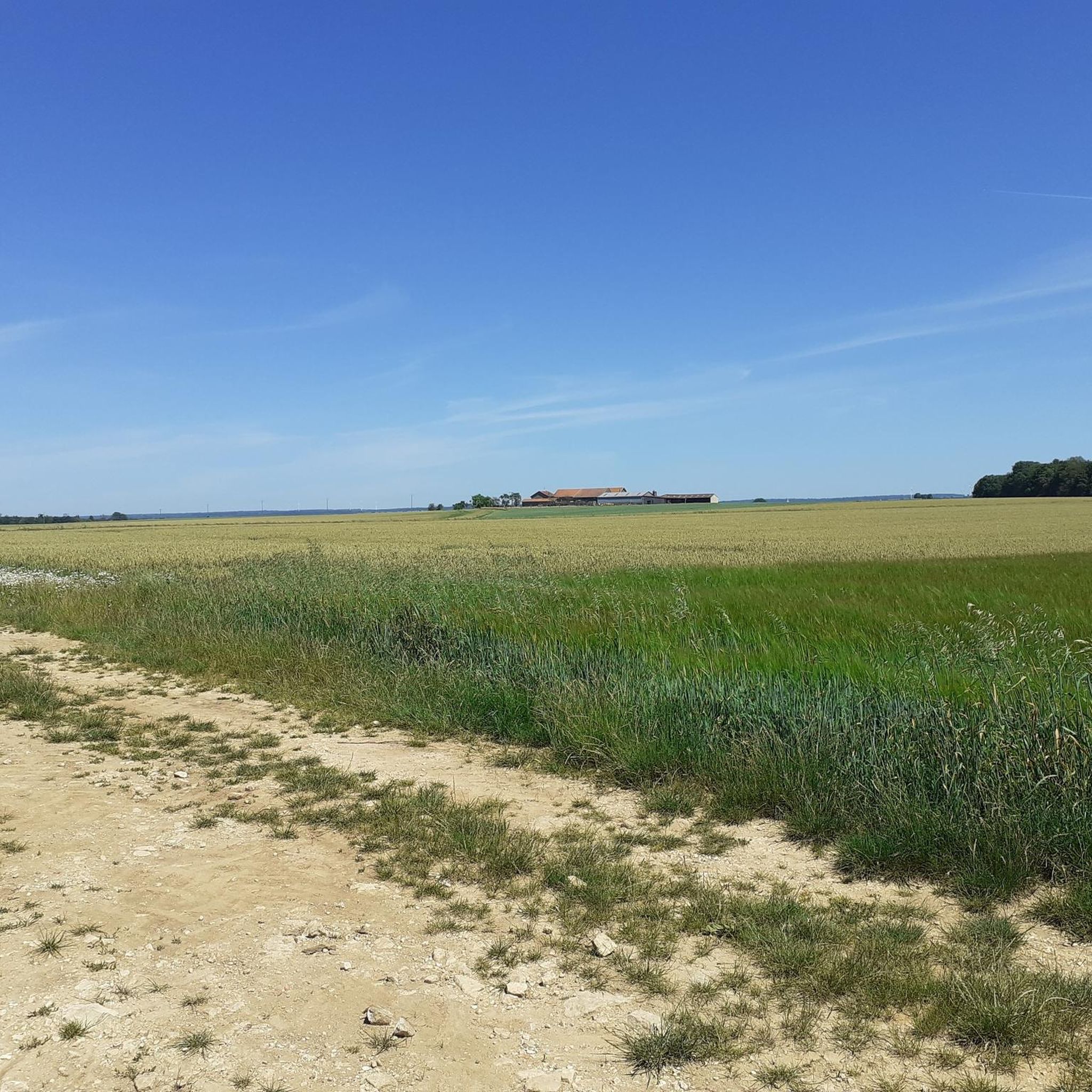
🔭 **Observatoire de l’Étang d’Amel – Nature Observation at the Pond** At the Étang d’Amel, there is a wooden observation post from which wildlife can be observed undisturbed. Waterfowl such as herons, ducks, and geese are particularly easy to spot here – depending on the season, even with their young. 🌾 The platform is sheltered from the wind, offers information panels about the regional fauna, and is idyllically situated among reeds, trees, and riparian grass. **Tip:** Bring binoculars! The chances of spotting birds are particularly good in the early morning or late afternoon. Ideal for nature lovers and families.
0
0

Ornes was a real city, larger than the other destroyed villages, but which eventually found itself, after the First World War, on the same site, or almost, under their stones. In the course of its history, its lord's castle suffered the same fate, when it was taken in February 1653 and then destroyed by the Catholic troops of Lorraine, while he, like his ancestors since 1563, vigorously defended Protestantism. As early as 1587, a very bloody battle took place between his troops and the Catholic troops of the Duke of Lorraine. In the mid-19th century, the city had 1,367 inhabitants, but in 1914 the number of inhabitants fell again to 750. This was mainly due to the rural exodus, which provided labour for the large industrial centres that were growing rapidly at the end of the 19th century. However, this city has an industrial textile and processing factory that is well suited to local agricultural production and textiles from the neighbouring Woëvre plain. But its geographical location, close to the border with the annexed Moselle and then on the front that had been stabilised after the Battle of the Marne, was not favourable for the area. In the event of an enemy offensive, the area would quickly find itself on the front line. For this reason, on 25 August 1914, the population was asked to leave the village. But not everyone left, at their own risk, because the bombardments and German patrols in the village became increasingly intense. In September 1914, two children were killed by shrapnel. In October 1914, several villagers who were about to leave were taken prisoner by the Germans... In 1915 and until February 1916, French troops held the village where units were positioned, in the second line opposite the front, at the beginning of the great German offensive. But from 21 to 24 February, the German advance was so strong that the village of Ornes was taken by their infantry on 24 February 1916, after heavy bombardments that destroyed all the houses and buildings in the village. It was not until 23 August 1917 that the area was retaken by our soldiers. At the end of the war, the area was classified as a 'red zone' and could never be rebuilt. Source: Tourism Verdun
3
0
In September 1914, the 186 inhabitants were evacuated from the village, which was temporarily left in no man's land. In October 1914, it was occupied by French troops who transformed it into a strong point. Beaumont unfortunately lay just behind the front line where the first German attack took place on 21 February 1916. Lieutenant-Colonel Emile Driant's chasseurs defended the Caures Wood to the north, in the most advanced position. Despite the heroic resistance of the chasseurs, the wood fell and Colonel Driant gave the order to withdraw to Beaumont. As the columns emerged from the wood, they came under withering German machine gun fire. The colonel, who formed the rearguard, was killed, but fragments of his sections managed to reach Beaumont and reinforce the garrison there. February 24 was the critical day. From the village, elements of two French regiments (four companies) fought off repeated attacks. As the troops of the 18th German Corps entered the village, they were mowed down by machine guns firing from cellar windows. The enemy formations, which were extremely densely packed, advanced so rapidly, with each wave passing the previous one, that the French automatic fire at first seemed to overwhelm them and they suffered terrible losses. The Germans began a systematic shelling of the village again. When the infantry attack was resumed, they again encountered fierce resistance, but the balance of power was now too unequal. As more of the attacking troops managed to break through, the French officers realized that a withdrawal was necessary. The French were able to keep an escape route open and a number of their survivors were able to escape the following morning. Beaumont was lost and it was to become a formidable stronghold for the German army for the remainder of the battle of 1916. Read the full story at https://roadstothegreatwar-ww1.blogspot.com/2022/10/three-battles-at-beaumont-en-verdunois.html
2
0

You can observe birds there without disturbing them. The pond is home to many rare and protected plant and animal species, such as the greater bittern, the little heron and the marsh copper. Enjoy the beauty and tranquility of this wetland habitat. An ideal break for your race.
2
0
You can observe birds there without disturbing them. The pond is home to many rare and protected plant and animal species, such as the great bittern, the dwarf heron and the marsh copper. Enjoy the beauty and tranquility of this wetland habitat.
3
0

Stationed in Longuyon in 1954, with an air base in Marville, the Canadians left our region in 1966/1967 following General DE GAULLE's decision in 1966 to no longer belong to NATO. The Canadians, in thanks for the welcome received by the French, proposed to the municipality, chaired by Robert DRAPIER, to build a totem characteristic of the Canadian nation. It was inaugurated on March 11, 1967 by the Indian chief KHUT LA CHA and his squaw "Princess of Peace", in the presence of the mayor and the city council, as well as the 4 colonels who had succeeded each other at the base. After many Indian dances and songs to the accompaniment of a tambourine, the chief gave his headdress to Colonel CHRISTIE, the last base commander, who unveiled the plaque affixed to the Totem's base. As a testimony to the warm welcome given by the French people to all Canadian personnel of the First Wing, Royal Canadian Air Force, who stayed at Marville Base from 1954 to 1967. Worn out over the years, our unusual Totem was replaced thanks to Canadians from the LAHR base in Germany. Renovated and carved from larch, 5.40 meters high, the new brand new totem was re-inaugurated by Pierre MERSCH, Mayor, on June 8, 1986. It is regularly maintained and some parts have been refurbished. weather and pollution would soon have overcome this memory of the past. In 2005, the second Totem, which still retained the original sculptures and designs, had to be replaced. It is now in resin, which should make it more resistant to the test of time. (https://www.longuyon.fr/Patrimoine/Totem.html)
1
0
This is one of the destroyed villages from WWI that were not rebuilt
4
0
This is one of the destroyed villages from WWI that were not rebuilt
2
0
Frequently Asked Questions
What historical sites can I explore around Mangiennes?
The region is rich in WWI history. You can visit the poignant ruins of villages like Bezonvaux and Beaumont-en-Verdunois Destroyed Village, which were not rebuilt after the war. Another significant historical site is the Ruins of Église Saint-Michel, offering a glimpse into the past.
Where can I go for nature observation and wildlife spotting?
The Amel Pond Observatory is an excellent spot for nature lovers. It features a wooden observation post where you can quietly observe diverse bird species, including rare ones like the great bittern and marsh copper, without disturbing them. The pond is also home to various protected plant and animal species.
Are there any unique cultural monuments in the area?
Yes, the Longuyon Totem is a distinctive cultural monument. It commemorates the Canadian presence in the region from 1954 to 1967 and has been maintained and replaced over the years, symbolizing a historical connection between Canada and France.
What outdoor activities are available near Mangiennes?
Mangiennes offers various outdoor activities, particularly hiking, running, and road cycling. You can find numerous routes for these sports, ranging from easy to moderate difficulty. For detailed routes, explore the guides for Hiking around Mangiennes, Running Trails around Mangiennes, and Road Cycling Routes around Mangiennes.
Are there easy walking trails suitable for beginners?
Yes, there are easy walking trails available. For instance, the 'Saint-Michel Chapel - Ornes – Ruins of Église Saint-Michel loop from Ornes' is an easy 6.6 km hiking route. You can find more options in the Hiking around Mangiennes guide.
What is the best time of year to visit Mangiennes attractions?
Given the focus on historical sites and nature observation, spring, summer, and early autumn are generally ideal. The weather is pleasant for exploring outdoor ruins and observing wildlife at the Amel Pond Observatory. These seasons also offer the best conditions for hiking, running, and cycling.
Are there any family-friendly attractions in the Mangiennes area?
The Amel Pond Observatory is ideal for families, offering an engaging way to introduce children to nature and wildlife. It's a sheltered spot with information panels, making it an educational and enjoyable experience for all ages.
Can I find circular hiking routes near Mangiennes?
Yes, several circular hiking routes are available. Examples include the 'Bezonvaux – Ruins of Église Saint-Michel loop from Ornes' (moderate, 11.1 km) and the 'Saint-Michel Chapel - Ornes – Ruins of Église Saint-Michel loop from Ornes' (easy, 6.6 km). More circular options can be found in the Hiking around Mangiennes guide.
What do visitors enjoy most about the attractions around Mangiennes?
Visitors particularly appreciate the historical depth of the WWI sites, such as the destroyed villages, and the tranquility of nature observation points like the Amel Pond Observatory. The unique cultural monument, the Longuyon Totem, also garners interest for its historical significance.
Are there opportunities for long-distance road cycling?
Yes, the area around Mangiennes offers several longer road cycling routes. For example, the 'Scenic Country Road – Church, memorial and old wall loop from Pillon' is a moderate 60.9 km ride. You can explore more options in the Road Cycling Routes around Mangiennes guide.
What kind of wildlife can I expect to see at Amel Pond?
At the Amel Pond Observatory, you can observe a variety of waterfowl such as herons, ducks, and geese. The pond is a habitat for rare and protected species, including the great bittern, dwarf heron, and marsh copper. Binoculars are recommended for the best viewing experience.

Get inspired with the komoot mobile app


Explore more
Still not found the Highlight you’re looking for? See guides of the top attractions in other regions:
