Attractions and Places To See around La Hallotière - Top 20
Attractions and places to see around La Hallotière, a municipality in the Seine-Maritime department of Normandy, France, provides a tranquil setting. The area serves as a gateway to numerous regional attractions, while also offering local points of interest. Within La Hallotière, visitors can explore a notable landscaped garden and engage in hiking opportunities that highlight local history and heritage. The surrounding region features significant landmarks, natural features, and cultural sites.
Best attractions and places to see around La Hallotière
- The…
Last updated: July 2, 2026
Andelle Ponds
Highlight • Lake
Translated by Google •
Tip by

Domaine de Forges and Historic Thermal Quarter
Highlight • Historical Site
Sign up now to discover places like this
Get recommendations on the best single tracks, peaks, & plenty of other exciting outdoor places.
Sign up for free
The Buchy Market Halls
Highlight • Monument
Translated by Google •
Tip by

Panorama Butte de la Ferté Saint Samson
Highlight • Other
Translated by Google •
Tip by

Source de la Chevrette
Highlight • Other
Translated by Google •
Tip by

Sign up for free to discover even more attractions around La Hallotière.
Sign up for free
Already have an account?
Start today with a free account
Your next adventure awaits.
Login or Signup



Tips from the Community

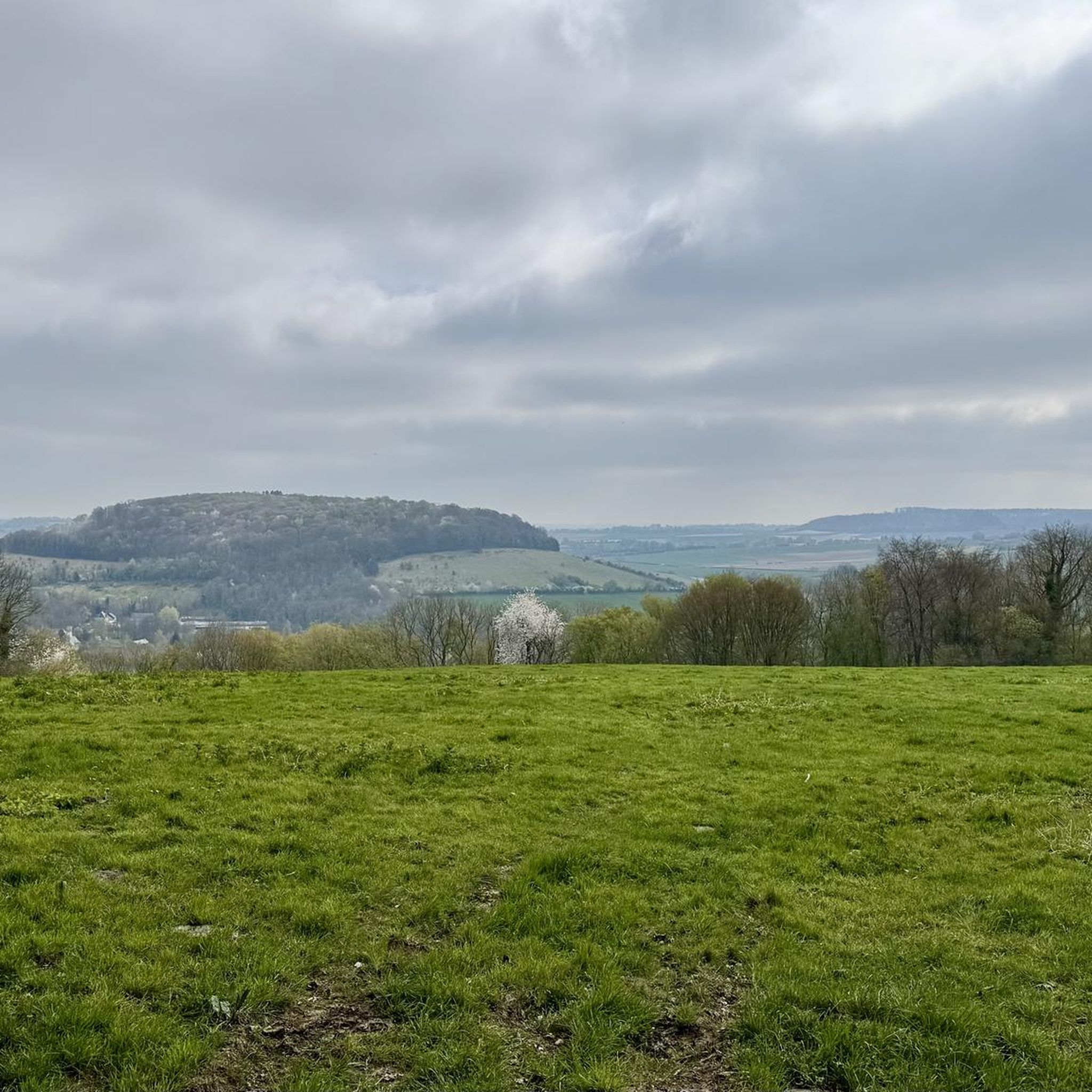
From the Hundred Years' War, there remain the "beautiful" elevations of land with large ditches, which were fortified points. These feudal mounds (wooden fortresses dominating a flattened area) made it possible to dominate the region from any attack. Today, a very beautiful orientation table (work of Juliette and Jacques Damville) offers one of the most beautiful panoramas of the Boutonnière! (Orientation table 5 on the Route des Paysages) Designed in ceramic, copper and lead, it evokes both the defensive tower with its loopholes and a crown decorated with set enamels. The seven traditional planets, represented by seven colored spheres, punctuate the upper plane of the panorama and stand out against the sky. The general spiral shape of the table is there to emphasize the constant link between the past and the present: the spiral starts from a medieval representation of the sky and ends at the half-spherical cap, a contemporary astronomical evocation of the Messier 51 galaxy.
0
0

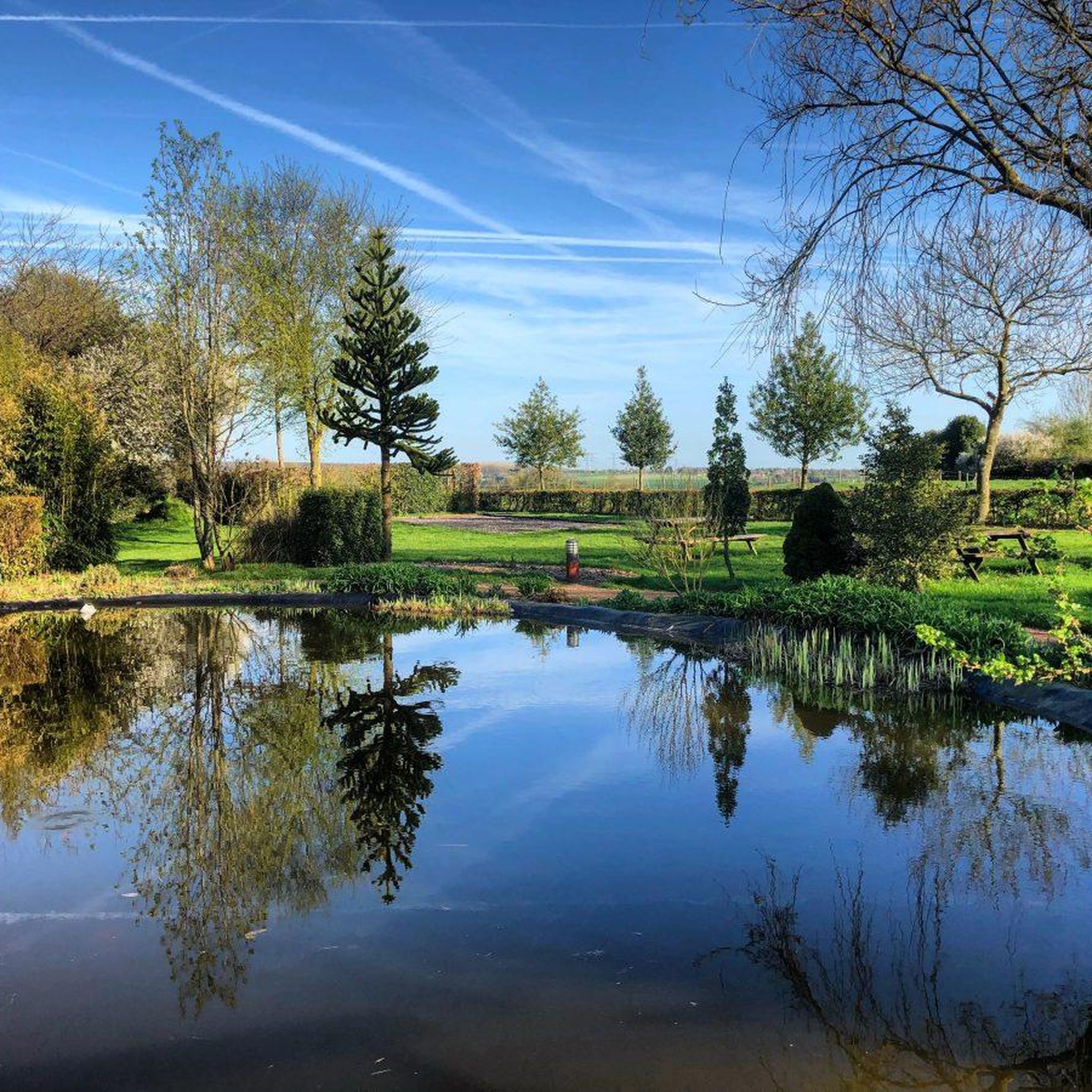
This natural area located in Forges-les-Eaux is organized around the ponds of the Andelle, formed by two rivers: the Andelle to the east and the Chevrette to the west. All around extends the Bois de l’Épinay, remarkable for the great diversity of tree species it shelters. You can walk there, observe the birds, picnic and take a quiet break enjoying the rustling of the many leaves.
1
0

This part of the city was developed from the 16th century with the discovery of ferruginous springs in the current Casino park. It was in 1573 that Nicolas de Moy, Grand Master of Water and Forestry, discovered the presence of ferruginous springs. They were made famous from 1633 with the arrival of King Louis XIII, Queen Anne of Austria and Cardinal Richelieu. The spa was thus born! The springs named Reinette, Royale and Cardinal were thus exploited for their property and their medicinal virtues until the 1980s. @OT Forges les Eaux
0
0
These artificial lakes were built in the late 1980s on a peat marsh. They are spread over two levels and separated by an earth dike, valves allow the water level to be controlled. They are fed by the Andelle river which has its source upstream. The wild ponds (to the North) were deliberately left in their natural state to allow birds to nest, while The Bird Mirror (to the South) was the subject of landscaping and ornamental development with consolidation of the banks. . @OT Forges les Eaux
0
0
130 million years ago, sand and iron from the dismantling of continental granite massifs were deposited in a shallow sea. These formations, revealed today by erosion, are crossed by rainwater and underground flows. At the bottom of the Brayonne buttonhole, lined with impermeable clay, water infiltrates into the sandy layers which cover them and soon reappears in multiple sources and small streams. During its journey, this water dissolves and carries away the ferric oxides contained in the sands. So on the surface, these waters are slightly acidic and the iron remains in suspension giving this curious rusty color. This is the case of the Chevrette which you trace back to its source. 850 meters long, this water was too high in iron and was never used for cures. @OT Forges les Eaux
0
0

The two halls which surround the current town hall were probably built before 1679. That, located along the road from Rouen to Forges, has the particularity of having stalls and hooks, hence its name "butchers hall". Owned by Bois-Guilbert until 1779, then by the Blosseville family, the halls were alienated to the town around 1830. Their granaries were used until the abolition of privileges to store tithes (wheat, oats, barley, rye ...). Every Monday, according to a very old tradition, Buchy hosts a picturesque farmer's market in its halls which is reminiscent of those of Flaubert's time. They are classified as historical monuments.
0
0
Frequently Asked Questions
What natural features can I explore around La Hallotière?
La Hallotière itself is home to a notable landscaped garden featuring trees from five continents and over 40 varieties of holly, offering free admission and a picnic area. Nearby, you can visit Etang de la Chevrette in Forges-des-Eaux for walks through the forest and past lakes, and discover the unique rusty-colored waters of Source de la Chevrette. The wider Vexin Normand region and Seine-Maritime countryside also offer diverse natural landscapes.
Are there historical sites or cultural landmarks near La Hallotière?
Yes, the region is rich in history. You can visit The Buchy Market Halls, classified as historical monuments, which still host a picturesque farmer's market every Monday. The Domaine de Forges and Historic Thermal Quarter in Forges-des-Eaux reveals the area's spa history dating back to the 16th century. Further afield, Rouen offers a stunning cathedral and old town, while Lyons-la-Forêt and Gerberoy are recognized as two of France's 'Most Beautiful Villages'.
What kind of outdoor activities are available near La Hallotière?
Beyond local hiking opportunities in La Hallotière, the surrounding area is excellent for various outdoor pursuits. You can find numerous road cycling routes, such as the 'The Buchy Market Halls – Outdoor Fitness Area loop', and general cycling tours. For runners, there are several running loops available, including routes starting directly from La Hallotière. You can explore more options for cycling at Cycling around La Hallotière, road cycling at Road Cycling Routes around La Hallotière, and running at Running Trails around La Hallotière.
Are there family-friendly attractions or activities in the area?
Yes, the region offers several family-friendly options. The landscaped garden in La Hallotière is suitable for all ages with its picnic area. Domaine de Forges and Historic Thermal Quarter is listed as family-friendly. Additionally, the The Bois-Guilbert estate, with its sculpture garden, provides an engaging outdoor experience for families. Many of the walking and cycling routes are also suitable for families, depending on the difficulty.
What do visitors enjoy most about the attractions around La Hallotière?
Visitors appreciate the blend of historical charm and natural beauty. The picturesque farmer's market at The Buchy Market Halls is a particular highlight, evoking a sense of tradition. The tranquil walks through forests and past lakes at Etang de la Chevrette are also highly rated. The unique artistic landscape of The Bois-Guilbert estate, shaped by a sculptor, offers a distinctive cultural experience.
Can I find places for walking or hiking directly in La Hallotière?
Yes, La Hallotière offers organized hiking tours that explore the town's history and heritage. These walks often depart from the town hall and typically cover about 5 km. The local landscaped garden also provides a pleasant setting for a leisurely stroll.
What are some notable villages or towns to visit near La Hallotière?
Beyond La Hallotière, you can explore Lyons-la-Forêt, approximately 13 km away, known for its picturesque half-timbered buildings and recognized as one of France's 'Most Beautiful Villages'. Another 'Most Beautiful Village' is Gerberoy, about 27 km away, famous for its 18th-century cottages and charming gardens. Rouen, the historic capital of Normandy, is also within reach, offering a wealth of cultural sites.
Are there any art or garden attractions nearby?
Absolutely. La Hallotière features its own notable landscaped garden with trees from five continents and over 40 varieties of holly. Additionally, The Bois-Guilbert estate is a large property with a unique sculpture garden, shaped by sculptor and landscape designer Jean-Marc de Pas. Further afield, the Fondation Monet in Giverny, with its famous gardens and house, is a major draw for art and nature lovers.
What is the best time of year to visit La Hallotière and its surroundings?
The region is enjoyable year-round, but spring and summer are particularly pleasant for exploring the gardens and outdoor attractions. The landscaped garden in La Hallotière is open year-round. For hiking and cycling, the milder weather of spring and autumn can be ideal. The farmer's market at The Buchy Market Halls takes place every Monday, offering a consistent attraction.
Are there any specific historical monuments or sites related to the region's past?
Yes, The Buchy Market Halls are classified historical monuments with a rich past, including their use for storing tithes. The Domaine de Forges and Historic Thermal Quarter highlights the area's history as a spa town, frequented by royalty. Further away, Château Gaillard offers insights into medieval history, and the D-Day Landing Beaches and Bayeux Tapestry Museum are significant historical sites in the wider Normandy region.
Can I find places to eat or drink near the attractions?
While specific cafes or pubs are not detailed for every attraction, the Vexin Normand region, where La Hallotière is located, is known for its traditional French and Norman gastronomy. You will find options in nearby towns and villages such as Argueil and Morville-sur-Andelle, as well as in larger towns like Forges-des-Eaux.
Is public transport available to reach La Hallotière or its main attractions?
La Hallotière is a small municipality, and while local transport options may exist, exploring the wider regional attractions often benefits from personal transportation. For specific details on public transport routes to La Hallotière or nearby towns, it is advisable to check local transport authority websites.

Get inspired with the komoot mobile app


Explore more
Still not found the Highlight you’re looking for? See guides of the top attractions in other regions:
