The best road cycling routes around Origny-Le-Roux
4.6
(9)
226
riders
122
rides
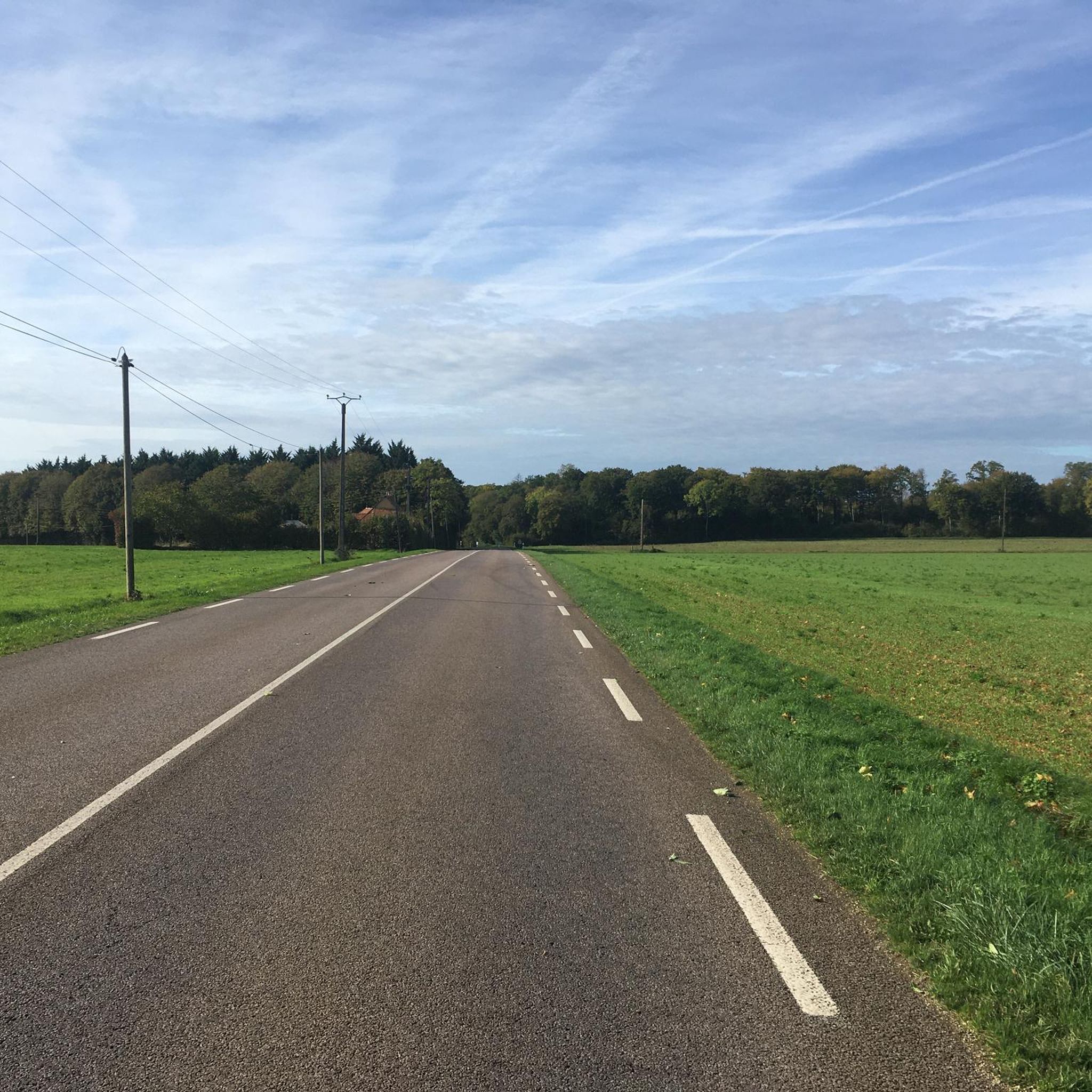
Road cycling around Origny-Le-Roux offers routes through the tranquil and verdant countryside of Normandy. The region features gently undulating terrain, with elevations ranging from approximately 79 to 142 meters, providing varied landscapes suitable for cycling. Proximity to the Perche Natural Regional Park means access to quiet roads and hilly sections. These characteristics make the area suitable for diverse road cycling experiences.
Best road cycling routes around Origny-Le-Roux
- The most popular road cycling route is Motte castrale de Peray – Saint-Jouin…
Last updated: July 4, 2026
13
riders
124km
06:04
1,110m
1,110m
Hard road ride. Very good fitness required. Some segments of this route may be unpaved and difficult to ride.
6
riders
49.4km
02:08
430m
430m
Moderate road ride. Good fitness required. Mostly well-paved surfaces and easy to ride.

Sign up for free
8
riders
Easy road ride. Great for any fitness level. Mostly well-paved surfaces and easy to ride.
6
riders
62.3km
02:40
530m
530m
Moderate road ride. Good fitness required. Mostly well-paved surfaces and easy to ride.
5
riders
33.2km
01:32
240m
240m
Easy road ride. Great for any fitness level. Mostly well-paved surfaces and easy to ride.
Get access to more routes and recommendations from other explorers.
Sign up for free
Already have an account?
Our route recommendations are based on thousands of hikes, rides, and runs completed by other people on komoot.
Start today with a free account
Your next adventure awaits.
Login or Signup




Tips from the Community

very beautiful village with drinking and eating facilities
0
0

A lovely artist's village not to be missed.
1
0

This 11th century medieval bridge is a beautiful place to contemplate Beaumont-sur-Sarthe for a short moment. In addition to the river, you can see the castle located on the heights of the town.
0
0

Saint-Rémy Church from the 11th and 16th centuries. Stained glass windows from the 20th century. Altarpiece of the Saint-Julien chapel from the 17th century.
0
0
The Chapitrel is the name given to the entrance gate. The period door is in the Renaissance style. This construction had several functions: It was reserved for catechumens who were not allowed to enter the church and served as a warehouse for farmers who sold at the market on Sunday mornings. The saddleback tower dates from 1545. It is 28 m high. It is square and has four levels. Each floor is separated by an external Roussard belt called a "larmier" which overhangs quite widely, preventing water from running off. At the top of the roof are two granite crosses, each topped with a copper weather vane representing a crowned dragon's head.
0
0
Saint-Martin Chapel. It dates from the 12th or 13th century. It is made of granite, roussard sandstone and brick. This small chapel is lost in the middle of the fields. It is a simple rectangular nave which has a Romanesque window at its chevet.
0
0
The name of the parish is attested in the forms Sanctus Jovinus in 1147, Saint Jouin in 1429, Saint-Jouin-de-Blavon in 1801. Saint Jouin (in Latin Jovinus), brother of Saint Maximin, was a hermit in Poitou. The determinant refers to the forest of Blavou mentioned around 850 in the Acts of the bishops of Le Mans, it is no longer present today except by the toponyms: Saint Jouin de Blavou
0
1

Frequently Asked Questions
What kind of terrain can I expect on road cycling routes near Origny-Le-Roux?
The region around Origny-Le-Roux offers a diverse landscape for road cycling. You'll find tranquil and verdant countryside with gently undulating terrain, including quiet country roads and rolling hills. Proximity to the Perche Natural Regional Park means access to scenic routes through green valleys and forested areas like the Forêt de Perseigne. Some routes may also feature sections near the dramatic granite forms of the Orne River gorges, providing varied and engaging rides.
How many road cycling routes are available around Origny-Le-Roux?
There are over 120 road cycling routes available around Origny-Le-Roux. This includes 22 easy routes, over 100 moderate routes, and a few more challenging options, catering to various skill levels.
Are there any easy road cycling routes suitable for beginners or a relaxed ride?
Yes, there are several easy routes. One popular option is the Motte castrale de Peray – Saint-Jouin Church of Marnes loop from Saint-Rémy-des-Monts. This 39.4 km (24.5 miles) trail offers a gentle ride through the local countryside, ideal for a relaxed pace.
What are some moderate road cycling routes in the area?
For moderate challenges, you can explore routes like the La Perrière – Monthimer Castle loop from Mamers, which is 49.0 km (30.4 miles) and traverses varied terrain near historical sites. Another option is the Porte Saint Denis – Château de Bellerive loop from Mamers, a 62.3 km (38.7 miles) trail leading through the scenic Orne department.
What can I see along the road cycling routes near Origny-Le-Roux?
Many routes offer opportunities to discover charming villages and historical sites. You might pass through places like Bellême, a small attractive village within the Perche Natural Regional Park, or La Perrière. Historical landmarks such as Monthimer Castle and the Saint-Sauveur Church in Bellême are also accessible. The region's natural beauty, including the Forêt de Perseigne and the Orne River valleys, provides scenic backdrops.
Are there any circular road cycling routes available?
Yes, many of the road cycling routes around Origny-Le-Roux are designed as loops, allowing you to start and finish at the same point. Examples include the Château de Bellerive – Ruins of Perseigne Abbey loop from Mamers and the Saint-Rémy Church – Church of Saint Mary Magdalene loop from Mamers, both offering scenic circular rides.
What do other road cyclists enjoy most about cycling in Origny-Le-Roux?
The area is highly rated by the komoot community, with an average score of 4.6 stars. Reviewers often praise the quiet country roads, the gently rolling hills, and the scenic sections near forested areas, which provide a peaceful and enjoyable cycling experience.
What is the best time of year to go road cycling in Origny-Le-Roux?
The spring and autumn months generally offer the most pleasant conditions for road cycling in Origny-Le-Roux, with milder temperatures and beautiful scenery. Summer can also be enjoyable, especially in the shaded forest sections, though it can be warmer. Always check the local weather forecast before heading out.
Are there any specific regional natural parks that these routes pass through?
Yes, many routes are located near or within the Perche Natural Regional Park, an area known for its preserved countryside and numerous outdoor exploration opportunities. The broader Orne department also lies within the Normandie-Maine Regional Natural Park, ensuring a consistent experience of unspoiled nature.
Where can I find more information about cycling in the wider Orne department?
For broader information on cycling in the Orne department and surrounding areas, you can consult resources like France Vélo Tourisme, which details routes like La Vélo Francette, or explore local tourism sites such as Caen la Mer Tourisme and Alençon Tourisme for regional insights.
Most popular routes around Origny-Le-Roux
Most popular attractions around Origny-Le-Roux

Get inspired with the komoot mobile app


Explore more
Browse the best Road cycling routes in other regions.
