The best cycling routes around Nailhac
4.6
(58)
320
riders
78
rides
Touring cycling around Nailhac, nestled in the Dordogne department, offers routes through a landscape characterized by rounded, wooded hills and extensive walnut groves. The region features quiet country roads that traverse diverse scenery, including vineyards and golden cliffs adorned with châteaux. The terrain includes ascents and descents, providing varied cycling experiences across the area.
Best touring cycling routes around Nailhac
- The most popular touring cycling route is Hautefort Castle – Muratel railway tunnel loop from Hautefort, a 41.6 miles…
Last updated: July 2, 2026
4.8
(12)
59
riders
67.5km
04:27
880m
880m
Hard bike ride. Very good fitness required. Mostly paved surfaces. Suitable for all skill levels.
5.0
(3)
17
riders
67.0km
04:31
980m
980m
Hard bike ride. Very good fitness required. Mostly paved surfaces. Suitable for all skill levels.

Sign up for free
8
riders
34.8km
02:18
490m
490m
Hard bike ride. Very good fitness required. Mostly paved surfaces. Suitable for all skill levels.
4.7
(6)
7
riders
26.9km
01:45
350m
350m
Moderate bike ride. Good fitness required. Mostly paved surfaces. Suitable for all skill levels.
5.0
(1)
5
riders
60.0km
03:42
590m
590m
Hard bike ride. Very good fitness required. Mostly paved surfaces. Suitable for all skill levels.
Get access to more routes and recommendations from other explorers.
Sign up for free
Already have an account?
Our route recommendations are based on thousands of hikes, rides, and runs completed by other people on komoot.
Start today with a free account
Your next adventure awaits.
Login or Signup


Tips from the Community


The Muratel railway tunnel was dug between 1893 and 1895. It allowed the crossing of a meander of the Elle River on the Nontron-Sarlat railway line, crossing the Muratel hill. 215 meters long, it features a limestone vault with refuge niches for safety. The line operated until 1939, then the tunnel was decommissioned in 1941, its roadway even being paved for temporary road access during construction. Today, it is an unused historical railway remnant. Good luck if you dare venture there!
0
0
Hautefort Castle was built between the late 16th and late 17th centuries on the remains of an ancient medieval fortress. Its architecture is clearly reminiscent of the Loire Valley châteaux, with a classical style combining elegance and defensive elements, including crenellated towers and a large quadrangle. The Marquis Jacques-François de Hautefort, a great builder, carried out a significant transformation to create a refined residence with galleries, a chapel, and rich interior decoration. The castle is surrounded by magnificent French gardens designed in the 19th century by the Count of Choulot. It survived the Revolution thanks to the defense of the inhabitants and was restored after a fire in the 20th century.
0
0
The Excideuil hospital building, designed in reinforced concrete, is a hospital complex built from 1937, with an interruption during the war, then resumed in 1949. It comprises several buildings including a main hospital in the shape of a comb with a curved plan, with seven levels adapted to the slope of the land, allowing differentiated entrances. The architecture strictly separates the services by floor (medicine, surgery, children, etc.) with rooms open on the south facade to let in light. The building also has a central glass rotunda housing the reception hall and operating rooms, as well as an administrative building with a clock tower. The complex is located in a large sloping park overlooking the town of Excideuil
0
0

What you need to know Medieval origins: A Romanesque building dating from the 11th century, it is a testament to the religious architecture typical of Limousin. Style: Its robust structure, barrel vaults, and sculpted capitals invite you to immerse yourself in Romanesque art. Idyllic setting: Nestled in a village listed as one of the most beautiful in France, the church is surrounded by cobbled streets and old houses.
0
0
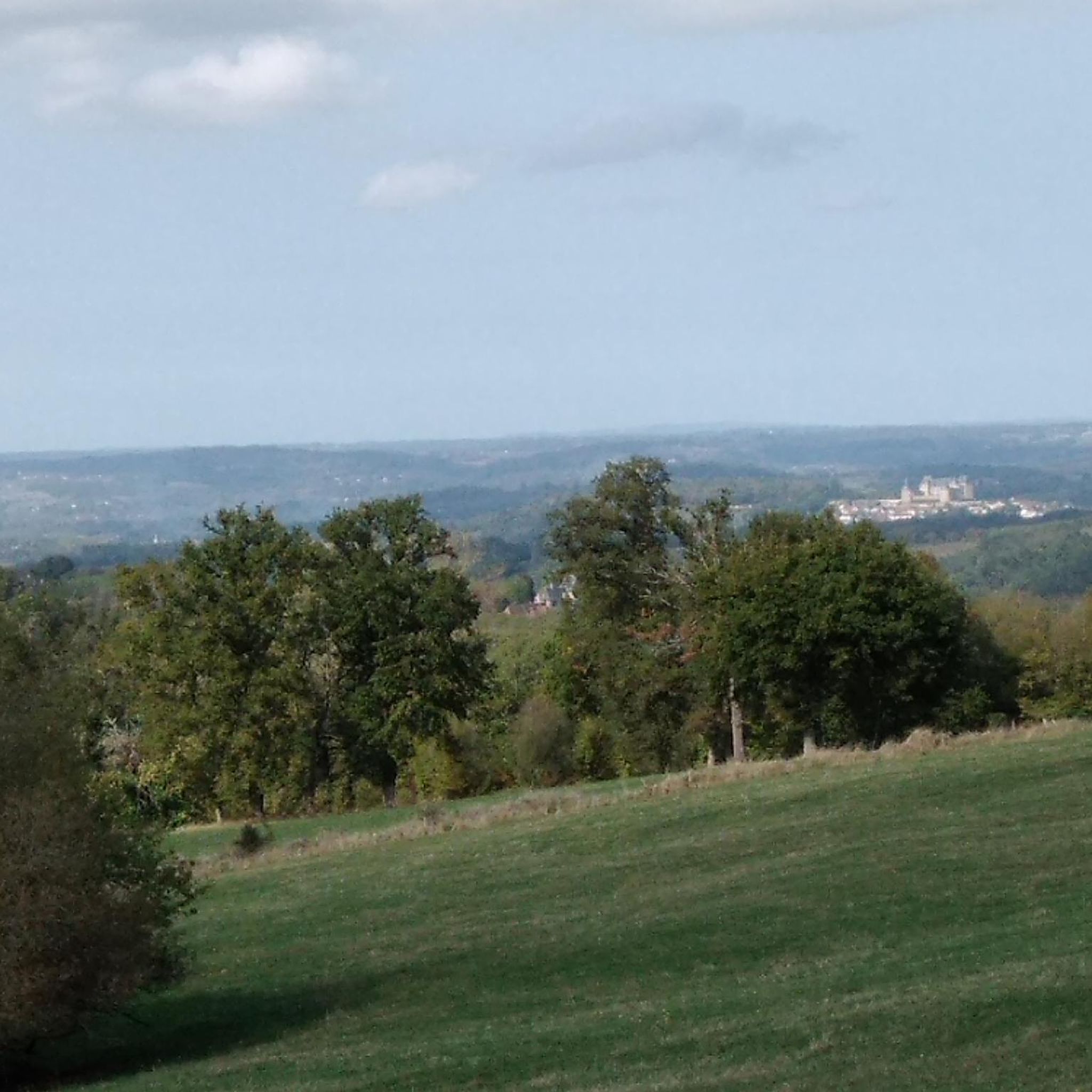
Hautefort Castle is one of the few surviving examples of classical architecture in southwest France. Situated on a rocky spur overlooking the village of Hautefort, it offers a majestic silhouette that is more reminiscent of the Loire Valley châteaux than the region's typical medieval fortresses.
1
0


Frequently Asked Questions
How many touring cycling routes are available around Nailhac?
There are nearly 80 touring cycling routes around Nailhac, offering a wide variety of options for exploring the region. These routes cater to different skill levels, from moderate to difficult.
What is the terrain like for touring cyclists in Nailhac?
The terrain around Nailhac is characterized by rounded, wooded hills and extensive walnut groves. You can expect quiet country roads that meander through diverse scenery, including vineyards and along golden cliffs adorned with castles. While there are ascents and descents, the routes are generally designed for a relaxed pace, allowing you to enjoy the authentic French countryside.
What are the difficulty levels of the touring cycling routes in Nailhac?
The routes around Nailhac offer a range of difficulties. While there is one easy route, the majority are classified as moderate (around 28 routes) or difficult (nearly 50 routes), providing varied challenges for touring cyclists.
What do other cyclists say about touring cycling in Nailhac?
The touring cycling routes in Nailhac are highly rated by the komoot community, with an average score of 4.6 stars from over 40 reviews. More than 300 touring cyclists have used komoot to explore the varied terrain, often praising the scenic views and the charm of the region.
Are there any historical landmarks or châteaux to visit along the routes?
Yes, the region is rich in historical landmarks. A prominent feature is the magnificent Château de Hautefort and Gardens, which is often visible from or directly accessible via many routes. You might also encounter charming villages like Saint-Robert, classified among 'The Most Beautiful Villages in France', and other historical sites such as the Hautefort Museum of Medical History.
What natural features can I expect to see on a touring bike ride near Nailhac?
You'll cycle through picturesque walnut groves and wooded hills, which are characteristic of Nailhac. The wider Dordogne region also offers proximity to natural wonders such as the Tourtoirac Cave and the famous Lascaux Caves, known for their prehistoric art, though these may require a slight detour from direct cycling routes.
Are there any specific viewpoints or scenic spots on the touring routes?
Many routes offer stunning views of the historic Château de Hautefort and the surrounding rolling hills. The quiet country roads often traverse landscapes with vineyards and golden cliffs, providing numerous scenic spots to enjoy the beauty of the Dordogne.
Are there any circular touring cycling routes around Nailhac?
Yes, many of the touring cycling routes around Nailhac are designed as loops, allowing you to start and finish in the same location. For example, the Hautefort Castle – Muratel railway tunnel loop from Hautefort is a popular option, as is the Bauzens Church – Cubjac loop from Temple-Laguyon.
What is the longest touring cycling route available?
One of the longer touring cycling routes is the Périgueux City Center – Saint-Front Cathedral loop from Hautefort, which covers approximately 90.6 kilometers (56.3 miles) and takes around 5 hours and 28 minutes to complete.
Are there any routes that pass through railway tunnels?
Yes, the Hautefort Castle – Muratel railway tunnel loop from Hautefort is a difficult 67 km route that includes a railway tunnel, offering a unique feature for your ride.
What is a good moderate-difficulty route for touring cyclists?
For a moderate challenge, consider the Hautefort Castle – Hautefort loop from Hautefort. This 29.8 km (18.5 miles) trail leads through wooded areas and past the impressive château, typically completed in about 2 hours and 3 minutes.
What is the best time of year for touring cycling in Nailhac?
The Dordogne region, where Nailhac is located, generally offers pleasant cycling conditions from spring through autumn. The quiet country roads and natural beauty are particularly enjoyable when the weather is mild, allowing for a relaxed pace to soak in the scenery.
Most popular attractions around Nailhac

Get inspired with the komoot mobile app


Explore more
Browse the best Cycling routes in other regions.
