The best road cycling routes around Granges-D'Ans
4.3
(29)
679
riders
142
rides
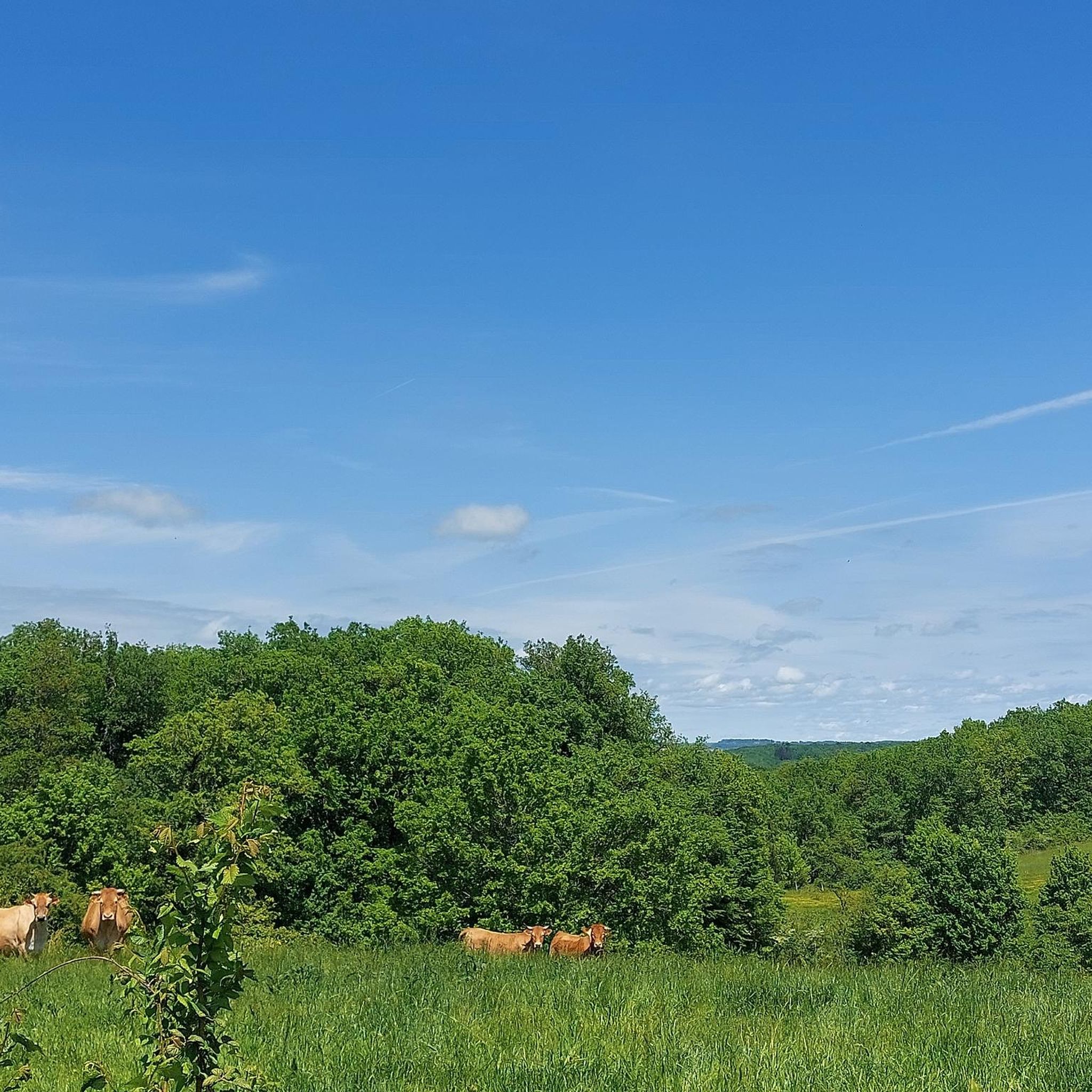
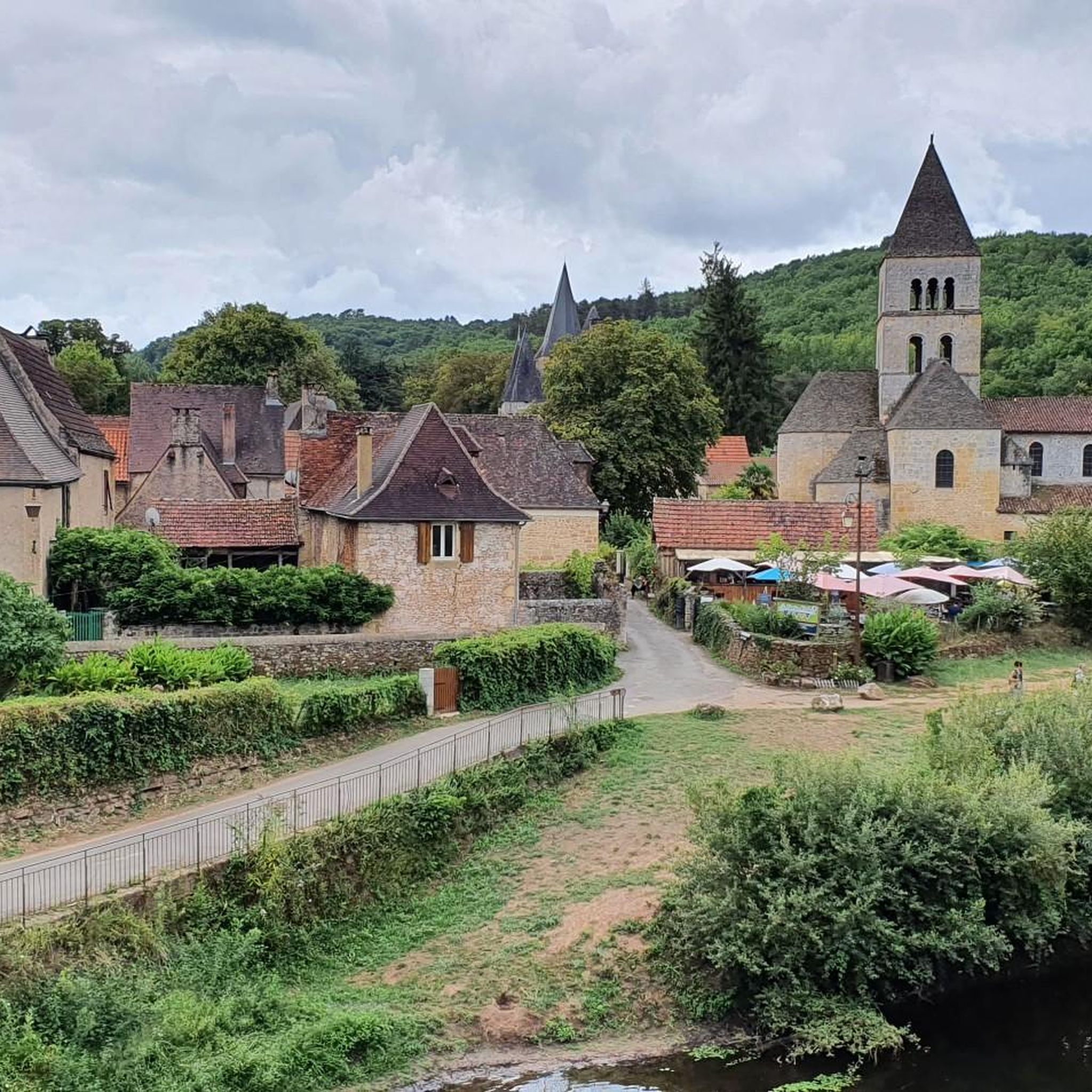
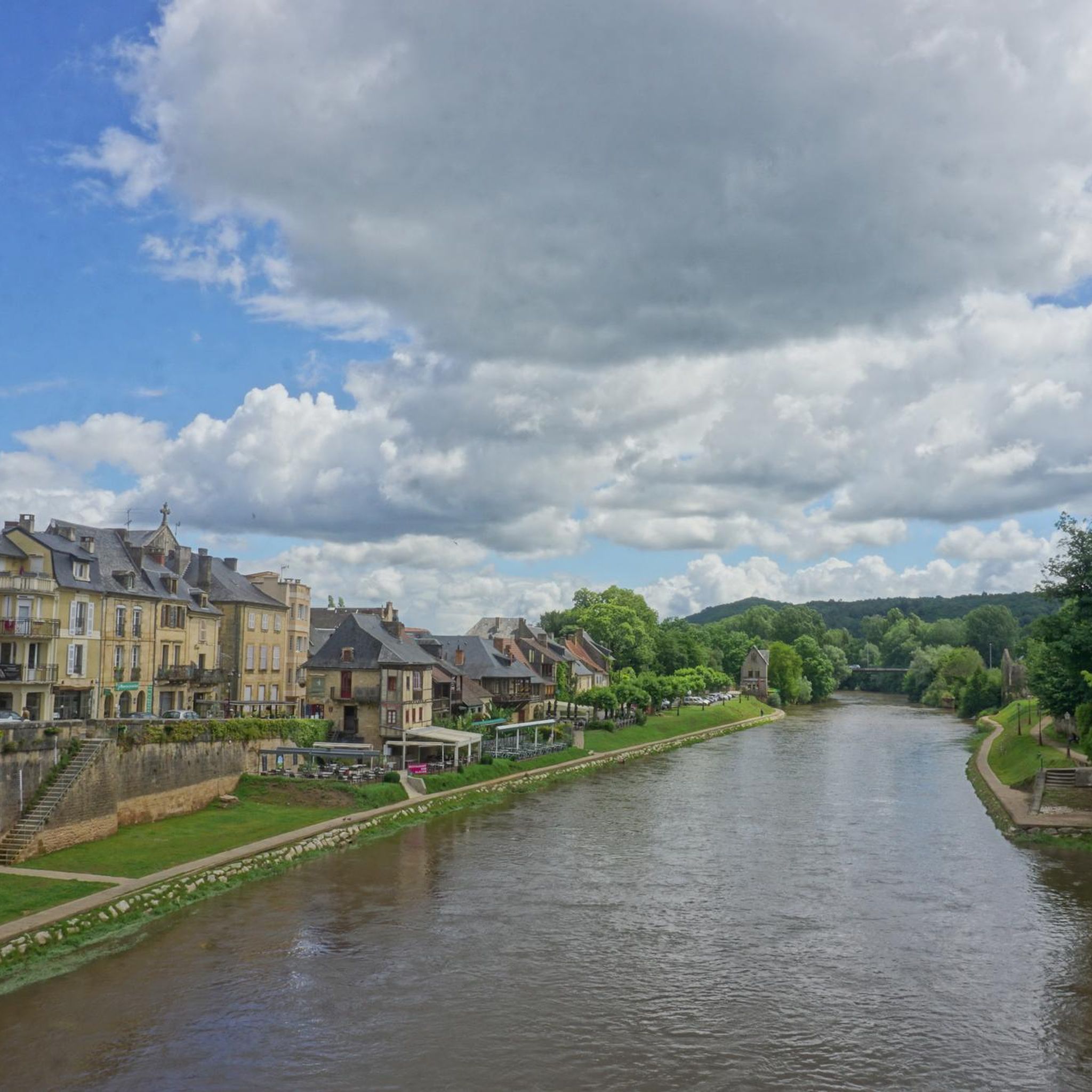
Road cycling routes around Granges-D'Ans traverse the varied terrain of the Dordogne department, characterized by rolling hills, serene river valleys, and lush forests. The region features gentle valleys suitable for relaxed rides, alongside mid-length climbs that offer elevation gains. Much of the cycling takes place on quiet country roads, providing a peaceful experience through areas like Périgord Noir with its dark oak tree forests.
Best road cycling routes around Granges-D'Ans
- The most popular road cycling route is Sauveboeuf Castle loop…
Last updated: August 23, 2026
5.0
(1)
21
riders
58.6km
02:42
600m
600m
Moderate road ride. Good fitness required. Mostly well-paved surfaces and easy to ride.
5.0
(1)
9
riders
Moderate road ride. Good fitness required. Mostly well-paved surfaces and easy to ride.

Sign up for free
5.0
(1)
6
riders
47.1km
02:24
690m
690m
Moderate road ride. Good fitness required. Mostly well-paved surfaces and easy to ride.
5
riders
29.2km
01:27
430m
430m
Moderate road ride. Good fitness required. Mostly well-paved surfaces and easy to ride.
5.0
(1)
5
riders
Moderate road ride. Good fitness required. Mostly well-paved surfaces and easy to ride.
Get access to more routes and recommendations from other explorers.
Sign up for free
Already have an account?
Our route recommendations are based on thousands of hikes, rides, and runs completed by other people on komoot.
Start today with a free account
Your next adventure awaits.
Login or Signup

Tips from the Community


Hautefort Castle, located on a rocky outcrop overlooking the town and village of Hautefort, is a rare example of classical architecture in the Dordogne. Built from the 16th to the 17th century on the foundations of an old castle, its architecture is reminiscent of the castles of the Loire. The construction, led by architects Nicolas Rambourg and Jacques Maigret, was intended for the family of the Marquis de Hautefort, close to the king and influential at Court, renowned for their generosity towards the poor. During the Revolution, the castle was protected by the inhabitants of Hautefort, who repelled a revolutionary troop from Excideuil wanting to destroy it. At the beginning of the 20th century, the castle was in ruins, having lost its furniture, its woodwork and parquet floors. In 1929, it was bought by the Baron and Baroness de Bastard, who undertook a complete restoration. After the Baron's death in 1957, the Baroness continued the work alone. A fire in 1968 destroyed the central building, leaving only the charred exterior walls. Thanks to national and local generosity, as well as the support of personalities, Baroness de Bastard undertook a second restoration, even selling her works of art to finance the work. The facades, frames, ceilings, decorations and rooms were reconstructed identically from photos. The woodwork of the Château de Kerlaudy was recovered and the castle was completely refurnished. In 1977, Baroness de Bastard moved back into the castle and opened it to visitors. In 1984, she created the Château de Hautefort Foundation, to which she donated the building, its estate and its furniture. Today, the interiors not open to the public are still being restored. The French gardens, recreated by the baron and baroness, extend into terraces around the castle, with flowered boxwood embroidery beds and are classified as historic monuments. An English-style park of 30 hectares extends on the hill to the west of the castle.
0
0
The Abbey of Tourtoirac is a Romanesque building from the 11th century which experienced an important monastic life linked to the Abbey of Saint-Martial in Limoges, known in the 13th century for its cultural influence.
0
0

Beautiful route, varied landscape... The source (quelle) can be removed, that's not much....
1
0

Built in the same style as the Luxembourg Palace in Paris, the castle is made up of a vast elongated main building framed by dormer-roofed pavilions overlooking the Vézère. You can admire the entrance courtyard, the facades and the roofs of the castle, the gallery and the semi-outdoor pavilion which follows it, the isolated pavilion, the framework of the castle, the main staircase, the fence of the main courtyard, the dovecote. There are paintings by Philippe de Champaigne.
0
0

Translation of the homepage: According to early written sources, Sauveboeuf Castle dates from the mid-14th century. The castle was later owned by the De Ferrières family, vassals of the Lords of Montignac. At that time, the castle was supposed to be a fortified country house, the purpose of which was to protect Montignac. Over the centuries and up to the middle of the 18th century, the De Ferrières family developed within the French nobility. In 1743 the estate passed into the hands of Victor Riquetti, Marquis de Mirabeau, father of the famous French revolutionary, and belonged to the family for about sixty years. In the 19th century, the building belonged successively to the Chassagnac Latrade, Dehÿs and Baillemont families. In 1891, the Oberkampf family, known for their fabric factory in Jouy (Jouy-en-Josas), acquired Sauveboeuf and carried out extensive renovations. The Oberkampfer sold the castle in 1927. The Château de Sauvebœuf has been open to visitors since April 2013. Visit to the castle (1h): The Château de Sauveboeuf was built in the Louis XIII style. It has a Renaissance terrace overlooking the Vézère, which is worth a visit in itself. The large rooms of this famous residence are furnished with period furniture, a monumental staircase in white stone and a cabinet of curiosities: the variety of the collections of Mr. Douce, the owner, will surely fascinate you. The visit can be free or guided. Visit to the Museum of Prehistory (1H30) The vaulted cellars of the Château de Sauveboeuf house one of the largest private prehistoric collections in the world. From the erectus to the early Neolithic, discover the evolution of man through different prisms: his environment, his innovations and his conflicts. Almost 500,000 pieces, including mammoth ivory ornaments that are more than 20,000 years old! Guided tour of the Museum of Prehistory, duration 1h30. Exclusive guided tour. Wedding at the Château de Sauveboeuf An ideal place for your reception.... In the heart of the Périgord Noir and overlooking the Vézère, Château de Sauveboeuf, a 17th century setting, will allow you to receive your guests for unforgettable moments. Experience château life for a weekend in this historic Louis XIII style residence. The "Nicolas Rambourg" room is an exceptional place, it offers you a magnificent view of the main courtyard and the main building of the castle thanks to its six large bay windows. Equipped with a communication room on the ground floor, you can easily dance and celebrate your event.
0
0
Frequently Asked Questions
What kind of terrain can I expect when road cycling around Granges-D'Ans?
The region around Granges-D'Ans offers varied terrain, characterized by rolling hills, serene river valleys, and lush forests. You'll find a mix of gentle valleys perfect for relaxed rides and mid-length climbs that provide rewarding elevation gains. Much of the cycling takes place on quiet country roads, offering a peaceful experience through areas like Périgord Noir, known for its dark oak tree forests.
Are there challenging road cycling routes in Granges-D'Ans?
Yes, while the area doesn't feature long mountain passes, it offers numerous mid-length hills that can provide a significant workout when linked together. There are 41 routes rated as 'difficult' in the area, allowing for impressive elevation gains for those seeking a challenge.
Are there easy road cycling routes suitable for beginners in Granges-D'Ans?
Absolutely. For those preferring a more relaxed pace, there are plenty of flat or gently rolling sections. The region also features 'Voies Vertes' (greenways), which are car-free paths ideal for safe and stress-free cycling. There are 11 routes specifically rated as 'easy' in the Granges-D'Ans area, perfect for beginners or a leisurely ride.
What historical sites or landmarks can I see while road cycling near Granges-D'Ans?
The area is rich in history and offers several notable attractions. You can cycle past the impressive Château de Hautefort and Gardens, a rare example of classical architecture in the Dordogne. Other points of interest include the Hautefort Museum of Medical History and various charming traditional Périgordian houses in the villages.
When is the best time of year for road cycling in Granges-D'Ans?
Spring is an especially pleasant time for cycling in Granges-D'Ans, with mild weather and the village and its surroundings coming into bloom. The vibrant local markets also add to the experience. The region's natural canopies from dense vegetation along roadways can create a fairytale-like riding experience during warmer months.
Are there family-friendly road cycling options in the Granges-D'Ans area?
While dedicated road cycling routes are generally on public roads, the region does offer 'Voies Vertes' (greenways) which are car-free paths. These are ideal for safe and stress-free cycling for all ages, often winding alongside rivers and through picturesque countryside, making them suitable for families.
Can I bring my dog on road cycling routes around Granges-D'Ans?
Road cycling routes typically follow public roads, which may not always be suitable or safe for dogs, especially if they are not accustomed to riding in a trailer or basket. For off-road or more leisurely cycling with a dog, consider exploring the 'Voies Vertes' or quieter country lanes, always ensuring your dog's safety and local regulations.
What do other road cyclists enjoy the most about road cycling in Granges-D'Ans?
The area is highly rated by the komoot community, with an average score of 4.4 stars from over 20 reviews. Cyclists often praise the peaceful experience on quiet country roads, the varied terrain with rolling hills and river valleys, and the immersive rides through dense forests like those in Périgord Noir.
Are there any circular road cycling routes available?
Yes, many of the routes around Granges-D'Ans are designed as loops. For example, the Sauveboeuf Castle loop from Sainte-Orse is a popular 58.5 km trail, and the Abbaye Saint-Pierre-ès-Liens loop from Temple-Laguyon offers a moderate 36.8 km ride through picturesque landscapes.
Where can I find parking facilities for cyclists in Granges-D'Ans?
While specific parking facilities for cyclists are not detailed, Granges-D'Ans and surrounding villages typically offer public parking areas. It's advisable to look for parking near the start points of your chosen routes, often in village centers or near local amenities.
What are some of the longer road cycling routes in the area?
For those looking for longer rides, the Sauveboeuf Castle loop from Sainte-Orse covers 58.5 km with over 600 meters of elevation gain. Another substantial option is the Brouchaud Loop – Abbaye Saint-Pierre-ès-Liens loop from Nailhac, which is 47.1 km long and leads through dense forests and quiet country roads.
Are there opportunities to see wildlife while road cycling?
Cycling through the lush forests and river valleys, particularly in areas like Périgord Noir, offers opportunities to observe local flora and fauna. The region is home to diverse wildlife, including wild boar, deer, and various bird species, especially in the quieter, more secluded sections of the routes.
Most popular attractions around Granges-D'Ans

Get inspired with the komoot mobile app


Explore more
Browse the best Road cycling routes in other regions.
