The best road cycling routes around Verrières
4.1
(36)
1,103
riders
269
rides
Road cycling around Verrières offers a diverse landscape characterized by rolling hills, hedgerows, and expansive countryside views. The region includes forested stretches, such as the Forêt Domaniale de Bellême, providing varied terrain for cyclists. Routes often pass through picturesque villages and farmlands, with elevation gains typical of a gently undulating environment.
Best road cycling routes around Verrières
- The most popular road cycling route is Saint-Germain d'Auxerre Church – Forêt Domaniale de Bellême loop from Rémalard en Perche, a 26.4…
Last updated: July 2, 2026
4.0
(2)
7
riders
Moderate road ride. Good fitness required. Some segments of this route may be unpaved and difficult to ride.
5
riders
Moderate road ride. Good fitness required. Mostly well-paved surfaces and easy to ride.

Sign up for free
4
riders
41.9km
01:52
340m
330m
Moderate road ride. Good fitness required. Mostly well-paved surfaces and easy to ride.
9
riders
104km
04:54
890m
890m
Moderate road ride. Good fitness required. Some segments of this route may be unpaved and difficult to ride.
4
riders
21.7km
01:08
180m
180m
Moderate road ride. Great for any fitness level. Some segments of this route may be unpaved and difficult to ride.
Get access to more routes and recommendations from other explorers.
Sign up for free
Already have an account?
Our route recommendations are based on thousands of hikes, rides, and runs completed by other people on komoot.
Start today with a free account
Your next adventure awaits.
Login or Signup




Tips from the Community

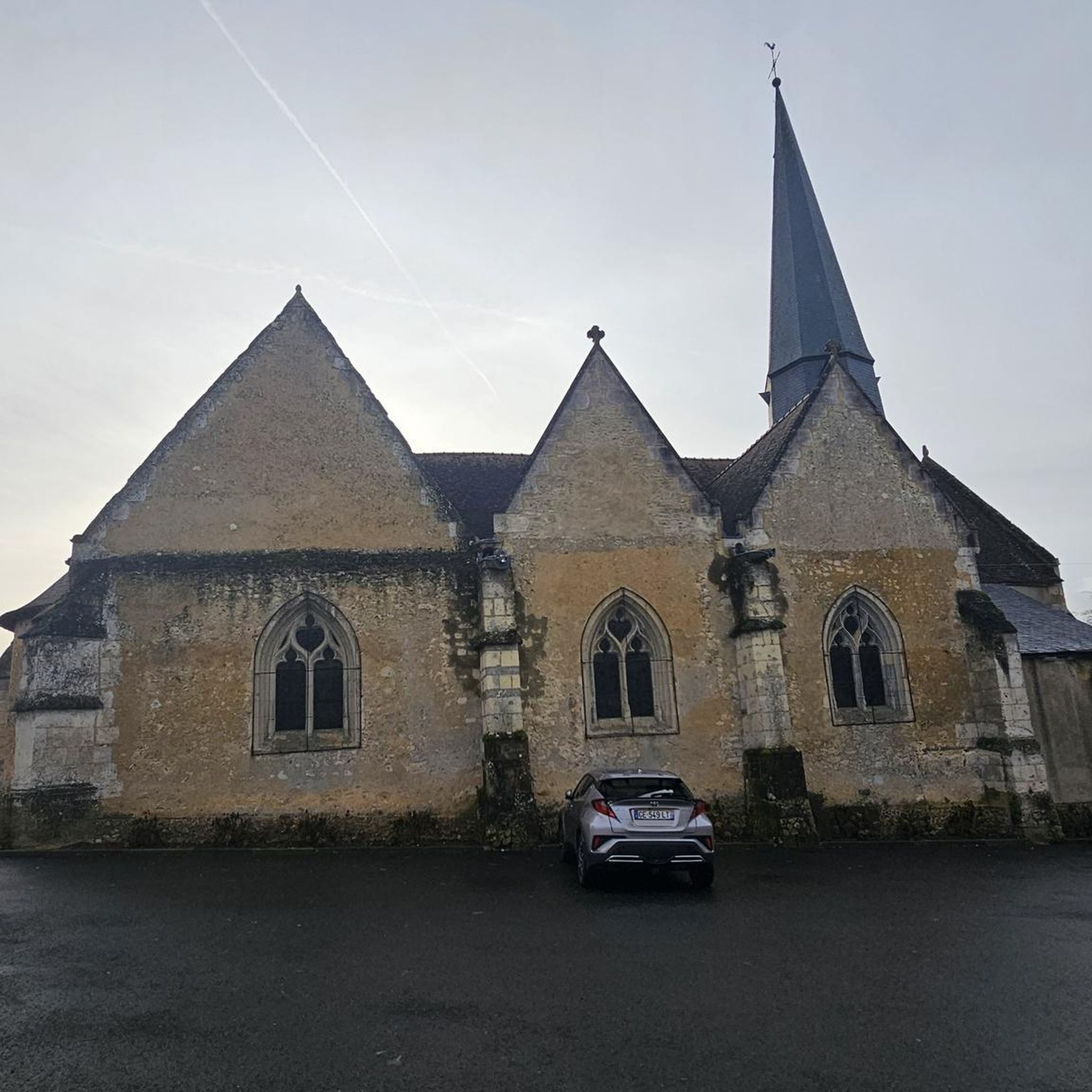
From the 11th century, only the lower part of the bell tower remains. The church was rebuilt in the 14th century in the Gothic style. Since then, the church has undergone only partial alterations and restorations. Church with an elongated plan. Nave flanked by two side aisles. Polygonal chevet flanked by a small building. Bell tower flanking the left side aisle with a double gable roof topped by an octagonal spire. Pointed arch portal with voussoirs, surmounted by a polylobed rose window. Pointed arch bays. Buttresses flanking the building.
0
0
The Church of Saint-Pierre, under the Ancien Régime, part of the deanery of Bellême, in the diocese of Sées, is located in the heart of the village of Saint-Pierre-la-Bruyère, in the Perche region. This building features a relatively high nave, surmounted by a slate bell tower, extending into a square-plan choir, much lower, flanked by a rectangular chapel to the south. The façade is supported by four powerful buttresses that appear to date from the late Middle Ages. It features a basket-handle lintel entrance door, dating from the late Gothic period. This door replaced a Romanesque doorway whose semicircular arch appears above the Gothic opening. It is surmounted by a pointed window. The northern drip wall is flanked, where it meets the western façade, by a brick staircase turret leading to the attic. The nave was built in the Romanesque period, as evidenced by the small round-arched windows in the upper part of the north drip wall. The bell tower is supported by four posts set within the nave's volume behind the façade wall. The three bays delimited by these posts are covered by a plastered wooden vault, lower than the nave vault, built in the 18th century. The triumphal arch is quite small. It is flanked by two finely crafted stone altarpieces. The choir is adorned with a large stone altarpiece with three sides delimited by four columns, surmounted by a richly decorated cornice crowned with fire pots. The high altar and side altars, in the same style, were built after the episcopal visit of 1706. They are a representative example of the quality of the renovations carried out in Percheron churches in the 17th and 18th centuries. A seigneurial chapel, built in the late 15th or early 16th centuries to the south of the choir, was converted into a sacristy between 1701 and 1706, to satisfy the observations made during the episcopal visitations. The arch opening onto the choir was walled up for this purpose. Aside from the altarpieces, the church contains few furnishings: an 18th-century stone Virgin Mary and a 16th-century baptismal font. The Sauvegarde de l'Art Français (French Art Protection Agency) granted €4,000 in grants in 2005 for the restoration of the roof.
0
0
The church has a Latin cross plan. It has a single nave and a flat chevet. A small building is attached to the chevet. A bell tower flanks the building. Buttresses support the drip walls and the gable wall. Pointed arch bays with tracery illuminate the building. The portal, in a low arch, has its external arched voussure.
0
0
Church built in the 12th and 16th centuries. Listed apse from the 12th century. 4-storey bell tower. Corner buttress bell with staircase turret. Renaissance portal. Large Gothic window above the portal. 16th century roof and nave. Stone statue of a bishop, 16th century paintings.
0
0
The Saint-Martin church, listed as a Historic Monument, is located in Nocé, Normandy. It was probably built in the 12th century near the ruined and abandoned Nocé castle after the Hundred Years' War. Originally, the church was surrounded by a cemetery that was moved in the 18th century. In the 15th century, the walls were razed and the Romanesque framework of the nave replaced by a new paneled framework. In the 16th century, after the troubles of the Hundred Years' War, the building was modified: a single large roof was built in place of the various previous volumes and the framework was transformed, a new chapel was added against the south facade and a stone bell tower was built to the right of the nave. This tower, square from base to top, stands twenty meters high. The church is composed of a rectangular nave, three bays and a choir with a Romanesque semicircular chevet. A succession of three chapels opens a side aisle separated from the nave by pillars. The chapels are covered with ribbed vaults. A sacristy is fitted out behind the church. Note the altarpiece and the tabernacle in painted and gilded wood with steps, installed in the choir and lit by two bays with tracery, a painting presenting the disciples of Emmaus and one of the Annunciation, as well as a polychrome terracotta statue and a stone statue of Saint Madeleine without forgetting a stone statue of Our Lady of Pity.
0
0

Very pretty trompe l'oeil
0
0
With a very simple plan, with its tiled nave and its small slate bell tower on the ridge, the church surrounded by its cemetery, set back from the road, overlooks the countryside planted with trees. The river is nearby, and its flowing water evokes that of the baptism of Jesus in the Jordan, as soon as we see the statue of the patron, Saint John the Baptist, in the choir. His arm raised towards the sky reminds us of his preaching in the desert of Palestine: "Prepare for the coming of the Messiah...". On the thin banner attached to his staff are written the words: "Ecce Agnus Dei", by which he already announced that he saw in Jesus the victim freely offering himself as a sacrifice for the Redemption of all men. Placed on the ground against the wall, a 17th century painting. depicts Jesus immersed up to his knees in the waters of the river, leaning with his hands crossed on his chest to receive the baptism of penance from the hand of John kneeling on the bank. We see “the Spirit descending on him like a dove” and we recall the words of John reported in the Gospel: “I am not worthy to bow down at his feet… I have baptized you in water; he will baptize you in the Holy Spirit.” Beside him, the angel wearing Jesus’ clothes turns his face towards a young child whom he guides with a hand placed on his shoulder, as if to teach him the profound meaning of baptism. Above the arch through which the nave opens onto the choir, the group of Christ on the cross surrounded by Mary and Saint John the Evangelist is a fine example of 16th century religious sculpture, faithful to traditional iconography. Similarly, at the back of the nave is the charming naive statue of Saint Fiacre: this young monk from Ireland loved to cultivate the vegetable garden of his monastery, near Meaux. Patron saint of gardeners, he holds his spade, and in the Perche region he was also invoked to cure various illnesses. More unique in style, the large Renaissance chest serving as a central altar was the former “work bench of the factory” reserved for the administrators of the parish’s resources and expenses. Let us admire the skill and imagination of the cabinetmaker who carved this series of full-length figures in oak under the arcades separated by “terms” inspired by Roman antiquity. Their distinctive attributes make us recognize Saints Christine, Barbara, Madeleine and Catherine on the front, and on the sides Saints Peter and Paul on the right, John the Baptist and Bartholomew on the left. Their silhouettes are more reminiscent of fairy tale characters…
0
0
In the nearby park shaded by large trees, the ruins of fortifications recall the memory of the six towers of the old castle built in the 11th century……. In the nearby park shaded by large trees, the ruins of fortifications recall the memory of the six towers of the old castle built in the 11th century by Geoffroy IV, Count of Perche, in order to control this border region near the Chartres region, Normandy, and the possessions of the Lords of Bellême and Alençon which extended as far as Sées. During the Hundred Years' War, Charles, Count of Evreux and King of Navarre, allied with the English against the King of France, seized the fortress in 1364. It was then besieged and retaken on behalf of King Charles V by his younger brother Philip the Bold, Duke of Burgundy, using catapults that threw large stones to collapse sections of the walls. But after the English victory at Verneuil in 1424, they rushed to destroy Marchainville, setting fire to the town and the castle. The church, too, has experienced some vicissitudes. It occupies the site of a very old small monastery, given to the abbey of Saint-Evrouit by a certain Fulchierus of Chartres, who was chaplain to Baldwin I, King of Jerusalem and author of an account of the first crusade. The monks built the priory church in the 11th century, of which the thick right wall with its flat buttresses, the cornice in grison stone, and the support points of the descending roof, which housed a small adjoining cloister, still remain. The church was enlarged (end of the 15th or beginning of the 16th century) along its entire length by a side nave resting on stone arches, whose voussures connect without capitals to octagonal pillars. On the unfortunate initiative of Abbot Fleuriel, this side nave was knocked down in 1723, and the roof of the church lowered. It was not until 1810 that a new priest, Abbot Dubois, had the four arcades of the current chapel of the Virgin reopened. The three other old arcades, still visible, remain blocked in the left wall of the nave. Unfortunately, on March 15, 1820, the shock of an earthquake caused the old square bell tower of the priory, which was located above the entrance to the choir, to collapse, which caused considerable damage. Thanks to the generosity of the inhabitants and the personal contribution of the Bishop of Séez, the church was repaired and a new bell tower was erected next to the entrance porch in 1824. On the classical-style altarpiece, a painting, dated 1949, of the Holy Virgin surrounded by angels replaces the painting of the Assumption hanging in the nave. The 18th century tabernacle presents a pretty wooden statuette of the resurrected Christ, with on each side those of a holy bishop with a kneeling donor, and perhaps a Father of the Church. Two pretty statues of Saint Lawrence and Saint Peter adorn the altarpiece of the chapel of the Virgin, where in the center appears the traditional image of Our Lady of Victories presenting Jesus as a child on a starry sphere that symbolizes the world. Above, appear God the Father, his arms outstretched, and the Holy Spirit. Finally, let us not forget the curious statue of Saint Louis with his scepter, presenting the crown of thorns and the three nails of the crucifixion, nor the ancient painting, in the nave, of Saint Eloi as bishop, with his anvil of patron saint of blacksmiths.
0
0
Frequently Asked Questions
How many road cycling routes are available around Verrières?
There are over 270 road cycling routes around Verrières, offering a wide range of options for different skill levels. This includes 44 easy routes, 213 moderate routes, and 18 difficult routes.
What kind of terrain can I expect when road cycling in Verrières?
Road cycling in Verrières is characterized by rolling hills, hedgerows, and expansive countryside views. You'll often pass through picturesque villages and farmlands, with routes featuring varied terrain, including forested stretches like the Forêt Domaniale de Bellême.
Are there challenging road cycling routes in Verrières?
Yes, for experienced cyclists seeking a challenge, Verrières offers several difficult routes. An example is the Mill – Porte Saint Denis loop from Bellou-sur-Huisne, which spans over 105 km with significant elevation gain, typically taking nearly 5 hours to complete.
Are there easier road cycling options for beginners in Verrières?
Yes, there are 44 easy road cycling routes in the Verrières area. These routes are generally shorter with less elevation, making them suitable for beginners or those looking for a more relaxed ride.
What natural features can I see while cycling in Verrières?
The region is known for its typical Norman landscapes, featuring rolling hills and hedgerows. You can cycle through forested areas such as the Forêt Domaniale de Bellême. While not directly on all routes, the broader Orne area features natural wonders like La Roche d'Oëtre, offering grand views of the Rouvre's wooded gorges.
Are there any interesting landmarks or attractions along the road cycling routes?
Yes, several routes pass near points of interest. You might encounter historical sites like Nogent-le-Rotrou Castle or the impressive Basilica of Our Lady of Montligeon. Some routes also pass by the Former Rémalard-Bellou Station, a remnant of the region's railway history.
Can I find family-friendly road cycling routes in Verrières?
While specific 'family-friendly' road cycling routes are not explicitly categorized, the 44 easy routes available are generally suitable for families. Additionally, the wider region offers greenways, such as the one following a former railway line, which provides a safe and leisurely cycling experience with educational panels, ideal for families.
What is the best time of year for road cycling in Verrières?
The region generally offers clement weather conditions, making spring and autumn (especially during harvest season in September and October) particularly enjoyable for cycling. These periods often provide pleasant temperatures and beautiful scenery.
What do other cyclists say about road cycling in Verrières?
The road cycling routes in Verrières are highly rated by the komoot community, with an average score of 3.98 stars from over 20 reviews. Cyclists often praise the diverse landscape, including rolling hills and forested areas, and the opportunity to explore picturesque villages and farmlands.
Are there any long-distance road cycling routes in the area?
Yes, Verrières offers several long-distance road cycling routes. For example, the Villeray Mill – Porte Saint Denis loop from Rémalard en Perche covers over 111 km, providing an extensive ride through the Orne countryside.
Are there greenways suitable for road cycling in the wider Verrières area?
Yes, the broader region includes greenways that are excellent for road cycling. For instance, a greenway follows a former railway line for 40 km, offering views over the Mayenne River and educational panels. You can find more information about this at The Greenways of Mayenne.
Where can I find parking for road cycling routes in Verrières?
While specific parking locations for each route are not detailed, many routes start from villages like Rémalard en Perche or Bellou-sur-Huisne, where public parking is typically available. It's advisable to check local village amenities for parking options near your chosen starting point.
Can I combine road cycling with other activities in the Verrières area?
Absolutely. Beyond cycling, the area around Verrières (Orne) offers opportunities for hiking. The region's picturesque villages and farmlands are perfect for exploration, and you can visit historical sites like the château grounds in Flers. The La Vélo Francette route also passes through the wider area, offering further cycling and exploration possibilities.
Most popular attractions around Verrières

Get inspired with the komoot mobile app


Explore more
Browse the best Road cycling routes in other regions.
