Attractions and Places To See around Fleuré - Top 19
Best attractions and places to see around Fleuré, a commune in the Vienne department of Nouvelle-Aquitaine, France, offers a blend of local historical sites and serves as a gateway to numerous regional attractions. The area is characterized by its rural setting, providing access to cultural landmarks, natural features, and theme parks within a short distance. Visitors can explore a rich tapestry of historical, cultural, and natural attractions, making it a suitable base for diverse interests.
Best attractions and places to…
Last updated: June 18, 2026
Château de Sassy
Highlight • Castle
Still inhabited, it houses the rich library of Chancellor Pasquier which contains 25,000 volumes and …
Translated by Google •
Tip by

Saint-Roch Chapel
Highlight • Religious Site
Translated by Google •
Tip by

Sign up now to discover places like this
Get recommendations on the best single tracks, peaks, & plenty of other exciting outdoor places.
Sign up for free
Saint-Germain Church
Highlight • Other
Translated by Google •
Tip by

Château des Ducs
Highlight • Castle
Translated by Google •
Tip by
Cuy Castle
Highlight • Castle
Translated by Google •
Tip by
Sign up for free to discover even more attractions around Fleuré.
Sign up for free
Already have an account?
Start today with a free account
Your next adventure awaits.
Login or Signup

Tips from the Community

Magnificent site, especially with morning lighting, unfortunately closed to visitors and the tree-lined avenue is closed to the public.
2
0

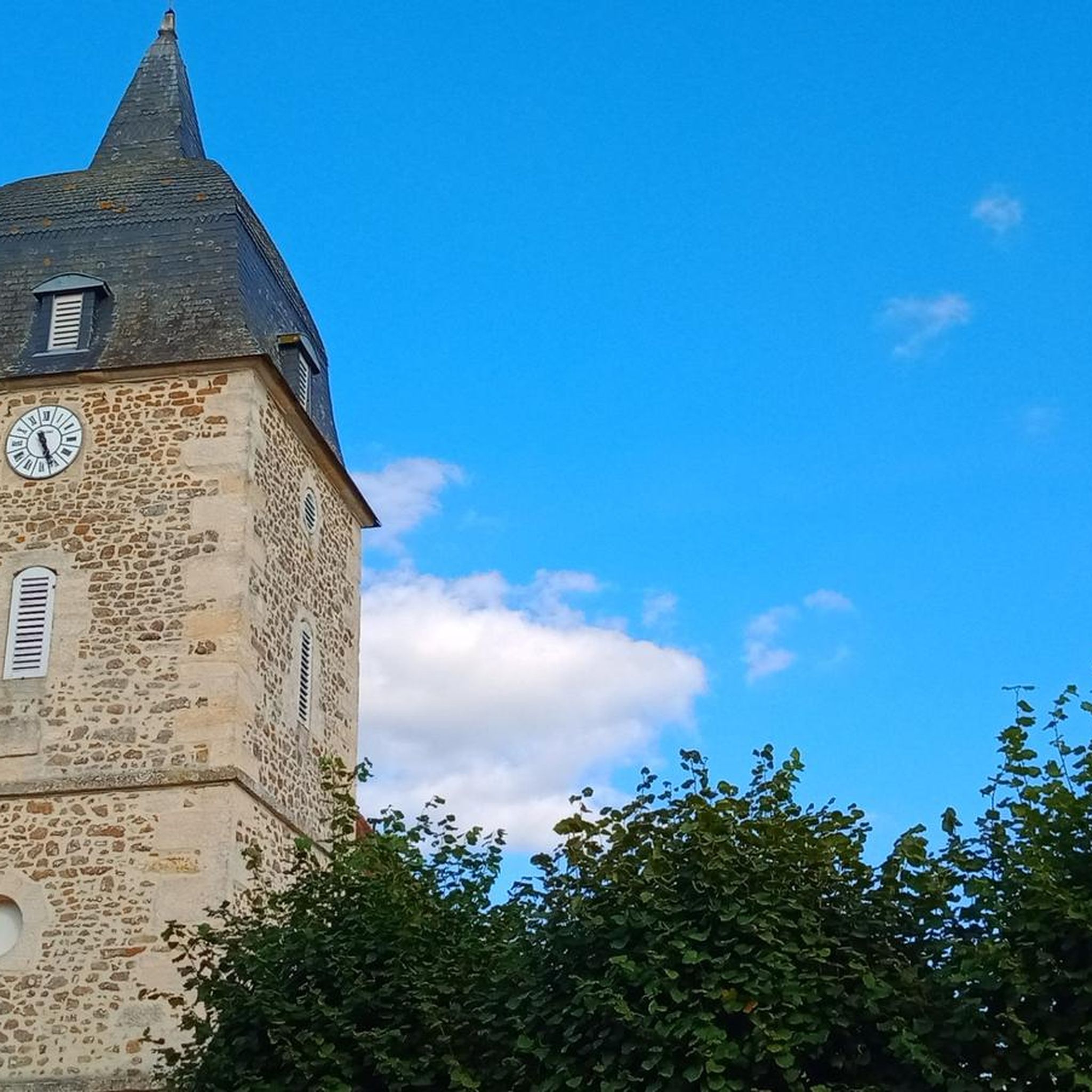
The Church of Saint-Germain is an impressive church that was built from the 14th to the 17th century and features a mix of Gothic, Renaissance and classical architecture. You can admire the majestic north porch, the lantern tower, the large bell tower and the 15 chapels inside. The church also houses the remains of Blessed Marguerite de Lorraine-Vaudémont, a benefactress of Argentan. The church is open to the public all year round and hosts many concerts, including organ concerts during the International Organ Festival in summer.
3
0
The Château des Ducs is a 14th century castle that was once the residence of Pierre II de Valois, a descendant of Saint Louis. The castle is today the seat of the court of justice, but you can still admire its architecture and its chapel, which houses a magnificent altarpiece from the 18th century.
2
0
The Château de Cuy in Occagnes is a 17th century castle with classic architecture. Its elegant facades, roofs and entrance doors are classified as historic monuments. You can admire the castle from the outside, but the interior is not open to the public as it is private property.
3
0

Saint Roch (Saint-ROCH), to whom this chapel is dedicated as patron, was born in Montpellier, France, in the middle of the 14th century. He is popularly considered – along with Saint Sebastian – to be the “plague saint”. What is characteristic of the depiction of Rochus in paintings and as statues is that he usually points to a plague boil on his leg; A dog can often be seen at his feet, because according to legend, when he was caring for plague patients, he himself fell ill with it and retreated into solitude, providing him with bread every day. Saint-ROCH's memorial day in the calendar of saints is August 16th.
0
0

Centrally located, right next to the Office de Tourisme.
0
0
The Château de Sassy you see today was built in the 18th century. It belonged to a chancellor of France in 1850, but by far the most important person to have visited this castle was Queen Elizabeth II, in 1967, during a private visit to France. The castle has an astonishing French garden built in 1920.
1
0
Frequently Asked Questions
What historical sites can I visit within Fleuré?
Within Fleuré, you can visit the Église Saint-Martin, a 19th-century parish church built on an older site, featuring a terracotta Pieta. While the historic Château de Fleuré and L'Etouzière are notable landmarks, they are private properties and not open to visitors. Other local heritage includes a Napoleon marker, the Priory and Chapel of Saint Thibault, ancient tumuli, a Pieta, and a tomb.
What are some popular castles to visit near Fleuré?
Several impressive castles are located near Fleuré. You can explore Château de Sassy, an 18th-century castle known for its significant private library and beautiful tapestries. Another option is Château des Ducs, a 14th-century castle that now serves as a court of justice but still showcases admirable architecture and an 18th-century altarpiece in its chapel. While Cuy Castle is a 17th-century architectural gem, its interior is not open to the public.
Are there any UNESCO World Heritage sites close to Fleuré?
Yes, the Abbey of Saint-Savin-sur-Gartempe, approximately 28 km from Fleuré, is a UNESCO World Heritage site. It is famous for its remarkably preserved 11th and 12th-century mural paintings, often referred to as the 'Romanesque Sistine Chapel'.
What natural attractions can I explore near Fleuré?
Near Fleuré, you can visit Gué de l'Omme, a developed natural site in the Miosson valley with a fishing pond and a 'green' pathway for walks. The vast Forêt Domaniale de Mareuil, an oak forest, is great for timber production, biodiversity, and public access. Additionally, the Réserve Naturelle Nationale du Pinail, located between Poitiers and Châtellerault, is a globally recognized wetland reserve known for its thousands of ponds and exceptional biodiversity.
What outdoor activities can I do around Fleuré?
The area around Fleuré offers various outdoor activities. You can find numerous routes for gravel biking, running, and hiking. For example, there are moderate to difficult gravel biking routes like the 'Montormel Memorial loop' or the 'Château de Sassy loop'. Running enthusiasts can enjoy routes such as the 'Running loop from Sarceaux' or the 'Étang de Vrigny loop'. Hikers have options like the 'Sassy Loop Trail' or the 'Château de Sassy – Etang de vrigny loop'. You can find more details on these activities in the dedicated guides for gravel biking, running, and hiking around Fleuré.
Are there family-friendly attractions near Fleuré?
Yes, there are several family-friendly attractions. Futuroscope, near Poitiers (approx. 24 km), is a popular theme park with unique multimedia and robotic experiences. For animal lovers, La Planete des Crocodiles in Civaux (approx. 11.5 km) is a zoological park focused on reptiles, and Zoo St. Pierre Woods in Smarves (approx. 11.9 km) offers a zoo and aquarium experience. The town of Chauvigny (approx. 14 km) also features falconry displays at its medieval castles, which can be entertaining for families.
What is the best time to visit Fleuré for outdoor activities?
The best time to visit Fleuré for outdoor activities like hiking and cycling is generally during the spring (April to June) and early autumn (September to October). During these months, the weather is typically mild and pleasant, making it ideal for exploring the region's trails and natural sites. Summers can be warm, while winters are cooler and may have more precipitation.
What are some cultural and historical towns to visit near Fleuré?
Beyond Fleuré, you can explore several towns rich in culture and history. Poitiers (approx. 18 km) is the capital of Vienne and boasts a cathedral and numerous historical buildings. Chauvigny (approx. 14 km) is famous for its five medieval castles and occasional falconry shows. Nouaillé-Maupertuis (approx. 9 km) is home to the substantial Abbey of Saint Junien. Additionally, Angles-sur-l'Anglin (approx. 37 km) is recognized as one of 'The Most Beautiful Villages of France' with its feudal castle and medieval houses.
Are there any museums near Fleuré focusing on local history?
Yes, the Musée la Vienne dans la Seconde Guerre Mondiale in Tercé (approx. 5 km away) offers a detailed look into the history of the Vienne department during World War II through reconstructed scenes and archives.
What do visitors enjoy most about the attractions around Fleuré?
Visitors appreciate the diverse range of attractions, from ancient churches to grand châteaux, offering varied exploration opportunities. The komoot community has shown appreciation for the area's highlights, with 20 upvotes and 12 photos shared by visitors, indicating a positive experience with the historical castles, religious buildings, and cultural sites.
Can I find any unique villages or towns to visit nearby?
Yes, Angles-sur-l'Anglin, located approximately 37 km from Fleuré, is officially recognized as one of 'The Most Beautiful Villages of France'. It's known for its picturesque setting, feudal castle, medieval houses, and traditional embroidery technique called 'Jours d'Angles'.
Are there any specific religious buildings worth visiting near Fleuré?
Besides the Église Saint-Martin in Fleuré, you can visit the Abbey of Saint-Savin-sur-Gartempe, a UNESCO World Heritage site renowned for its Romanesque mural paintings. The Abbey of Saint Junien in Nouaillé-Maupertuis is also a substantial and historically significant religious site. Additionally, the Saint-Roch Chapel is dedicated to Saint Roch, the patron saint of plague victims.

Get inspired with the komoot mobile app


Explore more
Still not found the Highlight you’re looking for? See guides of the top attractions in other regions:
