The best road cycling routes around Beauce-La-Romaine
4.3
(12)
193
riders
51
rides
Road cycling routes around Beauce-La-Romaine traverse a diverse agricultural landscape, characterized by an alternation of wheat fields, market garden crops, and fields of lavandin. The terrain is generally flat to gently rolling, providing suitable conditions for road cycling. The region also features the Aigre valley, adding to its natural diversity.
Best road cycling routes around Beauce-La-Romaine
- The most popular road cycling route is Château de Châteaudun – Saint-Valérien Church loop from Ouzouer-le-Marché, a 45.1 miles (72.6 km) trail that…
Last updated: July 5, 2026
4.0
(4)
26
riders
67.9km
02:45
180m
170m
Moderate road ride. Good fitness required. Mostly well-paved surfaces and easy to ride.
9
riders
72.8km
02:52
270m
270m
Moderate road ride. Good fitness required. Mostly well-paved surfaces and easy to ride.

Sign up for free
6
riders
37.4km
01:31
180m
180m
Easy road ride. Great for any fitness level. Mostly well-paved surfaces and easy to ride.
6
riders
61.8km
02:39
280m
280m
Moderate road ride. Good fitness required. Mostly well-paved surfaces and easy to ride.
5.0
(1)
5
riders
39.3km
01:41
270m
270m
Easy road ride. Great for any fitness level. Mostly well-paved surfaces and easy to ride.
Get access to more routes and recommendations from other explorers.
Sign up for free
Already have an account?
Our route recommendations are based on thousands of hikes, rides, and runs completed by other people on komoot.
Start today with a free account
Your next adventure awaits.
Login or Signup

Tips from the Community

Placed under the patronage of Saint Hilaire, this parish was given by Gannelon de Montigny, lord of the place, to the abbey of Marmoutier around 1042. Its reconstruction probably dates from this period; it then became a priory. The church has a rectangular nave ending in a choir with a flat chevet. An examination of the masonry easily reveals two distinct periods of construction: the Romanesque period and the Renaissance. Built of flint rubble with rendering, the western part of the building appears to date from the 11th or 12th century. A limestone cornice supported by rather crude corbels underlines the base of the roof. To the south, two narrow Romanesque windows flared inwards light the nave. To the north, the bays were later reworked and enlarged. On this same side, a Romanesque doorway was walled up; It allowed the church to connect with a building whose traces of detachment remain. The bell tower was built to the north of the Romanesque nave, extending the western façade. The absence of a connection between the east and west walls of the bell tower and the north wall of the nave clearly indicates that it is an entirely later construction. However, its crowning is much later, as evidenced by its cornice, whose molding is in the classical style. Flanked by obliquely angled buttresses, it is covered with a saddleback roof. The eastern half of the church appears to be an extension built during the Renaissance period. Its ogee-shaped cornice and the decoration of the eastern gable, as well as the moldings of the buttress bands, attest to this dating. A vast rectangular choir then appears to have replaced a semicircular Romanesque apse; the eastern gable and the southern and northern façades were then pierced with networked bays. In the lower part of the north façade, projecting ashlars appear to have supported the roof of a lean-to building. To the south, a sacristy was built in the 19th century. Inside, the entire building is covered with a paneled vault with exposed tie beams and kingposts. The 18th-century high altar is surmounted by an Assumption of the Virgin inspired by Murillo's. For the restoration of the roofs and façades, the Sauvegarde de l'Art Français (French National Art Protection Agency) awarded a grant of €30,490 in 2001.
0
0
The Church of Saint Sauveur La Trinité, probably built in the 12th century, is notable for its Romanesque windows with columns and capitals. On its walls, alternating with the consecration crosses, one can admire a Stations of the Cross in blue enamel on earthenware. The choir is lit by five Romanesque windows decorated with stained glass depicting Our Lord and the four Evangelists.
0
0

The imposing structure known as the "Château de Chateaudun" that reveals itself to visitors here is, of course, also available in other sports in the komoot system. For the corresponding hiking highlight, you'll find further relevant information and additional photos under the tips. If you're interested, see =>> https://www.komoot.com/de-de/highlight/936307
0
0


The church dates from the 12th century and was remodeled in the 15th or 16th century, its buttresses and bell tower date from the 19th century. It houses a wrought iron communion table from the 18th century.
0
0

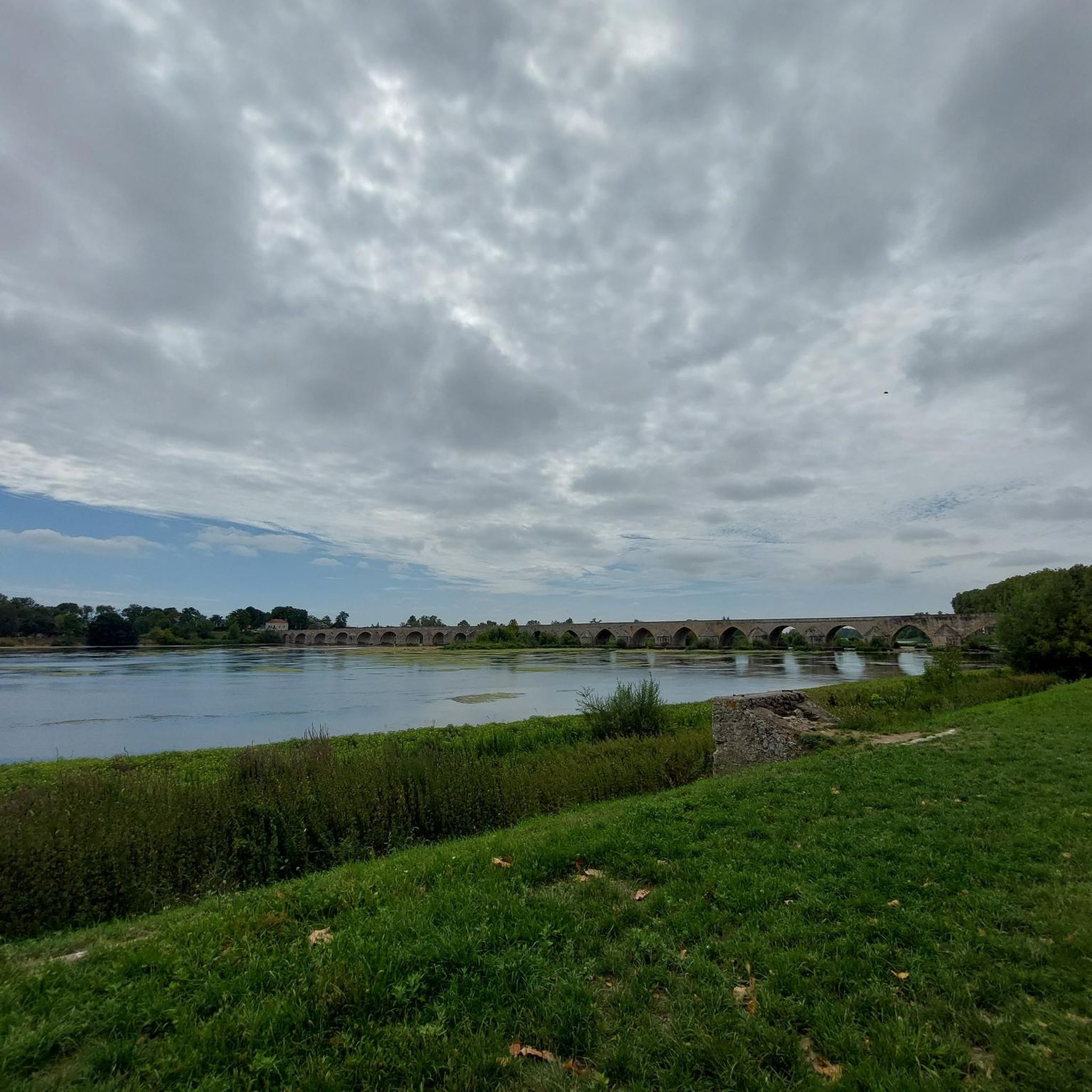
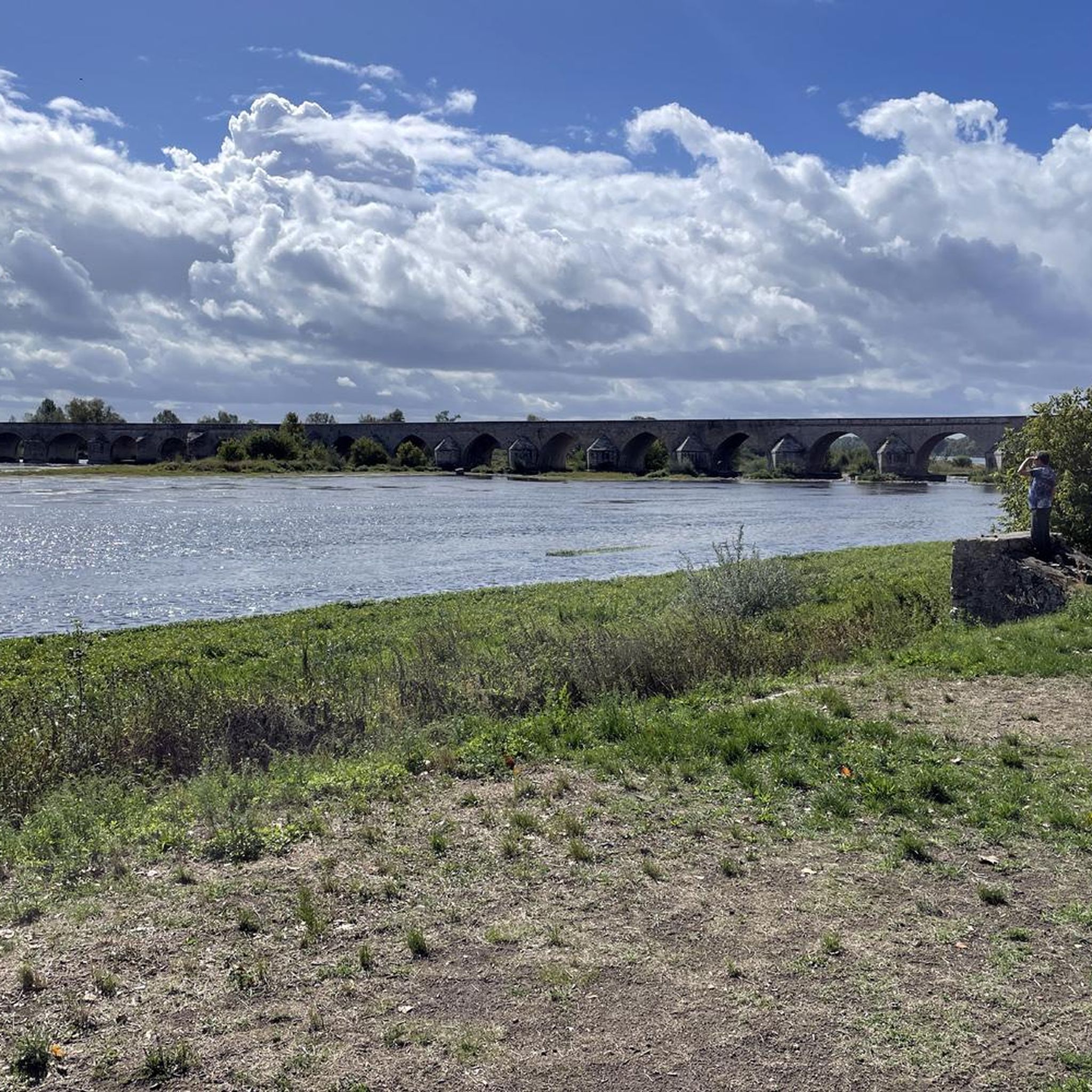
According to legend, the Devil took refuge in the castle after having built the magnificent Pont de Beaugency in one night.
1
0

A beautiful design - impressive and a great view!
3
1
Frequently Asked Questions
What is the general terrain like for road cycling in Beauce-La-Romaine?
Beauce-La-Romaine offers a generally flat to gently rolling terrain, making it ideal for road cycling. You'll traverse diverse agricultural landscapes, including expansive wheat fields, market garden crops, and, in late June to late July, vibrant lavandin fields. The region's topography is well-suited for enjoyable rides through scenic countryside.
How many road cycling routes are available in Beauce-La-Romaine?
There are over 35 road cycling routes available in Beauce-La-Romaine on komoot. These routes cater to various skill levels, with 15 easy and 20 moderate options, ensuring there's something for every cyclist.
Are there any easy road cycling routes for beginners or casual riders?
Yes, Beauce-La-Romaine has 15 easy road cycling routes. A great option for a more relaxed ride is the Montigny Castle – Saint Hilaire Church loop from Le Mée, which is an easy 37.4 km path winding through open countryside and past historical landmarks.
What historical sites or landmarks can I see while cycling in Beauce-La-Romaine?
The region is rich in history. You can encounter ancient megalithic sites like dolmens and menhirs, including the impressive 'Menhir de la Drue'. Vestiges of the Roman Road of Julius Caesar (Voie de Jules César) are also visible in towns like Verdes. Other notable landmarks include the 15th-century 'Croix de Chandry' and the ruins of the Cistercian Abbey Le Petit Citeaux in La Colombe. For specific points of interest, consider visiting Château des Énigmes de Rocheux or the Coulmiers Dolmen.
When is the best time of year to go road cycling in Beauce-La-Romaine?
The best time to go road cycling in Beauce-La-Romaine is generally from late spring to early autumn. If you wish to see the unique lavandin fields in bloom, plan your visit between late June and late July for a truly colorful experience.
Are there any longer, more challenging road cycling routes in the area?
Yes, for those seeking a longer ride, Beauce-La-Romaine offers several moderate routes. The Château de Châteaudun – Saint-Valérien Church loop from Ouzouer-le-Marché is a moderate 72.6 km trail that provides extensive views of agricultural fields and historic sites. Another option is the Montigny Castle loop from Saint-Léonard-en-Beauce, a 61.8 km route through agricultural fields and past historic castles.
What do other road cyclists say about the routes in Beauce-La-Romaine?
The road cycling routes in Beauce-La-Romaine are highly rated by the komoot community, with an average score of 5.0 stars from several reviews. Cyclists often praise the expansive agricultural fields, the gently rolling terrain, and the opportunity to discover historic Roman road vestiges.
Are there any circular road cycling routes available?
Yes, many of the routes in Beauce-La-Romaine are designed as loops, offering convenient circular journeys. For example, the Étang de Saint-Lubin – Étang de Saint-Lubin loop from Marchenoir is a 50.0 km moderate circular route, perfect for exploring the local landscape.
Can I find routes that pass by churches or other architectural points of interest?
Absolutely. The region features several historic churches and architectural sites. The Saint-Marc Church loop from La Ferté-Villeneuil is a 44.2 km moderate route that passes by the Saint-Marc Church. You can also find other churches like Saint Peter's Church or Église Saint Sulpice along various routes.
What kind of natural features can I expect to see while cycling?
Beyond the agricultural fields, you'll encounter the natural diversity of the Aigre valley. The landscape is characterized by open countryside, and during the summer months, the blooming lavandin fields add a unique splash of color, reminiscent of Provence.
Where can I find more information about the Beauce-La-Romaine region?
For additional information about the Beauce-La-Romaine region, including local attractions and tourism details, you can visit the official tourism website: tourisme-terresduvaldeloire.fr.
Most popular attractions around Beauce-La-Romaine

Get inspired with the komoot mobile app


Explore more
Browse the best Road cycling routes in other regions.
