Attractions and Places To See around Sesimbra - Top 20
Best attractions and places to see around Sesimbra include a rich blend of historical landmarks, natural beauty, and cultural sites. This coastal town, located south of Lisbon, is known for its maritime heritage, golden beaches, and dramatic landscapes. The region offers diverse points of interest, from medieval fortresses to protected natural parks and serene lagoons.
Best attractions and places to see around Sesimbra
- The most popular attractions is Cape Espichel Lighthouse, a man-made monument that is one of Portugal's oldest lighthouses. It was built in 1790 and offers views from its 32-meter high tower.
- Another must-see spot is Windmills of Serra do Louro, a collection of historical windmills. These structures were once vital for processing cereals and offer interesting views.
- Visitors also love Hermitage of Memory, a religious building and historical site. It features tile panels from the 18th century and offers views over Praia dos Lagosteiros.
- Sesimbra is known for its historical landmarks, natural attractions, and cultural sites. Visitors can explore medieval castles, dramatic capes, pristine beaches, and vibrant town centers.
- The attractions around Sesimbra are appreciated by the komoot community, with more than 100 upvotes and 40 photos shared by visitors.
Last updated: August 16, 2026
Cape Espichel Lighthouse
Highlight • Monument
The current tower was inaugurated in 1790, in 1865 it was fueled by oil, changing fuel in 1886, when its light began to be powered by incandescent petroleum vapour and, much later in 1926, by electricity.
In 1983 this lighthouse had a lighting device installed, called a first order, which emitted light in groups of four white flashes, instead of the old fixed light system. With this new system it now had a luminous range of twenty-eight nautical miles (forty-five kilometres).
The support structure for the lighthouse was extended to the sides around 1900.
In 1947 a new era in terms of lighting was entered. An aero-maritime optical device was installed, which had previously been in service with the Cabo da Roca Lighthouse. This new dioptic - catadioptic optic called fourth order, a large model, has a focal length of thirty centimeters, producing single flashes, now with a luminous range of forty-two nautical miles (about sixty-seven kilometers).
Translated by Google •
Tip by

Sanctuary of Our Lady of Cape Espichel
Highlight • Religious Site
The church is incredibly beautiful inside. Unfortunately, photography is not allowed.
Translated by Google •
Tip by

Sign up now to discover places like this
Get recommendations on the best single tracks, peaks, & plenty of other exciting outdoor places.
Sign up for free
Windmills of Serra do Louro
Highlight (Segment) • Monument
Tip by

Hermitage of Memory
Highlight • Religious Site
Translated by Google •
Tip by
Ribeiro do Cavalo Beach
Highlight • Beach
Tip by
Sign up for free to discover even more attractions around Sesimbra.
Sign up for free
Already have an account?
Start today with a free account
Your next adventure awaits.
Login or Signup
Other adventures around Sesimbra

Tips from the Community

These were the "mills" of old, moved by the wind, heavy granite millstones, transformed wheat seeds into flour from which delicious bread was made, which "satisfied" the hunger of those who had little to eat.
1
0

Built in the 18th century, it is an eye-catcher with its baroque architecture and the typical blue and white tiles in which some icons were also kept.
2
0
An excellent beach, although lacking in infrastructure and difficult to access, it's a super pleasant place, ideal for relaxing and recharging. Nearby, I also visited Mijona Beach and Hell Beach, which offer more challenging access but always boast immense natural beauty. I recommend it for those who don't have mobility issues and appreciate nature. 👍🥾🦯
1
0


As it is a wild beach and difficult to access, there is no support equipment of any kind or lifeguards. Don't forget to bring water and food, and on the way back make sure to take all your rubbish with you (there are bins near the car park, at the start of the trail)! If you prefer to stay in the shade, you will need to bring a parasol. Also note that the name of the beach is Praia do Ribeiro do Cavalo and not Praia da Ribeira do Cavalo, as it is often called.
4
0
At the top of the Serra do Louro stand the windmills which, in the not so distant past, were an important industry for processing cereals. The force of the wind hits the open sails, turning an axle, which in turn transmits the rotation to a limestone stone that rotates on another fixed one. These stones, called "millstones", receive the cereal grains between them, transforming them into flour.
6
0

For many centuries, the Portuguese coast was known to foreign ships, especially English ones, as the “black coast”, as there was no lighting system to aid navigation. At the end of the 18th century, the Marquis of Pombal ordered the construction of a network of lighthouses to make it safer, including the one at Cabo Espichel, one of the oldest in Portugal, built in 1790.
6
0
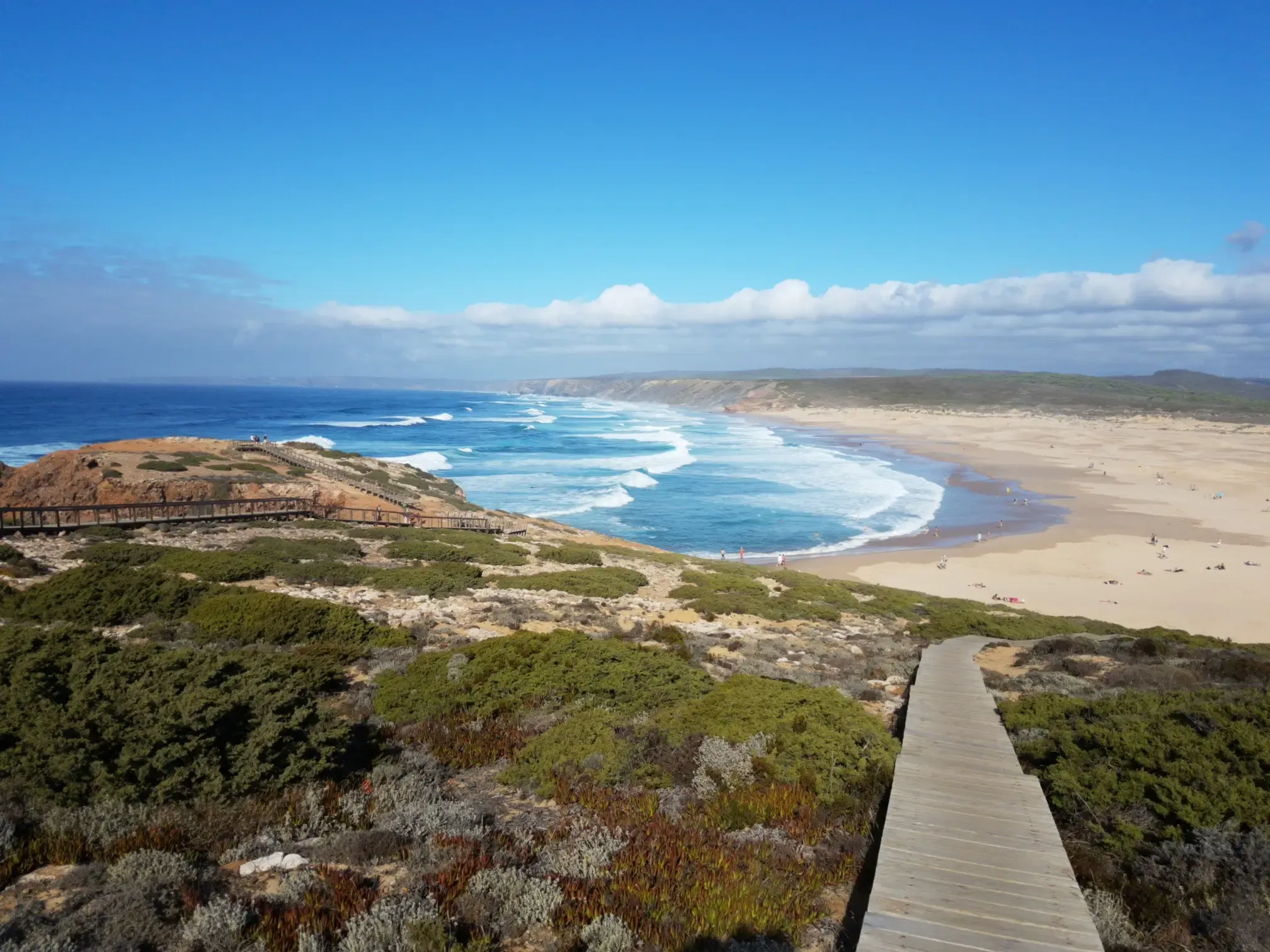
No one had ever heard of this wild beach until recently, when social media, bloggers, and travel websites began showing photos of its stunning scenery. It wasn’t even marked on any map, and only a few locals knew that there was a trail leading down to one of Portugal’s most beautiful beaches. They kept it a well-guarded secret, but it’s now quite popular, including with tourists.
4
0
Frequently Asked Questions
What historical landmarks can I explore in Sesimbra?
Sesimbra offers a rich history. You can visit the medieval Sesimbra Castle, perched atop a hill with panoramic views, or the Fortaleza de Santiago, which houses the Sesimbra Maritime Museum. Don't miss the Church of Santa Maria, adorned with stunning azulejos, and the historic Hermitage of Memory, featuring 18th-century tile panels.
Are there any significant religious sites in the area?
Yes, the region has several notable religious sites. The 17th-century Sanctuary of Our Lady of Cape Espichel is a prominent pilgrimage site with a sparse, serene setting. The Hermitage of Memory, a small chapel with beautiful paintings, is also significant. Additionally, the Sacred Art Museum, located in the historic Church of Mercy, showcases religious art.
Where can I learn about Sesimbra's maritime heritage?
Sesimbra's deep connection to the sea is evident throughout the town. The Maritime Museum of Sesimbra, located in the Fortaleza de Santiago, displays artifacts dating back 5,000 years, many donated by local fishermen. You can also explore the active Fishing Port to witness the town's strong maritime traditions firsthand.
What natural attractions are there to visit near Sesimbra?
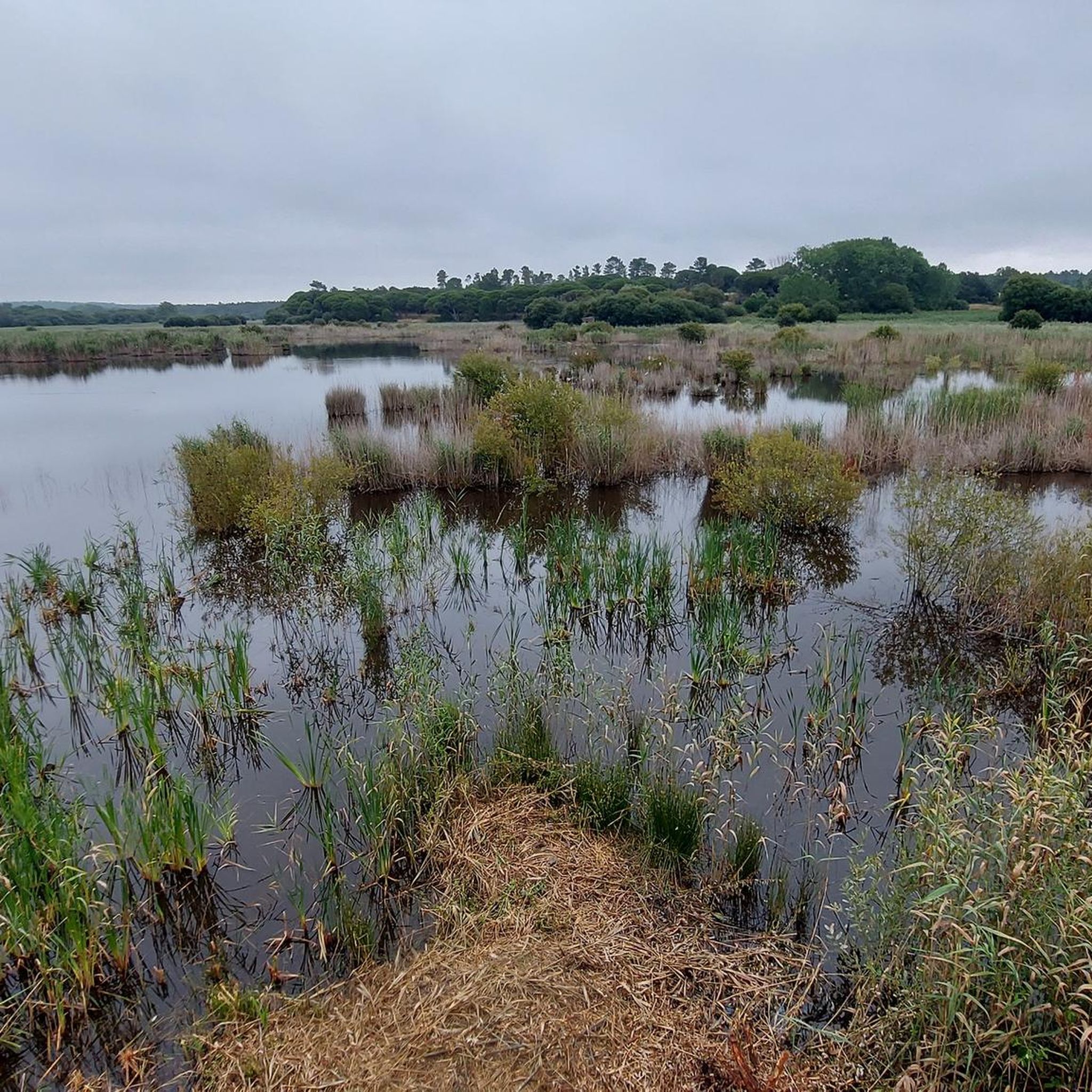
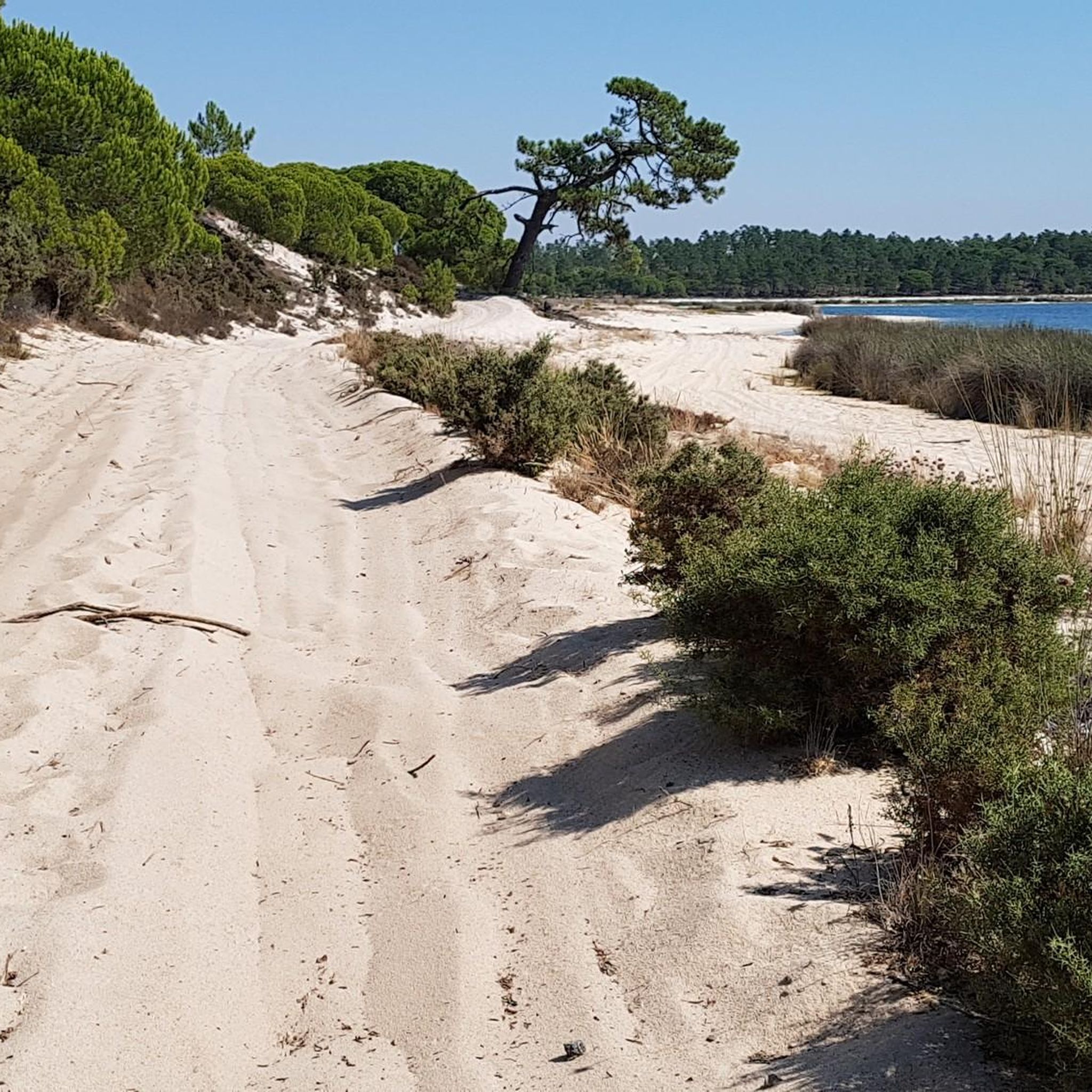
The area boasts stunning natural beauty. The Arrábida Natural Park offers diverse vegetation, spectacular landscapes, and protected marine life. The dramatic Cabo Espichel is known for its cliffs and ocean views. For serene waters, visit Lagoa de Albufeira, a Special Bird Protection Zone perfect for birdwatching and water sports.
Which beaches are recommended in Sesimbra?
Sesimbra is renowned for its beautiful beaches. Praia da California and Praia do Ouro are popular choices directly in front of town, known for tranquil waters and golden sand, ideal for families. For a more secluded experience, Praia do Ribeiro do Cavalo is a hidden gem with turquoise water, accessible by hike or boat. Praia do Meco is also a well-known extensive beach.
Can I find any unique natural phenomena or geological sites?
Absolutely. The cliffs around Cabo Espichel, specifically at Pedra da Mua and Lagosteiros, contain fascinating 150-million-year-old Dinosaur Footprints. Within the Arrábida Natural Park, guided tours allow visitors to discover breathtaking caves and grottos like Frade, Utopia, and Zambujal.
Are there family-friendly activities or attractions in Sesimbra?
Sesimbra is great for families. The calm waters of Praia da California and Praia do Ouro are ideal for children. Lagoa de Albufeira offers shallow, calm waters perfect for families and water sports. Exploring the Dinosaur Footprints at Cabo Espichel can also be an exciting educational adventure for kids.
What outdoor activities can I do near these attractions?
The region around Sesimbra is perfect for outdoor enthusiasts. You can find numerous hiking and biking paths within the Arrábida Natural Park. For specific routes, explore the hiking trails around Sesimbra, MTB trails, or road cycling routes. Popular activities include exploring the coast, visiting viewpoints, and enjoying the natural landscapes.
Are there any good viewpoints in the Sesimbra area?
Yes, the area is rich with stunning viewpoints. The Sesimbra Castle offers breathtaking panoramic views over the town and bay. The Cape Espichel Lighthouse and the surrounding cliffs of Cabo Espichel provide dramatic ocean vistas, especially at sunrise or sunset. The Windmills of Serra do Louro also offer interesting views of the landscape.
What is the best time to visit Sesimbra for outdoor activities?
Sesimbra generally enjoys a mild climate, making it suitable for outdoor activities for much of the year. Spring (April-May) and early autumn (September-October) offer pleasant temperatures for hiking, cycling, and exploring without the peak summer crowds. Summer (June-August) is ideal for beach activities and water sports, though it can be quite warm.
What do visitors enjoy most about Sesimbra?
Visitors frequently praise Sesimbra's unique blend of historical charm and natural beauty. Many appreciate the dramatic cliffs and ocean views at Cabo Espichel, the serene atmosphere of the Sanctuary of Our Lady of Cape Espichel, and the picturesque setting of the Cape Espichel Lighthouse. The hidden beauty of Praia do Ribeiro do Cavalo is also a community favorite, often described as one of Portugal's most beautiful beaches.
Are there any unique cultural experiences or local traditions to discover?
Beyond the historical sites, Sesimbra retains the soul of an old fishing village. Stroll through the charming Sesimbra Town Center with its colorful facades and cobblestone streets. The town's active Fishing Port is a living testament to its traditions. In recent years, urban art has also spread throughout the town, adding a modern twist to its traditional charm.
What kind of local cuisine can I expect in Sesimbra?
As a seaside village, Sesimbra is renowned for its exceptional seafood. You can expect fresh grilled fish and shellfish to be highlights of any meal. The region is also celebrated for its outstanding wines, particularly the fortified Muscatel from the Setúbal Peninsula, offering a delightful culinary adventure.
Most popular attractions around Sesimbra

Get inspired with the komoot mobile app


Explore more
Still not found the Highlight you’re looking for? See guides of the top attractions in other regions:
