Attractions and Places To See around Estremoz - Top 20
Best attractions and places to see around Estremoz, Portugal, a historic city in the Alentejo region known for its white marble and hilltop castle. The area features a blend of historical landmarks, cultural sites, and natural landscapes, including vast plains, cork forests, and the Serra d'Ossa. Visitors can explore ancient fortifications, significant monuments, and unique natural features that define this part of Portugal.
Best attractions and places to see around Estremoz
- The most popular attractions is Gadanha Fountain, Estremoz, a man-made monument located in a square dominated by Lake Gadanha. This fountain features a statue of "Gadanha," originally representing the god Saturn, symbolizing abundance.
- Another must-see spot is Evoramonte Castle, a castle of significant historical importance located between Évora and Estremoz. This medieval town, with its walls protecting inhabitants from the top of the Serra d’Ossa, offers a glimpse into Portugal's past, including its role in the Reconquest.
- Visitors also love Serra d'Ossa Boardwalks, a trail that runs along the Ribeira do Monte Virgem. This 1.5 km walkway provides access to a different side of the Alentejo region, with steep schist cliffs and views towards the Church of Nossa Senhora do Monte da Virgem.
- Estremoz is known for its castles, historical monuments, and natural features like cork forests and viewpoints. The region offers a variety of attractions, from ancient fortifications to interactive museums and scenic trails, providing diverse experiences for visitors.
- The attractions around Estremoz are appreciated by the komoot community, with 14 upvotes and 13 photos shared, highlighting the appeal of these places to see.
Last updated: July 2, 2026
Evoramonte Castle
Highlight • Castle
Translated by Google •
Tip by

Gadanha Fountain, Estremoz
Highlight • Monument
The epithet of “white city” is due, in addition to the color of the houses, to the deposits of white marble, the famous “Estremoz Marble”, which made the city internationally famous. The extraction of this raw material in the Alentejo makes Portugal the second largest exporter in the world, with Estremoz contributing around 90% of the total marble. Consider visiting one of these deposits on a trip to the country.
Translated by Google •
Tip by

Sign up now to discover places like this
Get recommendations on the best single tracks, peaks, & plenty of other exciting outdoor places.
Sign up for free
Serra d'Ossa Boardwalks
Highlight (Segment) • Trail
Although the Serra d’Ossa Walkways only opened in April 2021, they are already one of the must-see places in the Alentejo for all nature lovers. After all, walking along them allows you to discover a very different side of this region in the south of Portugal, more associated with vast plains than with steep cliffs.
The Serra d’Ossa Walking Trail is only 1.5 km long (3 km round trip), which makes it a great walk to do with children. Not only because it is relatively short, but above all because it does not have significant differences in height, with the exception of the section of the staircase that precedes the Church of Nossa Senhora do Monte da Virgem.
( vagamundos.pt )
Translated by Google •
Tip by
Montado Cork Oak Forest
Highlight • Forest
Translated by Google •
Tip by
Estremoz Castle
Highlight • Castle
Translated by Google •
Tip by

Sign up for free to discover even more attractions around Estremoz.
Sign up for free
Already have an account?
Start today with a free account
Your next adventure awaits.
Login or Signup

Tips from the Community

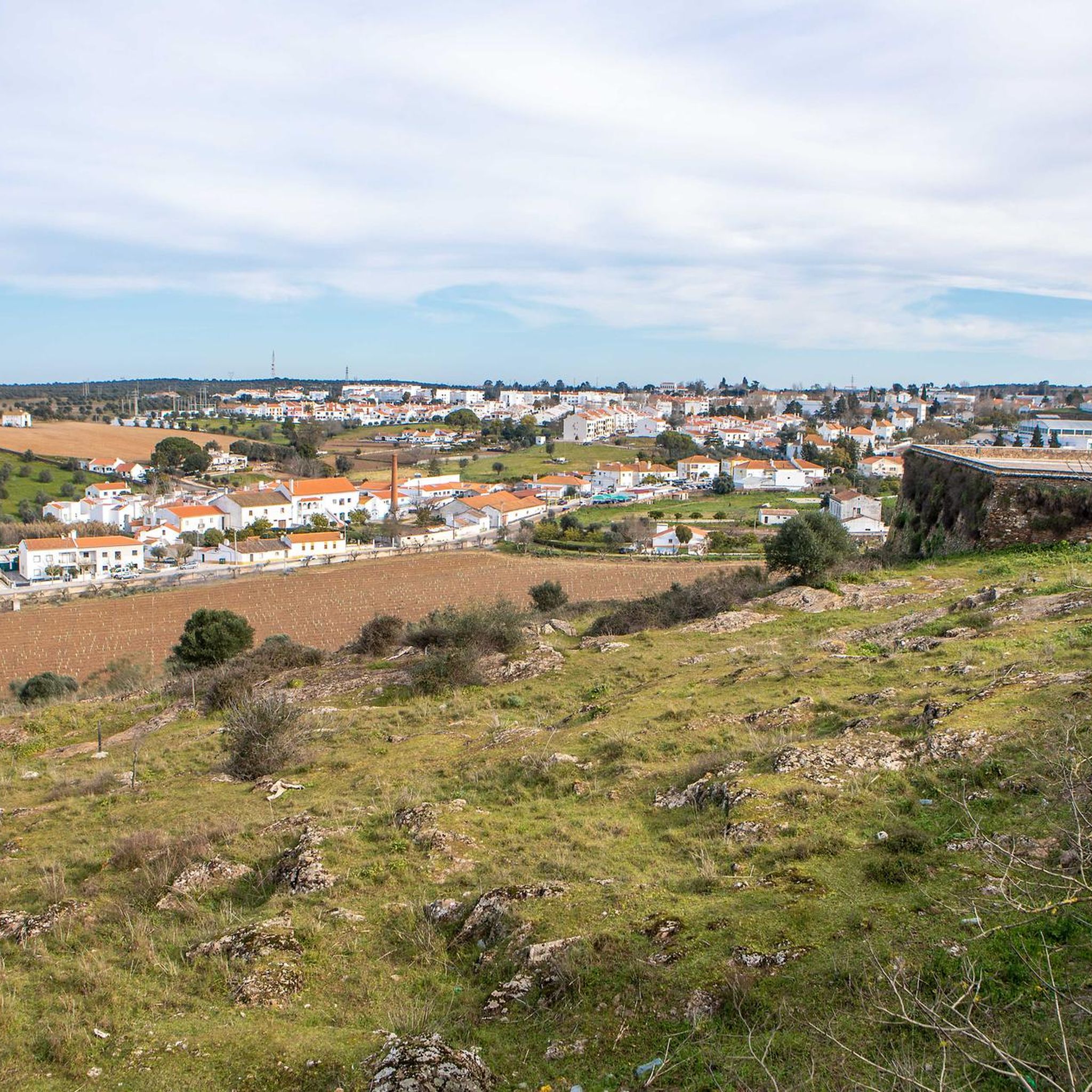
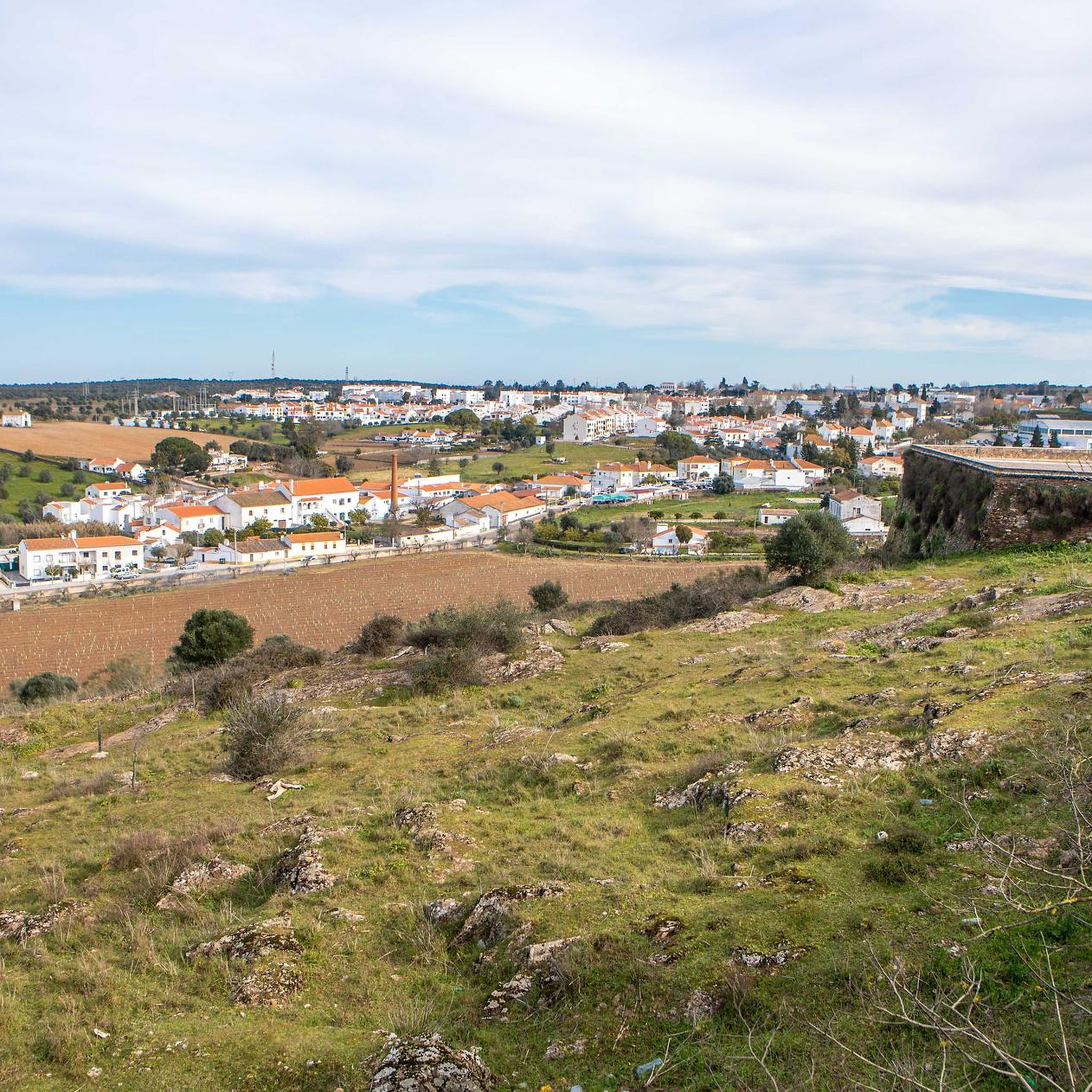
The view of the castle from the west is particularly impressive. There you can clearly see the fortress character with its protruding walls.
5
0
Fonte da Gadanha Square is dominated by Lake Gadanha. Next to it is the 13th-century Convento São Francisco, dating from the reign of King Afonso III, which served as a barracks after secularization. From here, you have a magnificent view up to the castle and the castle. The square is surrounded by other interesting monuments and fountains.
4
1
The famous statue of "Gadanha," located in the lake, originates from the Congregados Monastery and was only moved to the center of the lake in the mid-19th century. It originally represented the god Saturn, a symbol of abundance. The inscription on the base reads: "Time passes quickly."
3
0

The Serra d’Ossa Walkways run along the verdant valley of the Ribeira do Monte Virgem, along steep schist cliffs, between the village of Aldeia da Serra and the imposing Church of Nossa Senhora do Monte da Virgem, preceded by a long (and steep) staircase with approximately 300 steps. Although the Serra d’Ossa Walkways only opened in April 2021, they are already one of the must-see places in the Alentejo for all nature lovers. After all, walking along them allows you to discover a very different side of this region in the south of Portugal, more associated with vast plains than with steep cliffs. The Serra d’Ossa Walking Trail is only 1.5 km long (3 km round trip), which makes it a great walk to do with children. Not only because it is relatively short, but above all because it does not have significant differences in height, with the exception of the section of the staircase that precedes the Church of Nossa Senhora do Monte da Virgem. ( www.vagamundos.pt )
5
0
If you've ever been curious about the origin of the cork in your wine bottle, or questioned the composition of the notice board hanging in your workspace, then this guide is specifically designed to answer your queries. The cork oak, or Quercus suber, is a fascinating tree species that primarily grows in the Mediterranean region. Its unique bark is the source of the world's cork supply, a material that is used in a multitude of applications, from wine stoppers to insulation. In this all-encompassing guide, we will thoroughly investigate the mysteries of the cork oak, examining its native surroundings, its significance in the financial structures of Portugal and Spain, and the multitude of its applications. We will also take a close look at the cork production process, including the art of cork harvesting and the fascinating phenomenon of cork regeneration. Portugal and Spain stand as the global frontrunners in cork production, and much like the white oak of North America, the cork oak occupies a distinct position within the cultural and economic fabric of these nations. In Portugal, the montado landscapes are deeply intertwined with rural life, providing a source of income for many communities through cork production and other activities such as farming and beekeeping. In Portugal, the Montado landscapes are similarly important, with the cork oak providing a range of resources including cork, acorns for livestock, and wood for charcoal production. The cork industry in these countries is a significant employer, providing jobs in areas such as harvesting, processing, and manufacturing. Agroforestry, the practice of combining agriculture with forestry, is a key aspect of sustainable cork production. In the montado and dehesa landscapes of Portugal and Spain, cork oaks are grown alongside crops and livestock, creating a diverse and productive landscape. This form of land use not only provides a range of resources, including cork, food, and timber, but also supports a rich biodiversity and helps to conserve soil and water resources. This illustrates a prime instance of how humanity can coexist harmoniously with nature, utilizing resources sustainably.
5
1
The Estremoz Castle was built in a dominant position on a hill to the north of the Serra de Ossa, in the city of Estremoz, in the district of Évora, in Alentejo, Portugal. It is a pentagonal castle with a walled enclosure, reinforced by buttresses that rise around the Torre de Menagem, a spectacular tower built in white marble, 27 metres high. It is believed that the construction of this monumental tower lasted through three reigns: D. Afonso IV, D. Pedro and D. Fernando, and, for this reason, it is known as the Torre das Três Coroas. Beyond the medieval wall, the town of Estremoz has a vast expanse of fortifications from the epic Restoration War, where the towers with battlements and two arched gates stand out, next to which there is a rectangular tower in the Roman-Gothic style, with several windows.
5
1
Estremoz Castle was raised in a dominant position over a hill, up North to the Sierra de Ossa, in the city of Estremoz, inside the district of Évora, in Alentejo, Portugal. It is a castle with a pentagonal floor, with a walled enclosure reinforced with buttress which raises around the Torre de Menagem Keep, an spectacular tower made in white marble and 27 metres height. It is believed that the works for this monumental tower occurred during the reigns D. Alfonso IV, D. Pedro and D. Fernando. That is why it is known as Torres das Três Coroas (The Tower of the Three Crowns). Besides the Medieval fence, the city of Estremoz counts with a vast fortified area from the epic Guerra da Restaruação (Restoration War), where you can distinguish the battlemented towers and two arch doors, and a rectangular tower with Roman-Gothic style with several windows.
5
1
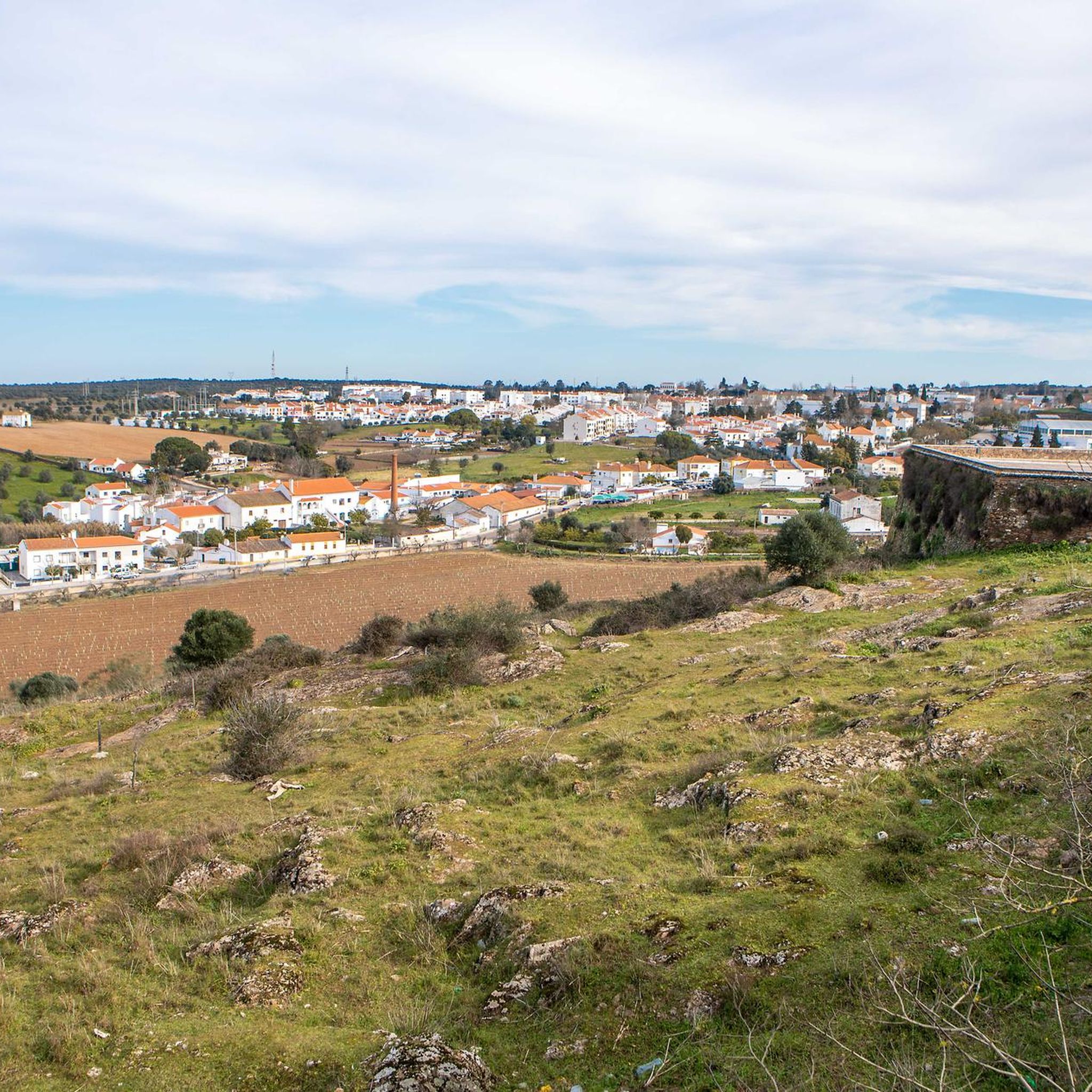
Estremoz is the “white city” of the Alentejo. It can be recognized from afar by its white houses, spread out along a hill, surrounded by old walls and protected, in times gone by, by the imposing Torre de Menagem. The people of Estremoz are friendly and hospitable, like all the people of the Alentejo. The epithet of “white city” is due, in addition to the color of the houses, to the deposits of white marble, the famous “Estremoz Marble”, which made the city internationally famous. The extraction of this raw material in the Alentejo makes Portugal the second largest exporter in the world, with Estremoz contributing around 90% of the total marble. Consider visiting one of these deposits on a trip to the country.
4
1
Frequently Asked Questions
What historical landmarks can I explore in Estremoz?
Estremoz is rich in history. You can visit the impressive Estremoz Castle, with its 27-meter-high marble keep, the Torre das Três Coroas, offering panoramic views of the Alentejo plains. Part of the former Royal Palace within the castle now houses a historic hotel. Another significant site is Evoramonte Castle, located between Évora and Estremoz, known for its Gothic and Manueline architecture and its role in Portugal's Reconquest. The town also features medieval gates like Porta do Sol and Porta de Santarém.
Are there any unique natural features or viewpoints to discover near Estremoz?
Yes, Estremoz is known for its distinctive natural landscape. The region is famous for its white marble, and you can explore the monumental landscape of the marble quarries. For scenic views and outdoor activity, the Serra d'Ossa Boardwalks offer a 1.5 km trail along the Ribeira do Monte Virgem, providing access to steep schist cliffs and views towards the Church of Nossa Senhora do Monte da Virgem. The Serra d'Ossa itself is a forested massif with cork oaks and wild herbs, offering panoramic viewpoints.
What cultural sites and museums are worth visiting in Estremoz?
Estremoz offers several cultural attractions. The Museu Municipal Professor Joaquim Vermelho, housed in a 13th-century building, reconstructs a traditional house and displays local crafts, including the famous 'Bonecos de Estremoz' clay figures, recognized by UNESCO. You can also visit the Museu Berardo Estremoz (Palácio Tocha), which showcases a significant private collection of Portuguese tiles. For religious architecture, explore the Igreja de Santa Maria e Santiago and the Convento dos Congregados with its striking pink marble facade.
What outdoor activities, like hiking or cycling, can I do around Estremoz?
The area around Estremoz is great for outdoor enthusiasts. You can find various routes for different sports. For gravel biking, explore challenging routes like the 'Serra d'Ossa – Loop from Estremoz' or 'Serra d'Ossa Loop from Rio de Moinhos'. Road cyclists can enjoy routes such as 'Redondo Castle – Gadanha Lake Fountain loop from São Lourenço de Mamporcão' or 'Evoramonte Castle – Estremoz loop from Estremoz'. Runners have options like the 'Our Lady of Monte da Virgem – Alto de São Gens loop from Aldeia da Serra'. You can find more details on these and other routes in the Gravel biking around Estremoz, Road Cycling Routes around Estremoz, and Running Trails around Estremoz guides.
Are there any family-friendly attractions or activities in Estremoz?
Yes, there are options for families. The Serra d'Ossa Boardwalks are considered family-friendly due to their relatively short length (1.5 km) and minimal elevation changes, making it suitable for children. The Montado Cork Oak Forest also offers an educational and accessible experience for families to learn about cork production and sustainable agroforestry. Additionally, the Centro de Ciência Viva de Estremoz (Estremoz Science Center) provides interactive and educational exhibits.
What is the significance of the 'white marble' in Estremoz?
Estremoz is famously known as the 'White City' due to its abundant white marble. This marble has shaped the city's architecture and economy, making Portugal the second-largest exporter of marble worldwide, with Estremoz contributing about 90% of the total. Visiting the marble quarries offers a unique insight into this significant industry and the monumental landscape it creates.
Where can I experience local culture and markets in Estremoz?
The Rossio Marquês de Pombal, one of Portugal's largest central squares, is the heart of local life. It hosts a vibrant Saturday market where you can find local fruits, vegetables, cheeses, and handicrafts. This is an excellent place to immerse yourself in the local culture and observe the daily life of Estremoz.
What is the Montado Cork Oak Forest and why is it important?
The Montado Cork Oak Forest near Estremoz highlights Portugal's leading role in cork production. It's a unique agroforestry system where cork oaks are harvested for their bark without felling the trees, demonstrating sustainable practices. This forest is crucial for the local economy, biodiversity, and the conservation of soil and water resources, offering a fascinating insight into a traditional industry.
Can I visit wineries or experience wine tasting near Estremoz?
Yes, the region around Estremoz is well-known for its vineyards. Visiting a local winery for wine tasting is a popular activity, allowing you to sample the renowned Alentejo wines and learn about the winemaking process in this picturesque landscape.
What is the story behind the Gadanha Fountain in Estremoz?
The Gadanha Fountain, Estremoz is a notable man-made monument located in a square dominated by Lake Gadanha. The famous statue of 'Gadanha' in the lake originally represented the god Saturn, symbolizing abundance. It was moved to the center of the lake in the mid-19th century, and an inscription on its base reads: 'Time passes quickly,' adding to its historical charm.
What is the best time to visit Estremoz for outdoor activities?
The Alentejo region, where Estremoz is located, generally experiences hot, dry summers and mild winters. For outdoor activities like hiking and cycling, spring (April to June) and autumn (September to October) are ideal, offering pleasant temperatures and beautiful landscapes. Winter can also be suitable for exploring, as temperatures are mild, though some trails might be wetter.
Are there any specific historical events associated with Evoramonte Castle?
Yes, Evoramonte Castle holds significant historical importance. Beyond its role in the Reconquest of Portugal, it was the site where the Concession of Evoramonte was signed on May 26, 1834. This document ended the Portuguese Civil War (1828–1834), with Dom Miguel I of Portugal surrendering and abandoning his claim to the throne, leading to his exile.
Most popular routes around Estremoz
Most popular attractions around Estremoz

Get inspired with the komoot mobile app


Explore more
Still not found the Highlight you’re looking for? See guides of the top attractions in other regions:
